


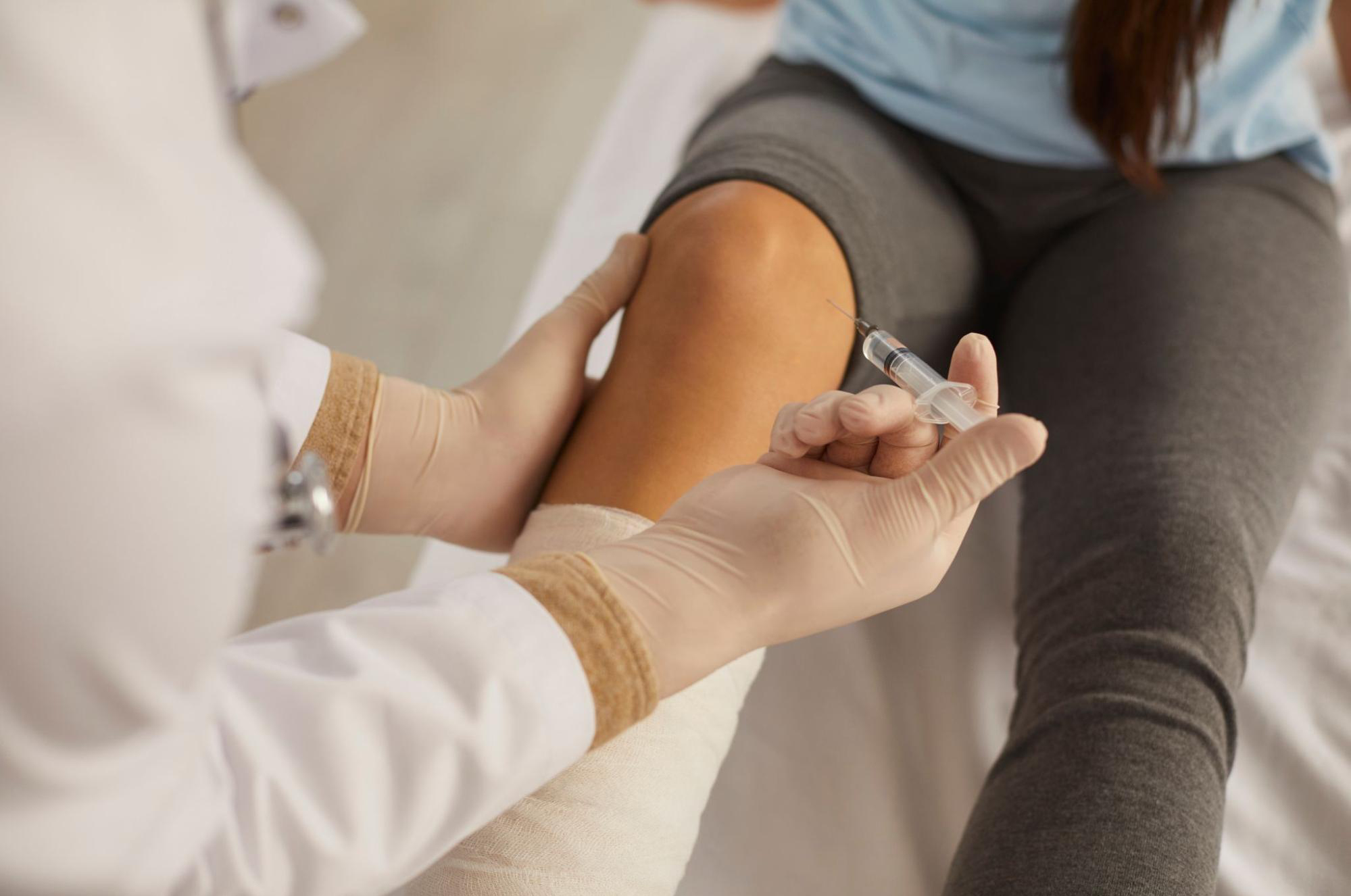
When the Shoulder Cannot Internally Rotate — Distinguishing Subscapularis Tendon Injury from Frozen Shoulder and Supraspinatus Tears: A Positive Belly-Press Test as a Marker of Chronic Micro-Damage to the Anterior Rotator Cuff, and Where Peri-Shoulder Injection of Stem Cell Conditioned Media Can Address the Inflammatory Milieu but Cannot Anatomically Reconstruct a Full-Thickness Tear — Dr. Moriwaki Explains2026.08.14
“My arm goes up, but tucking a shirt into my pants sends a sharp pain through my shoulder.”
“When I try to wring out a towel with my elbow tucked in, the front of my shoulder pulls painfully.”
“I was told I have frozen shoulder and have kept up with injections and rehab, but only internal rotation refuses to come back.”
Behind such complaints, subscapularis tendon injury may be hiding. Among the four muscles of the rotator cuff, the subscapularis is the only one that covers the anterior aspect of the shoulder joint. Its chronic micro-damage is less conspicuous on imaging than a supraspinatus tear and overlaps symptomatically with frozen shoulder, so diagnosis is easily delayed. In this column, Dr. Moriwaki of AVAN TOKYO Ginza Joint Regenerative Medicine carefully organizes, from a clinical perspective, what peri-shoulder injection of stem cell conditioned media can and cannot address for subscapularis tendon injury.
Key Points of This Article
・Subscapularis tendon injury is a micro-injury of the anterior rotator cuff, with pain especially during internal rotation and hand-behind-back movements, and its symptoms overlap with frozen shoulder or supraspinatus tears.
・Positive belly-press and lift-off tests are important clues for identifying anterior rotator cuff involvement.
・Peri-shoulder injection of stem cell conditioned media can address the chronic inflammatory cycle in the peri-tendinous tissue and subacromial bursa, but cannot anatomically reconstruct a full-thickness tear.
・Injections should not stand alone; parallel rehabilitation for internal/external rotation range and rotator-cuff strengthening is essential for functional recovery.
・For severe tears or advanced fatty degeneration, prioritizing orthopedic surgical evaluation is a necessary judgment.
What Is Subscapularis Tendon Injury — The Easily Missed Chronic Micro-Damage of the Anterior Rotator Cuff
Anatomy and Role of the Subscapularis
The subscapularis originates from the anterior surface of the scapula (subscapular fossa) and inserts onto the lesser tuberosity of the humerus. Of the four rotator cuff muscles (supraspinatus, infraspinatus, teres minor, subscapularis), it is the only one that governs the anterior aspect and serves as the prime mover for internal rotation of the shoulder joint. At the same time, it works as a dynamic stabilizer, pulling the humeral head toward the glenoid to keep it centered.
When this tendon is damaged, not only does internal rotation strength drop; the anterior stability of the shoulder itself becomes shaky, and as a result the supraspinatus tendon and the long head of the biceps tendon are more prone to secondary overload.
Typical Patterns Mistaken for Frozen Shoulder or Supraspinatus Tear
A characteristic feature of this condition is the gap: “the arm goes up, but only internal rotation fails.” Many patients are diagnosed with frozen shoulder and continue hyaluronic acid injections, steroid injections, and rehabilitation, yet only hand-behind-back motion (fastening a bra hook, reaching into a back pocket) never recovers.
This is because frozen shoulder (adhesive capsulitis) is characterized by omnidirectional range-of-motion loss, while anterior rotator cuff injury leaves a selective functional deficit in the internal rotation direction. Unlike a supraspinatus tear, abduction (raising the arm sideways) is often relatively preserved, so small partial tears tend to be overlooked even on MRI.
Assessing with the Belly-Press and Lift-Off Tests — In-Office Confirmation
Before relying on imaging to identify subscapularis tendon injury, it is important to confirm function with a physical examination. Two tests long used in orthopedics are useful for initial screening.
The first is the belly-press test. The patient is asked to press the palm against the abdomen and bring the elbow forward, in front of the trunk. If the subscapularis is functioning, the palm stays on the abdomen and can be pushed forward, but if the tendon is damaged, the elbow drops backward and only the palm lifts away from the abdomen.
The second is the lift-off test. Starting with the back of the hand on the lower back, the patient is asked to lift the hand away from the back. If there is damage to the anterior rotator cuff, this lifting motion becomes difficult.
If these tests are positive, we evaluate the tendon at the lesser tuberosity insertion using plain X-ray and ultrasound, and MRI when needed, to determine the extent of the tear, presence of fatty degeneration, and injury to related cuff tendons. For general information on joint disorders, please also refer to the Japanese Orthopaedic Association.
What Peri-Shoulder Injection of Stem Cell Conditioned Media Can and Cannot Target
For subscapularis tendon injury, what peri-shoulder injection of stem cell conditioned media can target is correction of the chronic inflammatory cycle in the peri-tendinous tissue, subacromial bursa, and glenohumeral joint. At the site of tendon micro-damage, ongoing release of inflammatory cytokines and tissue breakdown by matrix metalloproteinases (MMPs) sustain pain and delay healing. Various growth factors contained in the conditioned media (TGF-β, IGF-1, FGF, VEGF, etc.) and anti-inflammatory cytokines are suggested to intervene in this chronic inflammatory cycle and adjust the peri-tendinous environment toward a more “healable” state.
At the same time, we must clarify what this injection cannot target: anatomical reconstruction of a full-thickness tear, and functional recovery of tendons with advanced fatty degeneration. When tendon fibers are completely torn and Goutallier grade 3 or higher fatty degeneration is present, the tendon tissue itself has been lost, so restoring it to its original state with an injection is physically impossible. In such cases, orthopedic surgical evaluation — including arthroscopic rotator cuff repair — takes priority.
This is precisely why treatment design for this condition begins with accurately grasping the extent of injury and the presence or absence of fatty degeneration. For partial injuries with mild to moderate degeneration, peri-shoulder injection of stem cell conditioned media combined in parallel with rehabilitation for internal/external rotation range and rotator cuff strengthening can be a reasonable first-line conservative approach. For details, please see our page on stem cell conditioned media joint injections.
Outcome evaluation looks at pain scores (VAS/NRS), internal rotation angle, reproducibility of the lift-off motion, and improvement in hand-behind-back activities of daily living, over a timeline of several weeks to several months. When response is poor, we discuss with the patient whether to continue, change, or switch to orthopedic re-evaluation. Effect varies among individuals and has limits, and we always convey at the first visit that the same result cannot be guaranteed for every case.
Frequently Asked Questions
Q. I was diagnosed with frozen shoulder six months ago, but only internal rotation is not coming back. Should I suspect subscapularis tendon injury?
If abduction and elevation have improved but pain and functional loss remain selectively in hand-behind-back and internal-rotation directions, evaluation of the anterior rotator cuff is recommended. Belly-press and lift-off testing combined with detailed workup by ultrasound and MRI can identify a hidden tendon injury.
Q. Can peri-shoulder injection of stem cell conditioned media alone completely heal this injury?
In cases with a full-thickness tear or advanced fatty degeneration, injection alone cannot restore anatomical tendon continuity. For partial tears with mild degeneration, combining injection with rehabilitation can be expected to improve pain and function, but response varies among individuals and the same result cannot be guaranteed for every case.
Q. Steroid injection relieved my pain but it came back. How is it different from conditioned media injection?
Steroid injections provide strong anti-inflammatory action and short-term pain relief, but they carry risks of tendon weakening and questions about durability of effect. Stem cell conditioned media, beyond suppressing inflammation, is positioned as a biological approach that works on the healing environment around the tendon. The two are complementary options with different purposes.
Q. I was recommended surgery. Is trying injection first a viable option?
The decision changes depending on the extent of injury, degree of fatty degeneration, age, and activity level. Taking an orthopedic surgeon’s opinion into account, for partial tears observing the course with injections and conservative therapy is a fully reasonable option. However, when a large tear or progressive fatty degeneration is present, surgical candidacy narrows over time, so please do not leave it untreated.
Q. When can I start rehabilitation after the injection?
After a peri-shoulder injection, avoid vigorous exercise for the day and the next, but oral medication, bathing, and light daily activities are usually fine. Rotator cuff strengthening and range-of-motion exercises are commonly resumed gradually within a few days after the injection, with the specifics designed in consultation between the physician and physical therapist.
──────────────
Medical Supervision: Shin Moriwaki, MD
Member of the Japan Society of Aesthetic Surgery (JSAS) / Member of the American Academy of Aesthetic Medicine
ECFMG Certificate
──────────────
📍AVAN TOKYO 銀座 関節再生医療
AVAN TOKYO Ginza Joint Regenerative Medicine
English / 中文 / Tiếng Việt supported
Inquiries welcome via DM / LINE / Website / Phone.