


Case Study: Circumferential Upper Arm Liposuction and Hybrid Breast Augmentation in a Slim Patient2026.08.02

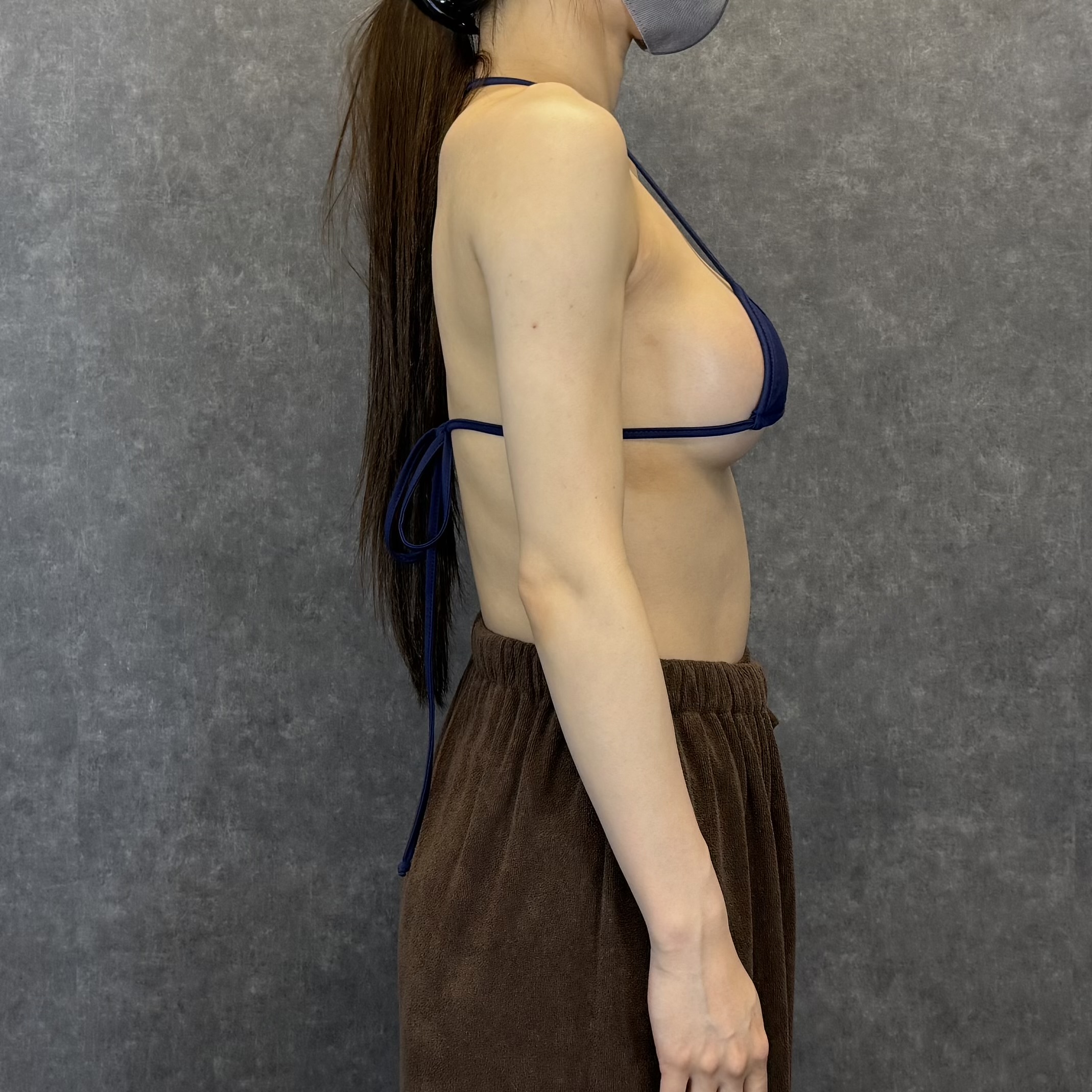
Six-Month Results in a Patient with a BMI Below 18
“I was told that liposuction would not make much difference because I am already slim.”
“I want slimmer arms, but I do not want them to look unnaturally bony or over-treated.”
Many slim patients have similar concerns when considering upper arm liposuction.
At the same time, patients may encounter statements online such as:
“Removing too much fat from the arms is dangerous.”
“Extremely slim arms are always a sign of unsuccessful liposuction.”
However, there is no single design that is appropriate for every patient.
The ideal amount of fat removal depends on the patient’s skeletal structure, skin quality, subcutaneous fat thickness, BMI, and desired body shape.
At AVAN TOKYO, upper arm liposuction is not performed simply to make the arms smaller.
We consider the shoulders, upper arms, underarm area, décolletage, and breasts as one continuous silhouette. Our goal is to create a balanced and elegant upper-body contour.
This case demonstrates circumferential upper arm liposuction combined with hybrid breast augmentation in a naturally slim patient.
Case Overview
Patient:
22-year-old female
BMI:
Below 18
Procedures:
• Circumferential upper arm liposuction
• Underarm and axillary fat liposuction
• Hybrid breast augmentation
Liposuction volume:
• Approximately 350 mL of pure fat
Breast implants:
• Motiva Demi 250 cc
• Subglandular placement
Follow-up:
• Six months after surgery
Results at Six Months
At six months after surgery, postoperative fibrosis and tissue tightness had largely settled.
The transition from the shoulders to the upper arms became sharper and more defined, while the décolletage and breasts maintained a smooth, natural contour.
Because the patient was already slim, our objective was not simply to make the arms smaller. We carefully considered the balance between her shoulder width, arm contour, chest, and breast volume.
Combining upper arm liposuction with hybrid breast augmentation further emphasized the changes in the upper arms and created a more balanced, three-dimensional upper-body silhouette.
Is an Extremely Slim Upper Arm Always a Bad Result?
Patients sometimes hear that very slim or highly defined upper arms are automatically an undesirable outcome.
However, this does not apply to everyone.
For a naturally slim patient with a BMI below 18 who wants a clearly visible change, leaving too much unnecessary fat behind may result in only a minimal difference after surgery.
The appropriate degree of fat removal should therefore be decided individually rather than according to a single aesthetic standard.
Some patients prefer a soft and moderately slim appearance. Others want sharper shoulders and more defined arms.
Neither preference is universally right or wrong.
The important question is whether the surgical plan matches the patient’s anatomy and desired result while maintaining safety and a smooth skin contour.
Our Approach to Upper Arm Liposuction in Slim Patients
Measuring Subcutaneous Fat with Ultrasound
At AVAN TOKYO, ultrasound may be used to assess the thickness and distribution of subcutaneous fat.
In carefully selected slim patients seeking a significant change, we may plan the procedure with the goal of preserving approximately 1.5–2 mm of superficial fat beneath the skin while removing the deeper unnecessary fat.
This does not mean removing every layer of fat.
A thin layer of healthy tissue must be preserved to support blood circulation, protect the skin, and reduce the risk of irregularities.
The objective is not complete fat removal. It is precise fat-layer management based on anatomy.
The actual amount of fat that should remain differs according to the patient’s skin thickness, tissue quality, fat distribution, and treatment area.
Designing the Entire Upper Body
We evaluate the following areas as one continuous silhouette:
• Shoulder shape
• Upper arm circumference
• Underarm and axillary fullness
• Décolletage
• Breast volume and projection
Treating only the arms does not always create the most balanced result.
For this patient, hybrid breast augmentation was combined with circumferential upper arm and underarm liposuction.
The implants provided stable breast volume, while the upper arm liposuction refined the shoulder-to-arm transition. Together, these procedures created a smoother and more feminine line from the shoulders to the breasts.
Focusing on Design, Not Only the Aspirated Volume
The quality of liposuction cannot be judged only by the number of milliliters removed.
The surgeon must determine:
• Which areas should be reduced
• Which areas should be preserved
• Which fat layers should be treated
• How the shoulders should transition into the arms
• How the arms should balance with the chest and breasts
Removing a large amount of fat without an anatomical design can lead to unevenness, depressions, excessive skin adherence, or an unnatural contour.
Conversely, removing too little fat may fail to produce the change requested by a naturally slim patient.
The correct balance is different for every individual.
What Is Hybrid Breast Augmentation?
Hybrid breast augmentation combines silicone breast implants with autologous fat grafting.
The silicone implants provide predictable volume and projection, while the patient’s own fat can be used to refine the breast contours and improve the transition around the implant.
Depending on the patient’s anatomy, hybrid breast augmentation may help:
• Add stable breast volume
• Improve upper-pole and décolletage contours
• Soften visible or palpable implant edges
• Correct mild right-to-left differences
• Create a smoother transition from the chest to the breasts
• Balance the breasts with the shoulders, arms, and waist
In this case, Motiva Demi 250 cc implants were placed in the subglandular plane.
The implant size, placement plane, and fat-grafting design must be selected according to breast tissue thickness, skin elasticity, chest-wall anatomy, and the patient’s desired appearance.
Why Upper Arm Liposuction and Hybrid Breast Augmentation Work Well Together
Circumferential upper arm liposuction and hybrid breast augmentation can create a significant change in the overall upper-body silhouette.
Upper arm and underarm liposuction can refine:
• The shoulder-to-arm transition
• Fullness around the armpits
• Bulging beside the bra
• The apparent width of the upper body
Hybrid breast augmentation can simultaneously improve:
• Breast volume
• Projection
• Décolletage fullness
• The transition between the chest and breasts
• Overall upper-body proportions
The goal is not simply to create smaller arms and larger breasts as separate changes.
The goal is to design a continuous and balanced line from the shoulders, through the arms and underarm area, to the décolletage and breasts.
This comprehensive approach is one of the defining principles of body contouring at AVAN TOKYO.
Will Upper Arm Liposuction Cause Loose Skin?
Not every patient develops loose skin after upper arm liposuction.
The risk depends on several factors, including:
• Age
• Skin elasticity
• Amount of fat removed
• Preoperative skin laxity
• History of major weight loss
• Liposuction technique
• Postoperative fibrosis and healing
• Lifestyle and weight changes after surgery
Younger patients with good skin elasticity often experience gradual skin contraction during recovery.
However, patients with significant pre-existing laxity may require additional treatments, such as energy-based skin tightening, an arm thread lift, or—in more severe cases—surgical skin excision.
AVAN TOKYO evaluates both fat thickness and skin quality before recommending the most appropriate treatment.
Recovery After Upper Arm Liposuction and Hybrid Breast Augmentation
The final result is not visible immediately after surgery.
During the early recovery period, patients may experience:
• Swelling
• Bruising
• Tightness
• Temporary numbness
• Firmness
• Unevenness caused by postoperative edema
• Fibrosis or hard areas under the skin
These symptoms generally improve gradually.
The arms and breasts often continue to change over three to six months, and some areas may take longer to fully soften.
At six months, the result is usually considerably more stable than during the first weeks after surgery.
Patients should understand that a one-week or one-month photograph does not represent the final outcome.
Postoperative Care
Postoperative care is an important part of recovery.
Depending on the procedures performed, patients may be advised to:
• Wear the prescribed compression garment
• Avoid excessive pressure on the breasts
• Use a wireless bra during the early recovery period
• Maintain adequate protein and calorie intake
• Avoid smoking
• Gradually resume exercise according to medical advice
• Attend scheduled follow-up examinations
• Perform massage or stretching only when instructed
Instructions vary according to the patient’s condition and surgical details. Patients should follow the individualized guidance provided by their surgeon.
Who May Be a Candidate for This Combination?
Circumferential upper arm liposuction combined with hybrid breast augmentation may be considered for patients who:
• Want slimmer and more defined upper arms
• Have fullness around the underarms or bra line
• Want clearer shoulder definition
• Want to improve breast volume and shape
• Prefer comprehensive upper-body contouring
• Have sufficient donor fat for grafting
• Understand that recovery takes several months
• Have realistic expectations about surgery
A low BMI does not automatically exclude a patient from upper arm liposuction or hybrid breast augmentation.
However, slim patients require especially careful evaluation because the margin for error is smaller and contour irregularities may be more visible.
The AVAN TOKYO Body-Contouring Philosophy
At AVAN TOKYO, we do not view the arms, breasts, abdomen, or thighs as isolated treatment areas.
The appearance of one area affects the proportions of the entire body.
For upper-body surgery, we consider:
• Skeletal structure
• Shoulder width
• Muscle shape
• Fat distribution
• Skin elasticity
• Arm circumference
• Breast volume
• Chest-wall anatomy
• Waist balance
• The patient’s personal aesthetic preference
Our role is not to impose a single definition of beauty.
Some patients prefer a soft and natural contour. Others want highly defined shoulders and very slim arms.
We listen carefully to both the appearance the patient wants and the appearance they wish to avoid.
Based on that information, we create an individualized surgical plan.
Surgeon’s Comment
Cosmetic surgery cannot guarantee that every patient will be completely satisfied.
Individual anatomy, healing responses, scar formation, lifestyle, and personal expectations all affect the final outcome.
That is why honest preoperative communication is essential.
However, we do not believe that every patient should receive the same average design.
Our goal is to understand the patient’s ideal body shape and pursue it as carefully as possible using anatomical knowledge, appropriate surgical techniques, and long-term follow-up.
For naturally slim patients, conservative treatment is not always synonymous with the best treatment.
At the same time, aggressive treatment does not mean removing all fat.
The most important principle is to preserve the tissue required for safety and smoothness while precisely removing the fat that interferes with the desired contour.
At AVAN TOKYO, we aim to create a refined upper-body silhouette that remains balanced from the shoulders and arms to the décolletage and breasts—not only immediately after surgery, but also six months, one year, and beyond.
This case is published with the patient’s informed consent.
Surgical results and recovery periods vary among individuals.
The appropriate amount and depth of liposuction are determined after evaluating the patient’s anatomy, fat thickness, skin condition, and aesthetic goals.
All surgical procedures involve potential risks, including bleeding, infection, asymmetry, contour irregularities, numbness, delayed healing, fat necrosis, capsular contracture, and the possible need for revision surgery.
This article is intended for patient education and does not replace an individualized consultation with a qualified physician.