


Arm Liposuction and Hybrid Breast Augmentation in a Very Slim Patient with a BMI Below 16.5 | 6 Months After Surgery2026.08.09
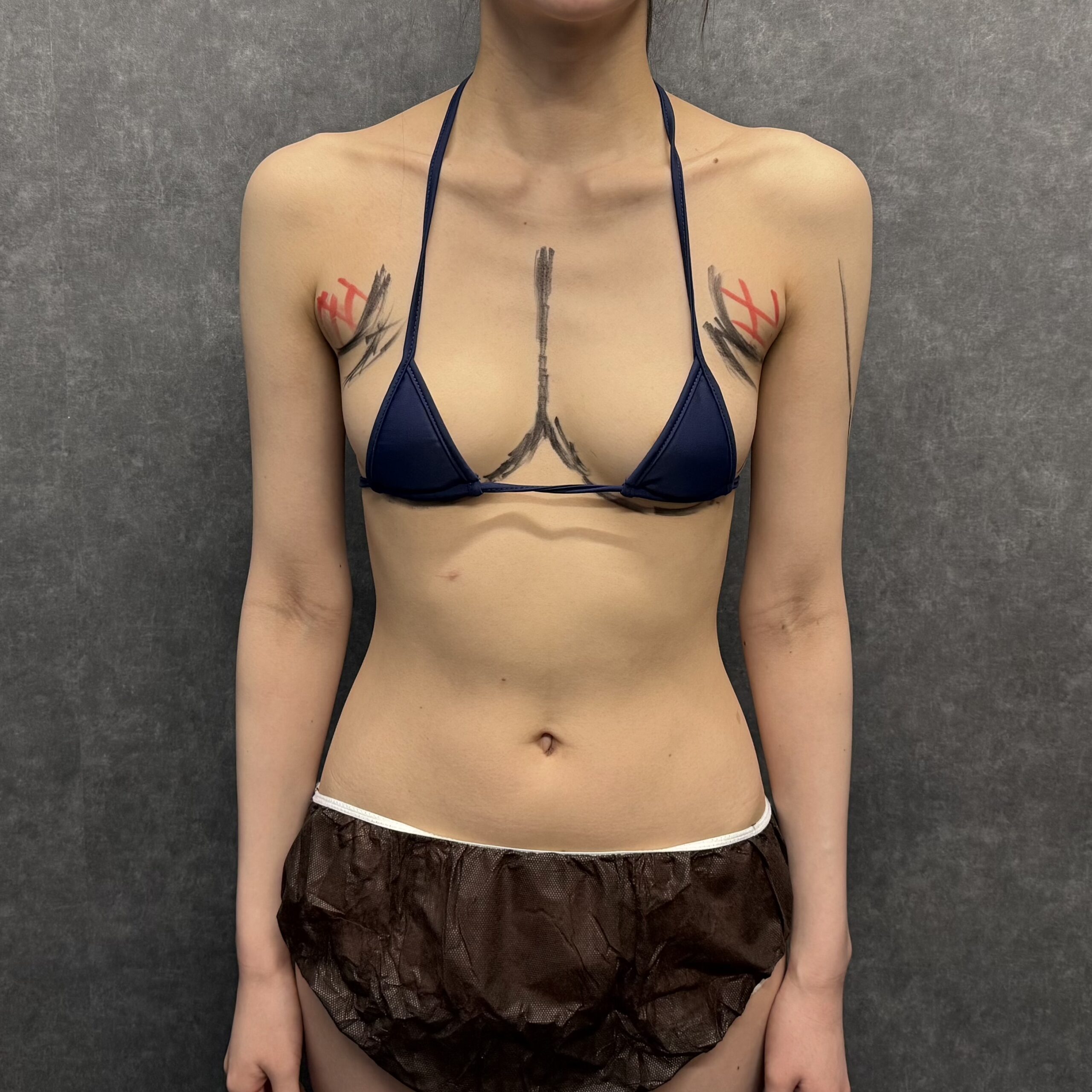
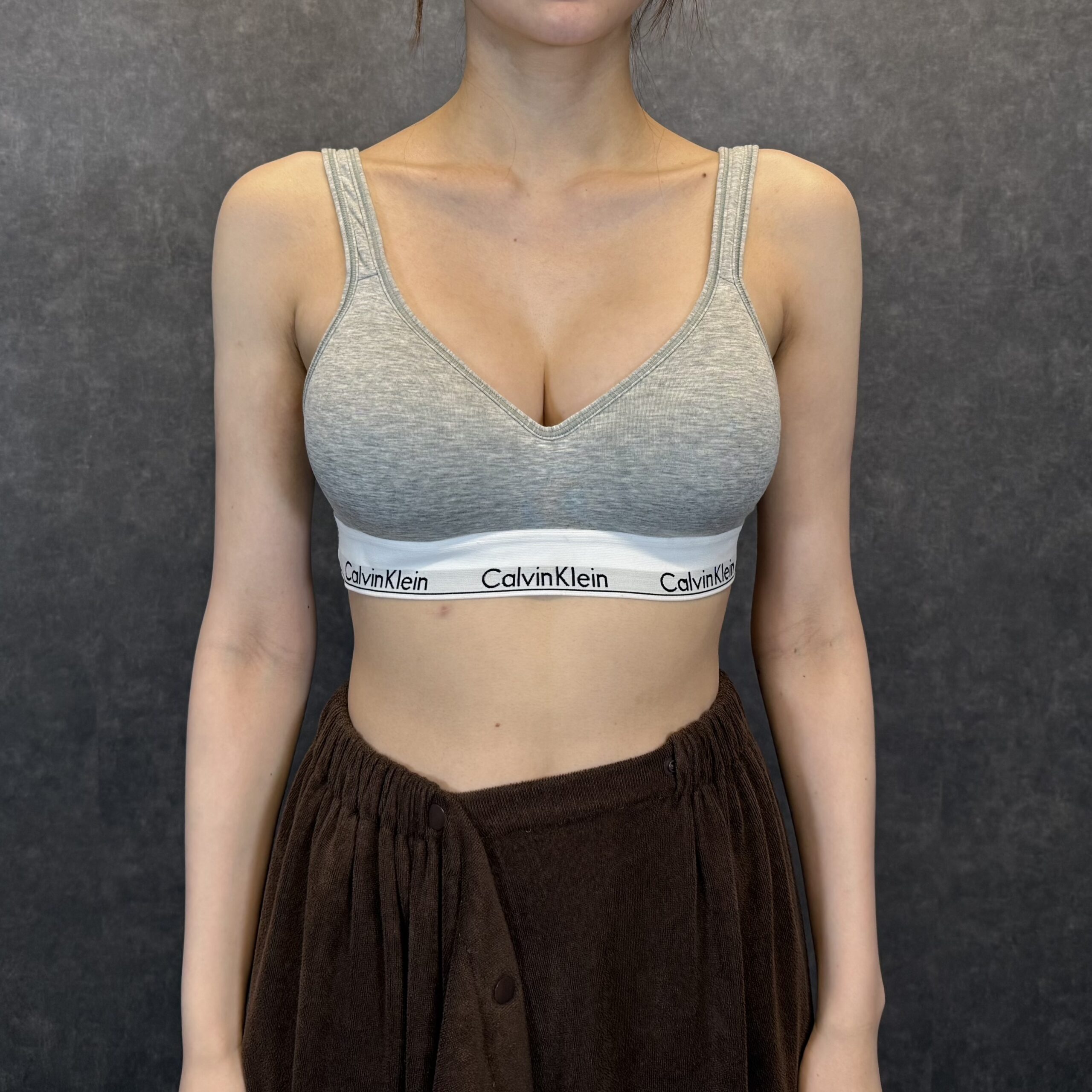
This case features a very slim patient with a BMI below 16.5 who underwent:
● 360° arm liposuction
● Accessory breast fat removal
● Hybrid breast augmentation
The postoperative progress is shown at 1 week, 1 month, 3 months, and 6 months after surgery.
Although the patient was already very slim, small amounts of subcutaneous fat remained around the upper arms and accessory breast area. Even in a slender patient, these subtle areas of fat can affect the transition from the shoulders and arms to the décolletage and breasts.
In this case, we carefully pursued the maximum degree of definition considered appropriate for her anatomy while preserving the tissue necessary for a smooth, natural contour. Hybrid breast augmentation was then used to add three-dimensional volume to the breasts and create a more balanced upper-body silhouette.
Can Very Slim Patients Have Arm Liposuction?
We often hear the question:
“If I am already very thin, will arm liposuction make any difference?”
A low BMI does not automatically mean that arm liposuction is unnecessary or unsuitable.
Even in very slim patients, the distribution of subcutaneous fat around the upper arms, shoulders, armpits, and accessory breast area can influence the overall silhouette.
In patients with very little body fat, even a few millimeters of remaining fat can affect definition.
For this reason, arm liposuction in a slim patient requires careful evaluation of:
● Subcutaneous fat thickness
● Skin quality and elasticity
● Muscle anatomy
● The transition from the shoulder to the upper arm
● Left-right asymmetry
The goal is not simply to remove as much fat as possible, but to determine how far the contour can be refined while maintaining a smooth and natural appearance.
“Maximum-Definition” Liposuction Does Not Mean Removing All Fat
Some slim patients request extremely defined or “very lean” arms.
However, removing all subcutaneous fat is neither the goal nor necessarily desirable.
The superficial fat layer contributes to smooth skin texture and a natural transition between the skin and underlying anatomy. Excessive superficial liposuction may increase the risk of contour irregularities, adhesions, and an unnatural appearance.
At AVAN TOKYO, we aim for the maximum degree of refinement that is appropriate for each patient’s anatomy while preserving the tissue required for a smooth, natural contour.
This distinction is especially important in patients with a very low BMI.
Why Treat the Accessory Breast Area Together with the Arms?
Arm liposuction should not always be planned as an isolated procedure.
If fullness remains around the armpit or accessory breast area, the upper body may still appear relatively wide even after the arms have been slimmed.
Carefully contouring this area can improve:
● Fullness around the armpits when the arms are relaxed
● The transition from the arms to the breasts
● Upper-body width when viewed from the front
● The overall silhouette in sleeveless clothing
At AVAN TOKYO, we therefore assess the shoulders, arms, accessory breast area, back, décolletage, and breasts as parts of one continuous body line.
Why Combine Arm Liposuction with Hybrid Breast Augmentation?
Hybrid breast augmentation combines breast implants with autologous fat grafting.
The implant provides predictable central breast volume, while fat grafting can be used selectively to soften transitions and refine the breast contour.
This approach can be particularly useful in very slim patients.
When the skin and subcutaneous tissues are thin, the outline of a breast implant may be more noticeable. Carefully placed fat grafting may help soften selected areas around the implant and create a smoother transition through the décolletage and upper breast.
Depending on the patient’s anatomy, hybrid breast augmentation may help:
● Soften visible implant contours
● Create a smoother décolletage
● Refine the upper and outer breast contour
● Improve the balance between slim arms and breast volume
The appropriate technique and amount of fat grafting must be individualized according to the patient’s available donor fat, breast anatomy, skin characteristics, and desired result.
Changes at 6 Months
At 1 week after surgery, swelling, bruising, and postoperative tightness are still expected.
By approximately 1 month, much of the initial swelling begins to improve, although firmness and postoperative tissue contraction may still be present in the arms.
At around 3 months, the contrast between the refined arms and increased breast volume becomes easier to appreciate. In this case, the shoulder-arm-décolletage-breast contour was already becoming clearly defined at the 3-month stage, creating an upper-body silhouette that complements sleeveless clothing, swimwear, and dresses.
By 6 months, postoperative firmness and tissue changes generally continue to settle, allowing the contour and texture to appear more natural.
Individual recovery varies, and final results should not be judged from the early postoperative period alone.
AVAN TOKYO’s Approach: Designing the Entire Upper Body
At AVAN TOKYO, we do not view arm liposuction and breast augmentation as completely separate procedures.
We consider the entire sequence:
Shoulders → Upper Arms → Armpit & Accessory Breast Area → Décolletage → Breasts
For patients who are already very slim, small differences in fat distribution and volume can have a significant visual impact.
The key is therefore not simply to make one area smaller and another area larger.
Instead, we determine where volume should be reduced, where it should be preserved, and where additional volume may improve the overall balance of the body.
Surgeon’s Comment
Performing liposuction in a patient with a BMI below 16.5 requires particularly careful patient selection and surgical planning.
Very slim patients are not necessarily “easier” to treat simply because they have less fat. In fact, when the subcutaneous fat layer is thin, small differences in the amount and depth of fat removal may have a greater influence on skin texture and contour.
In this case, we aimed to create highly refined arms and accessory breast contours while using hybrid breast augmentation to add three-dimensional breast volume.
For me, the success of liposuction is not defined by how many cubic centimeters of fat are removed.
What matters is the body line that remains.
Our goal at AVAN TOKYO is to create a natural, refined, and harmonious silhouette based on each patient’s anatomy rather than pursuing volume reduction alone.
Risks and Potential Complications
Potential risks and complications of arm and accessory breast liposuction and hybrid breast augmentation include:
● Swelling, bruising, and pain
● Postoperative firmness and tissue contraction
● Asymmetry
● Contour irregularities
● Temporary or persistent sensory changes
● Scarring
● Infection
● Hematoma or seroma
● Skin laxity
● Fat necrosis, palpable lumps, or calcification following fat grafting
● Capsular contracture
● Implant malposition
● Need for revision surgery
Patients with a very low BMI may have limited donor fat and thinner soft-tissue coverage. Suitability for liposuction, fat grafting, and hybrid breast augmentation must therefore be assessed individually.
Postoperative Care and Long-Term Results
Both liposuction and hybrid breast augmentation require time for the tissues to heal and settle.
Rather than evaluating the result based only on the first few weeks, we follow the changes at 1 month, 3 months, 6 months, and beyond.
At AVAN TOKYO, our goal is not simply to create a dramatic early postoperative change. We focus on achieving a refined body contour that remains natural and balanced over the long term.
Every treatment plan is customized according to the patient’s skeletal structure, fat distribution, skin quality, breast anatomy, and desired body silhouette.