


Hybrid Breast Augmentation: How Natural Does It Look After 1 Month? | 28-Year-Old Patient, Motiva Demi 285 cc + Fat Grafting2026.08.14
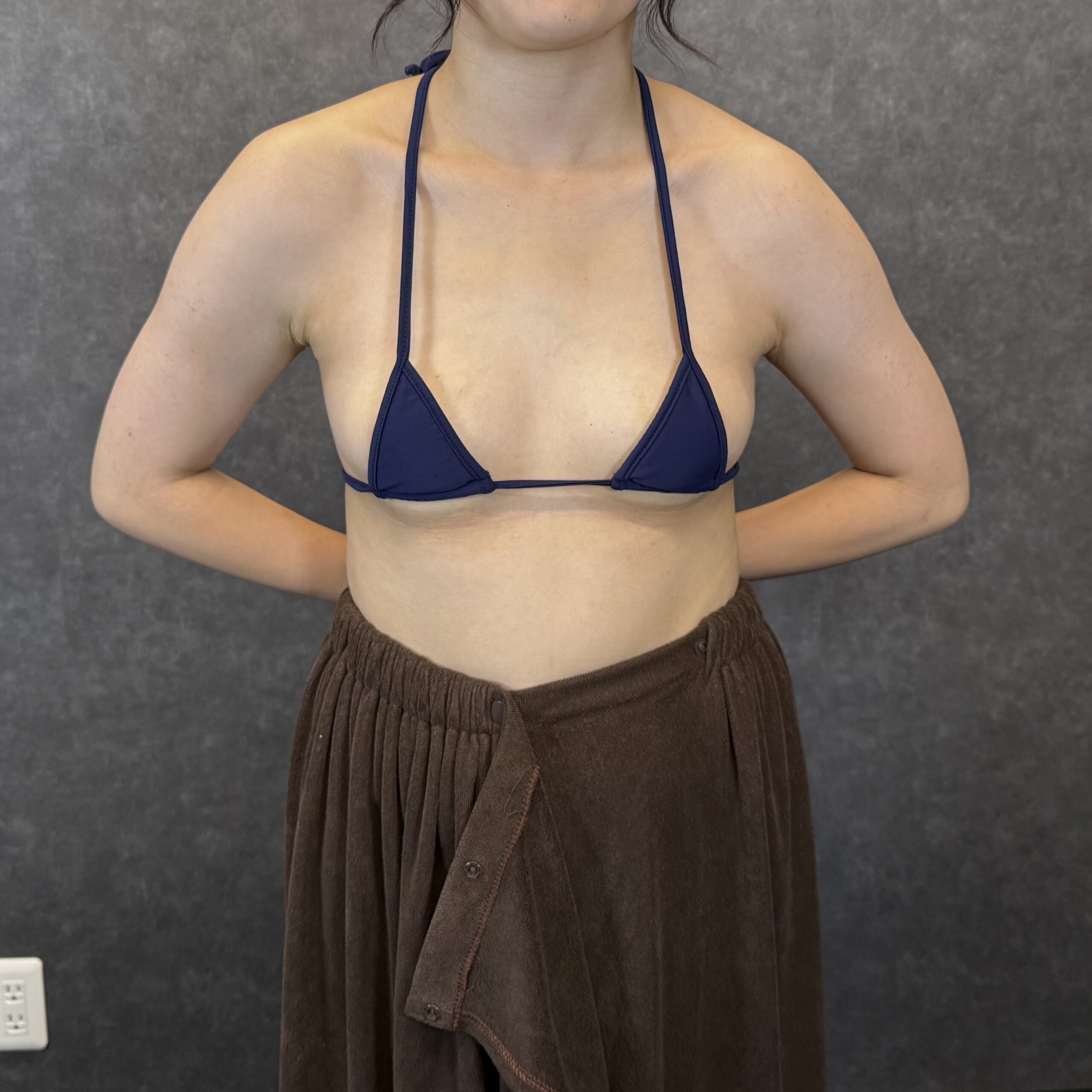
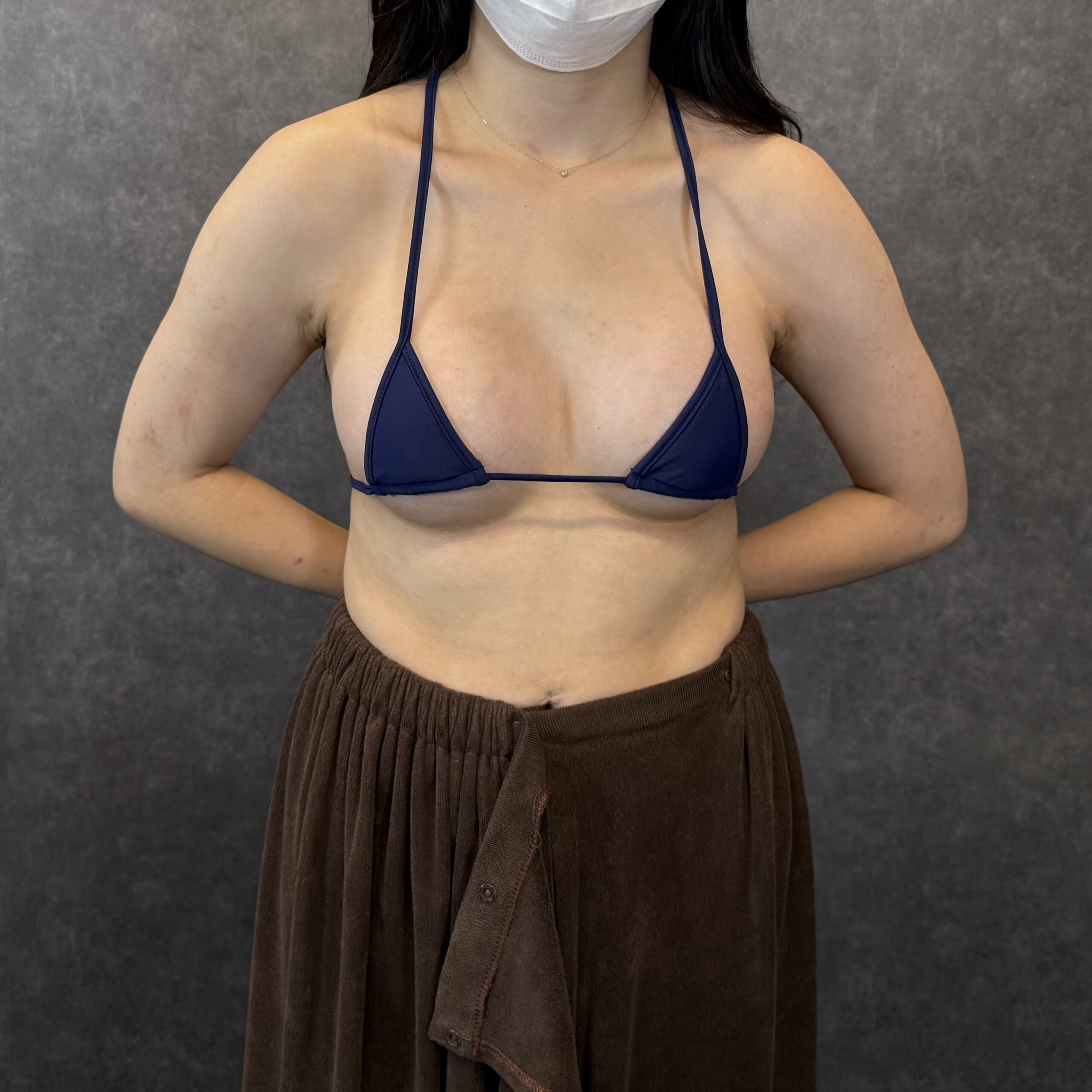
28-Year-Old Woman | 1 Week and 1 Month After Hybrid Breast Augmentation
This case features a 28-year-old woman who underwent hybrid breast augmentation combining silicone implants with autologous fat grafting.
We used Motiva Ergonomix2 Demi 285 cc implants, placed in the subglandular plane, together with autologous fat grafting of 110 cc to the right breast and 90 cc to the left breast.
An important point in this case is not simply the increase in breast volume, but how the breast shape and implant integration change from 1 week to 1 month after surgery.
Treatment Details
- Age: 28 years
- Procedure: Hybrid breast augmentation
- Implant: Motiva Ergonomix2 Demi
- Implant volume: 285 cc
- Implant placement: Subglandular
- Fat grafting: 110 cc right / 90 cc left
- Follow-up: 1 week / 1 month
Is Hybrid Breast Augmentation Fully Settled After 1 Month?
No. One month is still an early stage of recovery.
During the first few weeks after silicone implant or hybrid breast augmentation, swelling and skin tightness are still present. Implant position, breast shape, and softness can continue to change over time.
The breasts often begin to look more natural around the 3-month mark, while further softening and integration with the surrounding tissues may continue for 6 months to 1 year.
For this reason, at AVAN TOKYO, we do not evaluate the final result based only on photographs taken at 1 week or 1 month. Long-term postoperative changes are an important part of breast augmentation.
Do Implants Settle Faster in Patients Who Already Have More Natural Breast Tissue?
In this case, the patient already had a relatively good amount of natural breast volume and soft-tissue coverage before surgery.
When there is sufficient breast and soft tissue covering the implant, the implant contour may be less noticeable and the breast may appear naturally integrated at an earlier stage of recovery.
However, the same 285 cc implant can look very different in a patient with a low BMI and very thin breast tissue.
In other words:
A Motiva 285 cc implant does not produce the same result in every patient.
Chest width, existing breast tissue, subcutaneous fat thickness, skin elasticity, and the patient’s original breast size all influence implant selection and the final appearance.
Why Did We Choose Motiva Demi 285 cc?
Implant selection should never be based on volume alone.
For this patient, Motiva Demi 285 cc was selected to enhance breast projection while maintaining balance with her existing breast volume and overall body proportions.
At AVAN TOKYO, we evaluate the entire upper-body silhouette:
Shoulders → Clavicles → Décolletage → Breasts → Waist
Rather than simply asking, “How many cc should we use?”, we consider how much volume and forward projection are appropriate for the patient’s chest anatomy and overall body shape.
Why Combine an Implant With Fat Grafting?
Hybrid breast augmentation combines two components with different roles.
The silicone implant creates the foundation of volume and projection, while autologous fat is used to refine the surrounding soft-tissue contours.
In this case, we grafted:
110 cc to the right breast and 90 cc to the left breast.
The different volumes were selected according to the patient’s pre-existing asymmetry and the amount of correction required on each side.
With fat grafting, more is not necessarily better. Transplanted fat requires an adequate blood supply to survive. Excessive fat injection may increase the risk of fat necrosis, palpable lumps, and other complications.
What Changes Between 1 Week and 1 Month?
At 1 week, swelling and skin tightness can make the breasts appear higher, firmer, or more prominent.
By 1 month, swelling gradually decreases and the transition between the décolletage and breast contour may begin to look softer and more natural.
However, 1 month is still part of the healing process—not the final result.
With hybrid breast augmentation, there are two processes occurring simultaneously: the implant gradually settles within the surrounding tissues, while a portion of the transferred fat is naturally resorbed and the remaining fat becomes established.
Therefore, the breast volume seen at 1 month should not automatically be considered the final volume.
AVAN TOKYO’s Approach to Hybrid Breast Augmentation
The value of hybrid breast augmentation is not simply that “implant + fat creates a larger breast.”
The implant and transferred fat have different purposes.
The implant creates structure and projection.
The fat helps refine the surrounding contours and soft-tissue coverage.
By combining these techniques according to each patient’s chest anatomy, soft-tissue thickness, and overall body proportions, we aim to create a breast shape that harmonizes with the entire body rather than appearing isolated from it.
The surgical plan for a patient with substantial natural breast tissue can therefore be very different from that of a very slim patient with minimal soft-tissue coverage.
Rather than asking which implant size is most popular, we believe the more important questions are:
Which implant volume, profile, placement, and amount of fat grafting are appropriate for this individual patient’s anatomy?
That individualized approach is essential when aiming for a natural and balanced breast augmentation result.
Risks and Possible Complications
Potential risks associated with silicone breast implants include swelling, pain, bruising, infection, hematoma, seroma, asymmetry, capsular contracture, implant malposition, visible or palpable implant edges, implant deformation or rupture, and the possibility of future revision surgery.
Potential risks associated with fat grafting include swelling, bruising, asymmetry, partial fat resorption, palpable lumps, fat necrosis, calcification, and infection.
Implant settling, fat retention, recovery time, and final breast shape vary from patient to patient.
Surgeon: Dr. Shin Moriwaki (Director, AVAN TOKYO Ginza Liposuction Clinic)