


3 Months After Hybrid Breast Augmentation
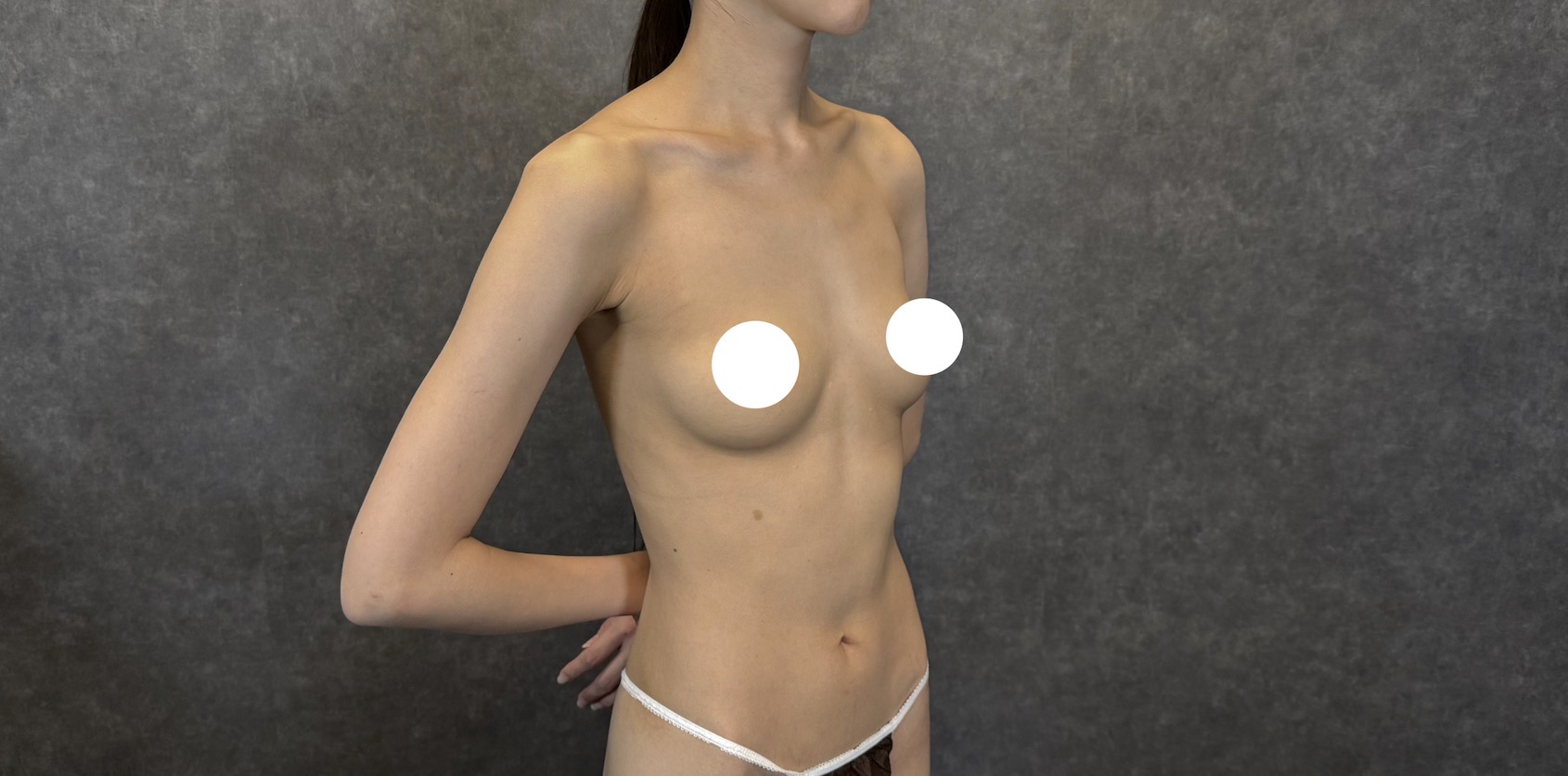
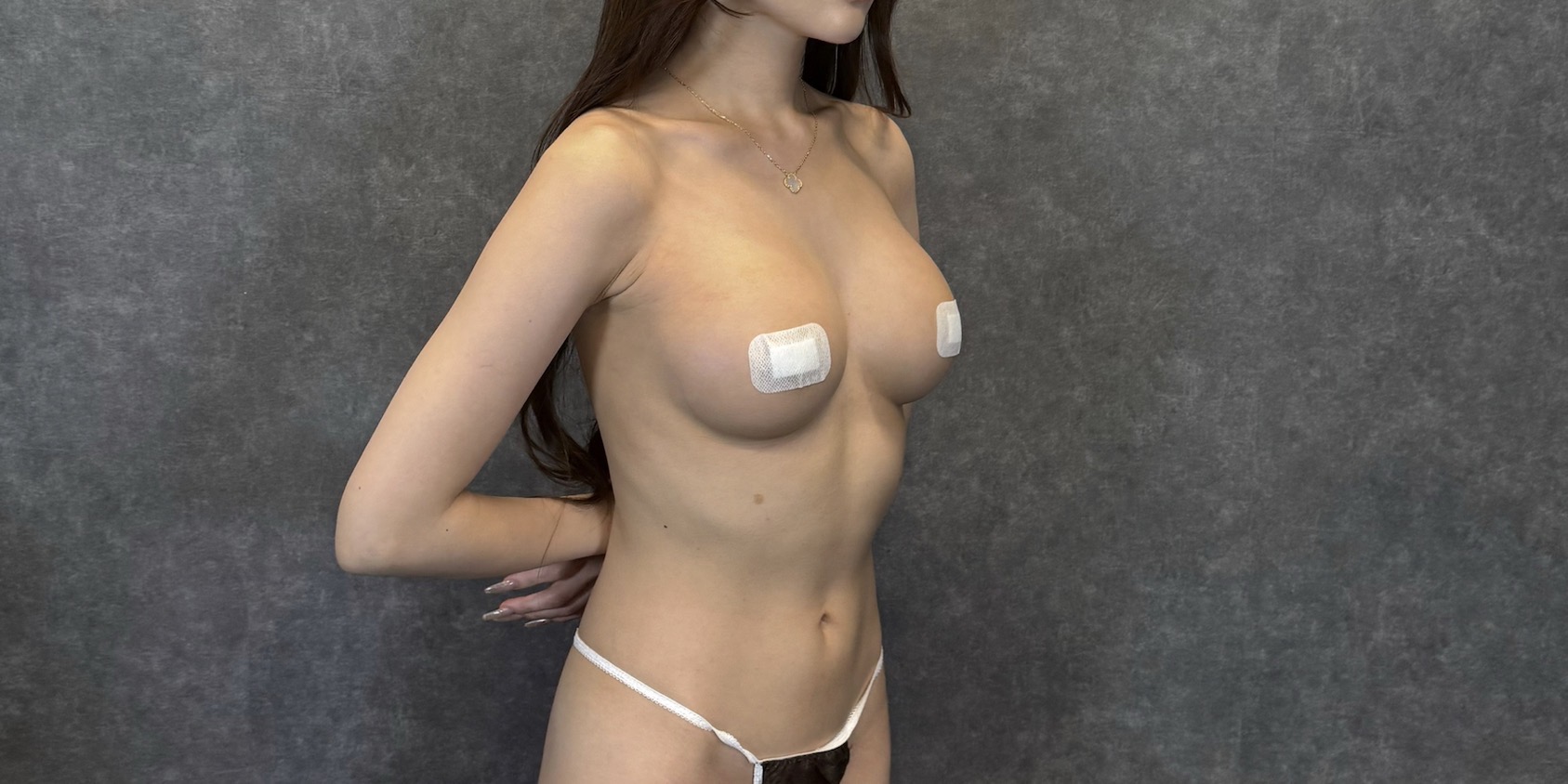
This patient is 3 months post-operative following hybrid breast augmentation, combining silicone implants with autologous fat grafting.
Case overview
| Procedure | Hybrid breast augmentation (silicone implant + fat grafting) |
|---|---|
| Sessions | 1 session |
| Cost | ¥1,500,000 (price at the time of treatment) Price list |
| Main risks | swelling, bruising, pain, edema, skin irregularities, asymmetry, scars, capsular contracture, rippling, lumps, calcification, etc. (see details below) |
| Doctor | Dr. Shin Moriwaki (Director) |
A Motiva Demi 250 cc implant was placed in the subglandular plane, and the implant was coated with the patient’s own fat using 100 cc for the right breast and 80 cc for the left breast.
The fat grafting volumes were carefully adjusted to improve breast symmetry while enhancing overall fullness, resulting in a softer, more natural-looking contour.
Hybrid breast augmentation combines the reliable volume provided by silicone implants with the natural contouring benefits of fat grafting. This approach can help soften the implant edges, improve upper-pole fullness, and create a more seamless transition, particularly in patients with pre-existing asymmetry or limited soft tissue coverage.
At 3 months, most swelling has resolved, and the breasts have begun to settle into a more natural shape and feel.
Potential Risks: Infection, hematoma, fat necrosis, palpable lumps, asymmetry, scarring, capsular contracture, changes in sensation, partial fat resorption, skin irregularities, and other potential complications.
Surgeon: Dr. Shin Moriwaki (Director, AVAN TOKYO Ginza Liposuction Clinic)
Risks and side effects
Liposuction may cause swelling, bruising, pain, edema, skin irregularities or tightness, asymmetry, pigmentation, and scars at the small incision sites. Rarely, complications such as infection, hematoma, numbness, or reduced sensation may occur.
Silicone implants may cause capsular contracture, implant rupture or malposition, rippling (waves of the implant visible on the surface), infection, and changes in nipple or breast sensation.
Fat grafting may cause calcification, lumps or cysts, individual variation in fat survival, asymmetry, and irregularities at the donor site.
These symptoms may occur during recovery and most improve over time, but their severity and the recovery period vary from person to person. If you have any concerns, please consult your doctor rather than judging for yourself.