


Is Fat Transfer Breast Augmentation Really Natural? — The Reality of Fat Survival and Lumps2026.06.06
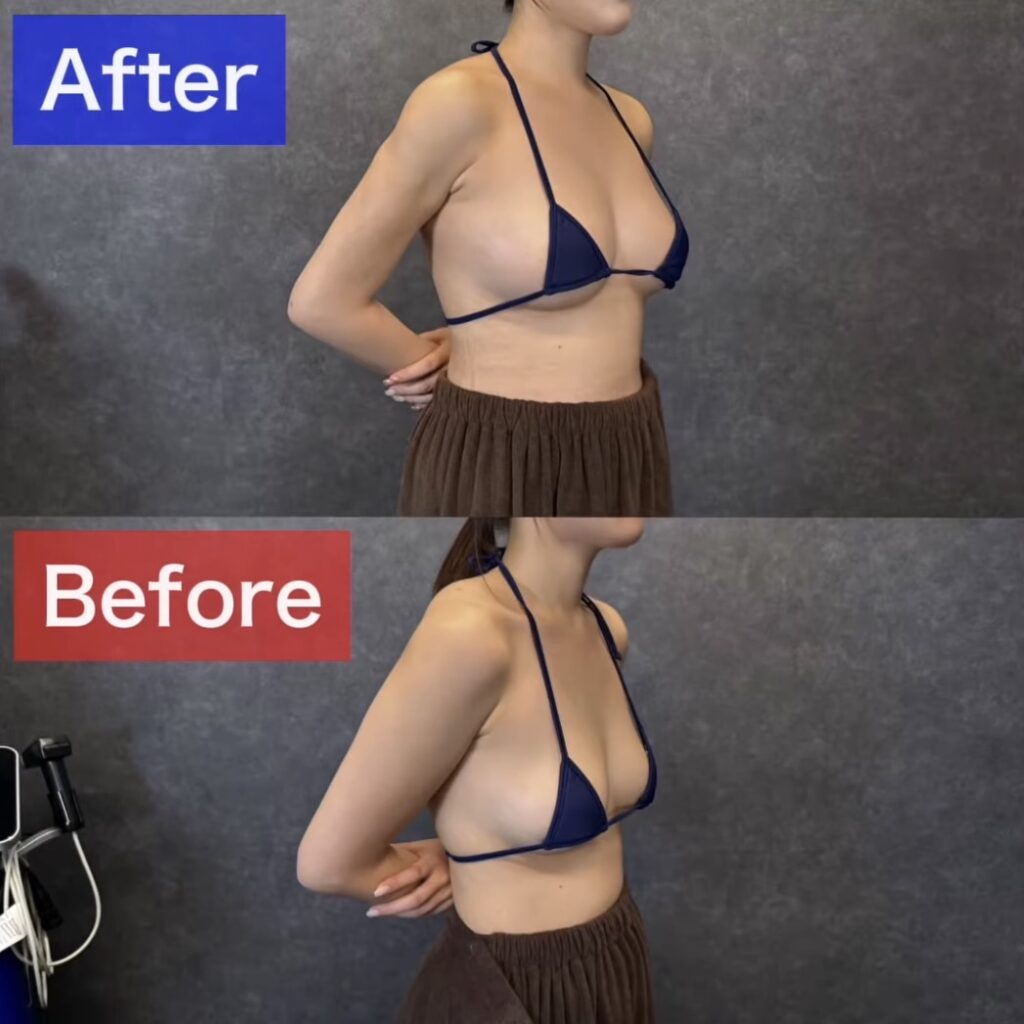
Fat transfer breast augmentation has become increasingly popular among patients who want a more natural enhancement without implants.
It offers several advantages:
- Natural appearance and feel
- Minimal scarring
- No foreign material
- Breast volume may increase with weight gain
However, fat grafting is also one of the most delicate procedures in cosmetic surgery.
The biggest challenge is that outcomes vary significantly from person to person.
Fat Survival Cannot Be Predicted Perfectly
One of the most difficult aspects of fat transfer breast augmentation is predicting how much of the transferred fat will survive.
Even when the same volume of fat is injected, some patients experience excellent fat survival, while others experience a lower survival rate.
A major reason is the quality of the harvested fat itself.
Some fat is soft and healthy, making it more likely to survive, while other fat contains more fibrous tissue and may have lower survival potential.
Recently, advances in medical technology have allowed us to estimate fat quality before surgery to some extent.
However, even today, it is impossible to predict fat survival with complete accuracy.
The Risk of Lumps Can Never Be Reduced to Zero
Another important consideration is the possibility of lumps (fat necrosis).
Even with meticulous technique and extensive experience, modern medicine cannot completely eliminate this risk.
The risk can be minimized through careful patient selection, surgical planning, and injection techniques.
However, it can never be reduced to zero.
Patients should understand this before undergoing surgery.
Surgery Is Only the Beginning
Fat transfer breast augmentation does not end when the surgery is completed.
In many ways, the postoperative period is just as important.
At AVAN TOKYO, we place great emphasis on long-term follow-up and communication with our patients.
Important factors include:
- Smoking cessation
- Calorie intake and nutritional management
- Anti-inflammatory dietary habits
- Monitoring for signs of infection
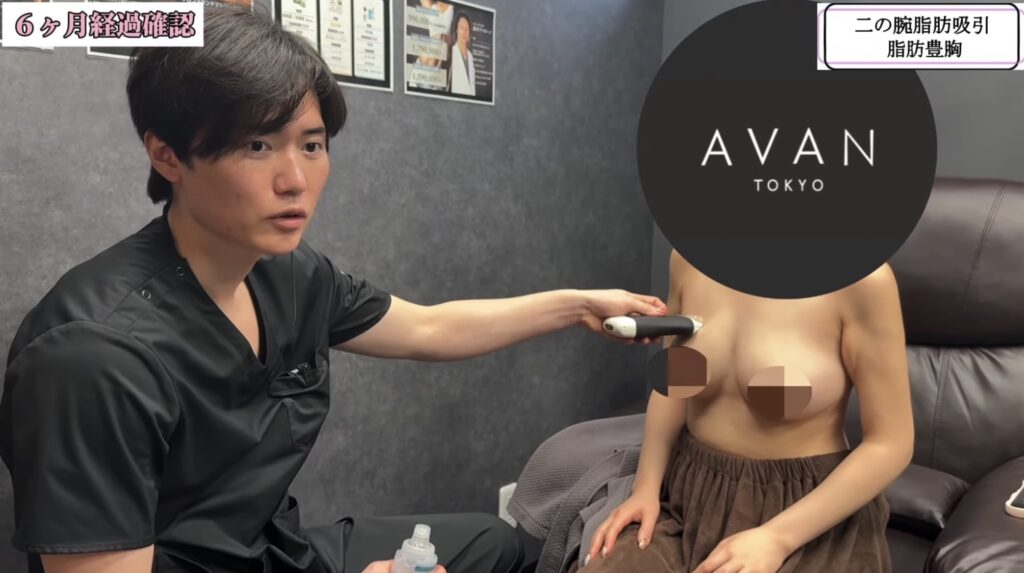
- Ultrasound examinations to evaluate fat survival and detect lumps
Successful outcomes require teamwork between the clinic and the patient.
Why Postoperative Care Matters
Personally, I believe that procedures such as facial liposuction or arm liposuction can be performed abroad if there is a surgeon you truly trust.
However, breast augmentation and large-volume liposuction are different.
The quality of postoperative care can significantly influence the final result.
In other words:
Choosing who performs the surgery is important.
Choosing who follows your recovery is equally important.
The Advantages of Fat Transfer Breast Augmentation
Despite its challenges, fat transfer breast augmentation remains a wonderful procedure.
Compared with implants, it offers:
- A more natural appearance
- Less obvious signs of surgery
- Increased breast volume when body weight increases
- No implanted foreign material
At the same time, it is highly individualized and difficult to predict perfectly.
This is why we believe that honest communication, realistic expectations, and long-term follow-up are essential.
At AVAN TOKYO, surgery is not the finish line.
It is the beginning of a long-term partnership focused on achieving the safest and most satisfying result possible.
AVAN TOKYO GINZA LIPOSUCTION CLINIC