


Abdominal Fat Grafting Breast Augmentation | Why the Entire Abdomen Is Chosen as the Donor Site2026.10.30
Many patients who wish to add natural volume to their breasts also want to refine their abdominal contour at the same time. Abdominal fat grafting breast augmentation harvests subcutaneous fat from the abdomen and injects it into the breasts, allowing both the bust and the waistline to be designed in a single surgery.

The short answer
In abdominal fat grafting breast augmentation, choosing the entire abdomen as the donor site makes it easier to shape both breast volume and the waistline in a single surgery and to secure sufficient fat for harvest. The upper, lower, and lateral abdomen are suctioned as one continuous area to prevent step-offs, and graft take and final shape vary by individual.
This article explains, from a surgeon’s perspective, the medical reasons for choosing the entire abdomen as the donor site, why the harvested volume differs from the injectable volume, how the injection layers are planned, and the possible risks, together with an actual case from our clinic.
Medical Reasons to Choose the Entire Abdomen as the Donor in Abdominal Fat Grafting Breast Augmentation
In short, for patients who want to add breast volume while also refining the waistline, treating the entire abdomen as a single donor area is a reasonable option. By handling the upper abdomen, lower abdomen, and flanks as one continuous zone, we can secure sufficient harvest volume while avoiding step-offs at the donor site.
[Comparison of donor sites for fat grafting breast augmentation]
| Entire abdomen | Thighs (circumferential) | Arms & back | |
|---|---|---|---|
| Pros | – Easy to secure harvest volume – Can create a waist curve – Compression garment covers one area |
– Easy to secure harvest volume – Firmer fat is easier to shape – Lower body is also contoured |
– Refines the upper body silhouette – Shoulders and back become slimmer – Harvest volume is limited by site |
| Cons | – Volume is limited in slim builds – Lower abdomen requires step-off prevention design – Prior pregnancy with skin laxity can prolong contracture |
– Wide compression area increases burden – Firm fat needs careful dispersion during injection |
– Harvest volume is small so large size-up is difficult – Better for correcting asymmetry or fine shaping |
| Who it suits | – Those who also want to reduce abdominal fullness – Those who want to shape the waist |
– Volume concentrated in the lower body – Tight-feeling thighs |
– Those focused on upper body contour – Those who feel their arms are thick |
Reason 1: The abdomen allows harvesting from a wide area
Subcutaneous fat in the abdomen is broadly distributed across the trunk, which generally allows a larger total harvest in a single surgery than other sites. In fat grafting breast augmentation, the harvested fat is processed by centrifugation or sedimentation to remove water and non-viable components, so the injectable volume is smaller than the harvested volume. Securing enough injectable fat for meaningful size-up requires a solid harvest volume, and the abdomen is well suited to meet this condition.
Reason 2: Breast and waistline can be designed together
If breast volume increases while abdominal fullness remains, the overall balance can look off. Because the donor abdomen itself becomes slimmer in this procedure, the breast and waistline can be designed together. Including the flanks allows us to adjust both the frontal waist curve and the lateral waistline.
Reason 3: Access incisions can be placed in inconspicuous locations
Donor-site access incisions are placed in the groin creases and inside the navel. The groin creases are easily hidden by underwear, and the navel is a physiologic depression where scars tend to be inconspicuous. From these access points, a cannula can be advanced forward, back, and to each side, allowing the upper abdomen, lower abdomen, and flanks to be suctioned from one access, keeping the number of incisions low while shaping the whole abdomen evenly.
Our Clinic Case
A case where abdominal fat was used to shape both breast and waistline (female, 20s)
We present a case of a woman in her 20s who wished to add soft, natural breast volume and also had concerns about her abdominal contour, for whom we proposed abdominal fat grafting breast augmentation. Preoperatively, fullness remained in the lower abdomen with fat also deposited over the flanks.
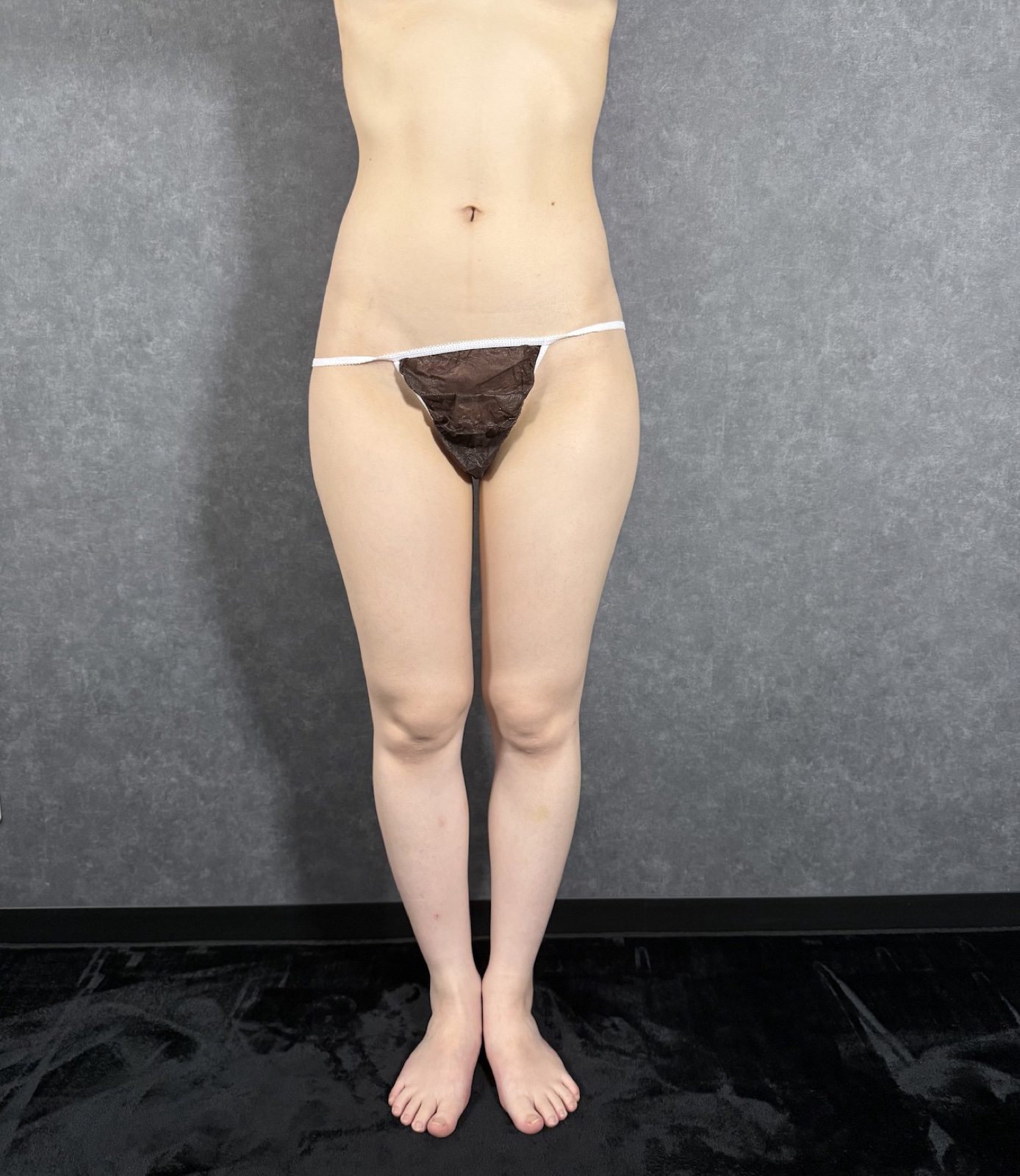
During surgery, tumescent anesthetic solution was infiltrated across the entire abdomen, and liposuction was performed treating the upper abdomen, lower abdomen, and flanks as one continuous area. Suctioning only part of the abdomen tends to leave step-offs, so we treat the abdomen as a single canvas and adjust the suction volume according to the thickness of fat at each sub-area.
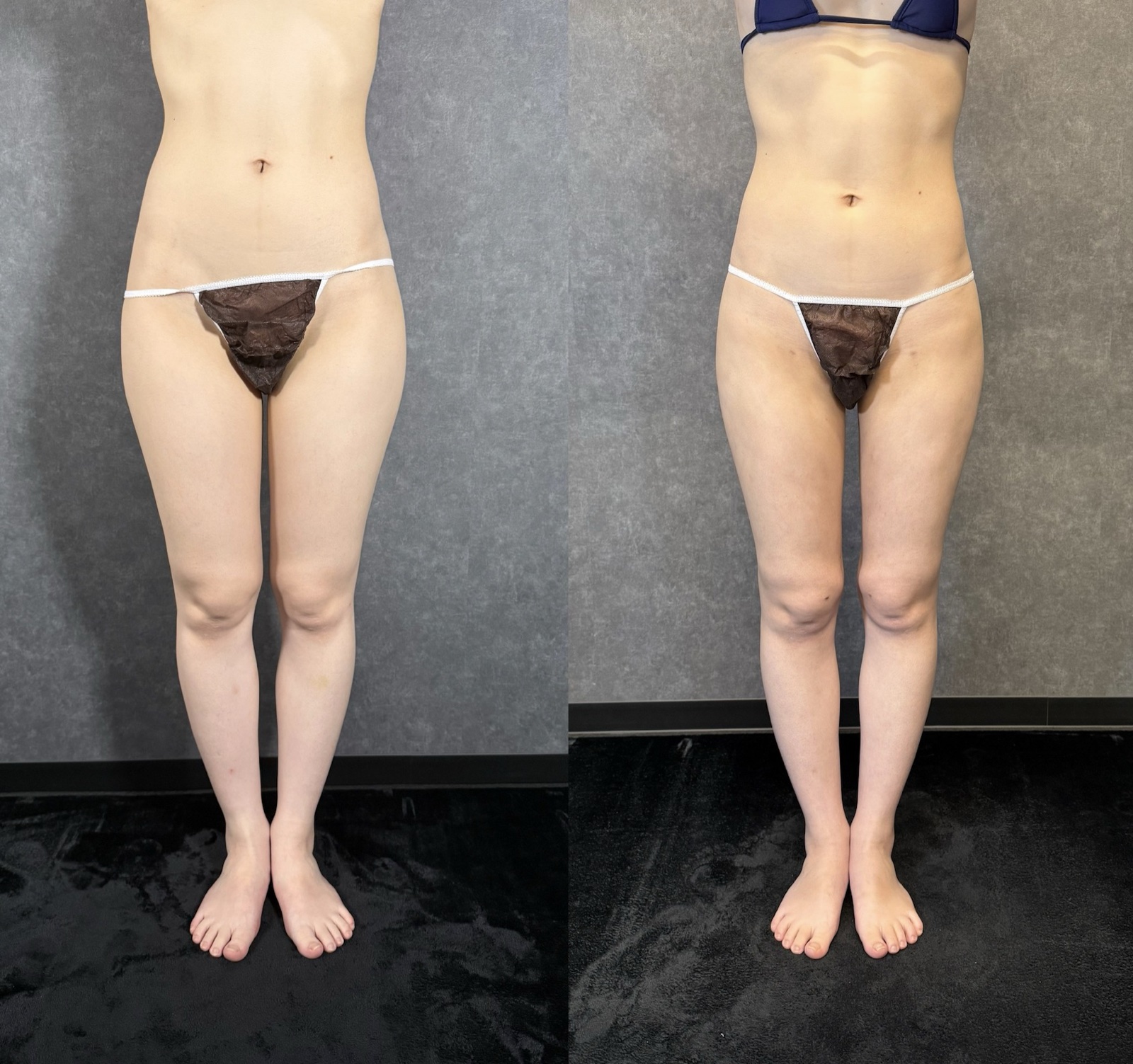
The harvested fat was processed by brief low-speed centrifugation to remove water, anesthetic fluid, and non-viable components before injection. In general, about 70% of the harvested volume becomes injectable, which is why the harvested and injected amounts do not match.
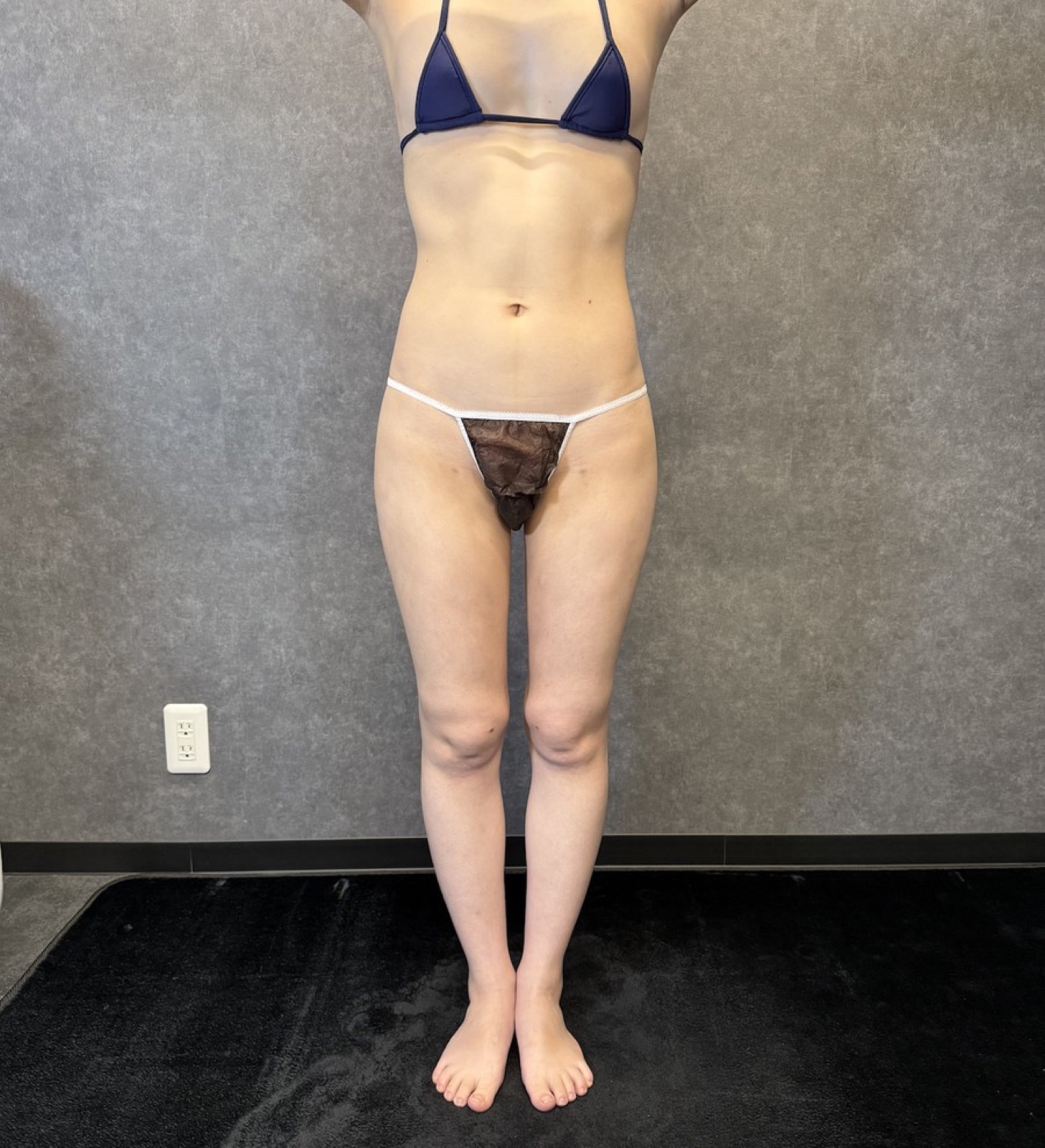
Injection was performed with the fat distributed across subglandular, submuscular (behind the pectoralis major), and subcutaneous planes, delivered in small aliquots while changing direction. Depositing fat in a single bolus can lead to fat necrosis, induration, or calcification, so we disperse the injection by varying layer and direction as a core design principle.
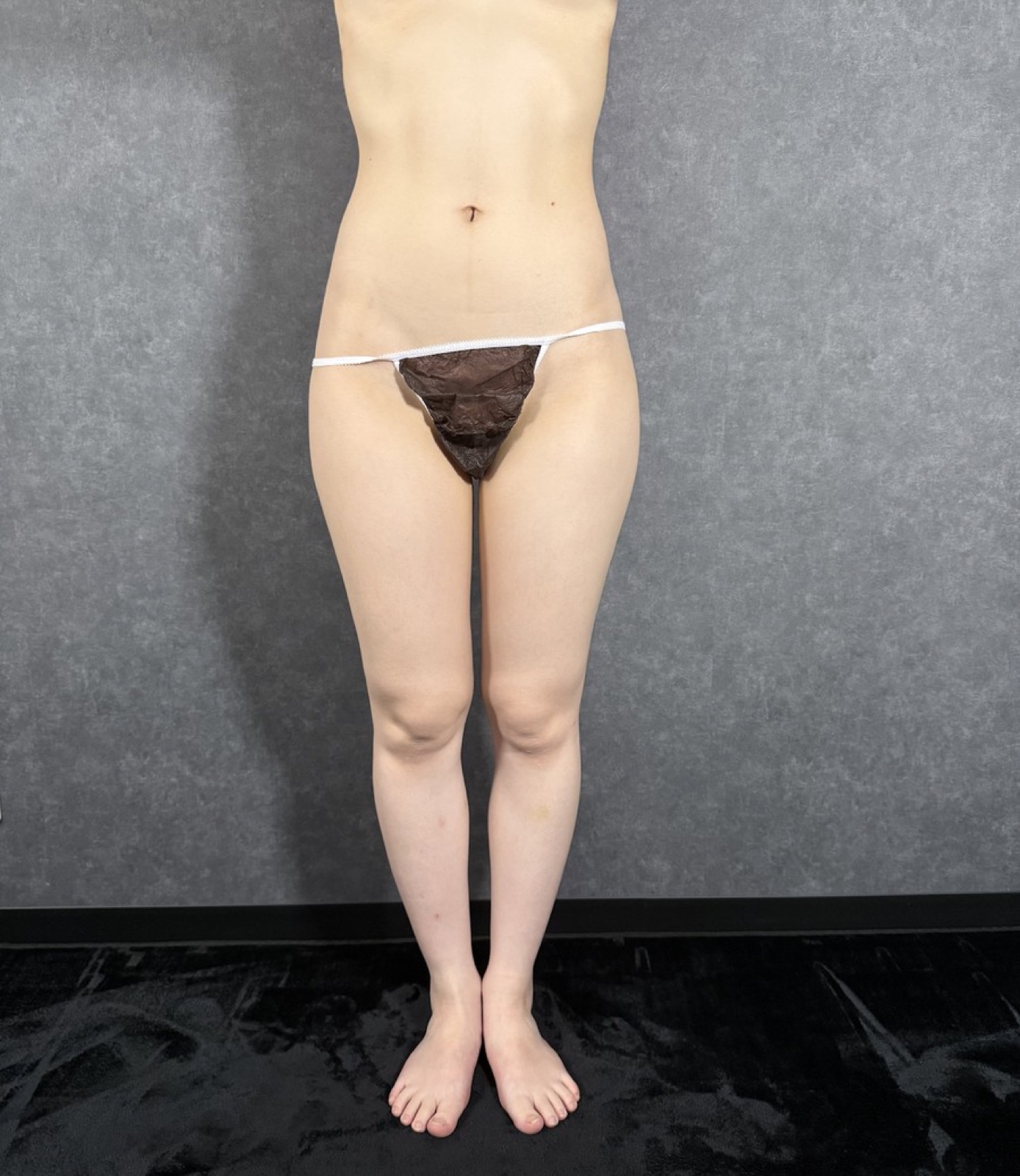
Based on the preoperative shape and asymmetry of the breasts, we adjusted the right and left injection amounts. When asymmetry exists, injecting equal volumes tends to leave the difference, so we design the procedure to vary both the volume and the layer distribution per side.
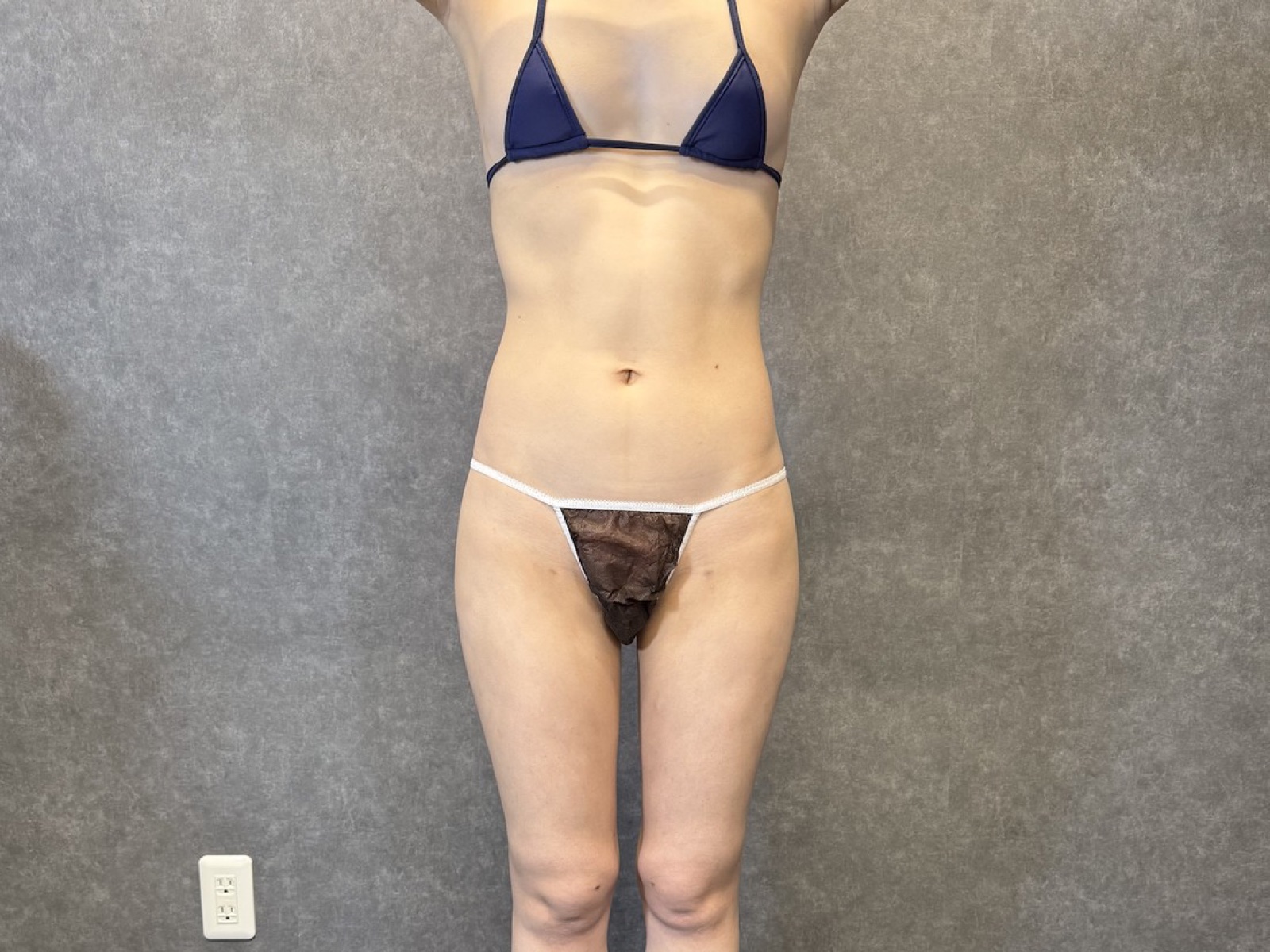
At 6 months postoperatively, the breasts retained softness with a natural added volume, while the lower abdominal fullness had settled and the frontal waist curve as well as the lateral waistline were refined.
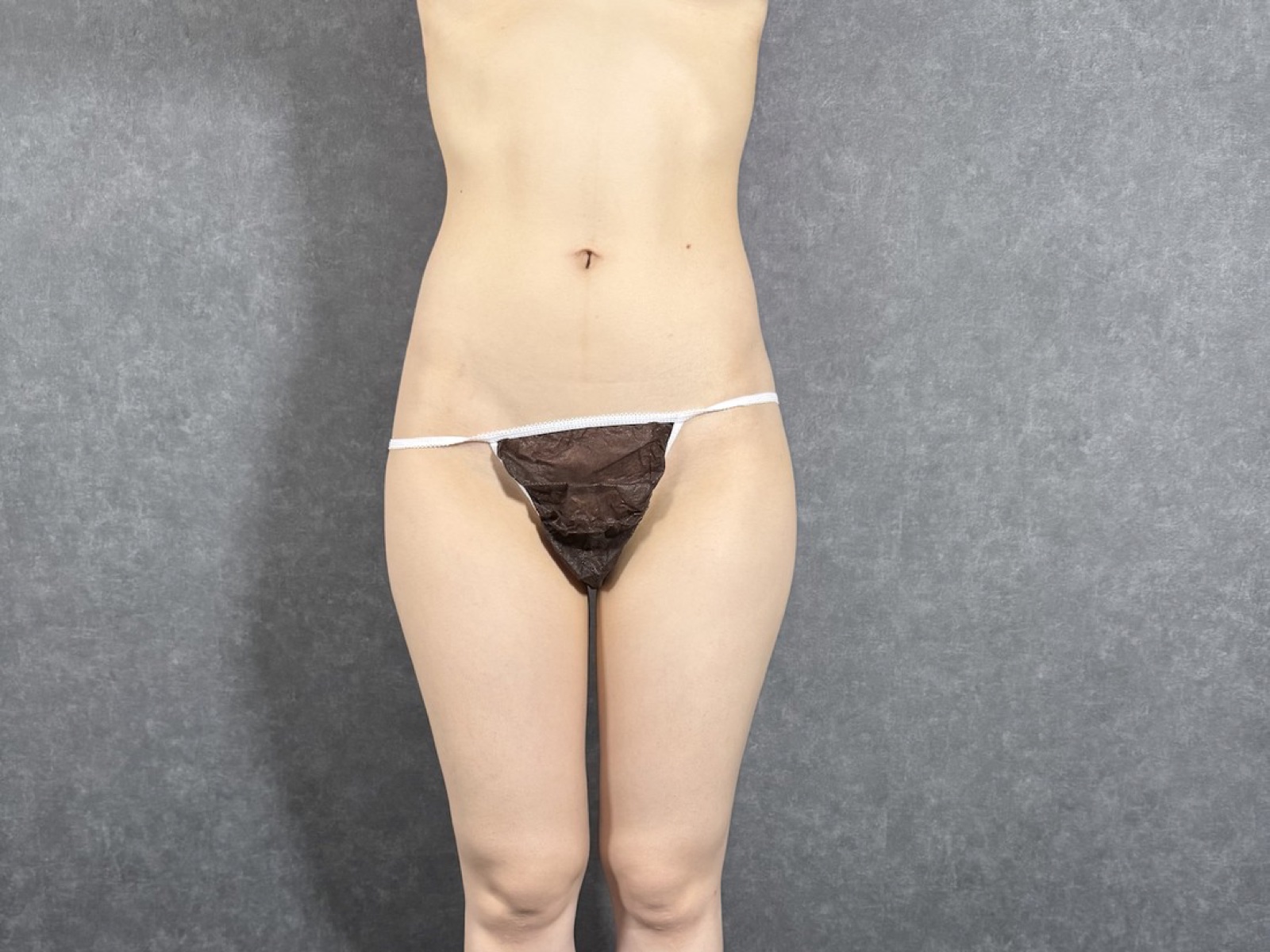
The injected fat integrates with the surrounding tissue over several months as graft take progresses. The proportion of fat that survives varies by individual, and not all of the injected volume remains.
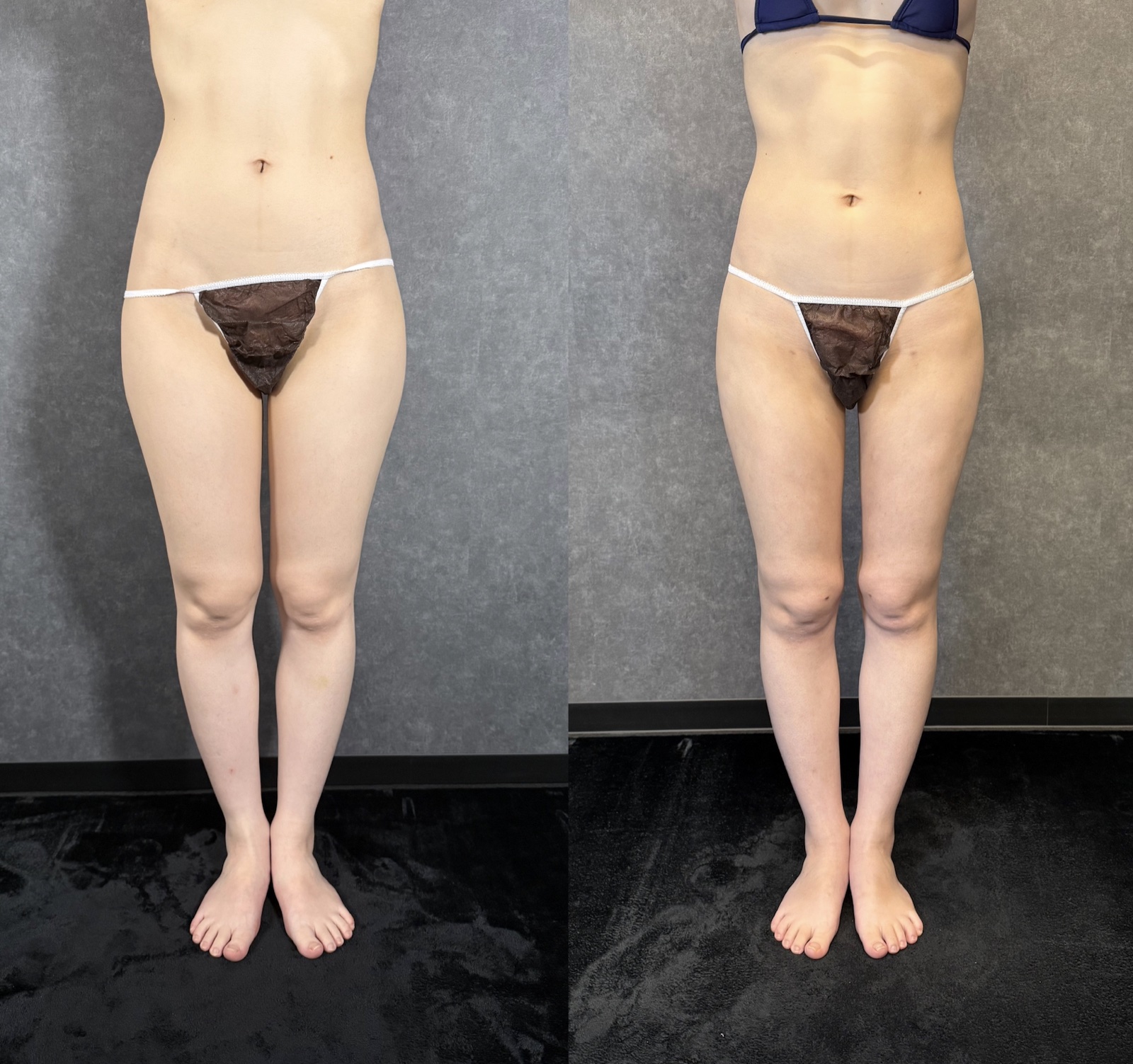
In the donor abdomen, contracture – a sensation of tightness and firmness in the skin – typically peaks around 1 month postoperatively and usually settles within about 3 months. On the abdomen, it may continue for up to about half a year.
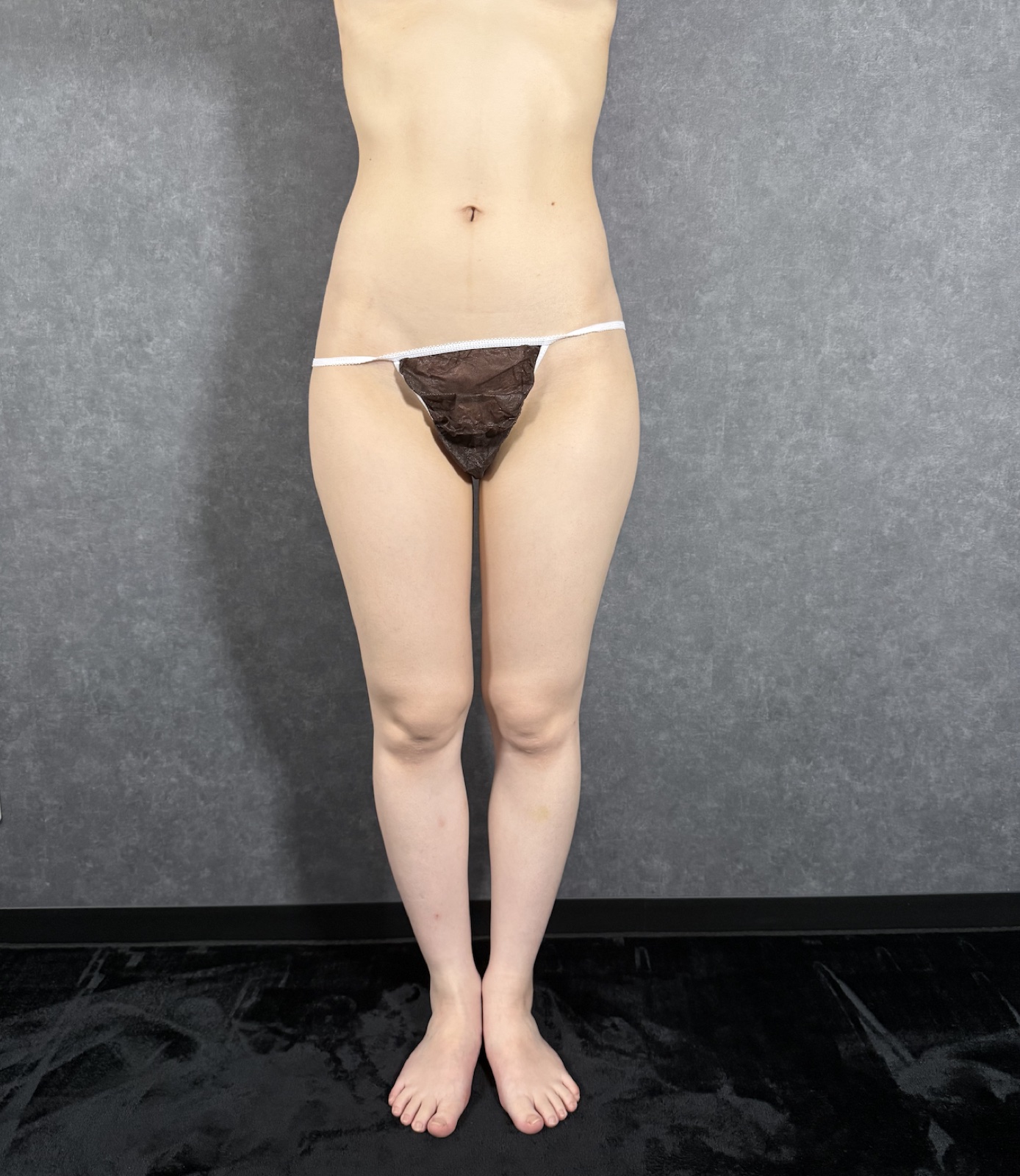
Postoperatively, the trunk compression garment was worn 24 hours a day for the first week, after which the patient continued to wear it at home, during sleep, and whenever practical until swelling and bruising subsided.
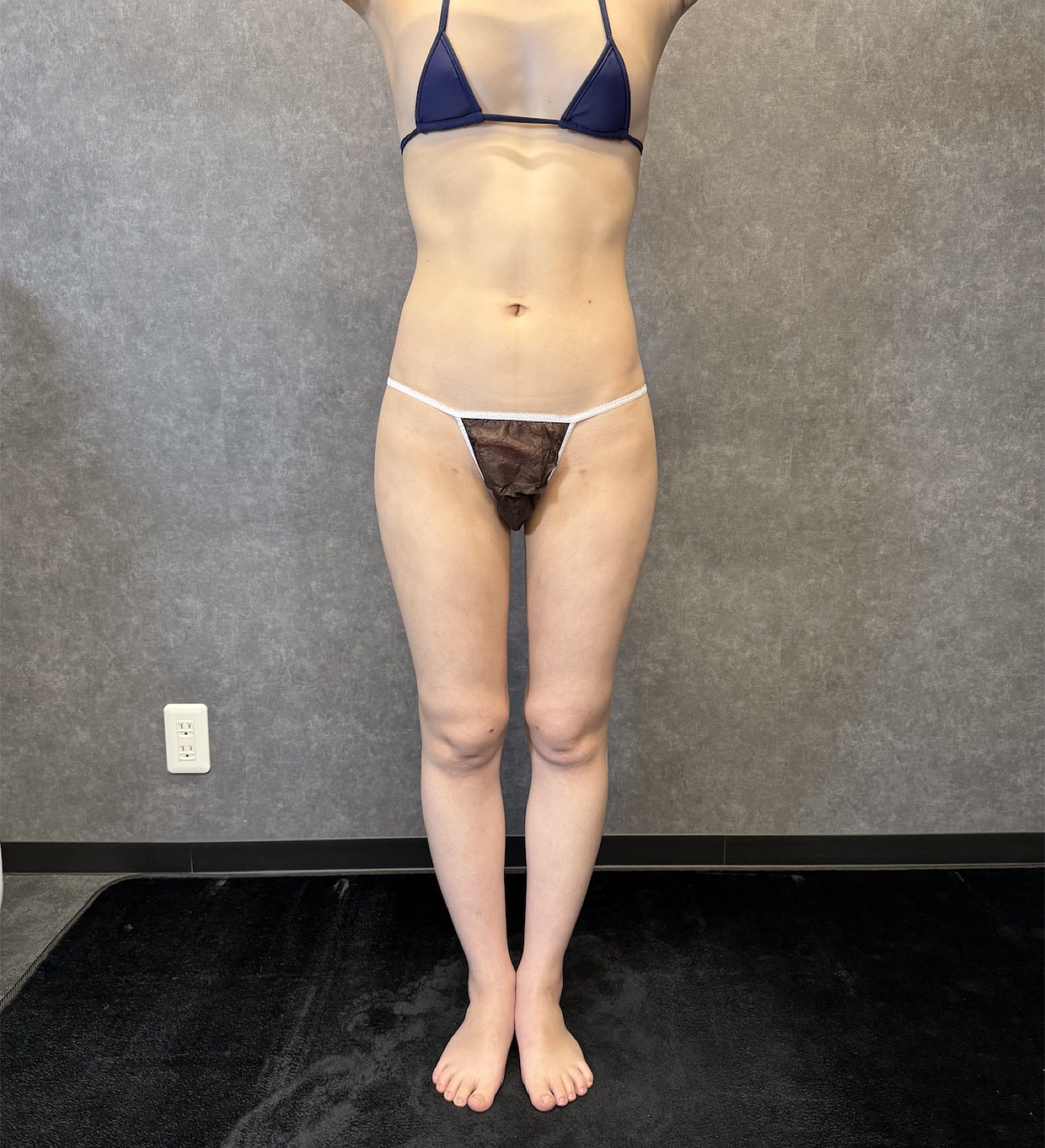
| Procedure | Fat grafting breast augmentation (fat harvested from the entire abdomen) |
|---|---|
| Details | Liposuction from the upper abdomen, lower abdomen, and flanks; harvested fat processed by centrifugation and injected into subglandular, submuscular, and subcutaneous planes |
| Photo timing | 6 months postoperatively |
| Cost | Please see the pricing page for fees (final amount is confirmed at consultation) |
| Main risks and side effects | Bruising, swelling, contracture, induration, lumps, calcification, asymmetry, donor-site step-offs, infection, etc. |
Effects vary by individual, and this photograph is one example.
How Is the Volume of Fat Injected into the Breast Determined?
It is determined by injectable volume, not by harvested volume
The amount of fat injected into the breast is determined not by the volume harvested through liposuction, but by the injectable volume after water, anesthetic fluid, and free fatty acids are removed from the harvested fat. About 70% of the harvested volume is a general reference, which varies with body type and fat quality.
The injected volume is not necessarily the same on both sides. Based on the preoperative breast size, shape, and asymmetry, we first decide the total injection volume for both breasts, then adjust the allocation per side.
Can the Injected Fat Form Lumps?
Layered small-volume dispersed injection reduces the risk
Some injected fat does not establish blood supply and is absorbed, and when large volumes are concentrated in one spot, fat necrosis, induration, and calcification can occur and lead to palpable lumps.
To avoid this, we distribute the fat across subglandular, submuscular, and subcutaneous planes, injecting small aliquots while varying direction so that fat does not concentrate in one place. Prior to surgery, we confirm there are no breast lumps or cysts, and periodic follow-up is important afterward.
What Are the Possible Risks and How Are They Prevented?
Bruising, induration, asymmetry, and donor-site step-offs
This procedure carries risks at both the donor site (abdomen) and the recipient site (breast). At the donor site, the main risks are bruising, swelling, contracture, asymmetry, step-offs, and infection. At the recipient site, there is a risk of induration, lumps, calcification, infection, asymmetry, and poor graft take.
To prevent step-offs, it is important to design the entire abdomen as one zone and adjust the suction volume to the thickness of fat in each area. To prevent lumps, the fundamental technique is to disperse the injection across layers in small aliquots. For safety standards in cosmetic surgery, please also refer to information from the Japan Society of Aesthetic Surgery (JSAS).
How Long Is the Downtime?
Pain 2 to 3 days, swelling 2 to 3 weeks, contracture peaking around 3 months
Pain peaks around 2 to 3 days postoperatively and typically settles within about 10 days. Swelling and bruising ease over 2 to 3 weeks. Abdominal contracture usually peaks around 1 month and settles within about 3 months, though on the abdomen it can continue for up to about half a year.
Showering is possible from the next day, while bathing, saunas, pools, the sea, hot springs, and vigorous exercise (gym, running) can be resumed from 2 weeks postoperatively. The trunk compression garment is worn 24 hours a day for the first week, and afterward continued at home and during sleep as practical until swelling subsides. Recovery varies by individual and will be guided at follow-up.
Abdominal Fat Grafting Breast Augmentation Starts with Designing the Entire Abdomen
Abdominal fat grafting breast augmentation uses subcutaneous fat from the abdomen to add breast volume and is chosen by patients who value softness and natural results. The key to this procedure lies in two design decisions: how the entire abdomen is treated as the harvest zone, and how the harvested fat is injected into which layers.
Suctioning only part of the abdomen leads to donor-site step-offs, while bolus injection leads to lumps. To design both the breast and the waist together, the basic plan is to treat the upper abdomen, lower abdomen, and flanks as one continuous zone, and to disperse the injection in small aliquots across subglandular, submuscular, and subcutaneous planes.
Final appearance and graft take vary by individual. Please start with a consultation to assess your body type, breast shape, and abdominal fat before discussing the design suited to you. Browse related columns on liposuction and fat grafting breast augmentation here.
Frequently Asked Questions
- Doesn’t centrifugation reduce the amount of fat?
-
What is removed is water, anesthetic fluid, free fatty acids, and other components that do not survive as grafts. Removing these prepares fat that is more likely to establish a blood supply and less likely to cause induration or calcification. Centrifugation is performed at low speed for a short time to minimize damage to fat cells while yielding fat suitable for injection.
- Can slim patients undergo abdominal fat grafting breast augmentation?
-
It may be possible, but with a limited harvest, the amount that can be injected into the breast is also limited. When the available harvest is small in slim patients, options include extending the donor area to other sites, or considering hybrid breast augmentation combining fat with a silicone implant. We will advise after confirming your fat volume during consultation.
- How long should the abdominal compression garment be worn?
-
At our clinic, the trunk compression garment is worn 24 hours a day for 1 week postoperatively, and afterward we recommend continuing to wear it at home, during sleep, and whenever practical until swelling and bruising subside. Continued compression during the contracture period helps the abdominal line settle more smoothly.
- Does it affect pregnancy or breastfeeding?
-
Fat grafting breast augmentation does not involve directly removing the mammary glands or ducts. However, depending on the injection layer and volume, imaging studies (mammography, ultrasound) may show calcification from fat necrosis, so it is useful to inform providers at health checkups that you have had fat grafting breast augmentation.
- What equipment is used at your clinic?
-
We use a conventional liposuction device, and when softening the fat before suction is judged helpful, we may add an ultrasound device (LSSA, Elsa) on request. We do not have a full-time anesthesiologist on staff, but a partner anesthesiology specialist can be arranged on request.
Free consultation available
1 min walk from Exit 6, Ginza-itchome Station / Open 10:00–19:00
About the supervising physician

Director, AVAN TOKYO Ginza Liposuction Clinic
Graduated from Tokushima University School of Medicine. Worked at Tokushima University Hospital, Tokyo Chuo Cosmetic Surgery and Gracia Clinic before taking up the current position. Over 5,000 liposuction procedures performed (including previous positions).
Member, Japan Society of Aesthetic Surgery (JSAS) / Member, American Academy of Aesthetic Medicine / ECFMG Certificate