


Why Arm Liposuction Before Dieting Prevents Skin Sagging2026.11.25
Many people think: “I should lose weight first, then get liposuction.”
However, when you lose a significant amount of weight through dieting, the skin on the arms can stretch out first — leaving sagging that is difficult to reverse.
This article explains how the order of upper arm liposuction and dieting affects skin laxity, using a case with approximately 6 months of follow-up.

The short answer
Getting upper arm liposuction first, then losing weight through dieting, tends to result in less skin sagging because fat cells are reduced while the skin still retains its elasticity. Individual results vary.
Arm Liposuction Before Dieting Helps Prevent Sagging
My view is straightforward: getting upper arm liposuction first, then dieting to manage body weight, is the approach that makes skin sagging less likely to occur.
If you diet significantly before liposuction, the skin has already been stretched by the time we perform the procedure — which makes residual sagging harder to avoid.
【Comparison by Procedure Order】
| Liposuction → Diet | Diet → Liposuction | Diet only | |
|---|---|---|---|
| Skin sagging risk | ・Skin has elasticity remaining when liposuction is performed ・Less likely to sag |
・Skin has already stretched before liposuction ・Sagging more likely to remain |
・Rapid weight loss can cause sagging ・Fat cell count does not change |
| Benefits | ・Less likely to regain weight ・Diet after surgery adds to the slimming effect |
・Easier to plan liposuction volume after reaching target weight | ・No cost ・Less physical burden |
| Best for | ・Those planning to lose weight after surgery ・Those wanting to minimize skin sagging |
・Those who prefer to manage weight before considering surgery | ・Those with minimal subcutaneous fat where lifestyle changes may be enough |
Liposuction → Diet
- Skin sagging risk
- ・Skin has elasticity remaining when liposuction is performed
・Less likely to sag - Benefits
- ・Less likely to regain weight
・Diet after surgery adds to the slimming effect - Best for
- ・Those planning to lose weight after surgery
・Those wanting to minimize skin sagging
Diet → Liposuction
- Skin sagging risk
- ・Skin has already stretched before liposuction
・Sagging more likely to remain - Benefits
- ・Easier to plan liposuction volume after reaching target weight
- Best for
- ・Those who prefer to manage weight before considering surgery
Diet only
- Skin sagging risk
- ・Rapid weight loss can cause sagging
・Fat cell count does not change - Benefits
- ・No cost
・Less physical burden - Best for
- ・Those with minimal subcutaneous fat where lifestyle changes may be enough
Reason 1: Skin Elasticity Is Preserved at the Time of Surgery
When subcutaneous fat is still present, the skin is supported from beneath and maintains firmness. By removing fat cells first through liposuction, the skin gradually contracts and conforms to its new shape.
This contraction process is what helps keep sagging to a minimum.
Reason 2: Dieting After Surgery Adds to the Result
After liposuction reduces the number of fat cells, dieting causes the remaining fat cells to shrink — resulting in further slimming.
Having liposuction first puts you in the best position to benefit from dieting afterward.
In the reverse order, fat cells shrink and skin stretches first, making it harder for skin to recover its shape even after the liposuction.
Reason 3: Age and Skin Contractility
Younger skin tends to have more collagen and elastic fibers in the dermis, giving it greater contractility.
To take full advantage of this elasticity, undergoing liposuction before major weight fluctuations can make a meaningful difference in outcome.
The Japan Society of Aesthetic Surgery emphasizes that age and skin condition should be comprehensively evaluated in aesthetic surgical planning.
Our Case
Case of Defined Arm Line (Female)
This patient underwent full-circumference upper arm liposuction combined with an RF treatment (Morpheus 8 Burst).
At the approximately 6-month follow-up, the arm contour was noticeably tighter throughout, with the rounded fullness gone even when viewed from the side.
Approximately 6 months after surgery (After)
| Procedure | Full circumference upper arm liposuction / Morpheus 8 Burst |
|---|---|
| Details | Full-circumference upper arm liposuction combined with RF treatment (Morpheus 8 Burst) |
| Photo timing | Approximately 6 months post-op |
| Cost | Please refer to our price page for details (final cost confirmed at consultation) |
| Main risks / side effects | Bruising, swelling, fibrosis, skin laxity, asymmetry, infection, temporary numbness, etc. |
Results vary by individual. Photos are representative examples only.
Will Dieting After Liposuction Reduce the Results?
Remaining Fat Cells Shrink, Often Leading to Further Slimming
The fat cells removed by liposuction do not return. When weight is lost through dieting afterward, the remaining fat cells in the treated area shrink — often producing even more definition.
That said, fat can accumulate in untreated areas, so weight management after surgery remains important.
How Long Is the Downtime?
Pain Peaks at Days 2–3. Swelling Settles Over 2–3 Weeks
Pain is most intense in the first 2–3 days and tends to ease within about 10 days. Bruising and swelling resolve over 2–3 weeks.
Fibrosis in the arm (firmness and a bumpy texture) typically peaks around 1 month post-op and gradually settles over about 3 months. Some desk-job patients return to work the next day, but pain levels vary individually.
Strenuous exercise and bathing can resume from 2 weeks post-op.
How Does Age Affect Skin Sagging Risk?
There Is a Significant Difference Between the 20s and Late 40s
Younger skin tends to have more collagen and elastic fibers in the dermis and contracts more readily after liposuction.
The ability to remove a reasonable volume without significant sagging depends largely on this skin quality.
From the late 40s onward, the same volume of liposuction carries a higher risk of residual sagging — making combined RF treatment or surgical lift options worth considering.
Tailoring the plan to age and skin condition is what makes the difference in outcomes.
What Are the Potential Risks and Complications?
Fibrosis, Skin Sagging, and Temporary Numbness Are the Main Concerns
The main risks of upper arm liposuction include bruising, swelling, fibrosis, skin laxity, asymmetry, and infection. In rare cases, temporary numbness in the hand can occur, though it typically resolves with time.
Fibrosis may feel like hardness or bumpiness around 1 month post-op, and can be eased with appropriate massage and compression garment use. Post-operative self-care and follow-up significantly influence the final result.
Start with the Right Order to Prevent Arm Sagging
“Lose weight first” is understandable logic — but significant weight loss before surgery stretches the skin, and once it has been stretched, it is harder to restore after liposuction.
The optimal order of arm liposuction and dieting depends on individual factors such as skin elasticity, age, and target weight. There is no single correct answer for everyone.
We encourage you to come in for a consultation to discuss your skin condition and find the approach that suits you best. View our full column archive here
Frequently Asked Questions
- Will dieting before surgery increase the amount that can be removed?
-
Thicker subcutaneous fat before dieting may allow for a higher volume of removal. However, more is not always better — the design must be tailored to your bone structure, muscle tone, and skin elasticity.
Dieting first can also increase the risk of skin sagging, so “diet first” is not universally the right choice.
- Why does dieting after liposuction add to the slimming effect?
-
Liposuction reduces the number of fat cells in the treated area permanently. When weight is lost through dieting afterward, the remaining fat cells shrink — producing further definition in the treated area.
For those planning to lose weight, liposuction first may be the better sequence.
- What should I do if fibrosis is severe?
-
Fibrosis peaking around 1 month post-op is a normal part of the healing process after aesthetic surgery. Self-massage and continued compression garment use can help soften it.
It typically settles within about 3 months, though individual variation exists.
- How long should I wait between liposuction and dieting?
-
The 3–6 month post-op period, once swelling and fibrosis have settled, is the best time to assess your body’s transformation.
Strenuous exercise can resume from 2 weeks post-op, but aggressive calorie restriction during early recovery should be discussed with your doctor.
- I am worried about skin sagging. Should I combine RF treatment?
-
When skin contractility is sufficient, liposuction alone often produces results with minimal sagging. However, for larger volumes or specific skin conditions, RF treatment may be a worthwhile addition.
This is best assessed at consultation based on your skin type and expected liposuction volume.
- When can I return to work after surgery?
-
Some desk-job patients return the following day, though pain levels vary. For jobs involving heavy lifting or physical exertion, please consult your doctor to plan an appropriate schedule.
- Can the arm temporarily look larger after surgery?
-
Around days 10–14 post-op, swelling and fluid retention can make the arm feel fuller and larger than before surgery. This is a normal part of the healing process.
Most patients start noticing slimness again around 3 months post-op.
This article is based on a post by Dr. Moriwaki on X (@doctor_shin_). View the original post
For prices, case photos and FAQs, see the upper arm liposuction page.
Book a consultation
1 min walk from Exit 6, Ginza-itchome Station / Open 10:00–19:00
About the supervising physician
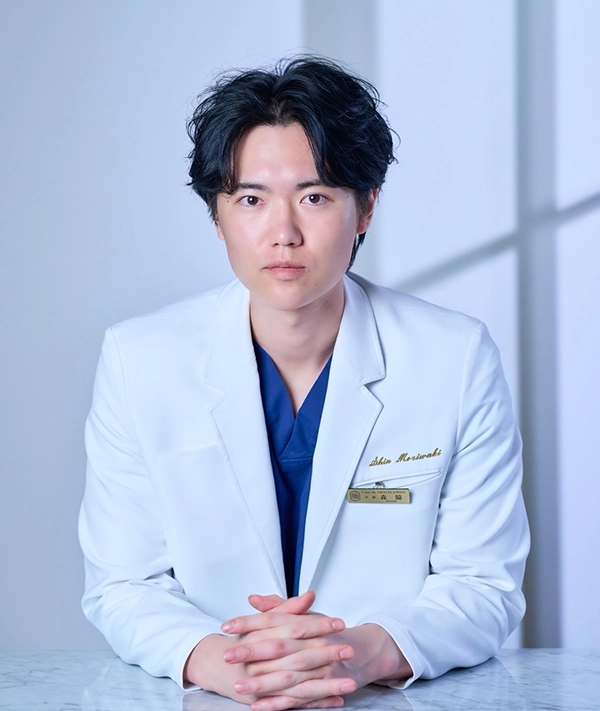
Director, AVAN TOKYO Ginza Liposuction Clinic
Graduated from Tokushima University School of Medicine.
Worked at Tokushima University Hospital, Tokyo Chuo Cosmetic Surgery and Gracia Clinic before taking up the current position.
Over 5,000 liposuction procedures performed (including previous positions).
Certifications
・VASER Lipo certified physician
・ECFMG Certificate
Memberships
・Member, Japan Society of Aesthetic Surgery (JSAS)
・Full member, Japanese Society for Regenerative Medicine
・Member, American Academy of Aesthetic Medicine
Related articles
- Why Outer Arm Bulge Won’t Slim Down with Diet: Liposuction Design Guide
- Why Your Front Thighs Bulge: The Real Causes Lie in Fat Position and Fascial Adhesions