


Arm Liposuction and Skin Laxity | The Role of Age, Volume, and RF Treatment2026.11.09
“Will my skin sag if too much fat is removed from my arms?” — this is one of the most common concerns I hear from patients.
Whether the skin becomes loose after liposuction depends heavily not just on the volume removed, but on the patient’s age, BMI, and skin elasticity.
In this article, I explain the relationship between arm liposuction skin laxity and age or volume, using real cases from our clinic. Understanding the skin laxity risk after arm liposuction is the first step toward a treatment plan you can feel confident about.

The short answer
Skin laxity after arm liposuction is influenced more by age, BMI, and skin elasticity than by the volume of fat removed. Patients in their early 20s tend to show minimal sagging even after large-volume procedures (900cc), though RF treatment or a fat-sparing design may be recommended depending on age and skin condition.
Why Patients in Their Early 20s Experience Less Skin Laxity After Arm Liposuction
The skin of patients in their early 20s is rich in dermal collagen fibers and elastic fibers, giving it strong contractility (skin retraction).
Even when large amounts of fat are removed, the skin can effectively close the space from the inside — and this is one of the key reasons why early-20s patients tend to report high satisfaction with arm liposuction.
The degree of arm liposuction skin laxity is determined more by this age-driven difference in contractility than by the volume of fat removed.
【Comparison of Approaches to Address Skin Laxity After Arm Liposuction】
| Radiofrequency RF Treatment (Morpheus8, etc.) | Body Thread Lift | Surgical Excision Lift | |
|---|---|---|---|
| Main indication | Mild to moderate laxity support | Moderate laxity | Severe laxity |
| Benefits | ・Minimal scarring ・Can be performed same day as liposuction ・Promotes skin tightening via fibrosis |
・No incision ・Reliable lifting effect ・Tightening through adhesion |
・Definitive removal of excess skin ・Long-lasting results |
| Drawbacks | ・Limited effectiveness for severe laxity ・Individual variation in results |
・Post-op discomfort and restrictions ・May be insufficient for large skin excess |
・Visible scar at incision site ・Longer downtime |
| Best suited for | Younger patients, mild laxity, those seeking preventive RF treatment | Moderate laxity, minimizing visible scars | Severe laxity, those seeking definitive results |
Reason 1: Age Determines Skin Contractility
Collagen and elastic fibers in the dermis decrease and degrade with age. In early-20s patients, these are abundant and highly elastic — meaning the skin can tighten inward even after the underlying fat is reduced.
In patients in their late 40s and beyond, the skin is more likely to become loose after the same volume is removed, and additional treatments are more frequently required.
Reason 2: Higher Volume Increases the Risk of Laxity
When more than 700cc of pure fat is removed from the upper arm, the risk of skin laxity increases. For volumes exceeding 900cc, even younger patients may notice a slightly wrinkled texture.
However, in early-20s patients with high skin contractility, combining RF treatment can produce results with minimal laxity even at the 6-month mark. Assessing the skin characteristics and elasticity before surgery is essential to determining the appropriate volume to remove.
Reason 3: RF Treatment Plays a Valuable Supplementary Role
High-frequency radiofrequency treatment (such as Morpheus8 Burst) is a supplementary procedure that uses thermal energy to stimulate collagen production in the dermis and assist skin contraction.
When performed on the same day as liposuction, it can enhance the skin-tightening effect that occurs naturally during the fibrosis phase. However, RF treatment is only supplementary — it has limitations for severe laxity, results vary between individuals, and it cannot remove excess skin on its own.
Clinical Case
Minimal Laxity Despite High-Volume Removal (20s, female)
This is a case of a patient in her early 20s who underwent full-circumference upper arm and axillary liposuction. 900cc of pure fat was removed. This volume would typically result in a slightly wrinkled texture, but radiofrequency treatment (Morpheus8 Burst) was performed on the same day.
At the one-month mark, fibrosis-related firmness was still present, but the degree of skin excess was minimal. At six months post-operatively, laxity remained mild.
I believe this reflects the combined effect of the patient’s youthful skin contractility and the supportive tightening from the RF treatment.
| Procedure | Arm Liposuction / Radiofrequency Treatment (Morpheus8 Burst) |
|---|---|
| Details | Full-circumference upper arm and axillary liposuction (900cc pure fat) + radiofrequency treatment |
| Photo timing | 1 month post-operatively |
| Cost | Please refer to the pricing page for details (final cost confirmed at consultation) |
| Key risks / side effects | Bruising, swelling, fibrosis, temporary sensory changes, rare cases of skin laxity, asymmetry, infection, etc. |
Results vary between individuals. The photo shown is one example.
Does Arm Liposuction Always Cause Skin Sagging?
It Varies Greatly with Age and Skin Elasticity
“Removing a lot of fat will always cause sagging” is only partially true. While the risk increases with volume, early-20s patients with high skin elasticity can often achieve results with minimal laxity even after large-volume removal.
For patients in their late 40s or older, the same volume may lead to more pronounced laxity, and strategies such as leaving some fat behind or combining with a surgical lift may be considered.
For information on safety standards in cosmetic surgery, you may also refer to the Japan Society of Aesthetic Surgery (JSAS).
How Is Arm Liposuction Approached for Older Patients?
It Is Applicable, but the Design Strategy Must Change
Arm liposuction can be appropriate for patients in their late 40s and beyond. However, approaching it the same way as with younger patients — thinking “the more you remove, the thinner the arm” — can result in excess skin and visible sagging post-operatively.
When skin laxity is a concern, options include leaving a certain amount of fat to prevent skin from floating, or combining with RF treatment or a body thread lift. For severe laxity, an upper arm excision lift is the most definitive solution.
At consultation, I assess each patient’s skeletal structure, subcutaneous fat volume, and skin elasticity to propose an individualized plan.
Post-Operative Risks, Complications, and Prevention
Bruising, Swelling, and Fibrosis Are a Natural Part of Recovery
After arm liposuction, bruising and swelling gradually subside over 2–3 weeks. Pain typically peaks at 2–3 days post-operatively and settles within about 10 days.
Around the 1-month mark, fibrosis (firmness and bumpiness) is at its peak, but this usually softens over approximately 3 months. In some cases, patients may notice a temporary numbness or tingling in the hand or fingers — this typically resolves naturally within a few weeks.
If concerning symptoms persist, please contact our clinic. Skin laxity, as discussed, varies with age, volume removed, and skin characteristics.
Summary | Planning Arm Liposuction with Age and Skin Elasticity in Mind
One of the most critical factors influencing the results of arm liposuction is not volume, but age and skin elasticity. Early-20s patients have high skin contractility and can expect minimal laxity even after large-volume procedures.
As age increases, strategy must evolve — combining RF treatment, designing with fat retention in mind, or integrating a surgical lift. We tailor our approach to each patient’s individual skin condition.
If you are concerned about arm liposuction skin laxity, we recommend beginning with a consultation to assess your current skin condition. Please come in to discuss your age, BMI, skin elasticity, and the most appropriate approach for you.
Browse related articles on liposuction
Frequently Asked Questions
- How long does pain last after arm liposuction?
-
Pain peaks at 2–3 days post-operatively and typically settles within about 10 days. The experience of pain varies between individuals, and the prescribed pain medication (acetaminophen) can help manage discomfort.
- When does the fibrosis (bumpiness) settle down?
-
Fibrosis typically peaks around 1 month post-operatively and gradually softens over approximately 3 months. Gentle massage with moisturizer to loosen firm areas can support recovery.
- How long is compression garment wear required?
-
Compression garments are worn 24 hours a day for the first week post-operatively. After that, we recommend continuing to wear them when at home or sleeping until bruising and swelling have subsided.
- When can I return to work after arm liposuction?
-
Some patients with desk jobs return to work the following day, though the experience of pain varies. For jobs involving heavy lifting or physical labor, we provide guidance based on the specifics of the surgery and recovery progress.
- Can RF treatment be performed on the same day as liposuction?
-
Yes, we are able to combine them on the same day. Pairing RF treatment with liposuction on the same day can enhance the skin-tightening effect that occurs naturally during the fibrosis phase. However, suitability depends on the individual’s skin condition and the specifics of the procedure.
- Does removing more fat make scars more noticeable?
-
There is no direct relationship between the volume removed and the visibility of scars. The access incisions are small — only a few millimeters. Scars gradually fade over 3–6 months, but UV exposure and friction can cause discoloration, so we recommend continuing to protect the area with tape.
- Who is best suited for a “fat-sparing” strategy?
-
This approach may be chosen for patients whose age and skin condition raise concerns about laxity. Leaving a certain amount of fat beneath the skin prevents it from becoming loose.
Rather than simply aiming to remove as much fat as possible, we consider the overall shape and skin condition together. This is assessed individually at consultation.
【Supervised by】Shin Moriwaki, M.D. (Supervising Physician)
Credentials: VASER Lipo Certified / ECFMG Certificate
Memberships: Japan Society of Aesthetic Surgery (JSAS)
Japanese Society of Regenerative Medicine
American Academy of Aesthetic Medicine📍AVAN TOKYO GINZA LIPOSUCTION CLINIC
English / 中文 / Tiếng Việt consultations available
Appointments and inquiries accepted via
DM / LINE / Website / Phone
This article is based on a post by Dr. Moriwaki on X (@doctor_shin_). View the original post
For prices, case photos and FAQs, see the upper arm liposuction page.
Book a consultation
1 min walk from Exit 6, Ginza-itchome Station / Open 10:00–19:00
About the supervising physician
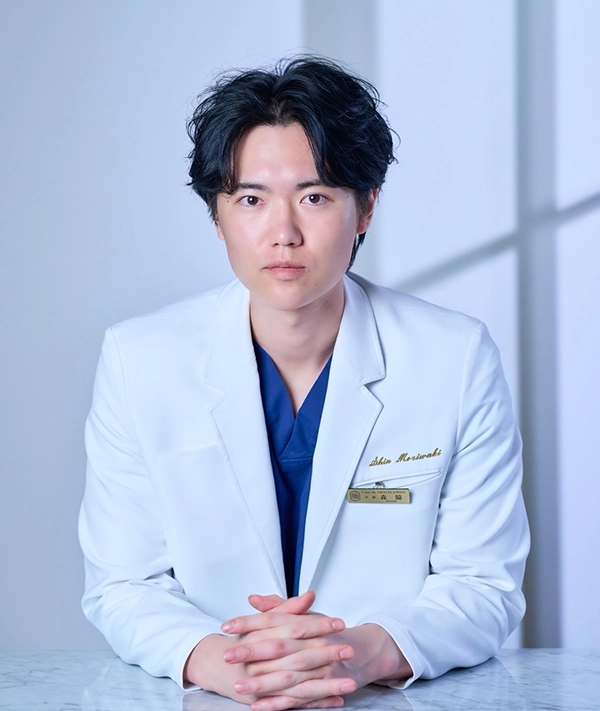
Director, AVAN TOKYO Ginza Liposuction Clinic
Graduated from Tokushima University School of Medicine.
Worked at Tokushima University Hospital, Tokyo Chuo Cosmetic Surgery and Gracia Clinic before taking up the current position.
Over 5,000 liposuction procedures performed (including previous positions).
Certifications
・VASER Lipo certified physician
・ECFMG Certificate
Memberships
・Member, Japan Society of Aesthetic Surgery (JSAS)
・Full member, Japanese Society for Regenerative Medicine
・Member, American Academy of Aesthetic Medicine
Related articles
- Does Liposuction Remove Cellulite? The Medical Truth About Fibrous Septae and Skin Laxity Explained by a Surgeon
- Upper Arm Liposuction With Thread Lift: Combined Design for Skin Looseness
- The Role of Age in Cosmetic Surgery Outcomes