


Is a Guaranteed 2-Cup Increase with Fat Grafting Realistic? A Surgeon Explains the Role of Stem Cells and PRP2026.11.07
“I absolutely want to go up two cup sizes with breast augmentation.” This is one of the strongest requests we hear during consultations.
However, a single fat grafting session typically delivers only a 1 to 1.5 cup increase, and there is a physiological wall standing in the way of a guaranteed 2-cup result.
In this article, I explain the medical reasons why a fat grafting 2-cup increase is difficult to achieve in a single session, where adjuncts such as stem cells, PRP and exosomes truly stand, and present one of our clinic’s cases.

The short answer
A single fat grafting session typically delivers an increase of 1 to 1.5 cup sizes. When a reliable 2-cup increase is the goal, hybrid breast augmentation or multiple fat grafting sessions become the realistic options. Stem cells, PRP and exosomes remain adjuncts and do not guarantee a 2-cup result.
Why a Single-Session Approach Is Rarely the Right Choice for a 2-Cup Increase with Fat Grafting
As the operating surgeon, my conclusion is that when a reliable increase of two cup sizes or more is the goal, a single fat grafting session is rarely the right choice. The realistic options are hybrid breast augmentation or multiple fat grafting sessions.
[Comparison of methods aiming for a 2-cup or greater increase]
| Single-session fat grafting | Multiple fat grafting sessions | Hybrid breast augmentation | |
|---|---|---|---|
| Advantages | – Natural texture using your own fat – No implant – Donor sites can be slimmed at the same time |
– Stays natural while adding size gradually – Each session stays within a safe volume |
– Implant provides a reliable base – Fat softens the contour naturally – Visible size change in one session |
| Disadvantages | – The volume injectable in one session has a physiological limit – A guaranteed 2-cup result is difficult |
– The overall treatment period is long – The donor sites are stressed repeatedly |
– Implant-related risks (capsular contracture, etc.) – Downtime and cost tend to be greater |
| Suited to | – Those who want a natural 1 to 1.5 cup increase – Those with ample donor fat |
– Those who prioritize natural results while still wanting more size in stages | – Those who want a reliable 2-cup or greater increase – Slim patients with limited donor fat |
Reason 1: One session of fat injection has a physiological ceiling
Injected fat has no blood supply the moment it is placed and must receive oxygen and nutrients from the surrounding tissue to survive. Packing in too much fat at once prevents oxygen from reaching the center, which leads to fat necrosis, lumps and oil cysts.
The volume that can be safely injected per breast is capped by breast flexibility, subcutaneous fat thickness and chest wall shape. This ceiling is the main reason a 2-cup increase in one session is difficult. Forcing a larger volume actually tends to reduce the take rate.
Reason 2: Stem cells, PRP and exosomes are adjuncts, not guarantees of certainty
Adipose-derived stem cells (ADSC), PRP, exosomes and condensed-rich fat have been studied as techniques that may support fat survival. Depending on the case, I consider them as options as well.
However, there is no solid evidence today that any of these can guarantee a 2-cup result. Even if the take rate improves to some degree, the ceiling on the volume injectable in a single session does not disappear.
Advertising that promises a guaranteed 2-cup increase through stem cells goes beyond current evidence.
Reason 3: Hybrid augmentation combines a reliable base with a natural finish
Hybrid breast augmentation builds a reliable base with a silicone implant and coats it with the patient’s own fat. Because fat softens the outline of the implant, the decolletage, cleavage and feel tend to be more natural than with an implant alone.
For those who want a reliable increase of two cup sizes or more, or who are slim with limited donor fat, hybrid augmentation is usually the central option.
Our Case
Arms, bra bulge and accessory breast shaped together with the bustline (female)
Circumferential upper-arm liposuction, liposuction of the bra bulge and accessory breast, and hybrid breast augmentation were performed on the same day, and the images are at three months after surgery.
The continuous bulge around the armpit when the arms are down was flattened, while the implant and fat gave the front of the bust a rounded fullness. Designing the upper body not as bust alone but as a continuous line of arms, armpits, accessory breast and chest makes the bust stand out more.
Enlarging the chest while subtracting from the surrounding areas is a short path to emphasizing volume.
3 months after surgery (After)
| Procedure | Upper arm (circumferential) / bra bulge / accessory breast liposuction + hybrid breast augmentation |
|---|---|
| Details | Circumferential upper-arm liposuction, bra bulge and accessory breast liposuction were performed, together with silicone implant placement and fat injection (hybrid augmentation) on the same day. |
| Photo timing | 3 months after surgery |
| Cost | Please check the price page (the final amount is confirmed at consultation). |
| Main risks and side effects | Bruising, swelling, fibrosis, asymmetry, infection, lumps, fat necrosis, capsular contracture, implant-related complications, and others. |
Results vary between individuals, and the images show one example.
Is a 2-Cup Increase in One Session of Fat Grafting Truly Impossible?
Occasionally yes, but reproducibility is poor
In rare cases, when donor fat is abundant, the breast has subcutaneous space, and survival conditions are favorable, a change of 2 cups or more can be obtained in one session. This, however, is not a condition that can be promised as “guaranteed” in advance.
What matters is planning around the change expected in most cases rather than the most favorable result. A gap between expectation and reality is a major reason for dissatisfaction after breast augmentation.
Do Stem Cells, PRP, Exosomes and Condensed-Rich Fat Really Work?
They offer certain possibilities, but not a basis for a guaranteed 2-cup result
Stem cells, PRP, exosomes and condensed-rich fat are being studied for their potential to support fat survival. Many of these are still at the research stage, and the degree of effect and reproducibility remain unsettled.
The slogan “use this and you will always gain two cups” goes beyond current evidence. It is important to assess indications and cost calmly, treating these as adjuncts that may support survival. For safety standards in aesthetic surgery, you can also consult the Japan Society of Aesthetic Surgery.
What Are the Risks and Complications of Hybrid Augmentation, and How Can They Be Prevented?
Be aware of both implant-related and fat-related risks
Hybrid breast augmentation carries both implant-related risks (capsular contracture, implant-related complications, replacement decisions over time) and fat-related risks (lumps, oil cysts, fat necrosis, asymmetry).
To reduce these risks, preoperative mammary and chest-wall assessment, appropriate choice of implant size and shape, layered injection design, and postoperative compression and lifestyle guidance are important.
At our clinic we use an ultrasound device (LSSA, Elsa) when appropriate, and pay close attention to the quality of the harvested fat.
After surgery, bathtubs, saunas, pools and vigorous exercise (gym, running) are all restricted until two weeks after surgery, and alcohol is to be avoided for one week.
Smoking is a major factor that compromises the result and significantly affects fat survival, so we ask patients to avoid smoking for at least one week after surgery, with a recommended period of 1.5 to 6 months of abstinence.
If You Are Considering a Fat Grafting 2-Cup Increase, Start by Clarifying Your Own Goal
When considering a fat grafting 2-cup increase, the first thing to sort out is your goal: do you want to finish in one session, do you prioritize natural results above all, or do you prioritize a reliable size increase?
Once the goal is clear, it becomes easier to decide whether single-session fat grafting is enough, whether multiple fat grafting sessions suit you better, or whether hybrid augmentation is the right option.
I personally tend to recommend hybrid augmentation for those who want a reliable increase of two cups or more, because it balances satisfaction and safety well.
Please start by discussing your chest wall, subcutaneous fat, available donor volume and lifestyle in a consultation to decide on the method that suits you. You may also want to browse our liposuction column list for related articles.
Frequently Asked Questions
- How long is the downtime?
-
Pain peaks 2 to 3 days after surgery and settles within about 10 days. Swelling and bruising subside over 2 to 3 weeks.
Fibrosis peaks around one month after surgery and usually blends in over about three months. Individual variation applies.
- When can I take a shower or a bath?
-
Showers are allowed from the next day. Bathtubs, saunas, pools, ocean and hot springs are all permitted from two weeks after surgery.
- How long do I need to wear the compression garment?
-
We ask patients to wear the garment 24 hours a day for the first week after surgery. After that, we recommend continuing to wear it as much as possible at home and during sleep until swelling and bruising subside.
- When can I return to sports bras or exercise?
-
Walking and gentle movement within your tolerance are fine from early on, but vigorous exercise such as gym workouts or running starts from two weeks after surgery. Guidance on sports bras is given based on your follow-up.
- Are there any restrictions on smoking or alcohol?
-
Alcohol should be avoided for one week after surgery. Because smoking significantly affects fat survival, it should be avoided for at least one week after surgery, with a recommended abstinence period of 1.5 to 6 months.
- How long should I wait between fat grafting sessions?
-
This varies between individuals, and planning begins after the first result has settled. We will guide you at consultation and examination based on your surgical plan.
- How do you choose between hybrid augmentation and fat grafting alone?
-
The decision is based on the desired breast size, the chest wall and subcutaneous fat condition, the available donor fat and lifestyle. When a reliable 2-cup or greater increase is the goal, hybrid augmentation is usually the central option.
[Supervisor] Shin Moriwaki, MD (Supervising Physician)
Qualifications: VASER Lipo Certified Physician / ECFMG Certificate
Memberships: Japan Society of Aesthetic Surgery (JSAS)
Japanese Society for Regenerative Medicine
American Academy of Aesthetic MedicineAVAN TOKYO GINZA LIPOSUCTION CLINIC
English / Chinese / Vietnamese supported
Appointments and consultations are available via
DM / LINE / Website / Phone.
This article is based on a post by Dr. Moriwaki on X (@doctor_shin_). View the original post
For prices, case photos and FAQs, see the fat transfer breast augmentation page.
Free consultation available
1 min walk from Exit 6, Ginza-itchome Station / Open 10:00–19:00
About the supervising physician
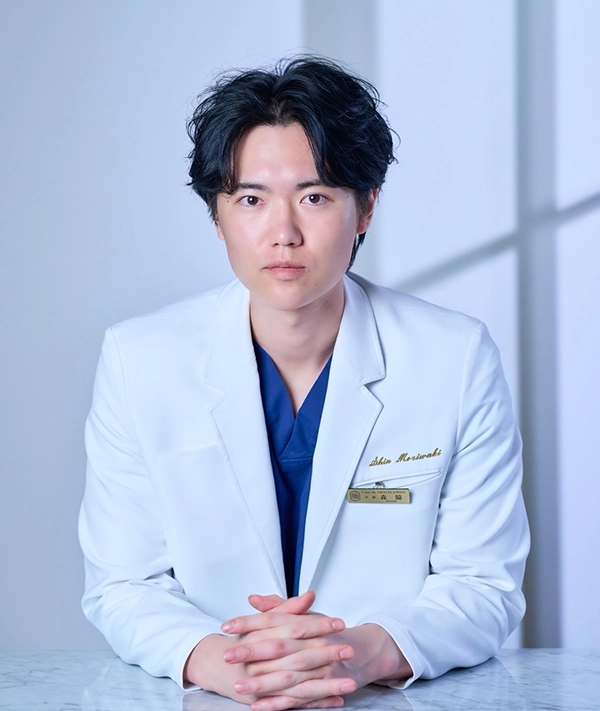
Shin Moriwaki, MD
Director, AVAN TOKYO Ginza Liposuction Clinic
Graduated from Tokushima University School of Medicine.
Worked at Tokushima University Hospital, Tokyo Chuo Cosmetic Surgery and Gracia Clinic before taking up the current position.
Over 5,000 liposuction procedures performed (including previous positions).
Certifications
・VASER Lipo certified physician
・ECFMG Certificate
Memberships
・Member, Japan Society of Aesthetic Surgery (JSAS)
・Full member, Japanese Society for Regenerative Medicine
・Member, American Academy of Aesthetic Medicine
Related articles
- For Reliable Breast Enhancement with Fat Grafting
- Triple Fat Grafting Breast Augmentation: 3-Cup Enlargement in 6 Months — Complete Medical Review
- Low-speed Centrifugation Fat Grafting
How Gentle Processing Protects Stem Cells in Hybrid Breast Augmentation