


Low-speed Centrifugation Fat Grafting | How Gentle Processing Protects Stem Cells in Hybrid Breast Augmentation2026.09.23
Low-speed centrifugation fat grafting is the concept of gently spinning harvested pure fat at around 200 rpm for about one minute, separating out only excess fluid, tumescent solution, and free oil while preserving the adipocytes and their surrounding adipose-derived stem cells (ADSCs) and stromal vascular fraction (SVF) that are essential for graft take. At our clinic, we adopt this low-speed centrifugation approach in hybrid breast augmentation, which combines arm and axillary fat liposuction with a submammary silicone implant and subcutaneous fat injection. This article uses one case of a woman in her 30s who underwent circumferential arm and axillary (accessory breast) liposuction combined with a small silicone implant (around 220 ml) and subcutaneous fat injection in a single session, to explain how centrifuge speed and fat quality shape the final result.
Key Points of This Article
• Low-speed centrifugation fat grafting is a processing method that separates only excess fluid while preserving adipocytes and stem cells (ADSCs/SVF).
• Higher spin speeds improve purity but increase mechanical stress on cells, which may actually lower graft take rates.
• In small implant plus subcutaneous cover-fat designs, fat quality — not quantity — is what drives the outcome.
• Selecting the full arm circumference and axillary region as donor sites both refines the upper body silhouette and secures enough fat for augmentation.
• Recovery varies from person to person, with risks including bruising, swelling, fibrosis, asymmetry, nodules, infection, and capsular contracture.
Case Overview | A Woman in Her 30s
This case involves a woman in her 30s who underwent circumferential upper-arm liposuction and axillary (SC) fat pad liposuction, together with submammary silicone implant placement and subcutaneous fat injection in the same session. The incisions were placed along the natural creases of the armpit, the implant was positioned in the submammary layer, and the fat was placed in the subcutaneous layer — separating the two by tissue plane. Approximately 360 ml of raw fat was harvested, refined to about 170 ml of pure fat after low-speed centrifugation, and injected with slight left-right volume adjustment. Baseline volume is provided by the small implant, while the fat contributes contour softness and roundness in the overlying skin envelope.
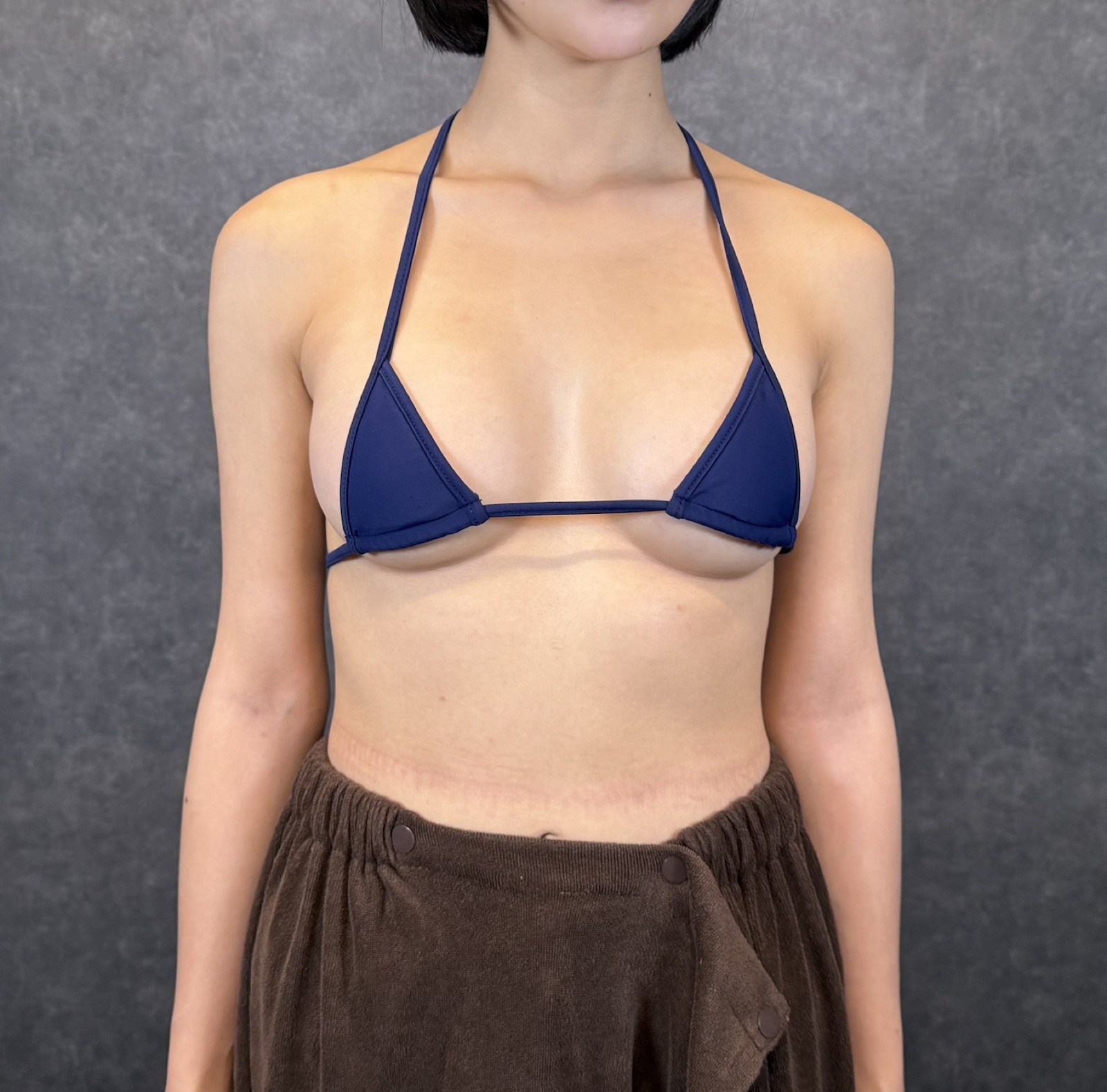
Treatment Content, Cost and Risks for This Case
The procedure was hybrid breast augmentation combining circumferential arm and axillary liposuction with a submammary silicone implant and subcutaneous fat injection. Anesthesia used intravenous sedation combined with local tumescent anesthesia, and the surgery was performed on an outpatient basis. Costs vary with implant choice, design range, and anesthesia — please refer to our price page for details. Main risks include bruising, swelling, subcutaneous induration (fibrosis), asymmetry, infection, nodules, capsular contracture, hematoma, and variable fat resorption. Results vary between individuals, and the photos are one example only. Final suitability and outcome are confirmed at consultation.
Why Low-Speed Centrifugation Matters | The Medical Rationale for 200 rpm × 1 min
Immediately after harvest, aspirated fat contains not only adipocytes but also tumescent fluid, free oil, red blood cells, and ruptured cellular debris. High-speed centrifugation at around 3,000 rpm efficiently separates fluid and oil, but the same forces damage adipocytes mechanically and dislodge the adipose-derived stem cells (ADSCs) and stromal vascular fraction (SVF) that live in the surrounding stroma. ADSCs and SVF form the biological infrastructure of graft take — supporting neoangiogenesis and controlling inflammation after injection. When they are depleted, even healthy-looking adipocytes may fail to establish reliably.
The gentle 200 rpm × 1 min protocol adopted in low-speed centrifugation fat grafting is designed to remove fluid, oil, and blood components with the minimum necessary force, while keeping mechanical stress on adipocytes and stem cells to a minimum. Rather than maximizing purity, we prioritize maximizing the total mass of biologically useful graft material. Literature also suggests that the 200–1,200 rpm low-to-moderate range better preserves ADSC viability and function, with higher tissue-preservation performance than the classic Coleman method (1,200–3,000 rpm).
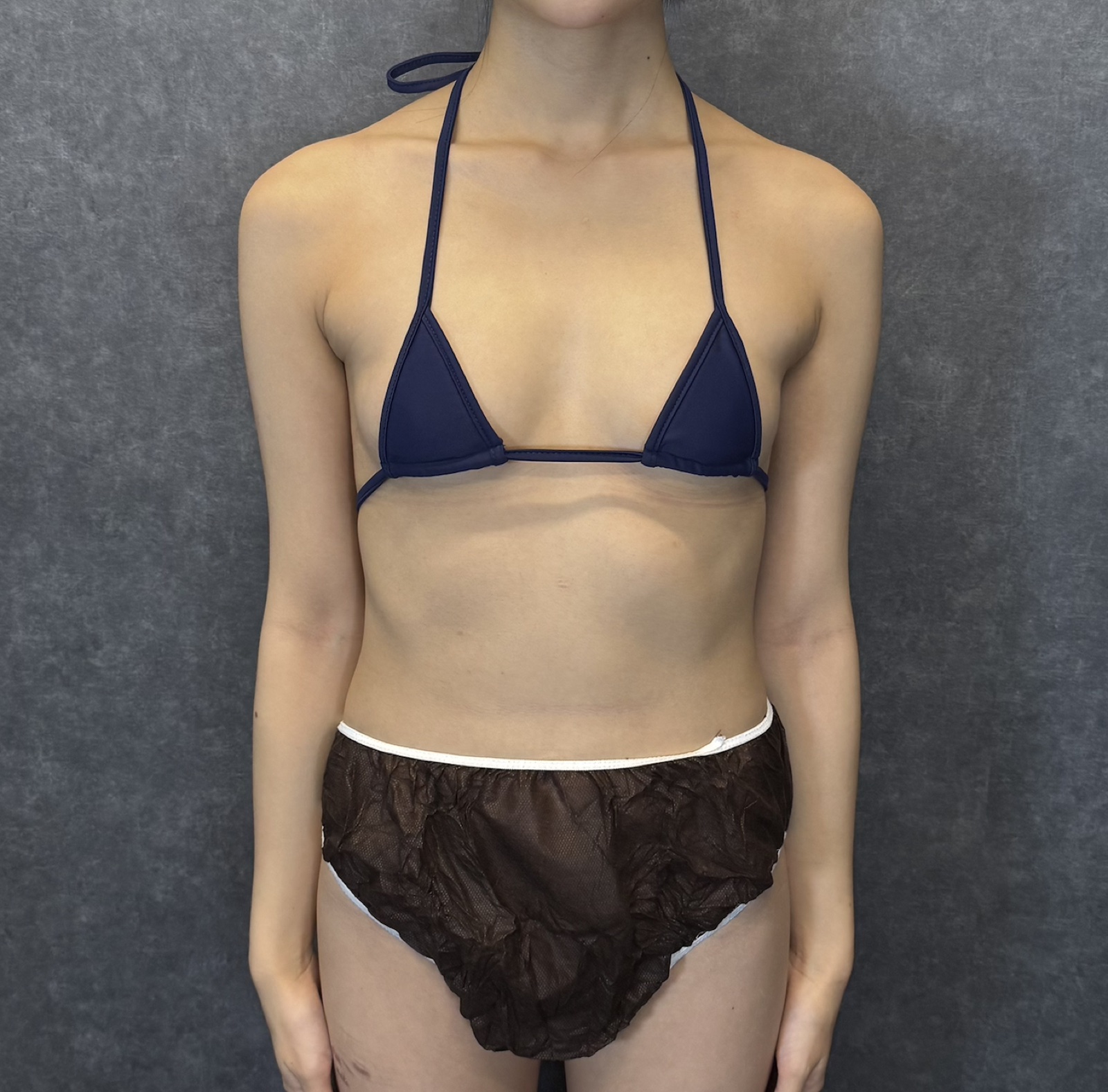
Graft Take Depends on Fat Quality, Not Volume
Fat graft take depends on reestablishing circulation — injected adipocytes must connect to new blood vessels to receive oxygen and nutrients. Since oxygen only diffuses a limited distance from the center, thin and even layering is the fundamental technique. Equally important, however, is the vitality of the fat itself. Fat stripped of its stem cells by aggressive centrifugation or over-washing tends to develop central necrosis and resorption, becoming a hotbed for nodules and calcifications, even when injected in large volumes.
In this case, approximately 360 ml of fat harvested from the full arm circumference and axillary region was processed at 200 rpm × 1 min under the low-speed centrifugation fat grafting concept, yielding roughly 170 ml of pure fat. It may sound like almost half was lost, but this reduction reflects removal of fluid, tumescent solution, and free oil — the proportion of biologically meaningful graft material is actually preserved. Moving away from the mindset of “more injected fat is better” is the first step in reducing nodule and contour risk.
Hybrid Augmentation Design | Roles of Implant and Subcutaneous Cover Fat
Another feature of this case is the layer-separated hybrid design — implant in the submammary space, fat in the subcutaneous cover layer. The implant carries sustained volume and forms the base of upper-pole fullness and cleavage. The subcutaneous fat is placed over the décolletage, lateral side, and lower pole where the implant edge tends to be visible, preventing contour step-offs and rippling (skin ripple deformity).
Because bilateral breasts always have some innate asymmetry, injection volumes were slightly adjusted between sides. The smaller side received a slightly thicker layer, while the larger side received less based on skin tension — distribution was tailored by intraoperative palpation and visual assessment rather than a fixed volume. Precisely because low-speed centrifugation preserves stem cells, even modest volumes can deliver reliable cover-fat effects. For safety standards in aesthetic surgery, please also refer to the Japan Society of Aesthetic Surgery.
Downtime and Recovery | How Low-Speed Processing Shapes Post-op Texture
Hybrid breast augmentation downtime overlaps implant swelling with fat injection edema and bruising, so it must be planned longer than standalone procedures. With individual variability, breast fullness typically peaks 1–1.5 months post-op and gradually softens over about three months. Pure fat processed with low-speed centrifugation tends to show a gentler take curve, with relatively mild post-op resorption — though this depends greatly on constitution and lifestyle (smoking, diet, circulation).
A compression garment (bolero-style bra) stabilizes breast position, while a separate elastic garment covers the arm and axillary regions through the fibrosis phase. To prevent infection and capsular contracture, we ask patients to follow guidance including antibiotic use, post-op activity limits, and strict non-smoking. See also our liposuction column archive.
Frequently Asked Questions
Q. How does this differ from “non-centrifuged” fat grafting?
Non-centrifuged fat (decantation only) maximally preserves stem cells but retains significant tumescent fluid and free oil, lowering the density of biologically active components per injection volume. Low-speed centrifugation fat grafting is the intermediate approach — protecting stem cells while separating out excess fluid — which we adopt for hybrid breast augmentation.
Q. What is the optimal spin speed?
Literature suggests 200–1,200 rpm as the range that preserves stem cells without excessive damage, but the optimum varies with fat character and surgical design. We fine-tune speed and duration based on donor-site fat viscosity, injection layer, and required pure-fat volume.
Q. What is the value of choosing a smaller implant?
Slim patients with thin cover fat are prone to rippling and unnatural tightness if implants are too large. Combining a small implant with subcutaneous cover fat is one option that balances natural contour with cleavage softness — which is why we chose this design for the case.
Q. Why use full arm circumference plus axillary region as donor sites?
The arms and axillary region are prime areas that disrupt the upper-body silhouette and respond well to liposuction. Transferring fat from these areas to the breast lets us achieve a body design of slim arms and naturally rounded breasts in a single surgery. Contour-preserving harvest design is essential.
Q. Are there risks of nodules or calcification?
Fat grafting carries some inherent risk of nodules and calcification. We reduce incidence through low-speed centrifugation, fine-cannula uniform injection, and multi-point small-volume delivery — but zero risk is not achievable. For future mammography or ultrasound, please inform your imaging physician that you have had a fat graft.
──────────────
Medical Supervisor: Shin Moriwaki, MD
Member, Japan Society of Aesthetic Surgery (JSAS) / Member, American Academy of Aesthetic Medicine
ECFMG Certificate (U.S. medical license qualification)
──────────────
📍AVAN TOKYO GINZA LIPOSUCTION CLINIC
English / 中文 / Tiếng Việt available
Bookings and consultations accepted
via DM / LINE / Website / Phone.