


Full Body Fat Harvest Breast Augmentation | Arms and Thighs to Breast Design Explained2026.10.28
I want to add natural breast volume, and I also want to shape my thighs and upper arms. We hear this combined request from patients in their 20s more and more often. Breast surgery alone leaves the rest of the body fat unchanged, and liposuction alone does not change the balance of the chest. This article explains full body fat harvest breast augmentation, in which fat is taken from the full circumference of the thighs, the full circumference of the upper arms, and the flank, then grafted into the breast. From the operating surgeon’s point of view I will cover harvest volume allocation, injection layer selection, and how to read the postoperative course.

The short answer
A design that combines fat grafting breast augmentation with simultaneous liposuction of the thighs, upper arms, and flank harvests fat from the body and grafts it into the breast, offering an option to shape both the body line and breast volume in one session. Harvested volume and purified fat volume are different, and results vary between individuals.
By balancing harvest between the upper and lower body in a single operation, you can refine the lines of the areas you dislike while securing enough fat volume to graft into the breast. The main significance of this approach is that you design the entire silhouette at once.
Why full body fat harvest breast augmentation becomes an option for both the breast and the body line
I want to make my chest larger, and at the same time I want to refine the lines of my lower body and upper arms. The surgeon’s answer to this request is that, for a body type where sufficient harvest volume can be secured, simultaneous upper and lower body harvest with full body fat harvest breast augmentation becomes an option. Compared with limiting surgery to the breast alone, this design lets you shape the whole body balance in one session, but the larger harvest volume requires attention to operating time, physical load, and skin retraction management.
[Comparison of breast augmentation methods]
| Fat grafting breast augmentation (single donor site) | Fat grafting breast augmentation (full upper and lower harvest) | Silicone breast augmentation | |
|---|---|---|---|
| Benefits | – Limited invasiveness with one donor site – Natural touch and appearance |
– Breast and whole body line designed together – Easier to secure sufficient injection volume |
– Reliable size increase in a single procedure – Independent of harvestable fat volume |
| Drawbacks | – Difficult to inject large volumes, so additional surgery is more likely – Limited by the fat volume at the donor site |
– Longer operating time – Compression garments needed in several areas |
– Not autologous tissue, so a sense of foreign body may occur – Implants may eventually need to be replaced |
| Suited for | Patients with concerns limited to one area | Patients who want to shape both breast and body line together | Patients with little autologous fat who want a larger size |
Reason 1 Large volume harvest secures enough injection volume for both breasts
In fat grafting breast augmentation, not all harvested fat can be grafted into the breast. The aspirate also contains anesthetic fluid, blood, and damaged cells, and only the purified fat obtained by centrifugation or sedimentation is used for injection. Because there is always a gap between harvest and injectable volume, you need to secure a reasonable harvest volume at the start to graft enough into each breast.
Reason 2 The lines of the suctioned areas affect how the chest is perceived
The chest is not seen in isolation. It is always viewed together with the lines of the upper arm, shoulder, flank, and torso. When the back of the upper arm or the flank is full, the outer contour of the breast appears to flow sideways, and the gained breast volume stands out less. Reducing the whole body contour by also suctioning the thighs and upper arms accentuates the breast fullness in relative terms.
Reason 3 Same day harvest and injection consolidate downtime
Separating liposuction and fat grafting breast augmentation into different days means repeating anesthesia, downtime, and compression periods twice. Combining harvest and injection in the same operation under general anesthesia consolidates time off and the burden of compression into one period.
Our case
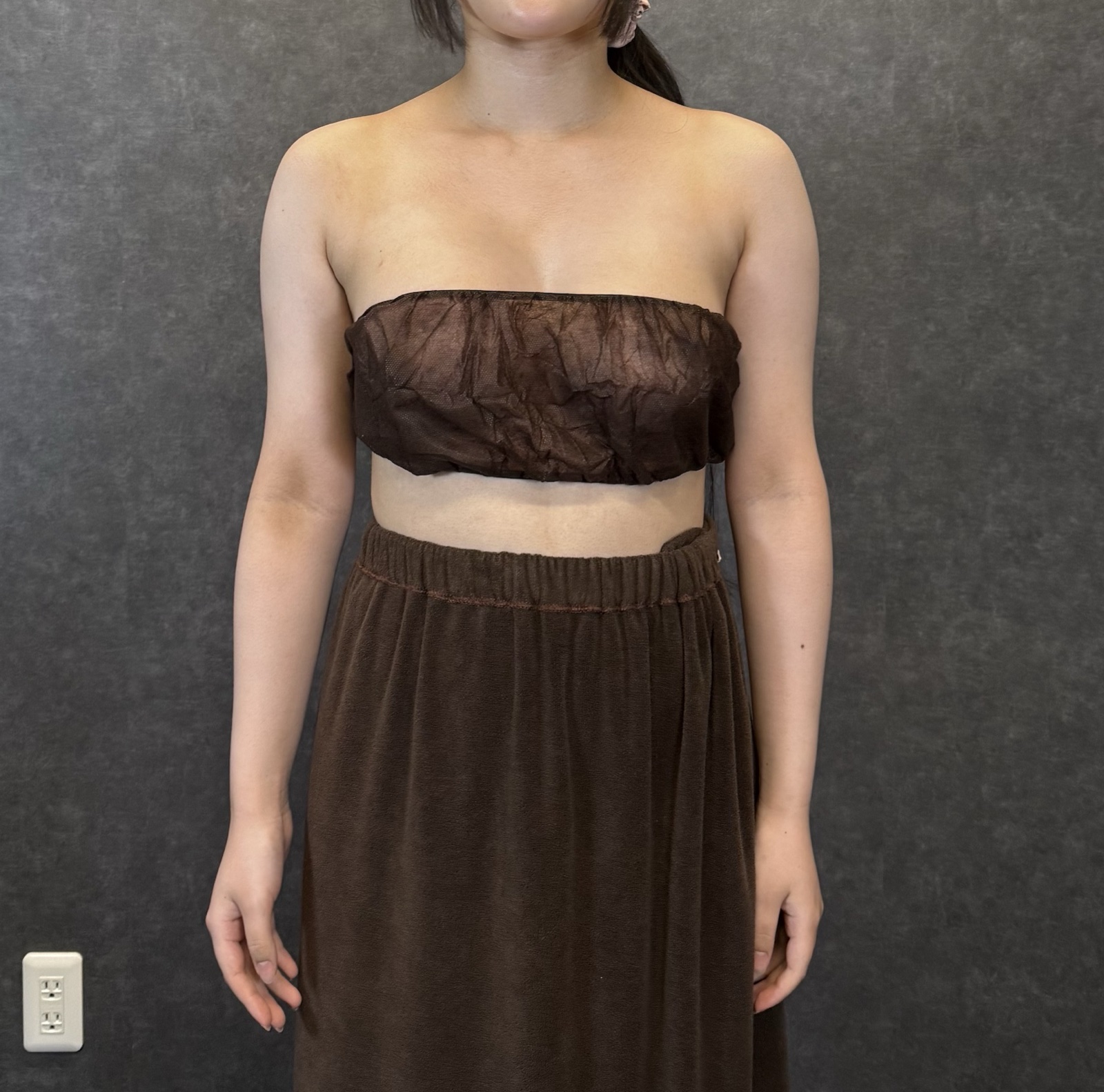
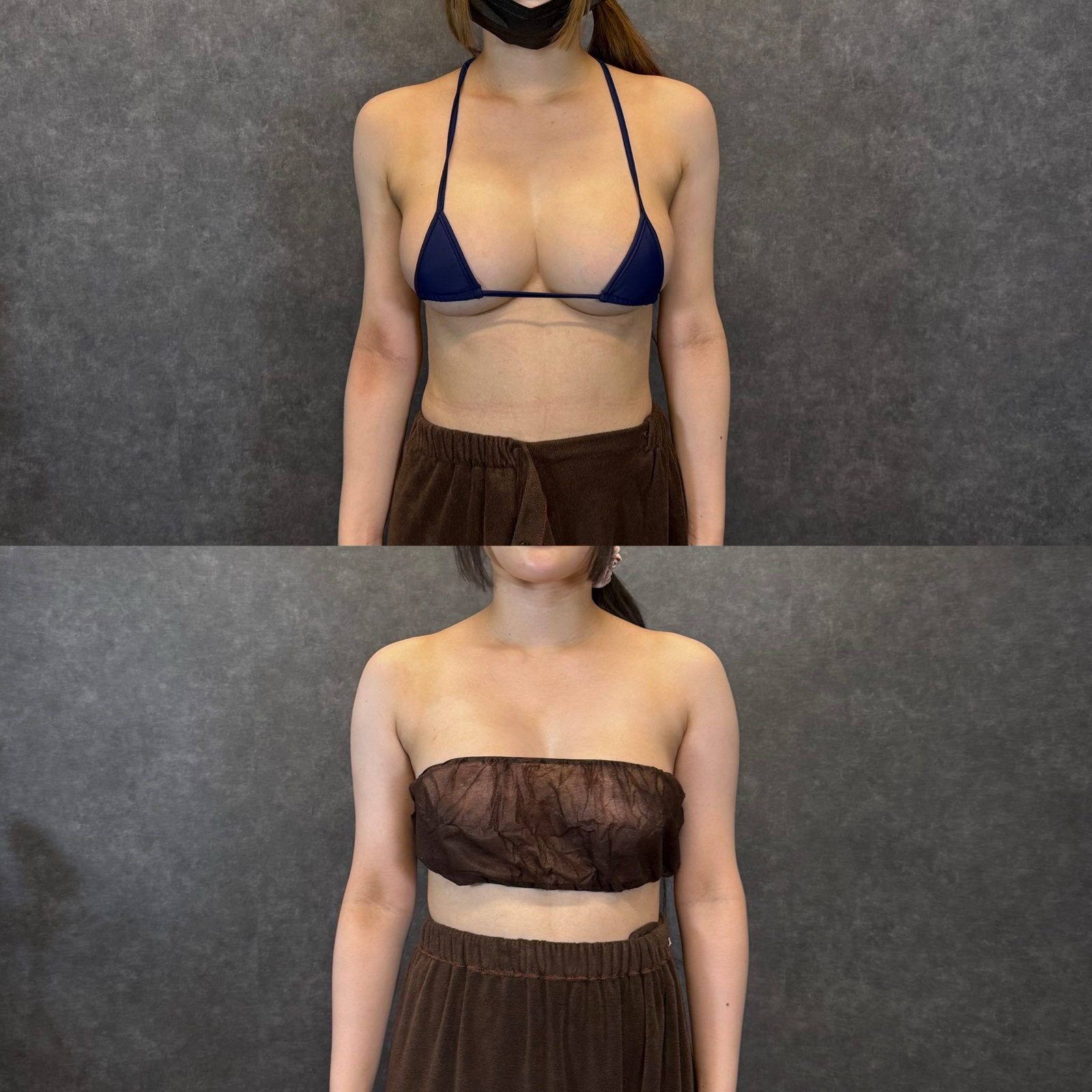
Case of full body fat harvest breast augmentation using the full circumference of the thighs, the full circumference of the upper arms, and the flank (woman in her 20s)
The patient wanted natural breast volume and also wanted to shape the lines of her thighs and upper arms. We chose a design that reduces the whole body contour while using her own fat to enlarge the breast.
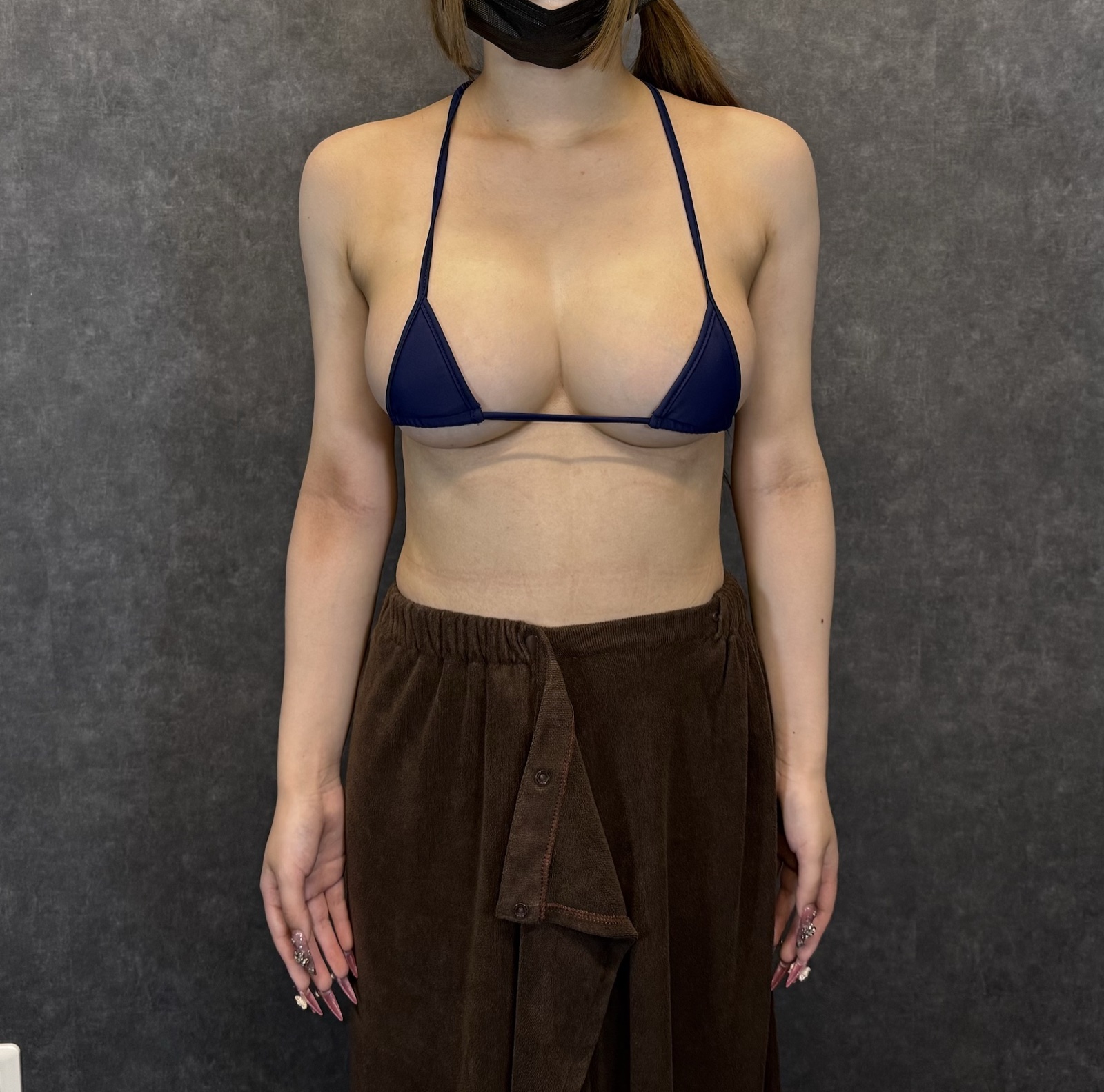
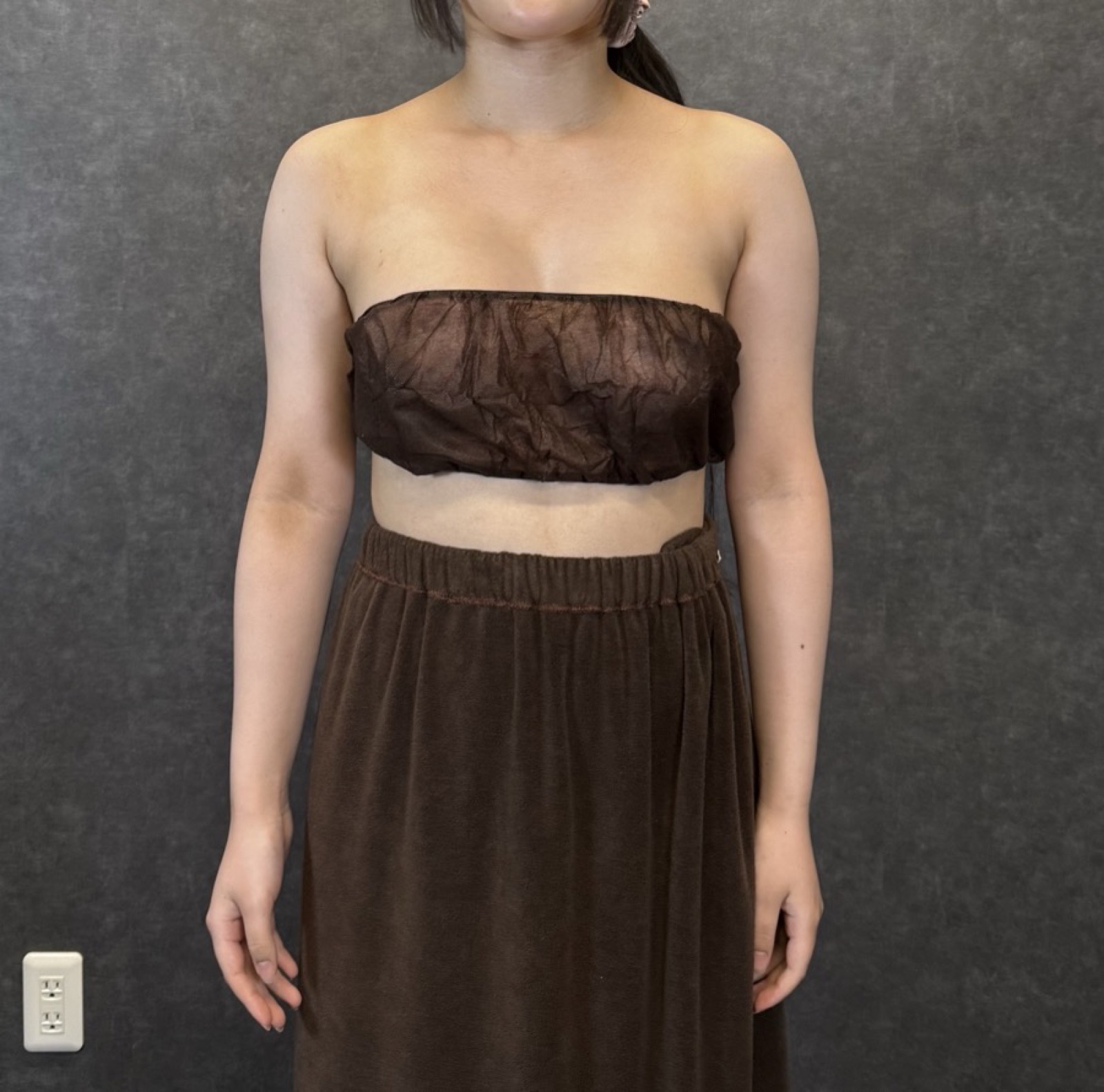
Preoperatively, the upper arms had roundness from the triceps area through the shoulder and anterior arm, and the thighs had full circumference thickness from the inner side through the front and outer side. Including the flank, the upper body line continued smoothly, which made the outer contour of the breast look blurred.
At surgery we infiltrated tumescent fluid into the upper arms and thighs to soften the fat, and then started suction. Because the thighs have large fat volume and firm fibrous tissue, we used an ultrasound device (LSSA, Elsa) as needed to emulsify the fat before suction. On the upper arms, we suctioned the triceps area, shoulder, anterior arm, and flank as a continuous zone so that the line from the arm to the outer breast would not break.
Harvested fat totaled approximately 2,300 ml from the thighs and 700 ml from the upper arms, for a total of about 3,000 ml. From this we centrifuged 800 ml of high purity fat at low speed for a short time, removing water and damaged cells, and obtained 520 ml of injectable fat. The injectable volume may feel small compared with the harvest, but it is important to remove the components that would not survive before grafting, in order to reduce nodules and calcification.
Injection was divided into four layers, subglandular, intrapectoral, subpectoral, and subcutaneous, with small aliquots at each level. Concentrating a large volume in a single area makes the center poorly vascularized and can lead to nodules and calcification, so we deliberately changed the layer and direction of each pass.
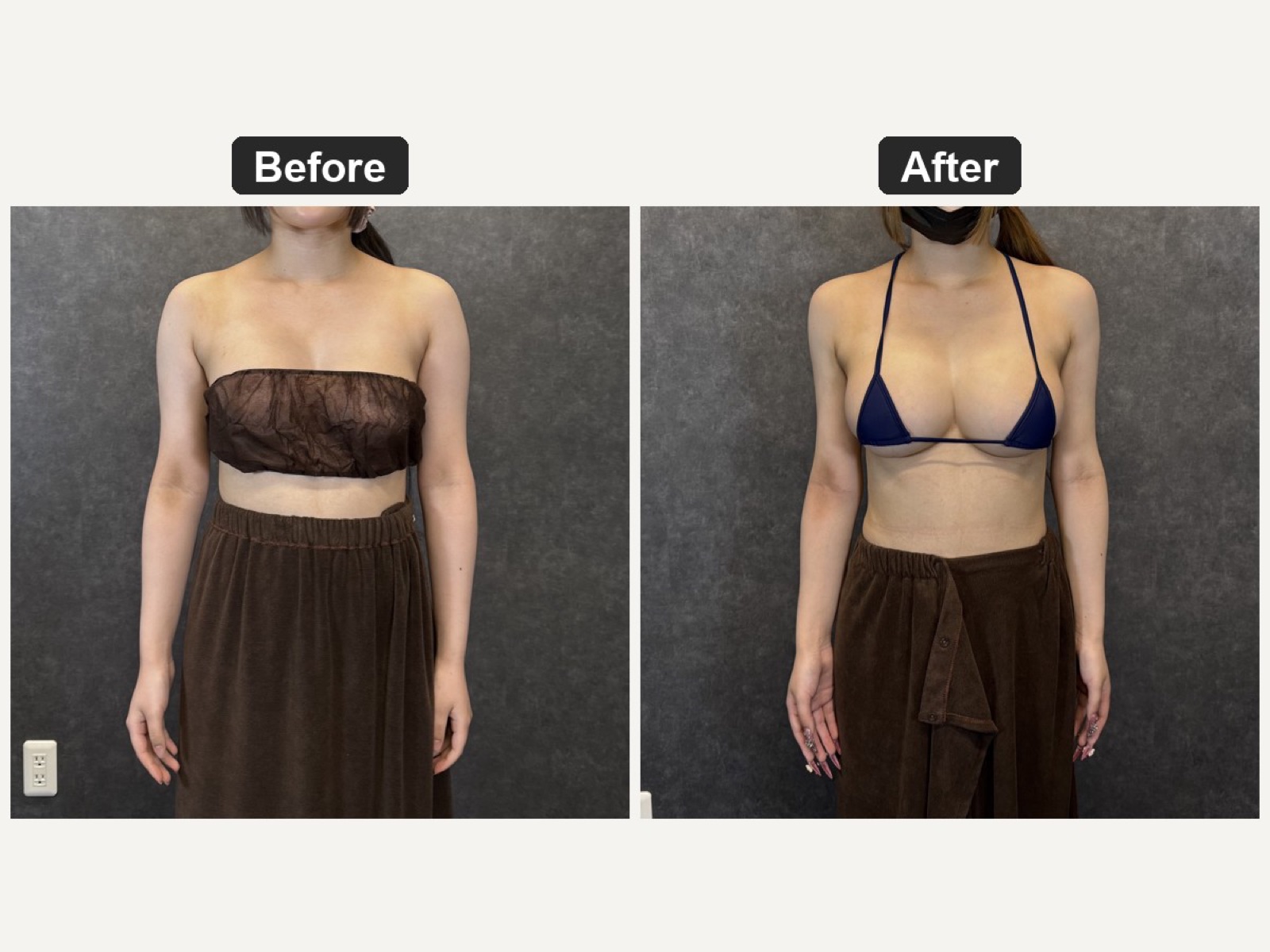
Because there was slight asymmetry before surgery, we grafted a little more on the right breast and also adjusted the layer balance. If we had injected an equal volume on both sides without regard to preoperative shape, the original asymmetry would simply have remained.
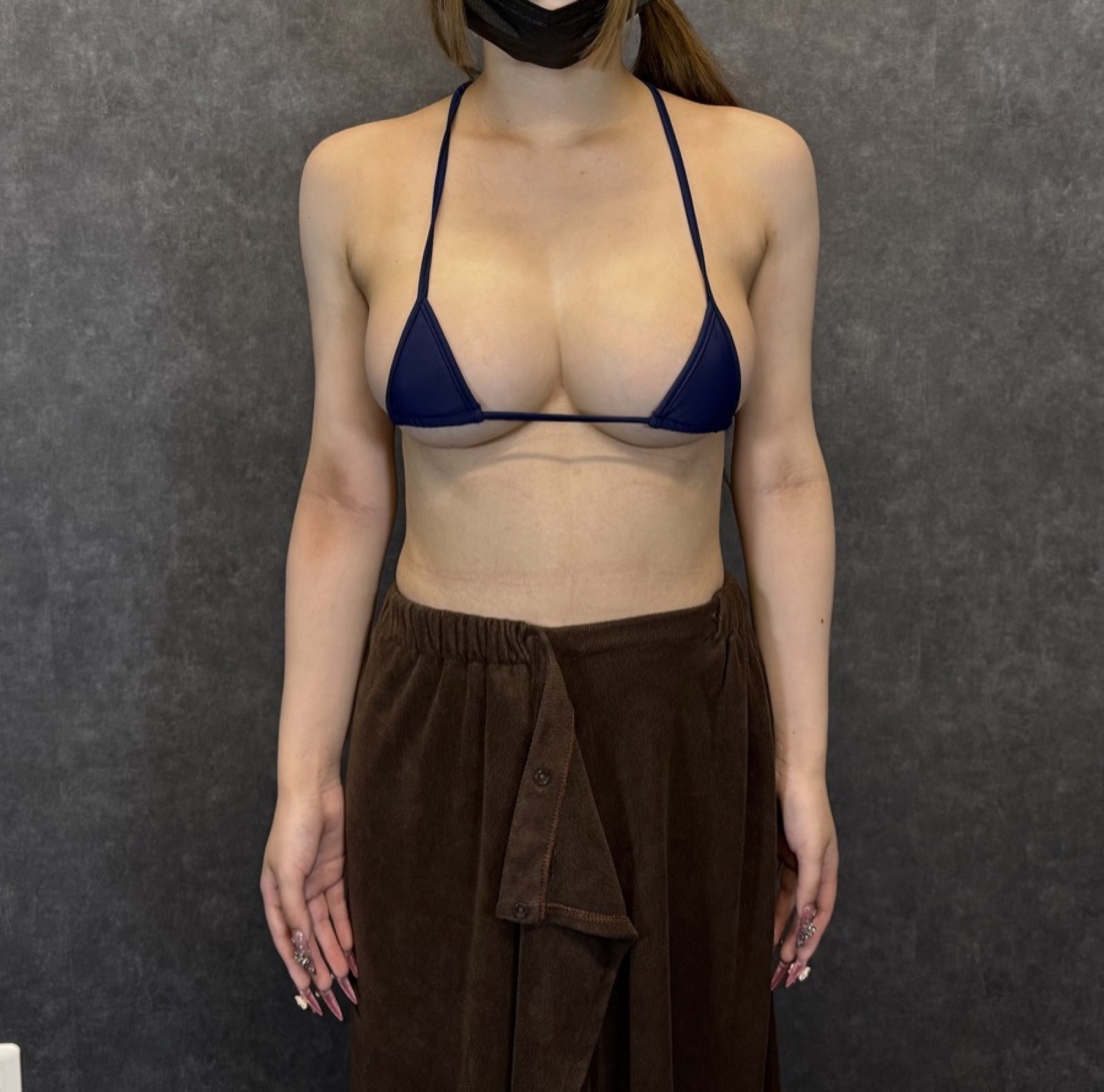
Access incisions were made at the anterior and posterior axilla, the elbows, below the nipples, both groins, and below the buttocks. The sites behind the axilla and under the buttocks are easy to hide even in seated positions. Postoperatively the patient wore a thigh girdle and an upper arm bolero.
At 3 months postoperatively, fullness has appeared from the decolletage to the upper breast, and the shape is rounded with a visible cleavage. The lines of the upper arms and thighs are also slimmer, and the overall silhouette including both upper and lower body has changed.
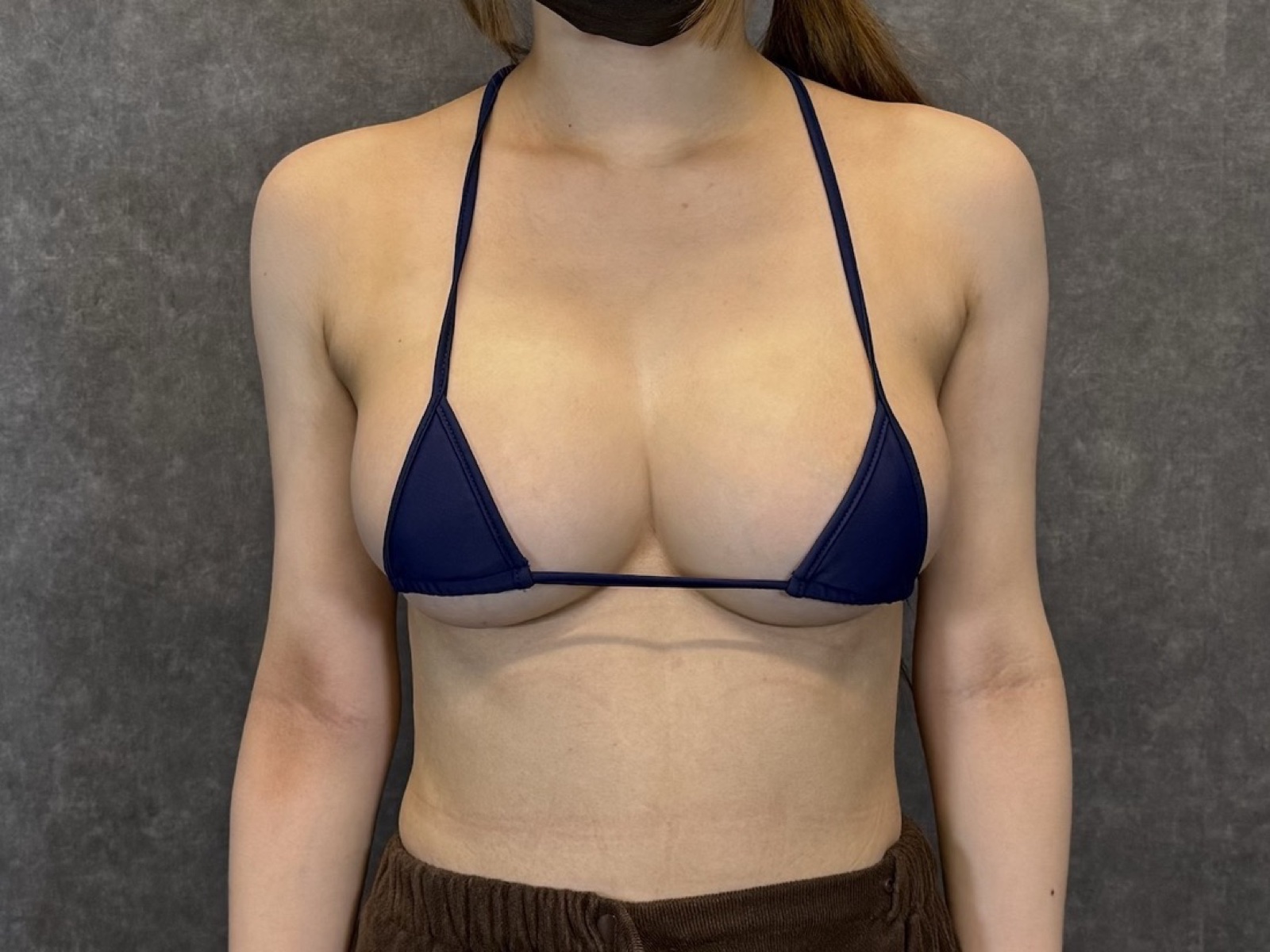
The grafted fat survives gradually as oxygen and nutrients are supplied by surrounding tissue. Graft take stabilizes around 3 to 6 months postoperatively, after which the volume becomes more stable. These photos are at 3 months and the final shape will continue to settle.
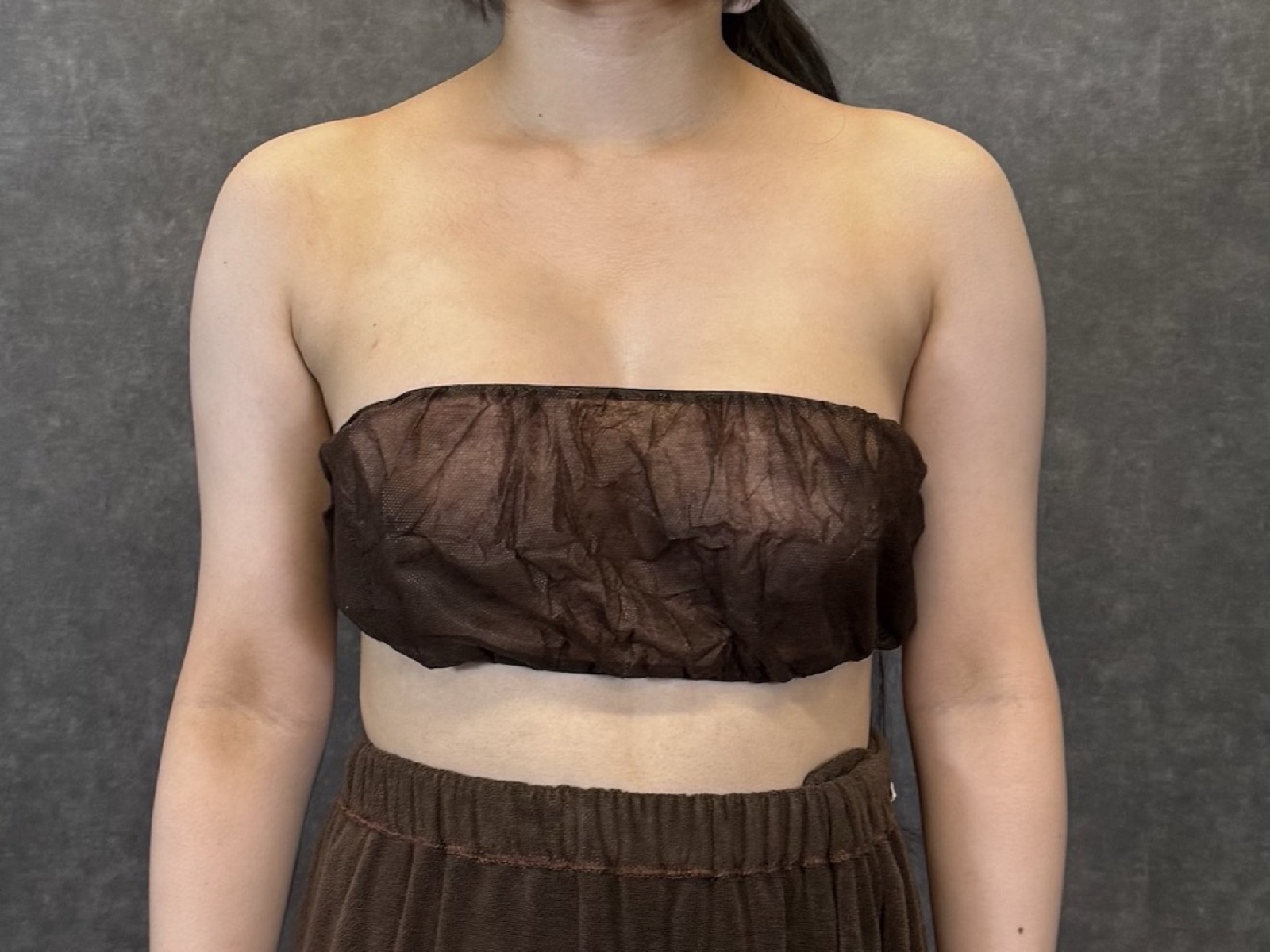
Immediately after surgery there is swelling and bruising at the suctioned areas, and over time the thighs and upper arms develop fibrosis, a period of skin tightness and firmness. Fibrosis typically peaks around 1 month after surgery and usually settles in about 3 months.
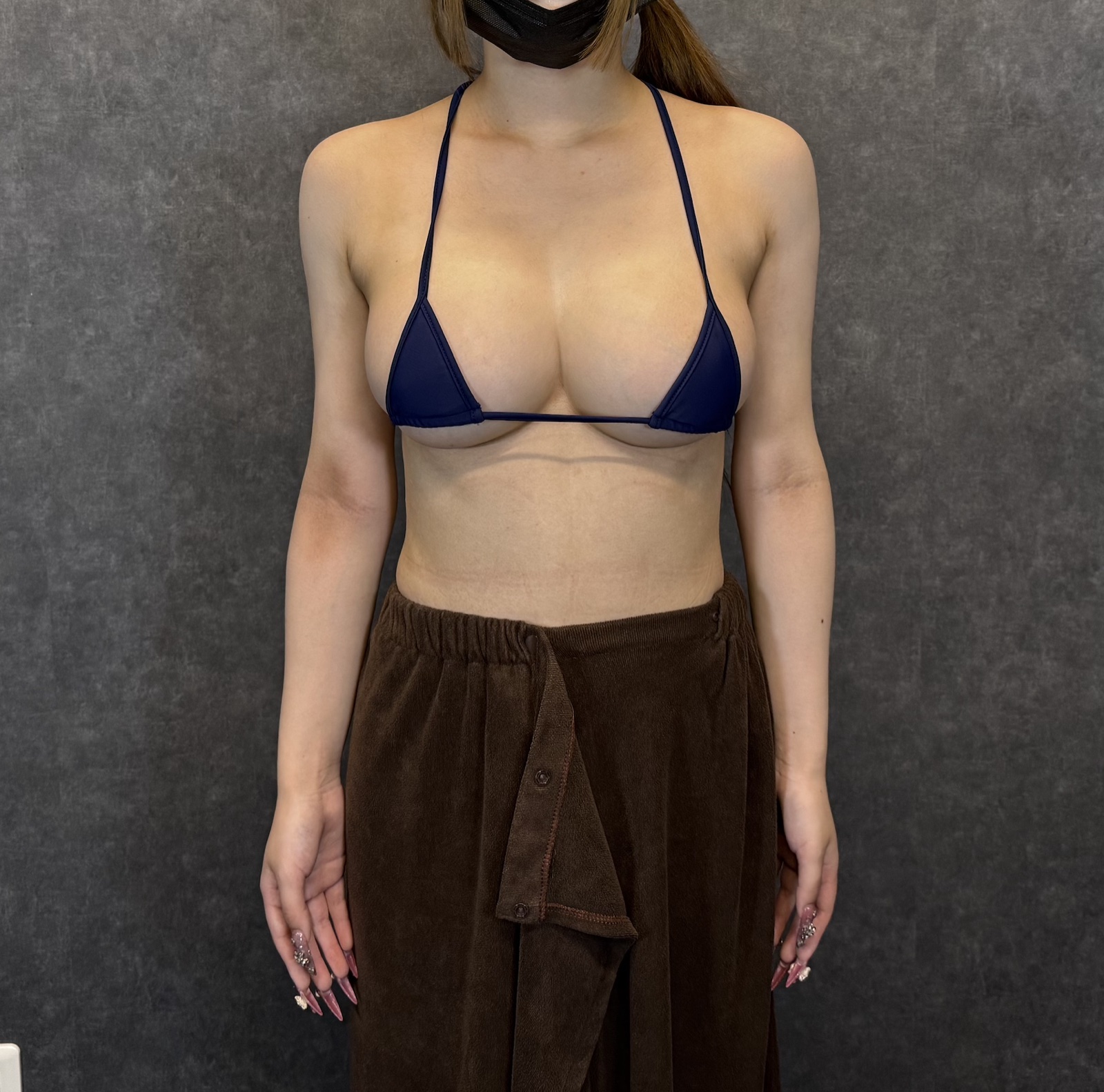
The breast injection area also feels tight for about 1 to 1.5 months. During this period the grafted fat looks larger than the final size, and part of it is reabsorbed during the graft take process until it settles.
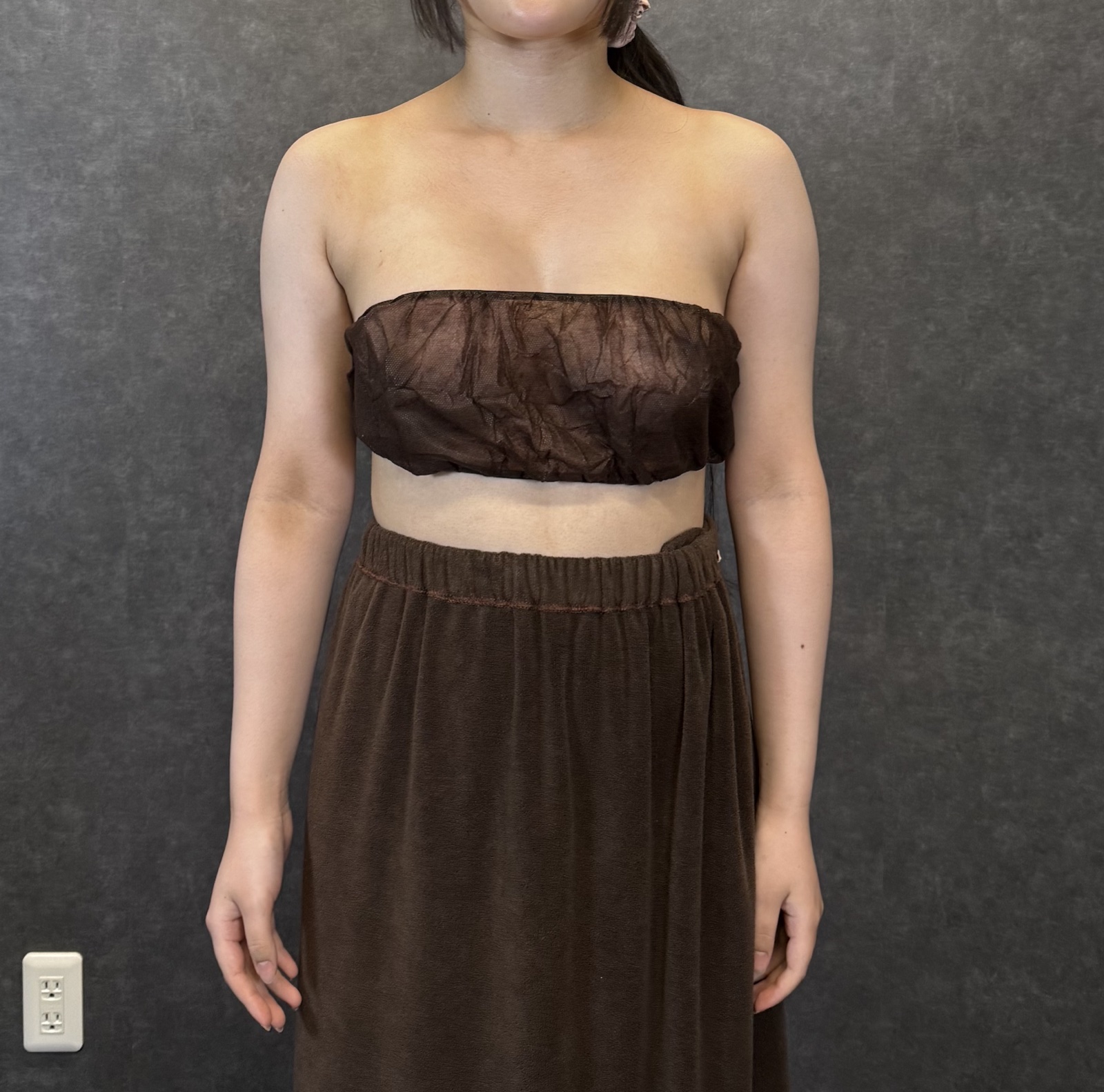
| Procedure | Fat grafting breast augmentation (harvest from full circumference of thighs, full circumference of upper arms, and flank) |
|---|---|
| Procedure details | Liposuction of the full circumference of the thighs, full circumference of the upper arms, and flank (an ultrasound device LSSA / Elsa was used on the thighs as needed), followed by centrifugation and distribution of the fat into four layers: subglandular, intrapectoral, subpectoral, and subcutaneous |
| Timing of photos | 3 months postoperatively |
| Cost | Please see the price page (final total is confirmed at consultation) |
| Main risks and side effects | Bruising, swelling, fibrosis, asymmetry, surface irregularity at suctioned sites, poor graft take or nodules, calcification, infection, and temporary changes in nipple sensation, among others |
Results vary between individuals, and these photos represent one example.
Is it hard on the body to suction the thighs and upper arms and inject into the breast all in one day?
If general anesthesia and harvest balance are properly managed, it can be done in one session
A surgery with 3,000 ml of harvest does affect circulatory dynamics and fluid balance, so it is performed under general anesthesia with managed fluid replacement and vital signs. By appropriately designing the volume and infiltration rate of tumescent fluid and giving matched intravenous fluids, most cases can be completed in a single operation. Blood test results, anemia, and comorbidities, however, may lead us to recommend staging.
Why does the fat volume decrease after centrifugation?
The volume decreases because water, anesthetic fluid, and damaged cells are removed
Harvested fat contains impurities such as anesthetic fluid, blood, damaged adipocytes, and free fatty acids. These do not survive when injected, and tend to cause inflammation and calcification. Centrifugation at low speed for a short time removes water and oil components, so that only the viable layer is used for grafting. The drop from 800 ml of harvest to 520 ml of injectable fat is the result of removing unnecessary components, and the reduction itself is a desirable processing step.
Why is an ultrasound device used on the thighs?
To soften fibrous fat and reduce damage during harvest
The thighs have particularly fibrous adipose tissue, and suctioning with a cannula alone can place excessive force on adipocytes, potentially lowering the survival rate of the harvested fat. Using an ultrasound device (LSSA, Elsa) to pre-emulsify and soften the fat before suction reduces damage to adipocytes and helps preserve the proportion of pure fat that can be used for grafting. The underlying principle is similar to other ultrasound devices, but at our clinic we use the Elsa (LSSA) system.
Possible risks, complications, and prevention
Surface irregularity, asymmetry, and nodules at the injection site are typical risks
On the liposuction side, bruising, swelling, fibrosis, surface irregularity, and asymmetry can occur. On the fat grafting side, part of the fat may not survive and be absorbed, and nodules (oil cysts), calcification, temporary changes in nipple sensation, and infection are possible. Full circumference suction avoids pulling only one side strongly, and splitting the injection into four layers reduces the volume at each point, lowering the risk of nodules and calcification. The risks cannot be reduced to zero, so the course is checked at scheduled follow-up visits. For aesthetic surgery safety standards, please also refer to the Japan Society of Aesthetic Surgery.
If you are considering enlarging your breast with fat from the thighs and upper arms, start with a whole body balance consultation
Full body fat harvest breast augmentation refines the lines of the upper arms, thighs, and flank at the same time as enlarging the breast, redesigning the overall silhouette. More harvest does not mean more volume into the breast, and the final result depends on the purity of the harvested fat, the choice of injection layers, and adjustment to preoperative asymmetry.
At our clinic the consultation covers the pinch test for subcutaneous fat, the shape and asymmetry of the breast, skin retraction potential, and medical history, after which we propose a combination of donor sites and injection volumes. Related content is also summarized on our liposuction column index.
Please start with a consultation to discuss your condition and a method that suits you.
Frequently asked questions
- How much fat can be harvested at once and grafted into the breast?
-
This depends on body size and fat distribution, but in general an aspirated volume of around 3,000 to 4,000 ml and an injected volume of around 200 to 300 ml per breast is the realistic range that balances safety and outcome. Harvestable volume and injectable volume are not the same, and more harvest does not automatically mean more injection.
- If the thighs and upper arms are suctioned at the same time, does one area end up undertreated?
-
We set a target volume for each area before starting so that harvest is not skewed. By working back from the planned breast injection volume to decide the harvest split between the thighs and upper arms, we design the procedure so that neither area is left under-treated.
- How long should compression garments be worn after full circumference liposuction?
-
A girdle is used on the thighs and a bolero on the upper arms. The guideline is to wear them for 1 week after surgery. If swelling or puffiness remains, you may continue wearing them, for example at night only. Skin retraction and fibrosis vary between individuals and are reviewed at each follow-up visit.
- How long does it take for grafted fat to settle?
-
From immediately after surgery through 2 to 3 months, the breast looks slightly larger due to swelling and inflammatory fullness. At 3 to 6 months, the balance between surviving and resorbed fat settles into the final volume. After that, significant change is uncommon.
- Can fat grafting breast augmentation be done over existing silicone implants from another clinic?
-
It is possible in some cases, but the condition of the existing implants and scar tissue, as well as the available injection layers, must be checked beforehand with ultrasound. In some situations it is safer to combine the fat graft with implant exchange or removal, which makes individualized design even more important.
Free consultation available
1 min walk from Exit 6, Ginza-itchome Station / Open 10:00–19:00
About the supervising physician

Director, AVAN TOKYO Ginza Liposuction Clinic
Graduated from Tokushima University School of Medicine. Worked at Tokushima University Hospital, Tokyo Chuo Cosmetic Surgery and Gracia Clinic before taking up the current position. Over 5,000 liposuction procedures performed (including previous positions).
Member, Japan Society of Aesthetic Surgery (JSAS) / Member, American Academy of Aesthetic Medicine / ECFMG Certificate