


Why We Don’t Centrifuge Fat in Hybrid Breast Augmentation | Non-Centrifuged Fat Grafting Explained2026.09.28
In hybrid breast augmentation, silicone implants and fat grafting are combined in the same surgery: the implant supplies volume while the fat softens the transition zones. One under-discussed choice in this design is how the harvested fat should be processed before it is injected. Using a case in a woman in her 20s as a starting point, we explain the concept of non-centrifuged fat grafting — deliberately not spinning the harvested fat before it is placed subcutaneously — from the supervising surgeon’s perspective.
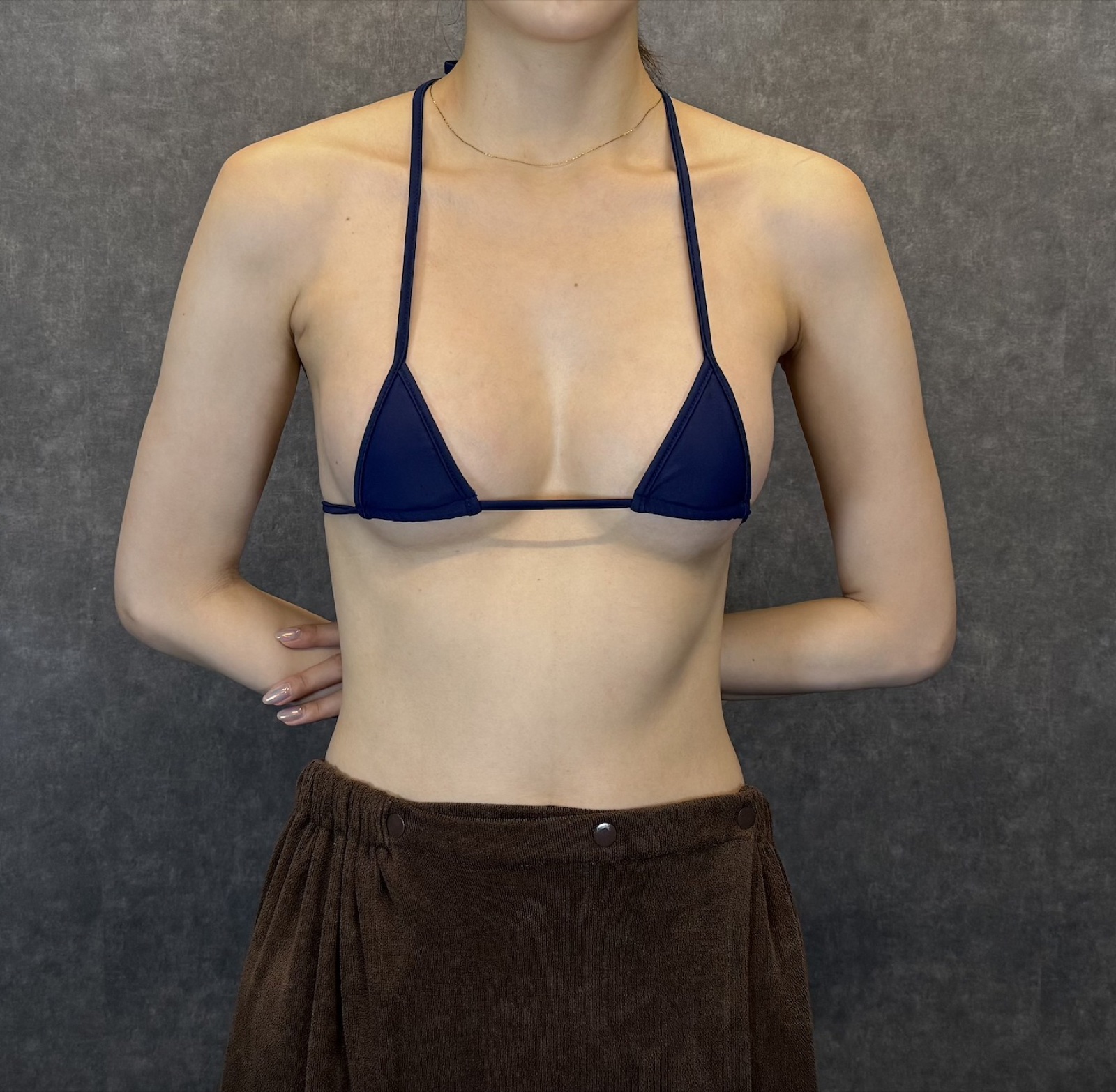
Key Points
・Non-centrifuged fat grafting means the harvested fat is not spun in a centrifuge; it is simply allowed to settle and be lightly drained, then injected as-is.
・Centrifugation separates liquid components more strongly, but it can also cause mechanical stress and crush a portion of the cells, so the non-centrifuged approach aims to preserve the elements that support graft survival.
・It pairs well with layering small amounts subcutaneously along the implant edge and upper décolletage, which is why it is often chosen in hybrid breast augmentation.
・Graft take and final look vary between individuals; centrifugation status alone does not decide the outcome — design, injection plane and total volume all matter.
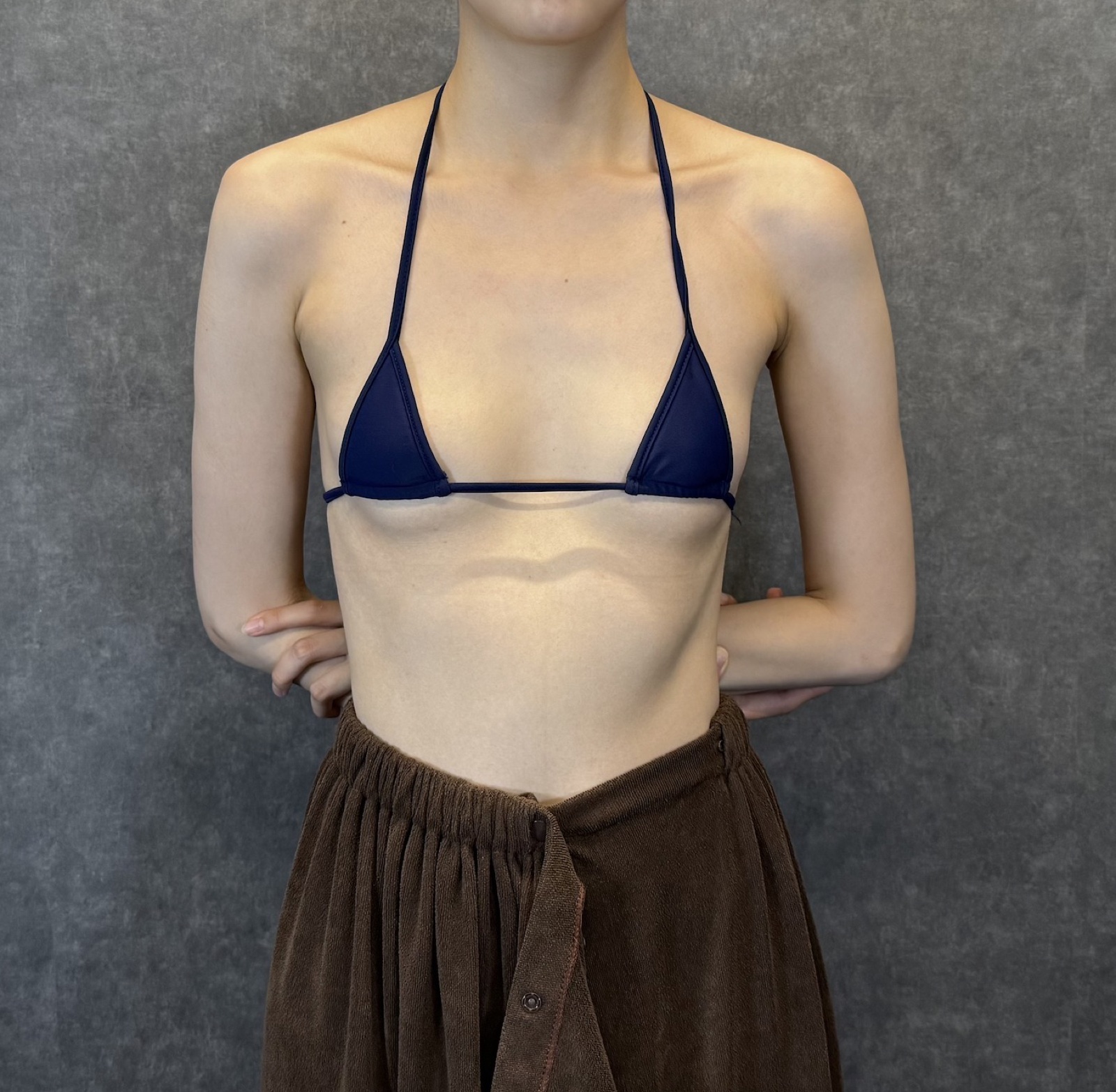
Treatment Content, Cost and Risks for This Case
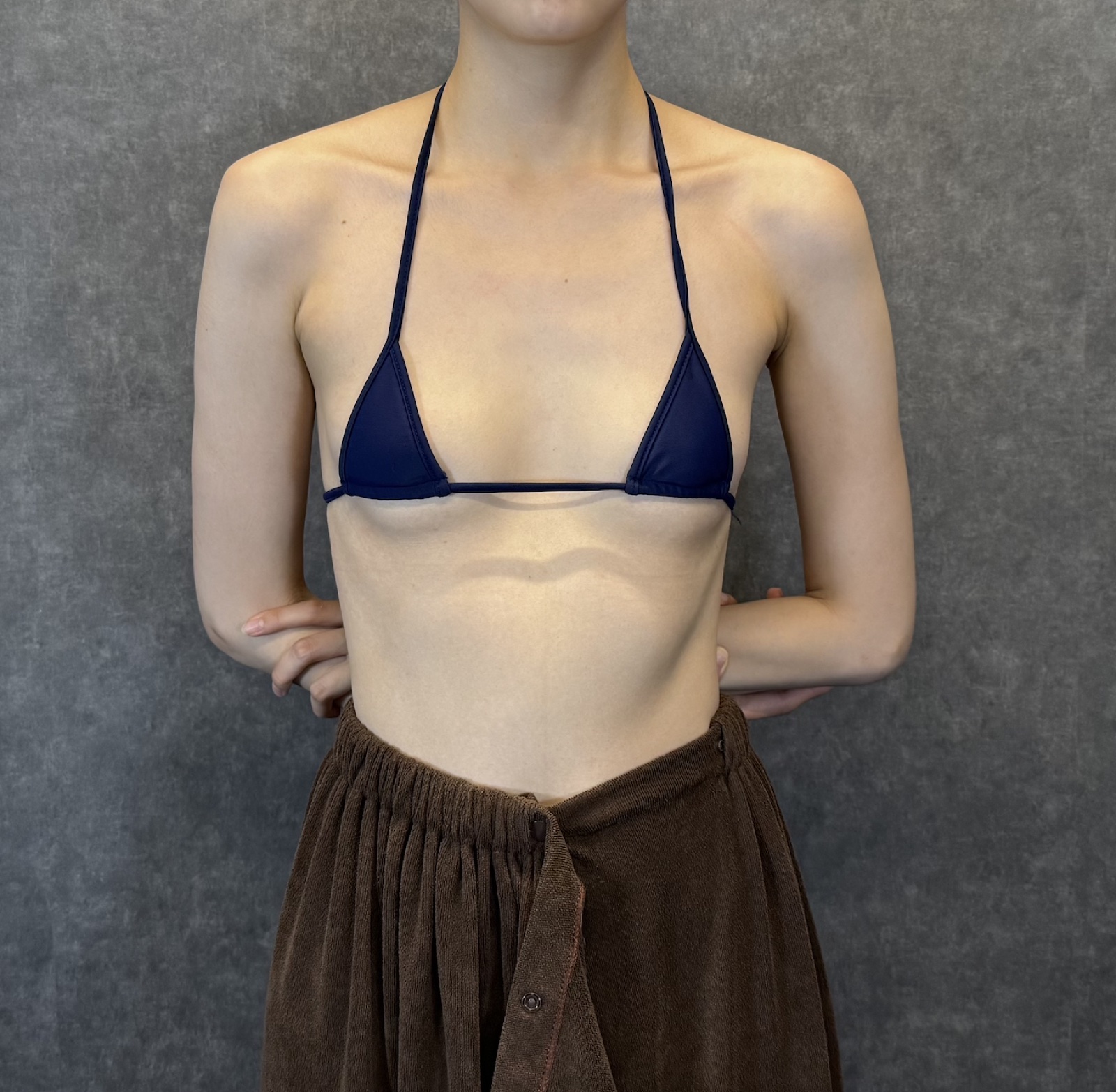
The case is one example of hybrid breast augmentation in a woman in her 20s. The treatment placed a silicone implant (Motiva Mini 250cc) under the mammary gland through a small axillary incision and injected more than 200 ml of fat harvested from the inner and front thighs into the subcutaneous plane of both breasts, together with liposuction of the front thighs. The cost was JPY 1,296,000 (tax included, monitor price): JPY 998,000 for the hybrid procedure (including one donor site) and JPY 298,000 for the front-thigh liposuction. Anesthesia, preoperative blood tests and compression garments are billed separately, and the final quote is confirmed at consultation. The main risks and side effects include swelling, bruising, edema, skin irregularity or tightness, asymmetry and scarring, plus capsular contracture and rippling from the implant, calcification or nodules and variable fat take from the graft, and irregularity or reduced sensation at the donor site. Outcomes vary between individuals; the photographs are one example.
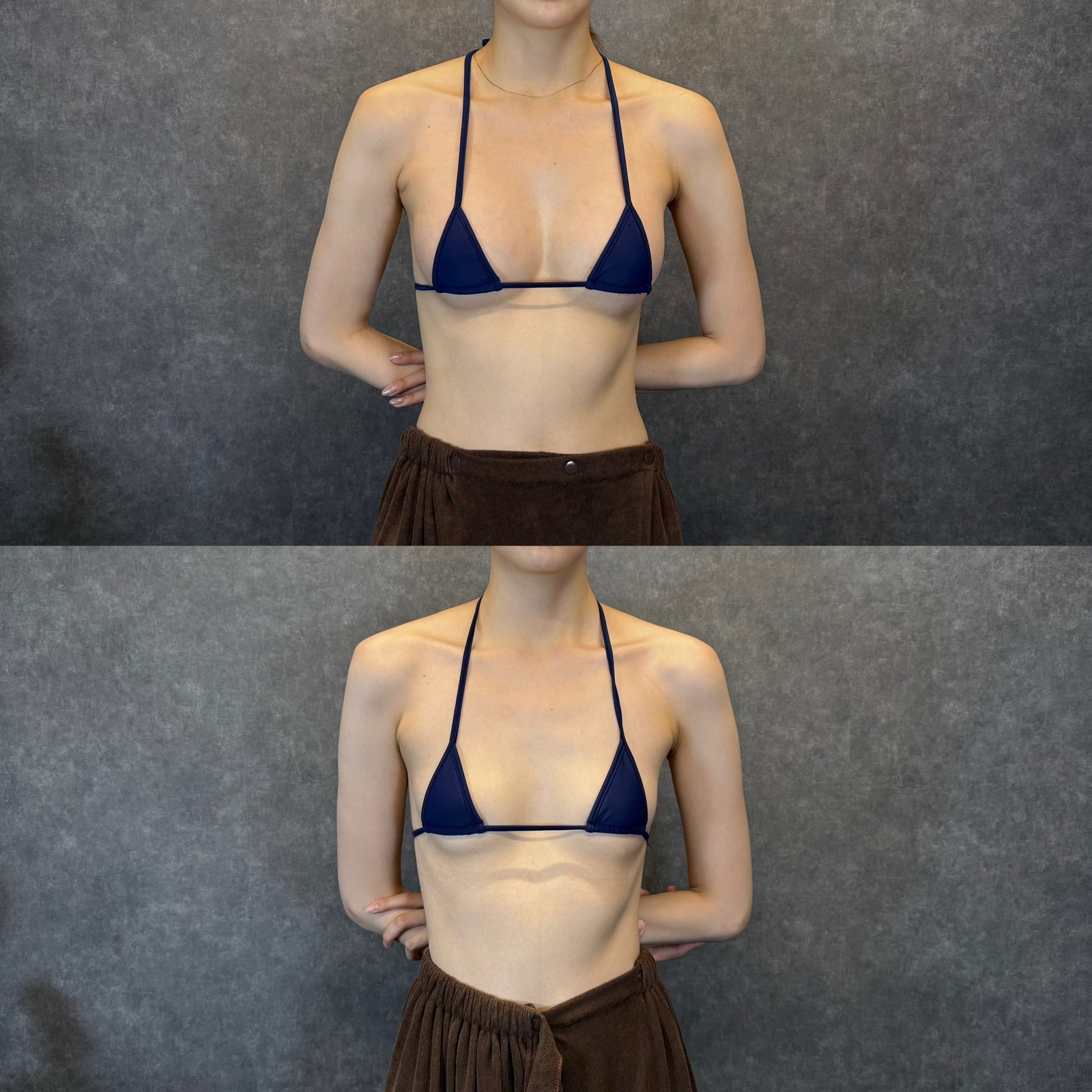
Background and Design Strategy for This Case
At consultation the patient wanted more breast volume together with a rounded contour that flowed naturally from the décolletage into the breast. She has a lean frame with thin subcutaneous cover, meaning that an implant used alone can leave the edge of the device more palpable. The plan therefore placed a Motiva Mini 250cc under the mammary gland and layered fat harvested from the inner and front thighs subcutaneously over the upper décolletage and around the implant edge. For this layering to matter, the injected fat has to take and persist as a long-term change in tissue quality — and this is exactly where the choice of fat processing comes in.
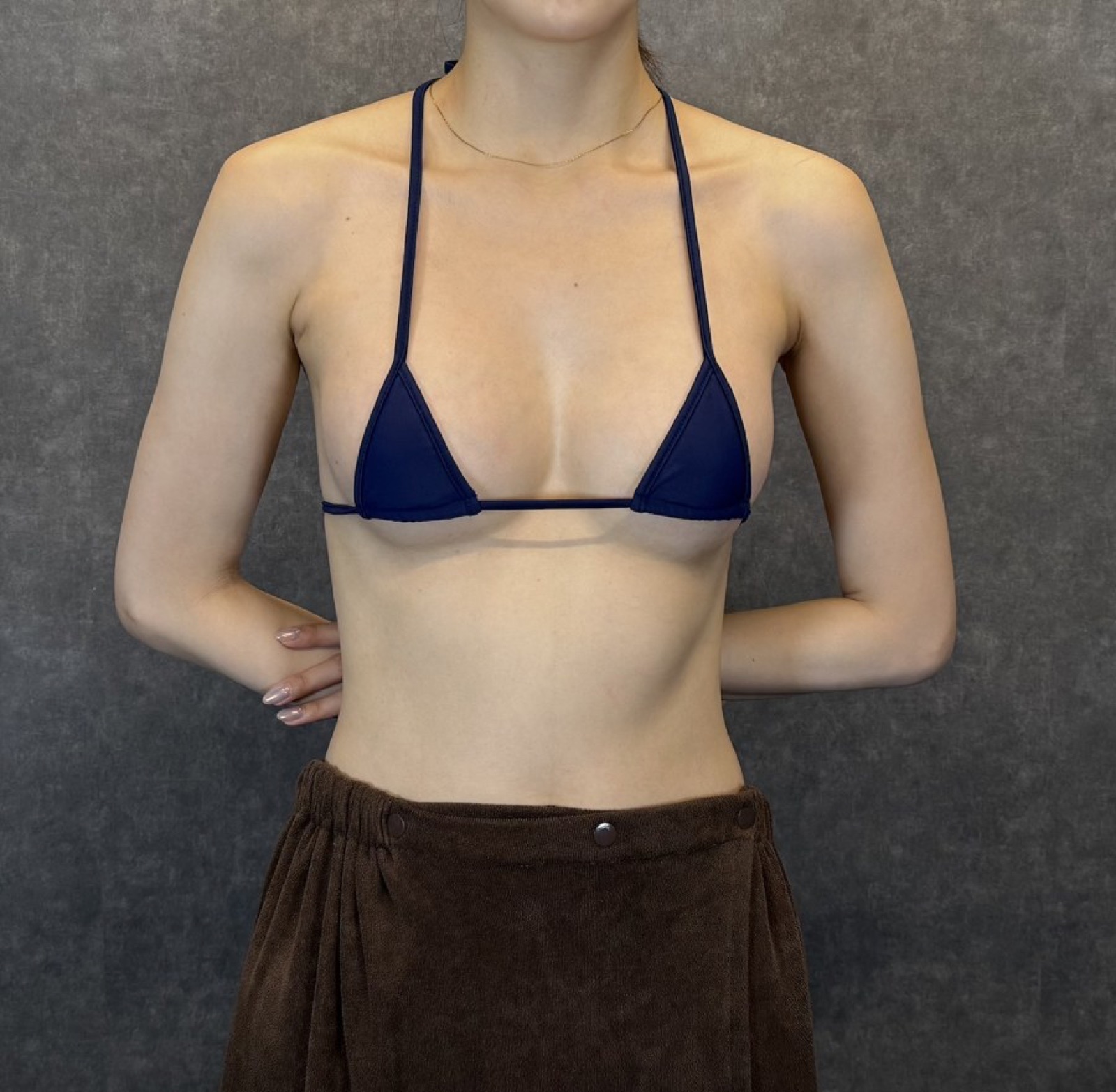
Why We Don’t Centrifuge | The Rationale Behind Non-Centrifuged Fat Grafting
Freshly aspirated fat contains fat lobules mixed with anesthetic fluid, blood and free oil droplets. Centrifugation is a classical way to separate these by density and concentrate the fat, and it does reduce the fluid fraction. Strong centrifugal force, however, can mechanically stress the adipocytes and their surrounding vessels and stroma; some cells can be crushed, and the tissue itself can compact into layers that slow the return of blood supply immediately after injection.
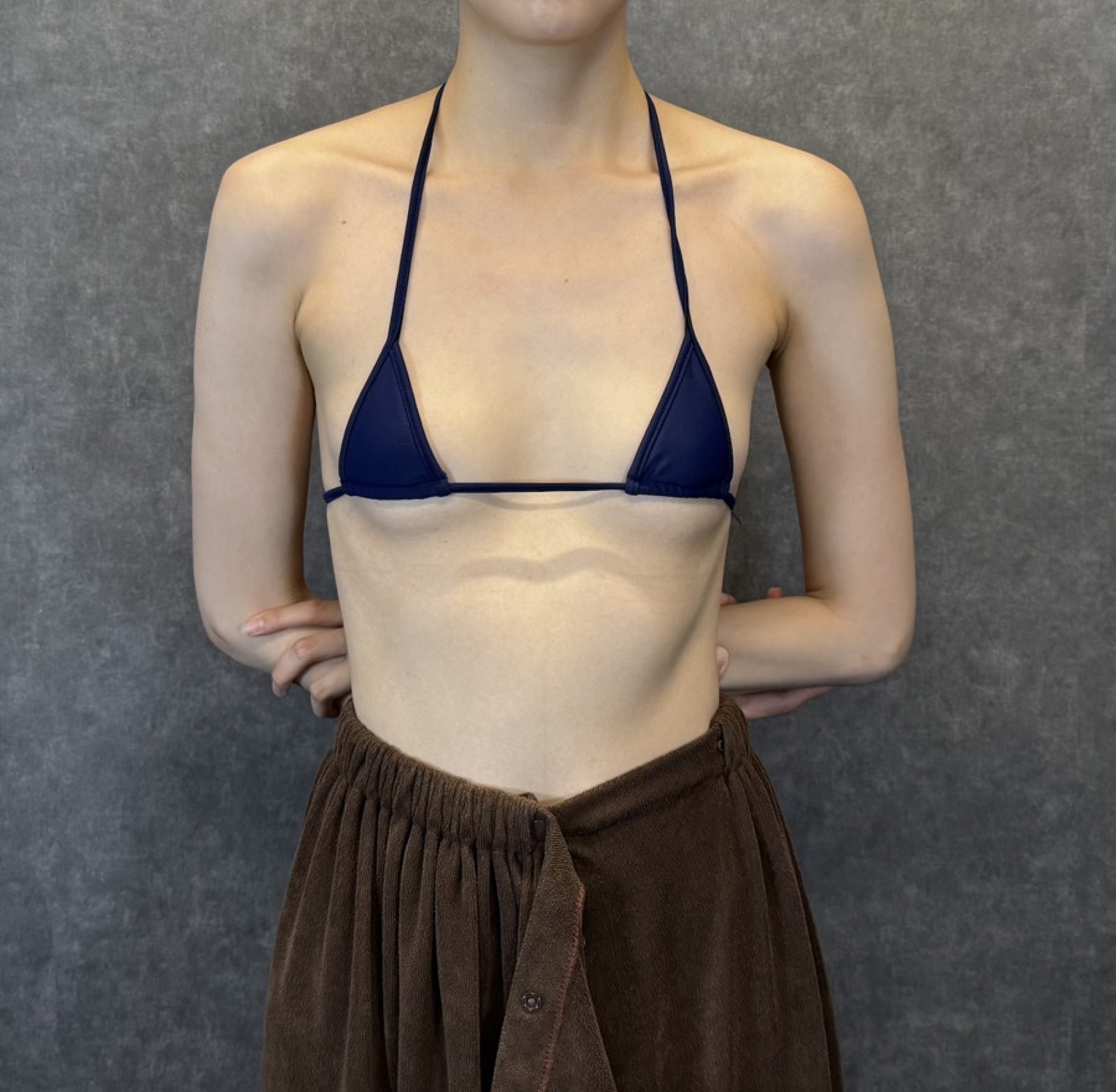
This alternative is built on treating the harvested fat as a graft: leaving it to settle, gently draining excess fluid, and preserving the adipocytes together with their surrounding vascular progenitors, stromal cells and extracellular matrix as much as possible before slow, small-volume injection through a fine cannula. Because hybrid breast augmentation aims for a thin transitional layer that hides the edge of the implant, protecting the quality of the tissue itself sits well with that goal.
Strengths and Limits
The strength of this technique is that the elements involved in graft survival are not damaged more than necessary. Along the implant edge and the upper décolletage — where the subcutaneous plane is thin — the days immediately after surgery, before blood supply is restored around the injected fat, are decisive for take. Undamaged tissue is thought to receive oxygen and nutrients from the surrounding tissue more readily, which may raise the floor of graft survival.
The trade-off is real. Because more fluid is left behind, the actual amount of fat tissue per injected millilitre is lower than after centrifugation. The plan therefore has to secure enough harvested volume and inject a suitable overage. “Skipping centrifugation” does not automatically mean better take; it is one design philosophy among several, chosen deliberately.
Subcutaneous Design at the Décolletage and Implant Edge
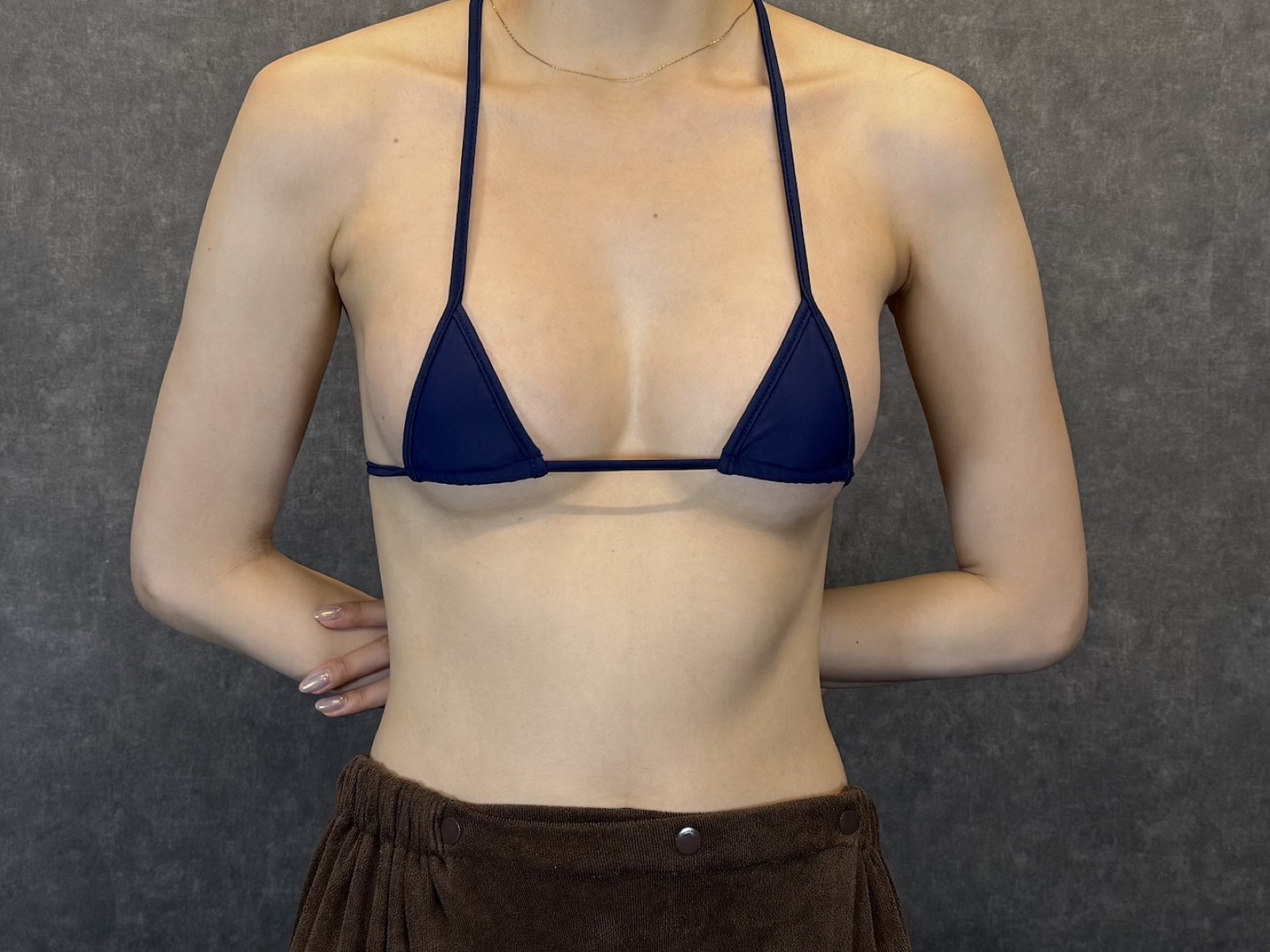
In this case, 116 ml on the right and 100 ml on the left were injected into the subcutaneous plane of the breasts from multiple directions in small amounts. Priority went to the upper décolletage and the subcutaneous area from the upper edge of the implant out laterally. Bone contour and chest wall angle show through most easily there, and when the fat layer between the implant and the skin is thin, the implant outline can become visible. Re-laying the preserved fat as a thin subcutaneous layer softens the transition between the implant and the patient’s own tissue.
Intraoperative Observations and What We Watch at 1 Month
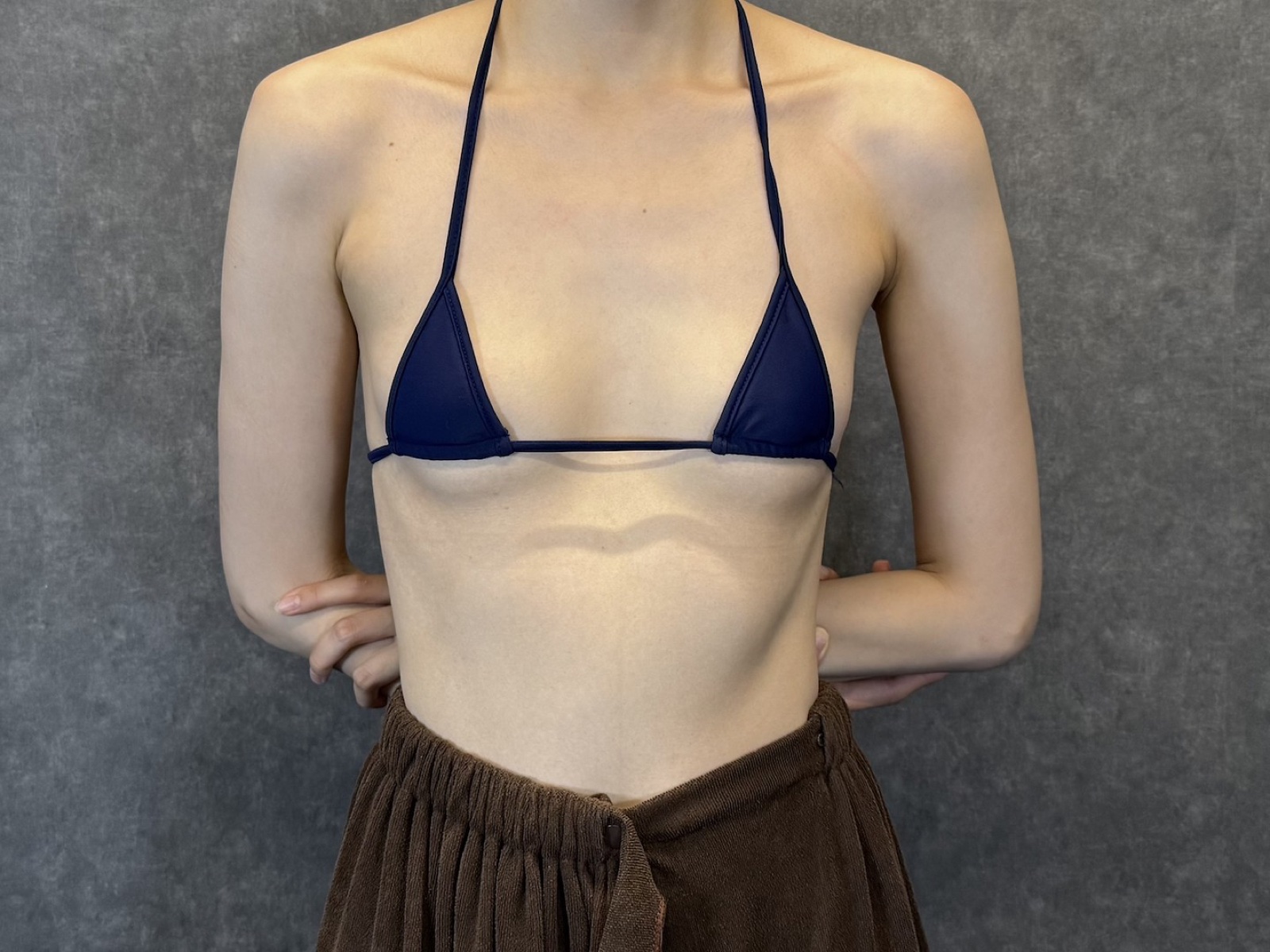
Intraoperatively, a small axillary incision was used to develop the subglandular pocket carefully, and the Motiva Mini 250cc was placed symmetrically. During injection, subcutaneous fill and skin smoothness were checked by palpation, and the volume per pass was kept small so that layers could be built up gradually. At the 1-month mark, swelling and bruising had settled and the projection and roundness of the breast were clearly visible. The line from the upper chest to the breast flowed naturally, with no visible implant outline. Fat integration progresses over months, however, so we follow the case with the assumption that this stage is not the final result.
Choosing the Donor Sites (Inner and Front Thigh)
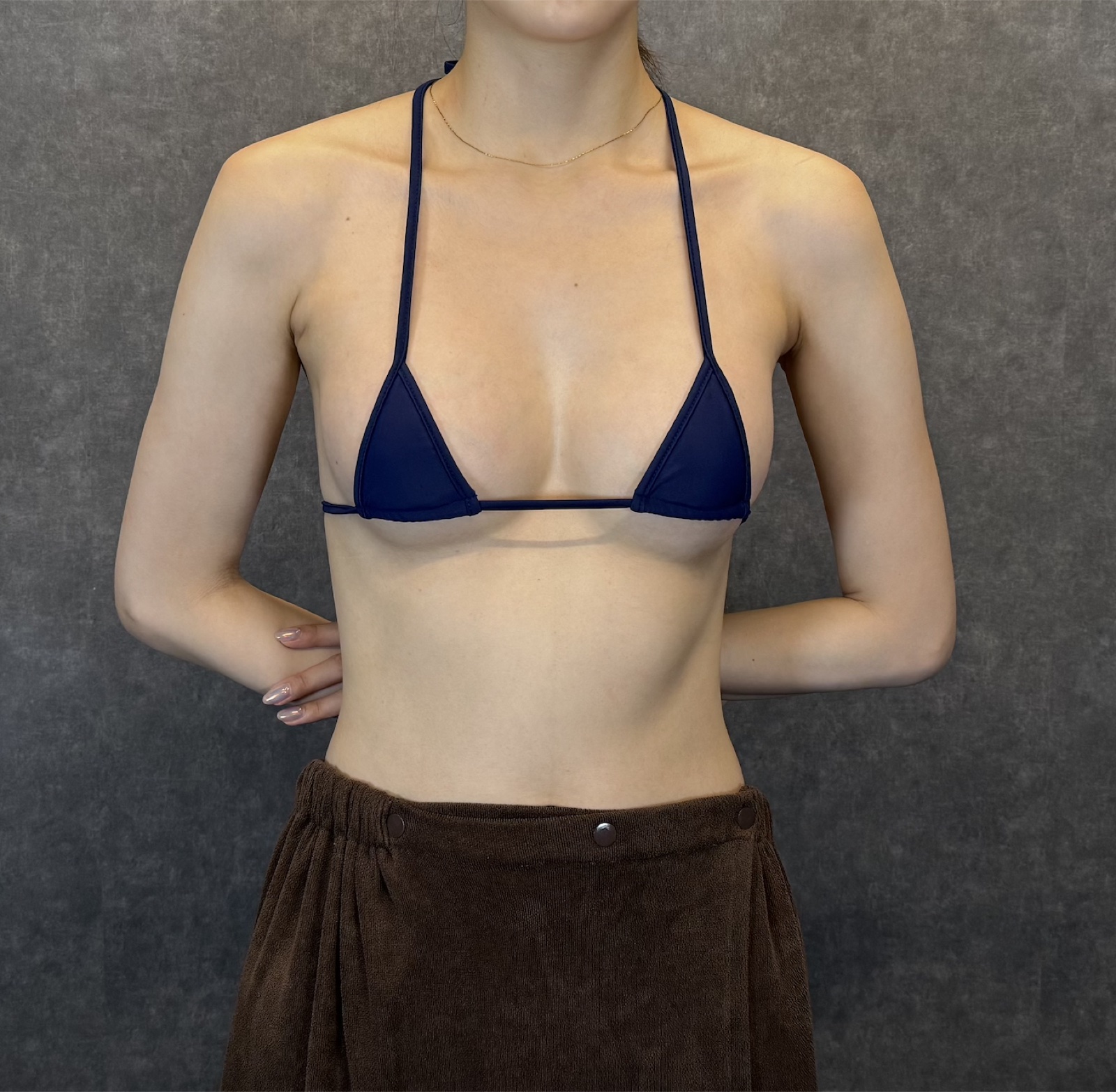
For this case fat was harvested from two donor areas — the inner thigh and the front thigh. The inner thigh alone would not have delivered enough volume in this body type, and including the front thigh also helps balance the anterior and posterior thigh silhouette. Thigh fat aspirates are relatively stable in consistency, which we consider one reason they suit the non-centrifuged approach. Injected volume is always chosen by working backwards from the target contour rather than from harvesting efficiency alone.
Additional Risks and Side Effects
Implant-related risks include capsular contracture, implant rupture or malposition, rippling, infection and changes in sensation; implants are not permanent and may require exchange or removal in the future. Fat-graft-related risks include calcification, nodules and oil cysts, individual variability in graft take, and irregularity or reduced sensation at the thigh donor site. Anesthesia can produce nausea, dizziness or (rarely) allergic reactions. Most of these settle with time, but degree and duration vary; if a symptom is concerning, please consult your surgeon rather than self-diagnosing. For safety standards in aesthetic surgery, please also refer to the Japan Society of Aesthetic Surgery.
Frequently Asked Questions
Q. If you don’t centrifuge, doesn’t the extra fluid just get absorbed right away?
Non-centrifuged fat does keep more fluid, so the immediate volume includes some excess water that is absorbed over days to weeks. That absorption does not by itself mean the fat has not taken. The injected volume is planned with that absorption in mind, and the final result is judged over several months.
Q. Does non-centrifuged fat take better than centrifuged fat?
Not automatically. Donor site, cannula gauge, injection plane, volume per pass, postoperative compression and general condition all influence graft take. Skipping centrifugation is one way to reduce mechanical stress on the cells and matrix; it should be judged together with the rest of the plan.
Q. Can non-centrifuged fat grafting alone create the décolletage and cleavage roundness?
Décolletage and cleavage design come from the implant’s position, size and pocket dissection combined with how the subcutaneous fat is layered. Non-centrifuged fat is strong as a finishing layer that softens the transition, but it is not the tool for delivering large volume on its own. The design divides the work between implant and fat.
Q. Isn’t harvesting from both the inner and front thigh a heavier burden?
Concentrating all harvest in one donor site raises the risk of irregularity or a depression there. Splitting harvest across two sites tends to keep the donor contour smoother and distributes the load. From the standpoint of the final result and safety, we consider it a reasonable choice.
Q. When does the result stabilize?
Implant volume approaches its final look within a few weeks as swelling settles, and fat take generally stabilizes over about 3 to 6 months. Because the course varies between individuals, we follow the patient with periodic checkups.
For related topics, please also see our liposuction column archive.
──────────────
Supervising physician: Shin Moriwaki, MD
Member of the Japan Society of Aesthetic Surgery (JSAS) / Member of the American Academy of Aesthetic Medicine
ECFMG Certificate (U.S. medical licensing qualification)
──────────────
📍AVAN TOKYO GINZA LIPOSUCTION CLINIC
English / 中文 / Tiếng Việt available
Bookings and consultations accepted via DM / LINE / Website / Phone.