


Who Bruises Heavily After Liposuction? A Doctor Explains Capillary and Fat-Layer Differences2026.06.14
Bruising after liposuction varies greatly from person to person: even when the same area is treated with the same technique, some people develop almost no bruises while others bruise heavily. In this article, our director explains the characteristics of people who bruise heavily, from the perspectives of capillary density, fat-layer thickness and clotting function.
The short answer: How heavily you bruise is largely determined by three factors: “capillary fragility, fat-layer thickness and clotting function.”
How bruising appears varies with constitution, treatment area and lifestyle, but a color change from purple to blue to green to yellow is a normal part of healing.
The key points for minimizing bruising are avoiding alcohol, smoking and certain supplements before surgery, and wearing compression after surgery.
Why does liposuction bruising differ from person to person?
Bruising is an unavoidable topic when discussing the course of recovery after liposuction.
Even when the same area is treated with the same technique, some people develop almost no bruises, while others bruise so heavily that the entire thigh turns purple.
AVAN TOKYO receives many inquiries along the lines of “Is my bruising unusually bad?”, but in reality constitution, anatomical structure and lifestyle are intricately intertwined, so individual differences in bruising are a phenomenon that can be explained medically.
In this article, I explain in specialist detail the characteristics of people who bruise heavily after liposuction, from the perspectives of capillary density, fat-layer thickness and clotting function.
Fees: Please see our price list. The final amount is confirmed at your consultation. For the main risks, see here. Results and recovery vary from person to person.
The mechanism of liposuction bruising: what is actually happening?
Liposuction is a procedure in which a cannula (a thin metal tube) is inserted into the subcutaneous fat layer to physically break up and suction out fat cells.
Countless capillaries run through the fat layer in a mesh-like network, and a certain number are inevitably damaged as the cannula moves.
Blood components leaking from the damaged capillaries seep under the skin and show through the skin surface — this is what bruising actually is.
However careful the surgeon, capillary damage cannot be reduced to zero
It is anatomically impossible to perform liposuction while completely avoiding the blood vessels.
What matters is technique that preserves the larger vessels (perforators) while keeping unavoidable capillary damage to a minimum.
Ultrasound devices such as ELSA (LSSA) reduce damage to blood vessels by selectively emulsifying fat, but even so, they cannot completely prevent bruising.
Three main characteristics of people who bruise heavily
① A constitution with fragile or dense capillaries
People who are born with thin capillaries with thin walls tend to leak blood components even with slight physical stimulation.
People who “bruise easily” in daily life or who “find bruises without remembering bumping into anything” are thought to be more likely to bruise heavily after liposuction as well.
A chronic deficiency of vitamin C and vitamin P weakens the collagen structure of the vessel walls, which is another contributing factor.
② Areas with thick fat layers and deep blood vessels
In areas where the fat layer is thick, at 3–5 cm, such as the outer thighs and abdomen, it takes longer for deep bleeding to reach the skin surface.
In addition, when the fat layer is thick, leaked blood tends to spread over a wide area, so the discolored area looks larger as a result.
Conversely, in areas with thin fat layers such as the upper arms and under the chin, any bruising that appears is often limited in extent.
③ Lifestyle habits that affect clotting and blood flow
Alcohol, smoking and supplements (especially DHA/EPA, ginkgo leaf and vitamin E) act to thin the blood and delay hemostasis. Regular use of low-dose oral contraceptives and fever and pain relievers also has an effect.
This is why moderation for two weeks before surgery is recommended.
How likely bruising is, by area
Full circumference of the thighs
This area has a well-developed vascular network, and the inner thighs and the backs of the knees in particular are prone to heavy bruising.
Because of gravity, blood can travel down below the knees, and in some cases the discoloration spreads as far as the ankles.
Abdomen
In the lower abdomen the subcutaneous fat layer is deep, and bruising tends to spread widely. Around the navel, blood vessels are densely concentrated, so bruising may appear darker there.
Upper arms and under the chin
Because the fat layer is thin, the amount of bleeding itself is small, but because the skin is thin, the color tends to be more noticeable.
The course of bruising and color changes: a normal healing process
Liposuction bruising usually peaks two to three days after surgery and disappears within two to three weeks, changing from purple to blue to green to yellow.
These color changes are a normal process in which hemoglobin is broken down and metabolized into biliverdin and bilirubin, and there is no need to worry.
Week 1
Purple to reddish-purple. This is when the bruising looks darkest, and also when patients tend to feel most anxious.
Week 2
The color changes to blue or green. Because of gravity, it moves downward, and new discoloration may appear around the ankles or the décolletage.
Week 3 onward
The color fades to yellow and closer to your normal skin tone, and almost disappears. Lasting pigmentation is rare, but it may linger if sun protection is insufficient.
What you can do to minimize bruising
Preoperative care
From two weeks before surgery, strictly avoid alcohol and smoking and stop any blood-thinning supplements. Consciously taking in vitamin C, iron and protein to support the vessel walls is also thought to be helpful.
Postoperative care
It is important to keep wearing compression 24 hours a day. Compression physically limits leakage from the blood vessels and prevents bruising from spreading.
You may shower from the day after surgery, but please avoid baths, saunas and strenuous exercise for two weeks.
Diet and nutrition
Vitamin K (found in natto and green and yellow vegetables) supports hemostasis. However, if you are taking warfarin, please consult your doctor.
How AVAN TOKYO addresses liposuction bruising
To minimize bruising from liposuction, AVAN TOKYO takes the following measures: (1) staged liposuction using ultra-fine cannulas, (2) liposuction that reduces the burden on blood vessels by combining an ultrasound device when needed, (3) assessment of each patient’s constitution and lifestyle guidance at the preoperative consultation, and (4) strict adherence to a postoperative compression protocol.
Even so, constitutional factors cannot be eliminated entirely, so we explain everything thoroughly before surgery and support you so that you can get through the downtime without undue anxiety.
For safety standards in cosmetic surgery, please also refer to information from the Japan Society of Aesthetic Surgery. For further explanations about liposuction, please see our list of related liposuction articles.
Main risks and side effects
| Treatment | Main risks and side effects |
|---|---|
| Liposuction | Swelling, puffiness and bruising; contracture (a tight feeling, unevenness, firmness); rarely, infection or pigmentation |
When intravenous sedation (or general anesthesia) is used, a preoperative blood test is required.
Frequently Asked Questions
- Who is more likely to bruise heavily after liposuction?
- People with a constitution of thin capillaries with thin walls (those who bruise easily in daily life), people having liposuction on areas with thick fat layers such as the outer thighs and abdomen, and people who habitually drink alcohol, smoke or take blood-thinning supplements tend to bruise more heavily.
- Is there anything I can do before surgery to reduce bruising?
- It is important to strictly avoid alcohol and smoking and to stop any blood-thinning supplements from two weeks before surgery. Consciously taking in vitamin C, iron and protein is also thought to be helpful. If you are taking any medication, please tell the doctor at your consultation.
Summary: liposuction bruising depends on constitution and area
How heavily you bruise after liposuction is largely determined by three factors: capillary fragility, fat-layer thickness and clotting function.
The surgeon’s skill also has a large influence, but the patient’s own constitutional factors cannot be ignored.
Even if you feel your bruising is “worse than other people’s,” this is an individual difference that can be explained medically, and in most cases it fades naturally within two to three weeks.
If you have any symptoms that concern you, please do not judge for yourself; always consult your doctor.
Consultations about liposuction downtime are welcome
1 minute walk from Ginza-itchome Station Exit 6 / Reception 10:00–19:00
About the reviewing doctor
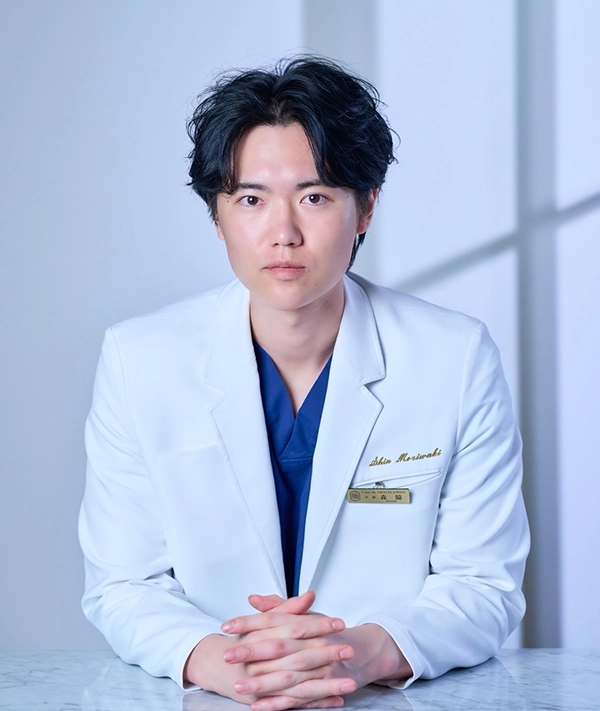
Dr. Shin Moriwaki
Director, AVAN TOKYO Ginza Liposuction Clinic
Graduate of Tokushima University School of Medicine.
After working at Tokushima University Hospital, Tokyo Chuo Cosmetic Surgery and Gracia Clinic, he took up his current position.
At least 3,000 cosmetic surgeries performed from January 2022 through November 2026, including previous positions.
Certifications
・VASER Lipo certified physician
・ECFMG Certificate
Memberships
・Member, Japan Society of Aesthetic Surgery (JSAS)
・Full member, Japanese Society for Regenerative Medicine
・Member, American Academy of Aesthetic Medicine