


Case Study: Fat Transfer Breast Augmentation Using Fat Harvested from the Upper Arms2026.07.30
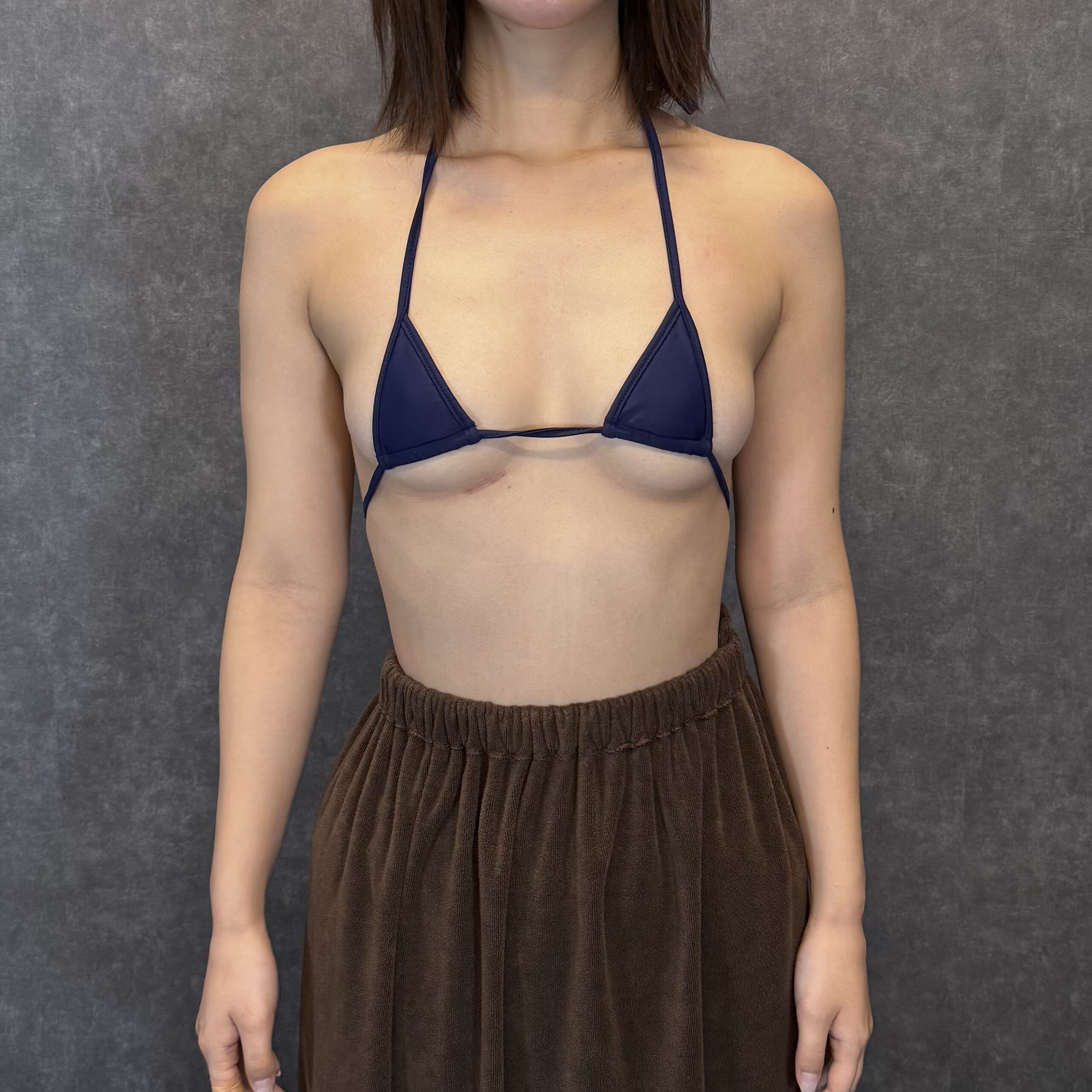
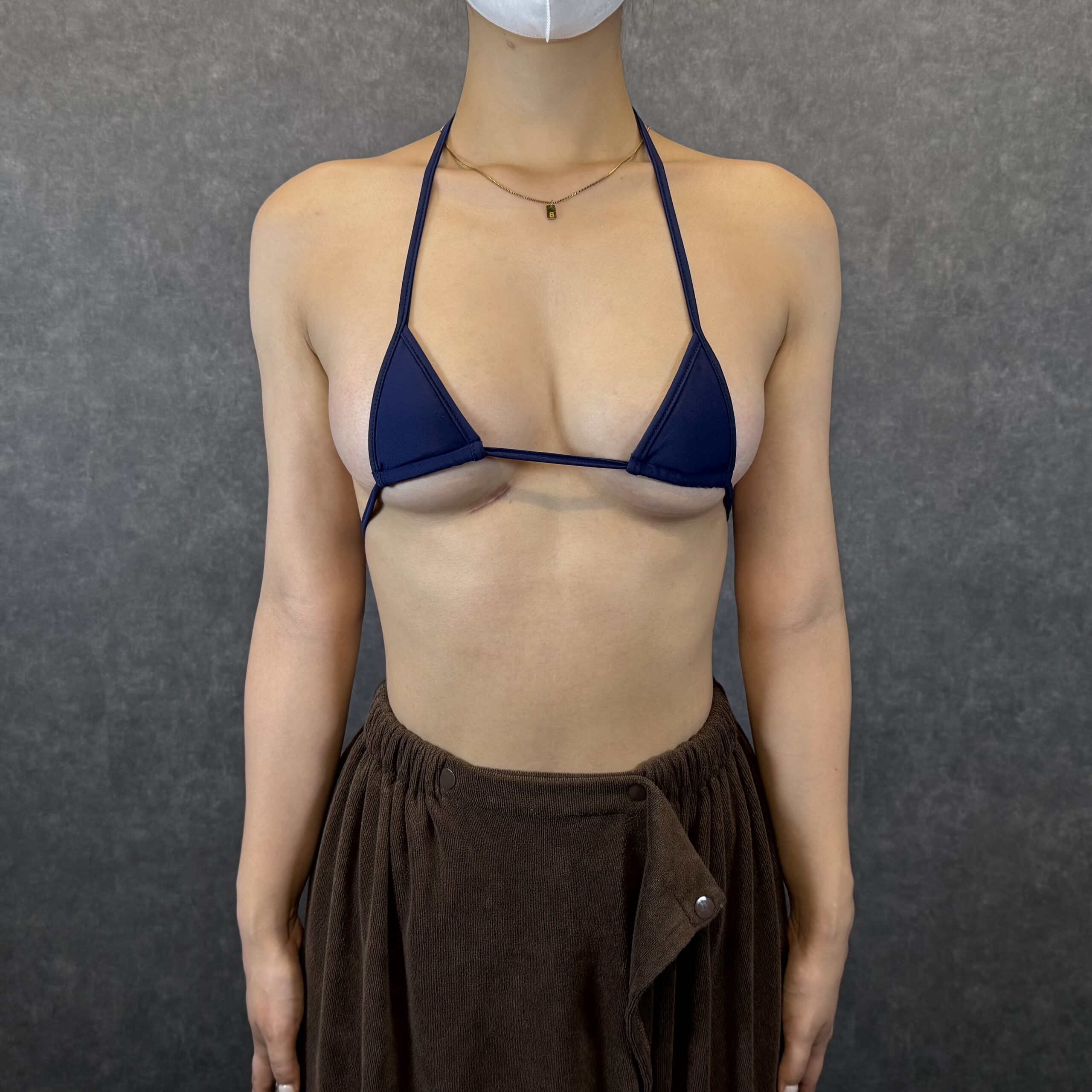
6 Months After Surgery
This case features a 22-year-old female who underwent:
• Circumferential upper arm liposuction
• Accessory breast (axillary breast tissue) liposuction
• Upper and lower scapular (upper back) liposuction
• Arm thread lift
• Autologous fat transfer breast augmentation
Surgical Details
During surgery:
• Approximately 1,000 mL of purified fat was harvested.
• The fat was processed using centrifugation at 600 rpm.
• Fat grafting was performed with 260 mL injected into the right breast and 250 mL into the left breast.
Results at 6 Months
At six months after surgery, the breasts have maintained a soft, natural feel with stable volume and a well-balanced contour.
At AVAN TOKYO, we believe that long-term fat graft survival depends not only on where the fat is harvested, but also on how the fat is handled throughout the entire procedure.
Three Principles We Believe Are Essential for Successful Fat Grafting
1. Selecting High-Quality Fat Cells
Harvested fat is never injected immediately.
Instead, we carefully process the fat using optimized centrifugation protocols to remove excess fluid, blood, and damaged tissue while preserving healthy fat cells for transplantation.
The quality of fat processing is one of the most important factors influencing long-term outcomes.
2. Careful Planning of Injection Volume and Injection Planes
Successful fat grafting is not about injecting the largest possible volume.
Fat cells require oxygen and nutrients from the surrounding tissues until a new blood supply develops.
For this reason, we carefully distribute the fat through multiple anatomical layers rather than concentrating large amounts in one location.
Although the ideal volume varies from patient to patient, carefully placing approximately 200–250 mL per breast often provides stable, natural-looking, and long-lasting results.
3. Minimizing the Time Between Harvesting and Injection
Fat cells and adipose-derived stem cells gradually lose viability once they are removed from the body.
Therefore, at AVAN TOKYO, we minimize the time between fat harvesting, processing, and reinjection whenever possible to reduce cellular stress and preserve cell viability.
Fat Graft Survival Depends on Multiple Factors
The long-term survival of transferred fat is influenced by many variables, including:
• Age
• Body Mass Index (BMI)
• Smoking history
• Postoperative lifestyle and recovery
• Injection volume
• The condition and blood supply of the recipient breast tissue
For this reason, it is not accurate to say that “fat from the upper arms does not survive” or that “thigh fat always survives better.”
Successful fat transfer breast augmentation depends on the entire surgical process rather than on the donor site alone.
The AVAN TOKYO Approach
Every patient has a unique body shape and aesthetic goal.
At AVAN TOKYO, we carefully plan every step of the procedure—from donor site selection and fat harvesting to fat processing and injection technique—to maximize the likelihood of achieving natural, long-lasting breast volume.
Our goal is not simply to enlarge the breasts, but to create elegant body proportions and beautiful breast contours that continue to look natural months and years after surgery.
Looking ahead, we are also preparing to introduce regenerative medicine using cultured adipose-derived stem cells to further expand the possibilities of fat transfer breast augmentation.
This case is published with the patient’s informed consent.
Fat graft survival and surgical outcomes vary among individuals.
This article is intended for patient education and should not replace an individualized consultation with a qualified plastic surgeon.