


166 cm, 49 kg Slim Patient | 360° Arm & Accessory Breast Liposuction + Hybrid Breast Augmentation | 6-Month Follow-up2026.08.11
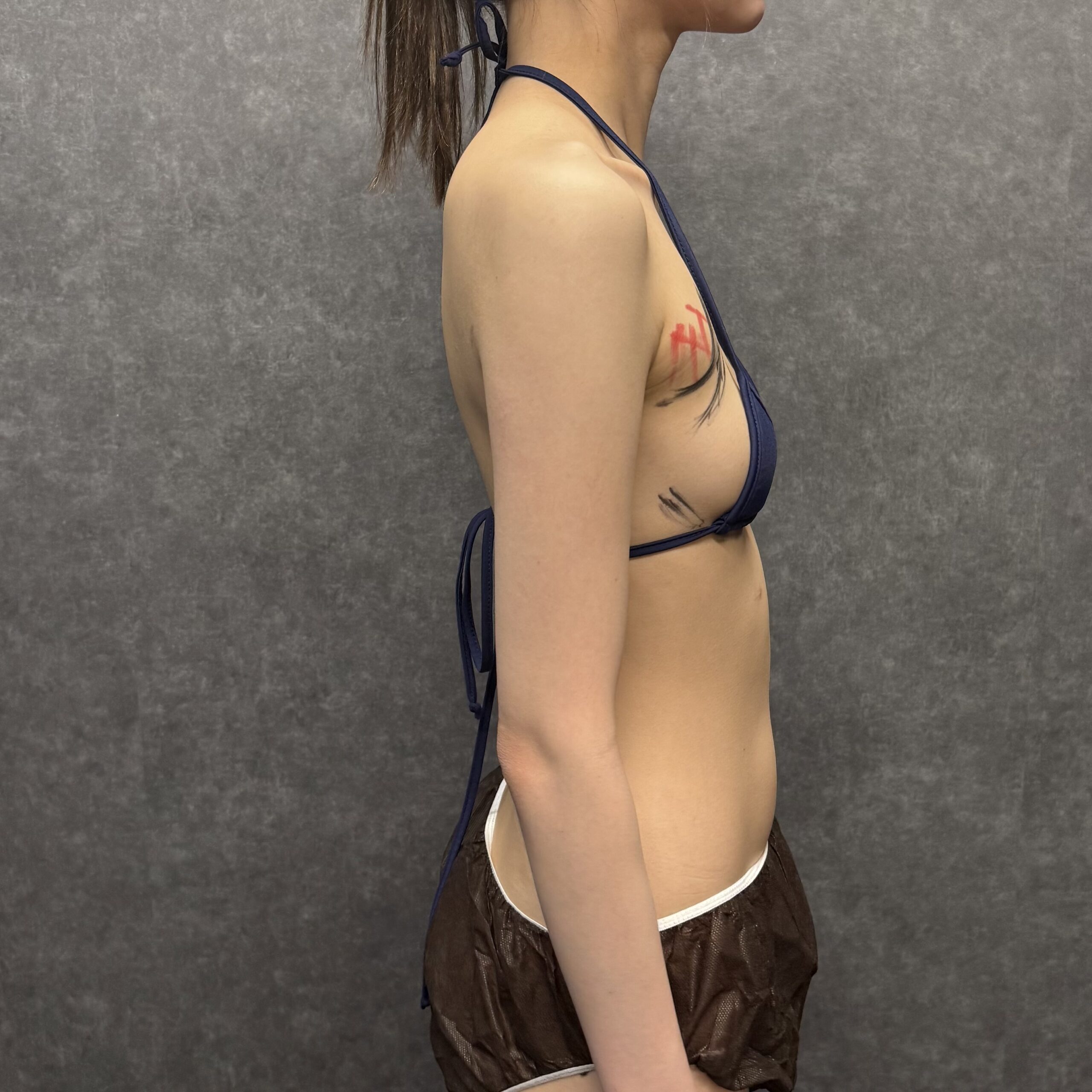
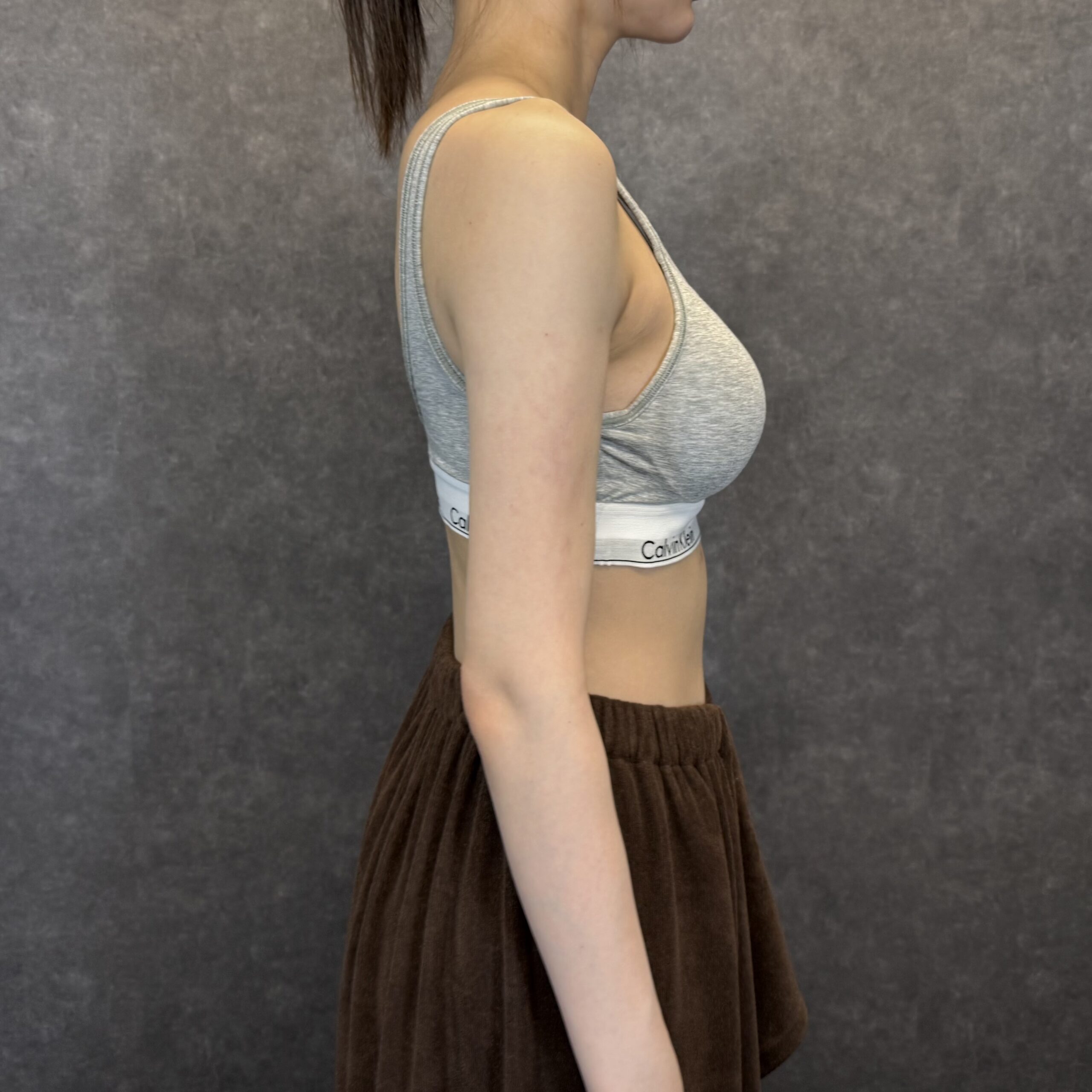
This case features a slim patient who is 166 cm tall and weighs 49 kg. She underwent 360° arm and accessory breast liposuction combined with hybrid breast augmentation.
For breast augmentation, we used Motiva Ergonomix2 Mini 270 cc implants, combined with autologous fat grafting of 150 cc to the right breast and 100 cc to the left.
At AVAN TOKYO, we do not select breast implants based on volume alone.
One of the most important questions is:
“How much forward projection do you want your breasts to have?”
Breast Implant Selection Is About More Than Just Volume
Even implants with a similar volume can create very different breast shapes depending on their dimensions and projection.
When selecting breast implants, we consider not only the desired breast size, but also:
● Forward projection
● The transition from the décolletage to the breasts
● Chest width and rib cage anatomy
● Existing breast tissue
● Skin and soft-tissue thickness
● Overall proportions of the shoulders, arms, breasts, and waist
Rather than focusing only on “How many cc should I choose?”, it is important to consider how much three-dimensional projection you want when viewed from the front, oblique angle, and side.
Mini or Demi for Slim Patients?
For slim Japanese patients with a BMI below 19, Motiva Ergonomix2 Mini or Demi can often create proportions that harmonize naturally with the body, depending on the individual anatomy.
For patients who prioritize a subtle and natural appearance, Mini is often considered because of its relatively moderate projection.
For patients who prefer more forward projection and a fuller three-dimensional breast shape, Demi may be considered.
For those seeking a significantly more projected or dramatic breast shape, higher-projection options such as Full or Corsé may also be considered when anatomically appropriate.
However, implant profile should never be determined by BMI alone.
Chest width, existing breast tissue, skin elasticity, soft-tissue coverage, and the patient’s desired silhouette all need to be evaluated before selecting the implant.
Why We Often Recommend Mini for Implant-Only Breast Augmentation
Slim patients generally have less subcutaneous fat and soft-tissue coverage over the breast.
Depending on the patient’s anatomy, a more highly projected implant may therefore have a greater chance of appearing prominent or having more noticeable edges.
When a slim patient wants a particularly natural result with breast implants alone, we often consider the Mini profile.
The goal is not simply to create the largest possible breast.
The goal is to create a breast that appears to belong naturally to the patient’s existing body proportions.
Why Demi Can Work Well with Hybrid Breast Augmentation
Hybrid breast augmentation combines silicone breast implants with autologous fat grafting.
The implant creates the primary breast volume and projection, while the patient’s own fat can be strategically placed to refine the surrounding soft tissue and create smoother transitions.
In slim patients, fat grafting may be particularly useful around areas such as:
● The décolletage
● Upper breast
● Medial breast and cleavage area
● Areas where the implant contour may otherwise be more noticeable
For appropriately selected patients, this can allow us to consider a Demi profile for greater forward projection while using fat grafting to create a softer, more natural transition around the implant.
However, fat grafting cannot completely conceal every implant contour. The amount of available donor fat and the thickness of the patient’s existing soft tissue are important factors when determining whether hybrid breast augmentation is appropriate.
This Case: Motiva Ergonomix2 Mini 270 cc + Fat Grafting
This patient is 166 cm tall and weighs 49 kg, giving her a naturally slim frame.
360° arm and accessory breast liposuction was performed to refine the transition from the shoulders through the upper arms and axillary area.
For breast augmentation, Motiva Ergonomix2 Mini 270 cc implants were used.
We then added 150 cc of autologous fat to the right breast and 100 cc to the left to refine breast shape, soft-tissue coverage, and asymmetry.
The Mini profile provided moderate, natural-looking projection, while fat grafting was used to further harmonize the breast contour with her slim frame.
At 6 months after surgery, the transition from the arms through the décolletage to the breasts has become more integrated, creating a balanced upper-body silhouette.
Breast Augmentation Should Be Designed as Part of the Entire Body
At AVAN TOKYO, breast augmentation is not simply a procedure to increase breast size.
We consider the entire body line:
Shoulders
↓
Upper arms
↓
Clavicles and décolletage
↓
Breasts
↓
Rib cage
↓
Waist
The same 270 cc implant can look very different depending on a patient’s height, weight, chest width, shoulder width, waist, and existing breast anatomy.
For this reason, when choosing an implant, we recommend thinking not only about:
“How many cc do I want?”
but also:
“How much forward projection do I want relative to my body?”
Surgeon’s Perspective
Patients often ask me, “How many cc would you recommend?”
However, implant volume alone does not determine the ideal breast shape.
I place significant importance on how much forward projection the patient wants when viewed from the side, as well as how the breast integrates with the rest of the body.
For slim patients who prioritize a natural appearance, Mini may be an appropriate option.
For patients who want more projection, Demi may be considered, particularly when hybrid breast augmentation allows us to refine the surrounding contour with autologous fat.
Ultimately, implant profile and volume should be selected individually according to the patient’s chest anatomy, soft-tissue coverage, and desired silhouette.
Our goal is to create breasts that remain balanced, refined, and natural in relation to the entire body.
Risks and Potential Complications
Potential risks associated with breast implant surgery, hybrid breast augmentation, and liposuction include swelling, bruising, pain, infection, hematoma, seroma, asymmetry, scarring, sensory changes, capsular contracture, implant malposition, implant deformity or rupture, and visible or palpable implant edges.
Fat grafting may involve partial fat absorption, palpable lumps, fat necrosis, or calcification.
Liposuction may involve postoperative firmness, contour irregularities, hyperpigmentation, skin laxity, and other complications.
Implant type, volume, projection, fat grafting volume, and liposuction areas must be selected individually according to each patient’s anatomy and goals.
Breast Augmentation Continues to Change After 6 Months
Breast augmentation is not complete immediately after surgery.
During the early postoperative period, swelling and skin tightness can make the breasts feel firmer and appear less natural.
Natural softness and movement generally develop gradually as the surrounding tissues settle. Changes may continue from approximately 3 months through 6 months and even up to one year after surgery.
At AVAN TOKYO, we do not design breast augmentation based solely on how the breasts look immediately after surgery.
Our goal is to create a breast shape that harmonizes naturally with the patient’s entire body over the long term.
Surgeon: Dr. Shin Moriwaki (Director, AVAN TOKYO Ginza Liposuction Clinic)