


Soy Milk After Fat Graft Breast Augmentation: Does It Cause Lumps?2026.11.20
“Drinking soy milk causes lumps in the breast” — this is something I hear from patients during consultations.
Some competing clinics and physicians make this claim, but there is no medical evidence directly linking soy milk to fat lump formation.
This article explains the correct relationship between hybrid breast augmentation nutrition and soy milk, and how post-surgery diet management affects your results.

The short answer
Drinking soy milk after fat graft or hybrid breast augmentation does not cause lumps — this claim has no medical basis. Post-surgery diet management, including adequate protein intake, is directly linked to fat graft retention, and soy milk remains a recommended nutritional guide after surgery. Individual results vary.
Post-Surgery Nutrition Is Inseparable from Fat Retention
For fat injected during fat graft or hybrid breast augmentation to survive, new blood vessels from surrounding tissue must grow in and re-establish a blood supply.
This process takes 3 to 6 weeks, and the nutrition you consume during that period supports angiogenesis and wound healing.
Sowing seeds in a field without water or fertilizer is pointless. Surgery is not the finish line — managing diet after surgery is an essential part of the process.
【Comparison of Post-Surgery Nutrition Approaches】
| Include Soy Milk | Protein Shake-Centered | No Change | |
|---|---|---|---|
| Benefits | ・Easy way to supplement protein and calories ・Unsweetened varieties are easy to continue |
・Clear protein content per serving ・Wide variety of flavors |
・No special preparation needed |
| Drawbacks | ・Excess consumption may lead to too much sugar or calories | ・Higher cost ・Some products may be hard on the digestive system |
・Protein deficiency may negatively affect fat retention |
| Best for | ・Those unsure what to eat ・Those who struggle with diet management |
・Those who want precise protein tracking ・Those experienced with diet management |
・Those who received implants only, with no fat injection |
Include Soy Milk
- Benefits
- ・Easy way to supplement protein and calories
・Unsweetened varieties are easy to continue - Drawbacks
- ・Excess consumption may lead to too much sugar or calories
- Best for
- ・Those unsure what to eat
・Those who struggle with diet management
Protein Shake-Centered
- Benefits
- ・Clear protein content per serving
・Wide variety of flavors - Drawbacks
- ・Higher cost
・Some products may be hard on the digestive system - Best for
- ・Those who want precise protein tracking
・Those experienced with diet management
No Change
- Benefits
- ・No special preparation needed
- Drawbacks
- ・Protein deficiency may negatively affect fat retention
- Best for
- ・Those who received implants only, with no fat injection
Reason 1: Transplanted fat is built on protein
For transplanted fat to survive, capillary ingrowth from surrounding tissue is essential. This angiogenesis requires collagen synthesis and cytokine production, both of which depend on protein as a building block.
Chronic protein deficiency after surgery delays angiogenesis and creates an environment where fat is less likely to survive. Make a conscious effort to consume adequate protein.
Reason 2: Soy milk is simply a convenient indicator
I recommend soy milk because it is a practical starting point for patients who are not sure what to eat. It provides plant-based protein, isoflavones, and appropriate calories in one easy-to-consume format.
Soy milk alone does not complete your diet management. A well-balanced overall diet remains the foundation.
Our Case
Natural Cleavage After Surgery (Female)
This patient underwent upper arm liposuction and hybrid breast augmentation on the same day. The video shows the result at Day 27 of downtime.
When wearing a bra with a slight push, the cleavage forms a natural shape rather than a Y shape. This is a case using Motiva MINI, and a natural line is already visible at 27 days post-surgery.
27 days after surgery (After)
| Procedure | Upper Arm Liposuction / Hybrid Breast Augmentation |
|---|---|
| Details | Upper arm liposuction, silicone implant (Motiva MINI) + fat injection breast augmentation |
| Photo timing | Day 27 after surgery |
| Cost | Please refer to the pricing page for fees. (Final cost confirmed at consultation.) |
| Main risks and side effects | Bruising, swelling, fibrosis (contracture), infection, inadequate fat retention, lumps, asymmetry, capsular contracture, implant-related risks, etc. |
Results vary between individuals. Photos shown are one example.
Does Soy Milk Really Cause Lumps?
No medical basis — this is a misconception
There is no established medical mechanism by which isoflavones or plant-based protein in soy milk cause fat lumps.
Lumps after fat graft breast augmentation result from transplanted fat undergoing necrosis or calcification — not from diet.
The claim that “soy milk causes lumps” has spread in some circles, but patients who have had surgery at our clinic should not be misled by this information and should continue their diet management.
Hybrid Breast Augmentation Nutrition: What to Eat After Surgery
Focus on high protein and appropriate calories
The foundation of a diet that supports fat retention is adequate protein intake combined with avoiding extreme calorie restriction.
Include meat, fish, eggs, and soy-based foods (tofu, soy milk, natto) in a balanced diet.
If you undergo excessive dieting or fasting during the first 1 to 3 months after surgery, the transplanted fat may be broken down (catabolism). Treat this period as one focused on active nutrition intake.
Does Alcohol Affect Fat Retention?
Avoid alcohol for the first week after surgery
Alcohol dilates blood vessels and can worsen swelling and bruising.
Alcohol metabolism also interferes with protein synthesis pathways, so please avoid alcohol for 1 week after surgery to minimize its impact on fat retention.
After the first week, gradually resuming is acceptable, but we recommend avoiding excessive drinking for optimal results.
We recommend avoiding smoking for at least 1 week after surgery, and suggest abstaining for 1.5 months to 6 months for best outcomes.
Can Slender Patients Have Fat Graft Breast Augmentation?
Limited harvest volume, but options exist
Patients with low BMI have a limited volume of harvestable fat, which may result in lower retention rates compared to other patients. This makes post-surgery nutrition management especially important.
Hybrid breast augmentation combining a silicone implant is often recommended for such patients. We start by assessing your body composition and type at a consultation to determine the most appropriate approach.
Potential Risks and Post-Surgery Care
Swelling and firmness are part of the process
After hybrid breast augmentation, you will experience a period of swelling and firmness in the breasts. Swelling peaks around 2 to 3 days after surgery and gradually subsides over 2 to 3 weeks.
Contracture (firmness and discomfort) peaks around 1 month after surgery and typically softens within about 3 months.
Potential risks include inadequate fat retention, lumps, asymmetry, and capsular contracture. If you notice any concerning changes, please consult your surgeon promptly.
Baths and vigorous exercise can be resumed 2 weeks after surgery.
Diet Management Is Part of Post-Surgery Care
I take full responsibility for surgical quality. That said, part of your final result is determined by how you care for yourself after surgery.
Please understand the relationship between hybrid breast augmentation nutrition and soy milk correctly, and make diet management a part of your daily routine.
Do not be misled by claims that “soy milk causes lumps.” Building a protein-centered diet is the simplest and most effective path to beautiful, long-lasting results.
Please come in for a consultation to discuss your body type and post-surgery lifestyle in detail.
For safety standards in cosmetic surgery, please refer to the Japan Society of Aesthetic Surgery (JSAS).
View more liposuction and breast augmentation columns here
Frequently Asked Questions
- How much soy milk should I drink?
-
Many patients aim for 200–400 ml per day (1–2 cups). Drinking too much may lead to excess sugar or calories, so choosing unsweetened soy milk helps. Overall dietary balance matters more than the exact quantity.
- Can I substitute soy milk with other protein sources?
-
Yes — protein shakes, meat, fish, eggs, dairy, or other soy-based foods (tofu, natto) are all suitable alternatives. Soy milk is recommended as a convenient starting point, not an essential food.
- How long should I maintain diet management?
-
We recommend staying mindful of nutrition for 3 to 6 months until fat has stabilized. Avoid extreme calorie restriction or fasting for the first 1 to 3 months. After that, a normal healthy diet is fine.
- Does combining arm liposuction and breast augmentation extend recovery?
-
Pain peaks around 2 to 3 days and gradually eases. Arm soreness and breast swelling may overlap, and individual variation is significant. Desk workers may return to work within a few days, but pain levels differ.
- How long do I need to wear a compression garment?
-
Wear it 24 hours a day for the first week. After that, wear it at home and during sleep until swelling and bruising subside. This supports implant stability during the healing period.
- When can I confirm fat graft retention?
-
The overall outcome is visible around 3 to 6 months after surgery. At 1 month, firmness and swelling often remain, so the final assessment of retention is best made after 6 months.
- Is fat graft breast augmentation possible for slender patients?
-
Slender patients with low BMI have limited harvestable fat volume, which may reduce retention rates.
Hybrid breast augmentation combined with a silicone implant is often recommended, and post-surgery nutrition management is especially important for such patients.
[Supervised by] Shin Moriwaki, M.D.
Credentials: VASER Lipo Certified Physician / ECFMG Certificate
Memberships: Japan Society of Aesthetic Surgery (JSAS)
Japanese Society for Regenerative Medicine
American Academy of Aesthetic MedicineAVAN TOKYO GINZA LIPOSUCTION CLINIC
English / 中文 / Tiếng Việt consultations available
Appointments and inquiries accepted via DM / LINE / Website / Phone.
This article is based on a post by Dr. Moriwaki on X (@doctor_shin_). View the original post
For prices, case photos and FAQs, see the fat transfer breast augmentation page.
Book a consultation
1 min walk from Exit 6, Ginza-itchome Station / Open 10:00–19:00
About the supervising physician
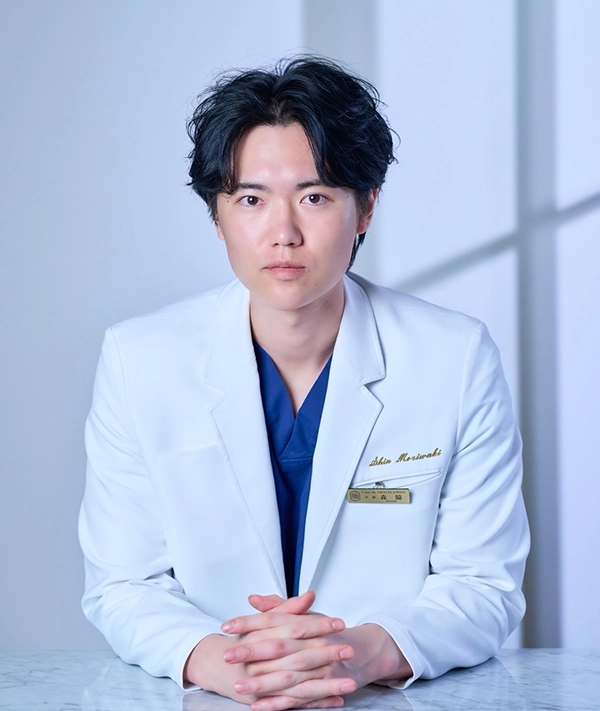
Director, AVAN TOKYO Ginza Liposuction Clinic
Graduated from Tokushima University School of Medicine.
Worked at Tokushima University Hospital, Tokyo Chuo Cosmetic Surgery and Gracia Clinic before taking up the current position.
Over 5,000 liposuction procedures performed (including previous positions).
Certifications
・VASER Lipo certified physician
・ECFMG Certificate
Memberships
・Member, Japan Society of Aesthetic Surgery (JSAS)
・Full member, Japanese Society for Regenerative Medicine
・Member, American Academy of Aesthetic Medicine
Related articles
- Diet After Fat Transfer Breast Augmentation: Soy Milk, Protein and a 6-Month Case
- Nutrition and Fat Graft Survival: Why Your Diet Matters After Breast Fat Grafting
- What Is the Most Important Factor for Fat Graft Survival in Breast Augmentation? The Answer May Surprise You.