


Scar Botox After Liposuction: How Small-Dose Botulinum Reduces Hypertrophic Scarring2026.09.04
At our clinic, we recently performed circumferential upper-arm and axillary (anterior accessory-breast) liposuction on a woman in her 30s. In the same operative session, we injected a very small amount of botulinum toxin around each incision site — a supplementary technique often called “scar botox.” The aim is to help the small entry wounds mature into less noticeable scars. Although the term may be unfamiliar to general readers, dermatology and plastic surgery literature has accumulated evidence that lowering mechanical tension around a wound suppresses hypertrophic scarring, and we consider this adjunct on a case-by-case basis. In this article, Dr. Shin Moriwaki explains why scar botox works alongside liposuction, its indications, and its limits.
Key Points of This Article
・Scar botox delivers a very small dose of botulinum toxin around a surgical wound to temporarily lower surrounding muscle tension and suppress hypertrophic scarring.
・Liposuction entry wounds are only a few millimeters wide, but scars in high-motion areas tend to leave redness and elevation during maturation.
・The upper arm and axilla are especially affected by the wide range of motion of the shoulder joint, and daily activity pulls on the wound repeatedly.
・The technique lowers mechanical stress on the incision and is positioned as an adjunct that reduces the risk of hypertrophic scarring.
・Results vary by individual and depend on constitution, location, and postoperative care — this is not a standalone treatment that erases scars.
What Is Scar Botox for Liposuction?
Liposuction requires small (a few millimeters) entry incisions to insert the cannula. Typical entry sites include the anterior/posterior axilla and elbow for the upper arm, umbilicus and lower abdomen for the abdomen, and the groin or popliteal fossa for the thighs. Although these wounds are tiny, when they lie near a joint that moves frequently, they can be repeatedly stretched during healing and end up as hypertrophic scars or hyperpigmentation.
The technique injects a very small dose of botulinum toxin type A intradermally to very superficial subcutaneous tissue around the wound, in divided micro-doses. By transiently reducing the tension of small dermal/subcutaneous muscle fibers, it lets the wound “rest from motion.” Case series from dermatology and plastic surgery worldwide suggest that reducing mechanical stress during scar maturation may improve scar redness, elevation, and pruritus.
Why Do Entry Wounds Turn into Hypertrophic Scars?
Wound healing proceeds through three phases: inflammation, proliferation, and remodeling. Collagen fibers reorganize during this process, but when tension on the wound is high, profibrotic cytokines such as TGF-β1 persist, driving excessive collagen production and neovascularization. The result is a raised, red, itchy hypertrophic scar. This can occur even without a keloid predisposition when mechanical stress is high and repetitive.
Although a liposuction entry wound is small, the skin over the upper arm and axilla stretches and contracts constantly with upper-limb motion. The axilla in particular sits under the wide arc of the shoulder joint, and everyday activities — raising the arm, rotating the shoulder, washing the hair — pull on the incision. Scar botox is positioned as an adjunct that targets this tension mechanically.
Why Combine Scar Botox with Upper-Arm and Axillary Liposuction
In cases like this one — circumferential upper-arm and anterior accessory-breast liposuction in a woman in her 30s — entry wounds are placed around the axilla and elbow, both areas strongly affected by joint motion. The axillary wound in particular is under continuous traction with daily movement and is known as a location where redness and induration can persist during scar maturation.
As the operating surgeon, three factors drove the decision to add the adjunct in this case: (1) the wounds sit near joints with a wide range of motion, (2) an active lifestyle was anticipated, meaning repetitive traction over the first 1–3 postoperative months, and (3) intraoperative assessment of dermal thickness, elasticity and subcutaneous quality suggested a slightly elevated scarring risk. It is always used as one part of a wider design that includes cannula choice, suture technique, and compression garment management.
Dose, Injection Plane, and Timing of Scar Botox
The dose is extremely small — typically a few units per entry wound, divided across multiple sites. This is a completely different scale from the standard doses used on facial expression muscles, so it does not meaningfully affect everyday motor function. The injection plane is intradermal to very superficial subcutaneous — the target is the fine subcutaneous muscle fibers just under the dermis and the arrector pili around hair follicles.
Timing is usually intraoperative or immediately after wound closure within the same surgical session. Scar maturation is most active from months 3 to 6 after surgery, so lowering tension at the beginning of that window is the key rationale. The pharmacologic effect fades over 3–4 months, by which time the peak of scar remodeling has passed and collagen can reorganize under lower tension going forward.
Indications, Limits, and Side Effects
The technique is not necessary for everyone. The main indications are: (1) wounds near joints or in high-motion areas (upper arm, axilla, knee, lateral abdomen), (2) a personal or family history of keloid or hypertrophic scarring, and (3) constitutional tendency toward pigmentation or scar induration. Contraindications include pregnancy, breastfeeding, neuromuscular junction disorders such as myasthenia gravis, and known botulinum toxin hypersensitivity.
Side effects are limited to transient bruising, redness or mild discomfort at the injection site. Because the dose is much smaller than for muscle relaxation, functional motor impact is minimal in daily life. Still, this adjunct does not eliminate scars on its own. It is used within a comprehensive strategy that includes taping to control tension, sun protection, silicone gel sheets, oral tranilast, and Kenacort® injections when indicated. Response varies by individual, and no definite outcome can be promised. For general safety standards in cosmetic surgery, please refer to the Japan Society of Aesthetic Surgery.
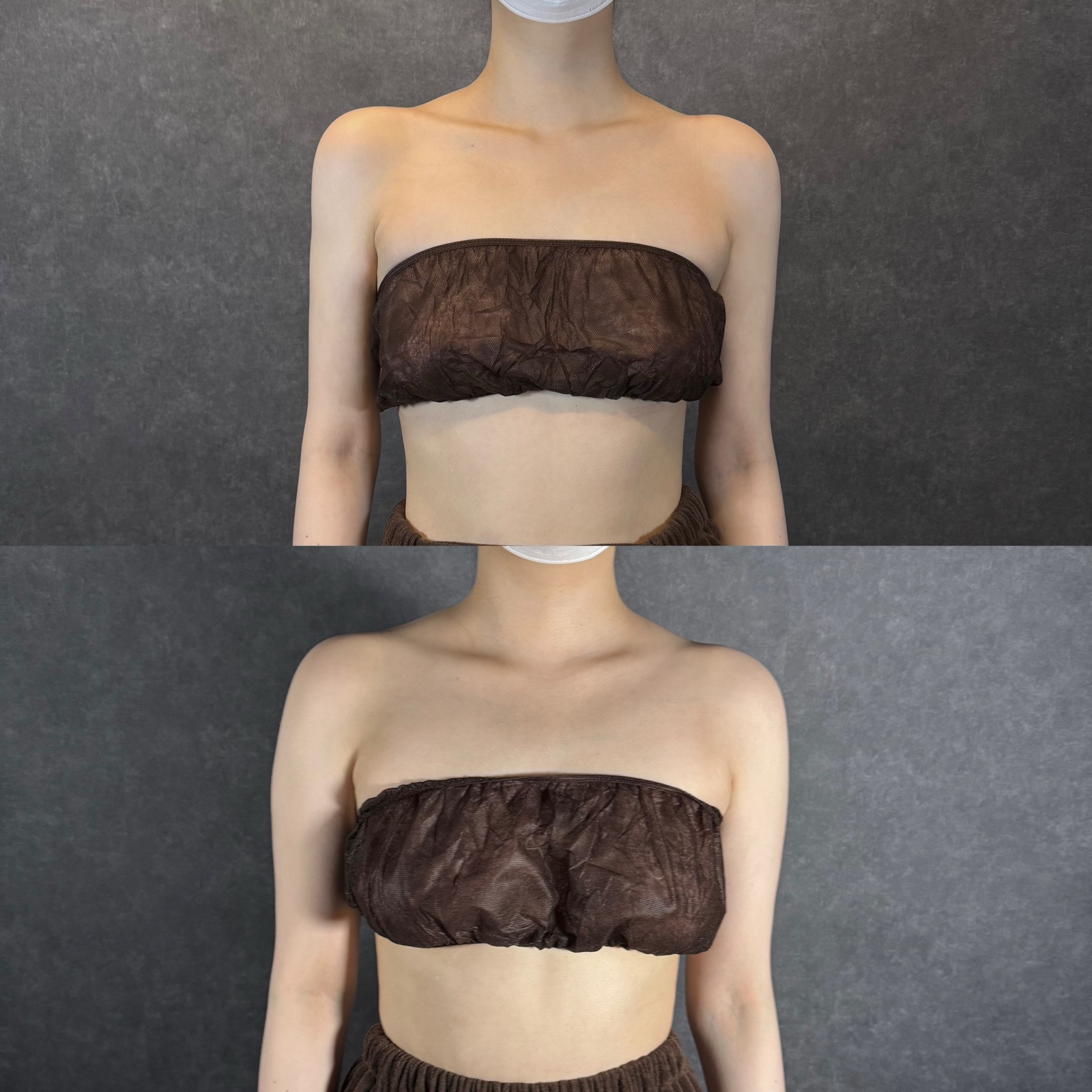
Treatment, Cost and Risks of This Case
Treatment: A woman in her 30s underwent VASER liposuction of the full circumference of the upper arms and the axillary area under intravenous sedation, combined with a small dose of botulinum toxin around the incision sites (so-called scar Botox).
Cost: Please see our price list.
Main risks and side effects: bruising, swelling, pain, fibrosis (skin tightness), asymmetry, contour irregularities, infection, scarring, and temporary muscle weakness from botulinum toxin.
Results vary between individuals; the photo shows one example.
Frequently Asked Questions
Q. Can scar botox be done on the same day as liposuction?
Yes. In most cases it is performed on the same day, within the same surgical session, injected around the closed wounds. No extra visit or additional anesthesia is generally required. The plan is finalized at consultation after checking your goals and constitution.
Q. How long does the effect last?
The muscle-relaxing effect itself fades over 3–4 months. However, the aim is to lower tension during the initial phase of scar maturation, and after that window collagen reorganizes under lower load — so scars tend to mature into a less hypertrophic form afterward.
Q. My upper-arm entry wounds are already firm and red. Is it too late?
If the scar is still in the maturation window (within 6 months of surgery), added small-dose botulinum, local Kenacort® injection, or silicone gel sheets may still improve the appearance. Effects on fully mature long-term scars are limited, so an early consultation is recommended.
Q. Can people with a keloid tendency have this treatment?
Patients with a keloid or hypertrophic-scar history are actually a group in whom tension control matters most. It is rarely sufficient on its own, so it is combined with steroid injections, silicone gel sheets, and oral tranilast in an overall strategy. History and family history are reviewed at the initial visit.
Q. Will this treatment guarantee my scars disappear?
No — no absolute promise can be made. It is an adjunct that creates a less hypertrophic environment, not a treatment that erases scars entirely. Final appearance depends on constitution, age, site, postoperative care, and UV exposure, and individual variation is significant.
Related liposuction column archive is here.
──────────────
【Supervising Physician】Shin Moriwaki, M.D.
Member of Japan Society of Aesthetic Surgery (JSAS) / Member of American Academy of Aesthetic Medicine
ECFMG Certificate
──────────────
📍AVAN TOKYO GINZA LIPOSUCTION CLINIC
English / 中文 / Tiếng Việt supported
Bookings and consultations available via
DM / LINE / Website / Phone.