


Does “Hair Grew Back in Mice” Really Apply to Humans? — Dr. Moriwaki honestly reads preclinical hair growth evidence against the differences between mouse and human hair follicles2026.07.21
Many people have seen a research headline like “hair grew back in mice” and hoped that a cure for hair loss is just around the corner. In reality, translating preclinical hair growth evidence directly into human outcomes involves several medical pitfalls. Mouse and human hair follicles differ fundamentally in structure and hair cycle length, and preclinical data do not guarantee clinical efficacy. In this article, Dr. Moriwaki honestly explains how to read this kind of research news and what to keep in mind when considering hair regenerative medicine, including stem cell conditioned media therapy.
Key Points of This Article
・Preclinical hair growth evidence from animal studies does not automatically translate into the same hair-growth effect in humans
・Mouse hair cycles last about 2 to 3 weeks, while human scalp hair grows for 2 to 6 years, so the evaluation window and mechanism dynamics are entirely different
・Mouse dorsal skin is thin with densely packed follicles, while human scalp has thicker skin, different follicle depth, and different androgen responsiveness
・When reading preclinical data, always check four things: animal species, delivery method, endpoints, and conflict-of-interest disclosure
・For stem cell conditioned media hair therapy as well, an honest approach separates animal-study findings from what is actually observed in clinical practice
Mouse and Human Hair Follicles Differ Almost Like Separate Organs
The Hair Cycle Length Differs by an Order of Magnitude
The first thing to watch for when reading preclinical hair growth evidence is the difference in the hair cycle. A mouse hair cycle completes in roughly 2 to 3 weeks, while a human scalp hair follicle stays in anagen (growth phase) for 2 to 6 years — and much longer overall when catagen and telogen are included. “The hair grew in a few weeks in mice” does not mean humans will regrow hair on the same timeline. Evaluating equivalent effects in humans requires follow-up over months to a year. Skipping this mismatch in time scale and reading “grew in a few weeks in mice” as “will grow quickly in humans too” is medically untenable.
Follicle Density, Depth, and Skin Thickness Are Also Different
Mouse dorsal skin has very densely arranged follicles and is much thinner overall, with follicles sitting close to the surface. In contrast, human scalp is thicker, and follicles extend from the deep dermis down to the border with subcutaneous fat, so the physical distance a drug or growth factor must travel to reach the follicle is completely different. Even when topical application produced hair growth in animal studies, it does not necessarily follow that the same concentration of factor will reach the follicle through the thick human scalp. When bringing animal-model results into human care, this anatomical distance cannot be ignored.
Androgen Responsiveness Is Hard to Reproduce
Moreover, human AGA progresses because follicles in the frontal and vertex scalp are sensitive to dihydrotestosterone (DHT) via 5-alpha reductase. Standard laboratory mice do not readily reproduce this AGA pathology as-is. Animal models can evaluate “hair growth,” but they often cannot faithfully reproduce “AGA-type hair loss,” which is another reason preclinical data must be interpreted with caution. There is also individual variation, so an honest posture is not to load animal data with excessive expectations.
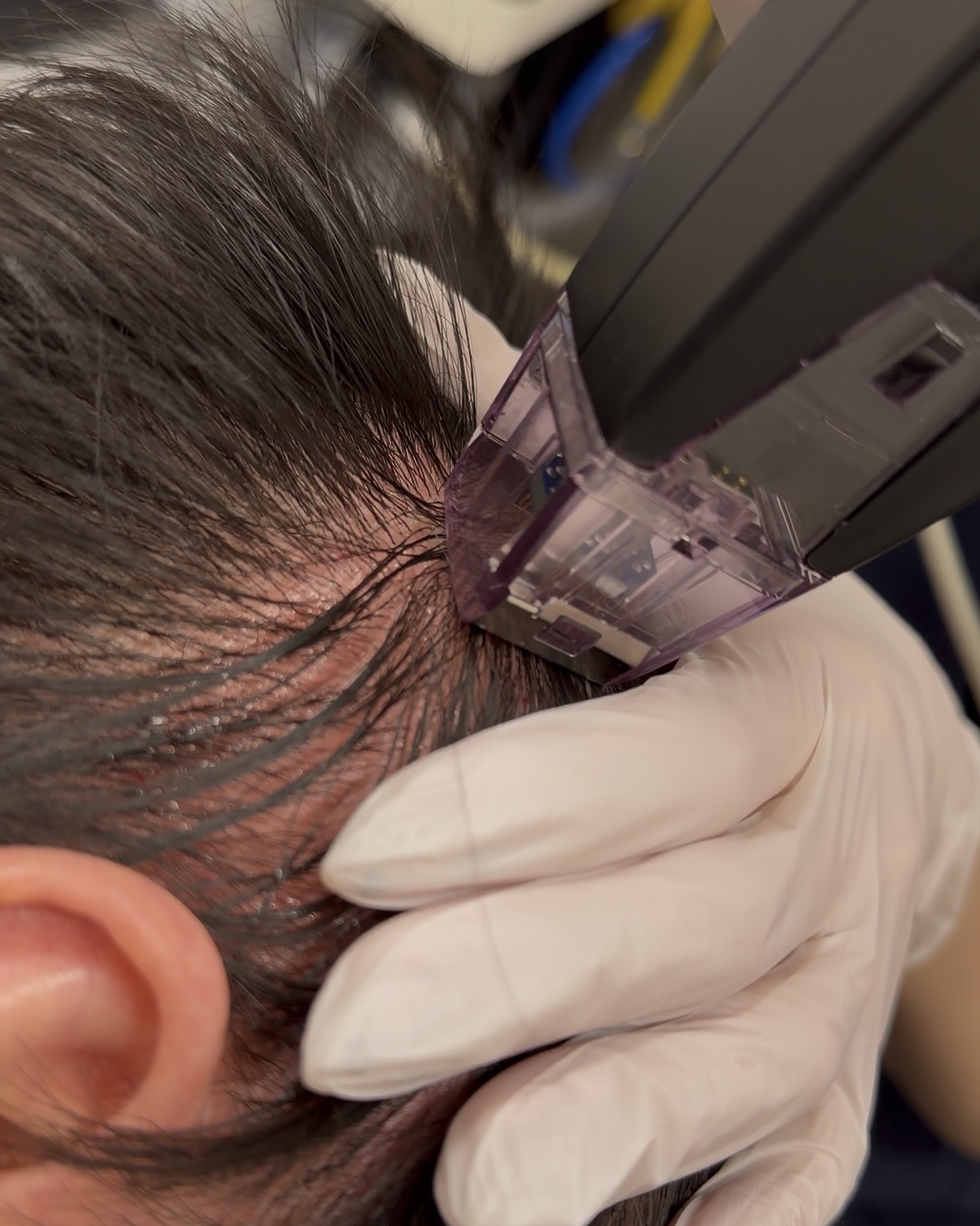
How to Bridge Preclinical Hair Growth Evidence Into Human Treatment
Four Checkpoints When Reading Research News
When I encounter animal hair growth evidence in daily news, I keep four questions in mind at the clinic. First, in which animal species and which body site was it evaluated? Second, what was the delivery method (topical, injection, drug delivery system) and at what depth did it reach? Third, which endpoint was used — hair count, hair diameter, anagen ratio, or something else? Fourth, is the funding source and any conflict of interest disclosed? News that leaves these four unclear is a weak basis for clinical choices and is safer read as a hypothesis stage.
Multiple Steps Sit Between Preclinical and Clinical Reality
Even when preclinical data look promising, the road ahead goes through human safety studies, small pilot studies, comparative trials, and accumulating real-world data. Between “it grew in mice” and “it will work for you,” many variables — dose, site, frequency, concomitant medications, age group, disease stage — must be verified on the human side. If those steps are skipped and expectations are raised too high, the gap with real treatment outcomes leads to disappointment, and the calm judgment needed for continued care becomes harder to maintain.
How to View This for Stem Cell Conditioned Media
For stem cell conditioned media hair therapy as well, basic research suggests that growth factors such as VEGF, IGF-1, and HGF can act on hair follicles in animal studies. However, that does not license the conclusion that “injecting conditioned media into the scalp will definitely grow hair.” Separating animal-study findings from what is actually observed in the clinic — changes that may begin with hair texture and body, followed by density changes over months in some cases — is what I consider the honest posture that improves treatment decisions. Response varies by individual and depends on stage and concomitant treatments, so sharing realistic goals with your physician is essential. For a broader look at hair regenerative medicine, see our related hair regenerative medicine column archive. For medical guidance on AGA treatment, the guidelines by the Japanese Dermatological Association are also a useful reference.
Summary
Preclinical hair growth evidence is an important starting point that suggests the potential of hair regenerative medicine, but it does not promise a specific treatment effect in humans. Mouse and human hair follicles differ fundamentally in hair cycle, anatomy, and hormone response, and preclinical data are, at best, the entry ramp to translation. When you consider hair therapy that includes stem cell conditioned media, do not judge by a fragment of research news alone. Read the evidence with a wider lens — animal species, delivery method, endpoints, and conflict of interest — and share a realistic level of expectation with your physician. Not rushing, but getting evaluated early, is a step that keeps your options open.
Frequently Asked Questions
Q. Can I expect the same effect in humans when news says “hair grew back in mice”?
Not necessarily. Because mouse and human hair cycles, skin thickness, and hormone responses differ substantially, preclinical hair growth evidence should be read as an entry point suggesting a possibility of clinical effect, and evaluated calmly until human verification accumulates.
Q. How different are mouse and human hair follicles?
The hair cycle length differs by an order of magnitude — about 2 to 3 weeks in mice versus 2 to 6 years of anagen in human scalp hair. Follicle density, depth, and skin thickness also differ, so the distance and duration a drug reaches the follicle change entirely. Androgen responsiveness is also hard to reproduce, so there are inherent limits to applying animal-model results directly to humans.
Q. Has stem cell conditioned media’s effect only been shown in animal studies?
Both basic research and observational reports in humans are accumulating, though large-scale comparative trial evidence is still an emerging area. It is important to separate the animal-study rationale that growth factors can act on hair follicles from what is actually observed in clinical practice, and to share realistic goals with your physician. There is individual variation and there are limits to what can be achieved.
Q. What should I watch for when reading research news?
Check four things: animal species, delivery method, endpoints, and funding source (conflict of interest). If any of these are unclear, the news is a weak basis for a treatment choice. It also helps to check how much the claims are backed by peer-reviewed publications rather than only conference reports or press releases.
Q. What treatment posture avoids taking animal-study results at face value?
Avoiding categorical efficacy guarantees and building oral, topical, and regenerative treatments in stages according to disease progression and age is a realistic posture. Stem cell conditioned media is not a panacea either; understanding its role and limits is what leads to choices you can live with over the long term.
──────────────
[Supervising Physician] Shin Moriwaki, MD
Member, Japan Society of Aesthetic Surgery (JSAS) / Member, American Academy of Aesthetic Medicine
ECFMG Certificate
──────────────
📍AVAN TOKYO 銀座 毛髪再生医療
AVAN TOKYO Ginza Hair Regenerative Medicine
English / 中文 / Tiếng Việt supported
Inquiries welcome via DM / LINE / Website / Phone.