


A New Option for Diffuse Hair Loss2026.03.12
Delivering Adipose-Derived Stem Cell Conditioned Medium to the Scalp with Morpheus8
“Recently, my overall hair volume has decreased.”
“My part line seems to be getting wider.”
“It is not just one area — my whole scalp looks thinner.”
These are common concerns in patients with diffuse hair loss.
Diffuse hair loss refers to a pattern in which the hair appears thinner across the entire scalp, rather than in one clearly defined area. In many cases, the background may include female pattern hair loss or telogen effluvium, which means that not all “hair thinning” is the same.
That is why, at AVAN TOKYO, we do not simply focus on putting something into the scalp.
We believe it is important to first understand what type of hair loss is present, and then determine how best to support hair follicles while they are still alive.
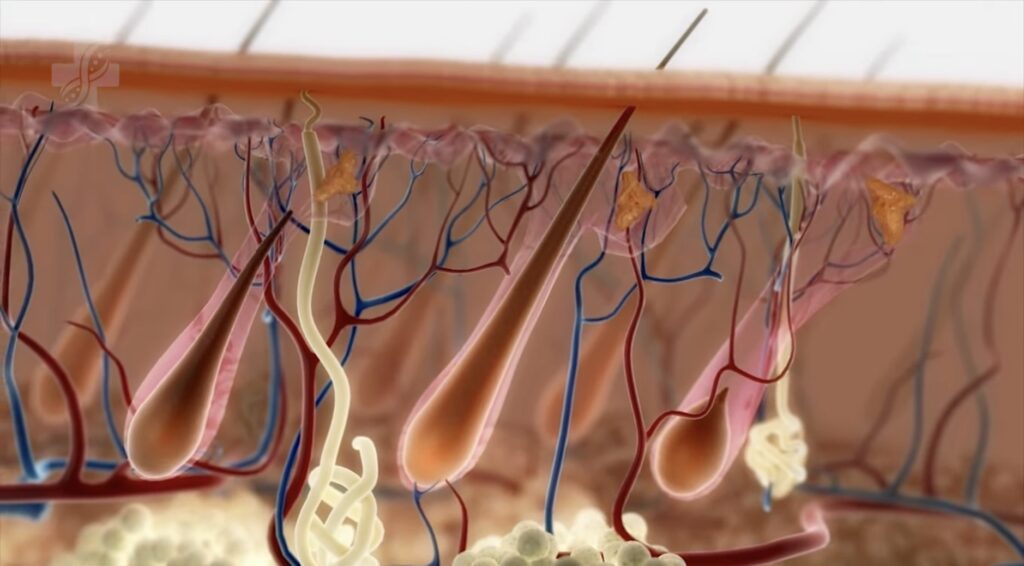
Adipose-Derived Stem Cell Conditioned Medium Is Not a “Hair-Growth Liquid”
It Is a Treatment That Supports the Hair Follicle Environment
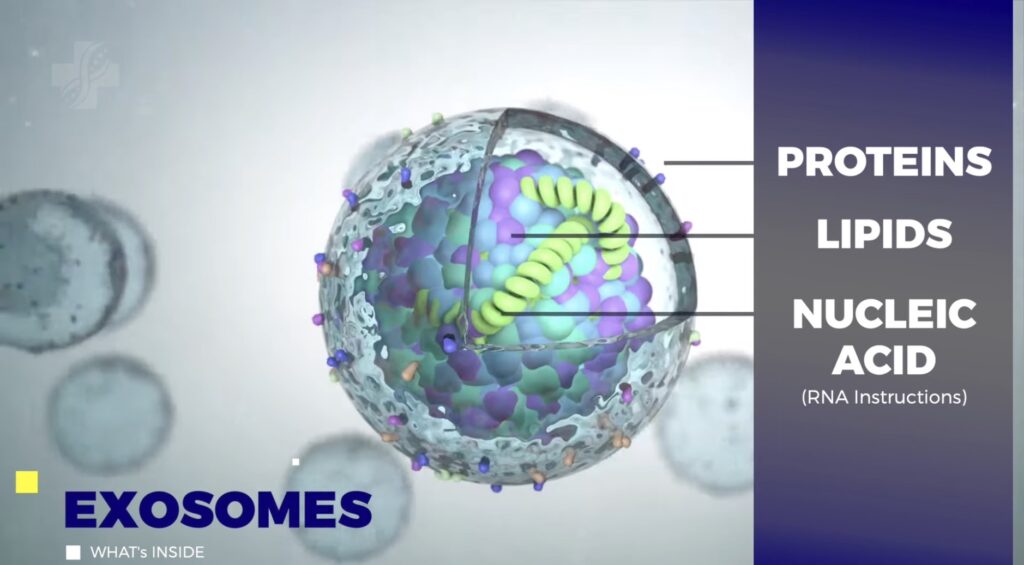
Adipose-derived stem cell conditioned medium does not mean injecting stem cells themselves.
It refers to the use of growth factors, cytokines, and signaling molecules released by adipose-derived stem cells during culture.
In other words, the goal of this treatment is not simply to “make hair grow instantly.”
Its real value lies in helping improve the environment surrounding weakened hair follicles.
In many patients with diffuse hair loss, the follicles have not disappeared completely.
Instead, they are still present, but they are producing hairs that are thinner, weaker, and shorter than before.
This is where conditioned medium may be especially meaningful:
it can help support the scalp environment and guide the follicles toward a healthier growth cycle.
The Biggest Advantage of Morpheus8
It Helps Deliver the Treatment More Effectively to the Scalp
One of the most important questions in regenerative hair treatment is not only what to use, but how to deliver it.
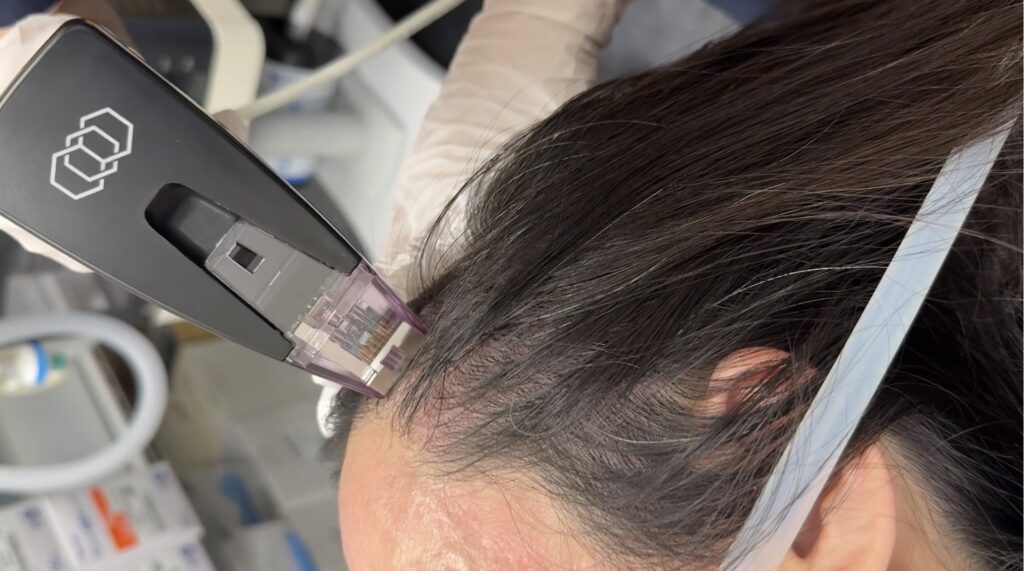
Morpheus8 is an RF microneedling device that creates tiny channels in the scalp while applying controlled radiofrequency energy.
By doing so, it allows the treatment to be delivered more directly into the tissue, rather than relying only on surface application.
For patients with diffuse hair loss, this is a major advantage.
Topical products alone may not reach the level where they are most needed.
By contrast, Morpheus8 can help deliver conditioned medium more effectively into the scalp while also providing controlled stimulation to the tissue itself.
This means the treatment is not only about adding regenerative factors, but also about creating an environment in which the scalp may respond more actively.
Potential Benefits for Patients with Diffuse Hair Loss
This approach may be especially suitable for patients whose hair follicles are still present but becoming weaker over time.
For example, it may be attractive for patients who feel that:
- their part line is becoming more visible
- the overall hair texture is becoming finer
- the top of the scalp has lost volume
- shedding has continued longer than expected
- home care alone does not feel sufficient
- they want to protect the follicles they still have
By delivering adipose-derived stem cell conditioned medium with Morpheus8, it may be possible to take a more direct approach to:
- the scalp environment
- local microcirculation
- the signals surrounding the hair follicle
- support for healthier hair growth conditions
For patients who want more than topical care alone, this can be a very appealing regenerative option.
Who May Be a Good Candidate?
At AVAN TOKYO, we believe this treatment may be especially well suited for patients who:
- are experiencing overall thinning of the hair
- are concerned about early female pattern hair loss
- have persistent shedding with slow recovery
- want more than shampoos, serums, or home treatments
- want to act early while follicles are still present
Diffuse hair loss is often easier to address when treatment begins before the follicles become too weak.
That is why early evaluation and early intervention matter.
Not Every Type of Hair Loss Should Be Treated the Same Way
This point is extremely important.
Some cases of diffuse hair loss are related to childbirth, rapid dieting, fever, stress, iron deficiency, thyroid disorders, or medication changes.
In these situations, identifying and addressing the underlying cause is essential.
That is why AVAN TOKYO does not believe in recommending the same treatment to everyone.
What matters most is determining what kind of hair loss the patient actually has, and then selecting the most appropriate treatment plan.
Scalp Treatment Designed from Diagnosis
The AVAN TOKYO Approach
The value of this treatment is not simply that conditioned medium is applied to the scalp.
What truly matters is designing the treatment based on:
- the type of hair loss
- the condition of the scalp
- the appropriate depth of delivery
- the right level of stimulation
- the proper treatment interval
Morpheus8 is a powerful device, but it should never be used carelessly.
At AVAN TOKYO, we do not believe that stronger is always better.
Our goal is to deliver the necessary stimulation, at the necessary level, while protecting the hair follicles.
That balance is what makes medical scalp treatment different from simple cosmetic care.
Conclusion
A Regenerative Option That Delivers Treatment Directly to the Scalp
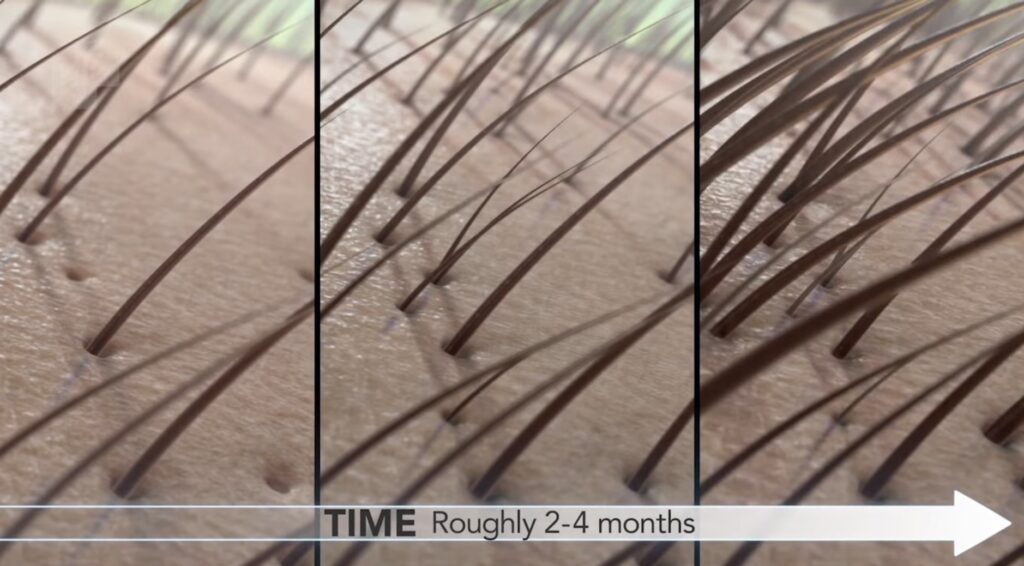
For patients with diffuse hair loss, delivering adipose-derived stem cell conditioned medium to the scalp with Morpheus8 represents a promising regenerative option.
It is especially meaningful in patients whose follicles are still present, but whose scalp environment and hair cycle need support.
If home care no longer feels sufficient, but you still want to preserve the hair you have now, this treatment may be a valuable next step.
At AVAN TOKYO, we believe that successful hair treatment begins not with simply choosing a product, but with understanding the type of hair loss and designing the treatment accordingly.
If you have started to notice a decrease in overall hair volume, this may be the right time to seek treatment — while your hair follicles are still there to be protected.