Why Some People Lose Results After Stopping Hair Loss Treatment While Others Maintain Them2026.03.22
A Regenerative Perspective on the Scalp
“I stopped treatment, and my hair loss came back.”
This is one of the most common concerns in hair restoration.
At the same time, there are patients who say:
“Even after stopping, I’ve been able to maintain my results.”
What creates this difference?
The answer is:
**It’s not whether the medication worked—
it’s whether the scalp itself has changed.**
Why Many People Experience Relapse
Conventional hair loss treatments mainly rely on:
- Finasteride / Dutasteride
- Minoxidil
These treatments are highly effective, but:
They are fundamentally suppressive treatments.
They work by:
- Reducing DHT
- Extending the hair growth phase
In other words:
They control the cause, but do not change the underlying structure.
What “Relapse After Stopping” Really Means
When treatment is stopped:
- DHT activity returns
- Follicular miniaturization resumes
This does not mean the treatment failed.
It simply means the condition returns to its original state.
What Happens in Patients Who Maintain Results
So why can some patients maintain results even after stopping?
Because:
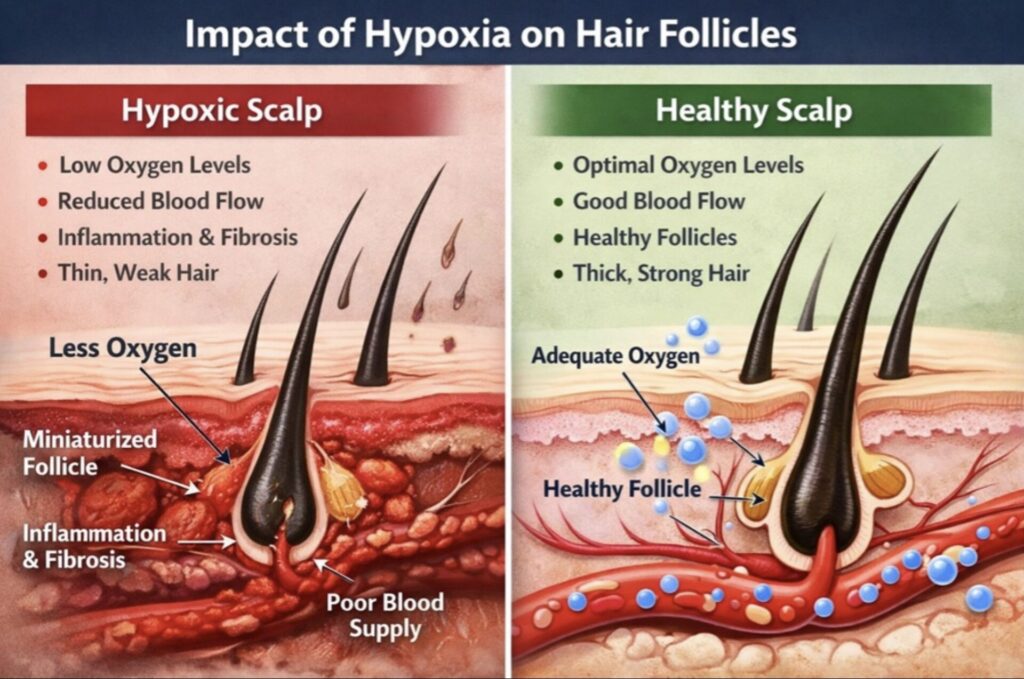
The scalp environment itself has improved.
Specifically:
- Blood flow is enhanced
- Micro-inflammation is reduced
- Fibrosis around hair follicles is improved
In other words:
A “hair-friendly environment” has been established.
The Role of Regenerative Medicine
This is where regenerative approaches become important:
Stem Cell Conditioned Media × Morpheus8
These treatments do not directly “create” hair.
Instead, they:
Improve the environment in which hair follicles function.
Why the Difference Occurs
The difference becomes clear:
● Medication alone
- Suppressive → dependent
- Results relapse after stopping
● Regenerative-based approach
- Environmental improvement → more independent
- Easier to maintain results
Can Hair Follicles Recover?
This is a critical point.
Hair follicles:
Can recover if they are not completely lost.
However:
- Long-term loss
- Complete follicle destruction
makes recovery difficult.
Therefore:
Earlier intervention leads to better long-term maintenance.
The AVAN TOKYO Strategy
At AVAN TOKYO, our goal is:
To create a state where results can be maintained even after stopping treatment.
To achieve this, we combine:
- Scalp remodeling with Morpheus8
- Regenerative signaling with stem cell conditioned media
- Medication when necessary for suppression
Final Thoughts
Hair restoration is not simply about:
continuing or stopping treatment.
The real question is:
Are you dependent on treatment, or have you created a self-sustaining condition?
“The Goal Is Not Just Hair Growth, but Sustainable Results”
Hair restoration is evolving:
from symptom control
to regenerative design
At AVAN TOKYO, we focus on:
creating a scalp environment where hair can be naturally maintained over time.