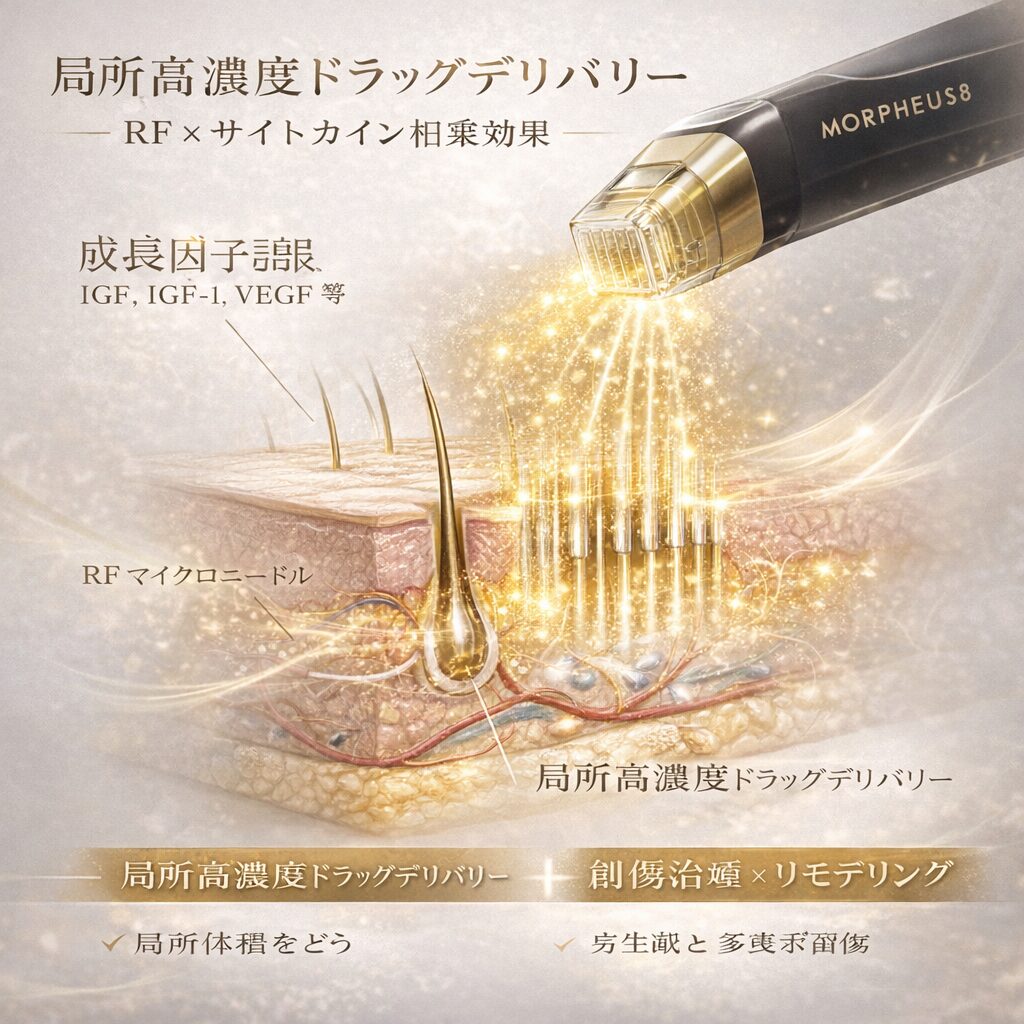
Medical Significance of Direct Drug Delivery of Stem Cell Conditioned Media via Morpheus82026.02.17
In regenerative medicine, Stem Cell Conditioned Media (SCCM), which contains cytokines such as EGF, IGF-1, VEGF, FGF, and TGF-β as well as exosomes, has gained increasing attention.
However, the critical question is not only what to use, but rather:
To which layer, at what concentration, and by what method should it be delivered?
At AVAN TOKYO, we do not simply apply conditioned media topically or administer it intravenously. Instead, we utilize Morpheus8 (RF microneedling) for direct dermal and scalp drug delivery.
1. High-Concentration Targeted Delivery
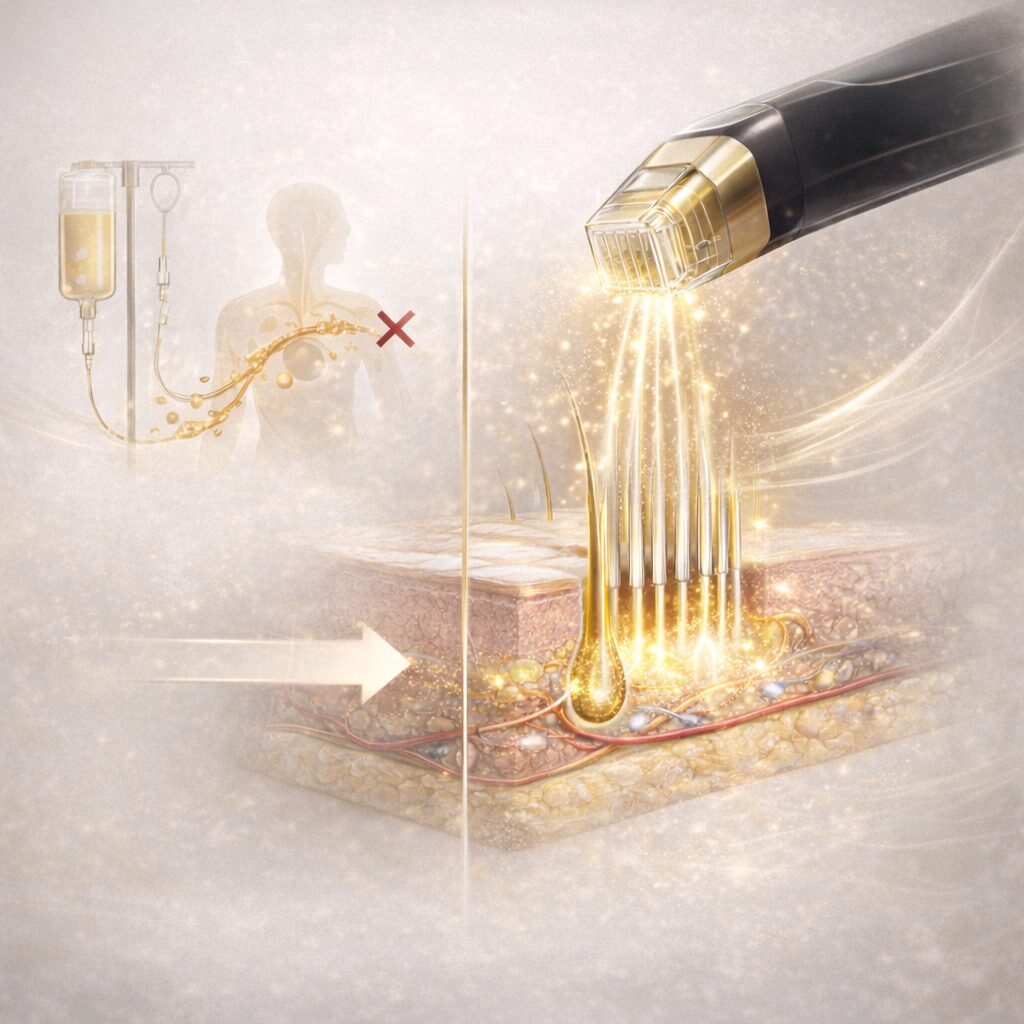
Intravenous infusion distributes bioactive substances systemically, leading to dilution before reaching the target tissue.
Morpheus8 creates controlled microchannels in the dermis using microneedles while simultaneously inducing micro-injury through radiofrequency (RF) energy.
Immediate application of SCCM after treatment allows:
- No systemic dilution
- High local tissue concentration
- Synergistic activation of wound healing pathways
This represents a locally controlled regenerative strategy, distinct from systemic therapy.
2. Synergy with Dermal Remodeling
RF energy from Morpheus8 induces:
- Collagen contraction
- Fibroblast stimulation
- Dermal remodeling
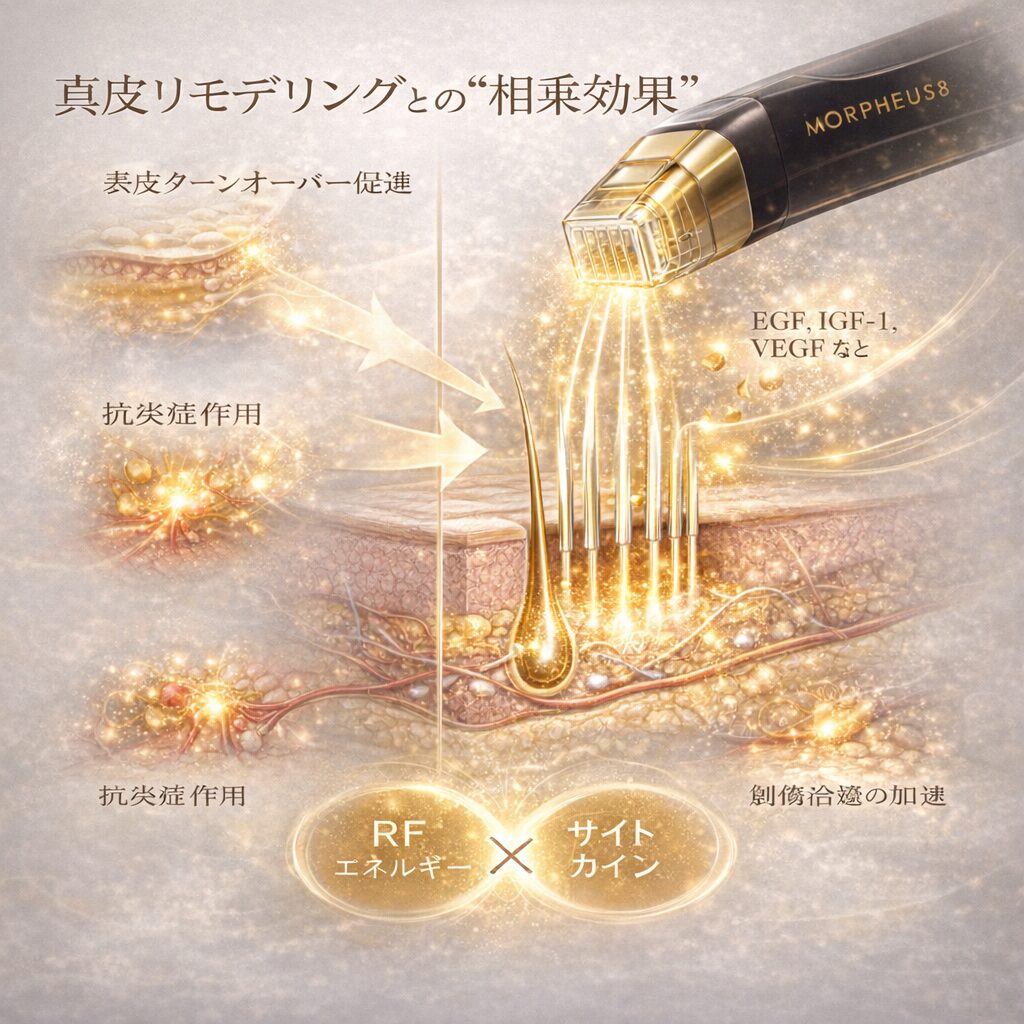
When combined with cytokines such as EGF and IGF-1, the following biological effects may be enhanced:
- Epidermal turnover acceleration
- Angiogenesis (VEGF-mediated)
- Anti-inflammatory modulation
- Accelerated wound repair
This establishes a dual mechanism:
Physical stimulation (RF) × Biological stimulation (cytokines)
3. Direct Approach to Scalp and Hair Follicles
Hair regeneration depends on:
- Perifollicular blood flow
- Activation of the anagen phase
- Reactivation of dormant follicles
By creating microchannels in the scalp and delivering IGF-1 and VEGF directly, potential benefits include:
- Promotion of hair cycle activity
- Improved microvascular circulation
- Reduction of inflammatory microenvironment
Such localized targeting cannot be replicated through IV administration.

4. Evidence Perspective
While exosome-specific clinical mechanisms are still under investigation, cytokines within conditioned media have documented roles in:
- Anti-inflammatory response
- Wound healing
- Angiogenesis
The key is avoiding exaggeration and adhering strictly to evidence-based indications.
5. Safety and Control
Drug delivery via microneedling allows:
- Precise control of delivery depth
- Localized dosage management
- Minimization of systemic exposure
Regenerative medicine is not a universal solution.
However, when executed with proper anatomical understanding, concentration control, and protocol design, it represents a rational therapeutic strategy.
Conclusion
The essence of direct drug delivery of SCCM via Morpheus8 lies in:
- High local concentration
- Synergy with dermal remodeling
- Direct follicular stimulation
- Optimization of wound healing biology
True regenerative medicine is built on anatomy, dermatology, and biological science — not trends.