


How Many Sessions Does Morpheus8 Take to Work?2026.04.25
The Common Traits of Patients Who See Results
One of the most common questions from patients considering Morpheus8 scalp treatment is:
“How many sessions before I see results?”
“Is one session still worthwhile?”
“Why do some people respond better than others?”
The honest answer is this: Morpheus8 should not be judged by the number of sessions alone.
What matters more is how the treatment is performed, under what conditions, and with what strategy.
At AVAN TOKYO, we do not simply sell treatment packages by session count.
We focus on personalized protocols designed for outcomes.
Why Is Morpheus8 Used for Hair Treatment?
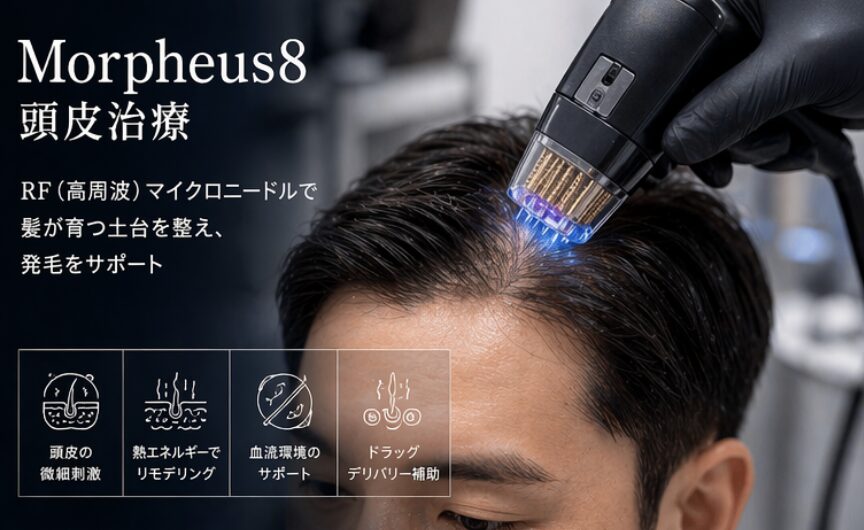
Morpheus8 uses RF (radiofrequency) microneedling to support:
- Controlled micro-stimulation of the scalp
- Thermal energy delivery into dermal and subdermal layers
- Improved circulation environment
- Scalp remodeling
- Enhanced delivery support for regenerative therapies
In other words, it does not treat the hair directly—it improves the environment where hair grows.
How Many Sessions Does It Usually Take?
This varies by patient, but a common pattern is:
Session 1
- Softer scalp feel
- Oil balance changes
- Reduced shedding signs
- Early improvement in hair texture
This is often when the scalp begins to respond.
Sessions 2–3
- Better texture in thinning hair
- Stronger root lift
- Easier styling
- Improvement in visible part-line appearance
This is when many patients begin noticing visible changes.
Session 4 and Beyond
- Better density perception
- More stable volume
- Maintenance phase begins
This is often where more meaningful progress is evaluated.
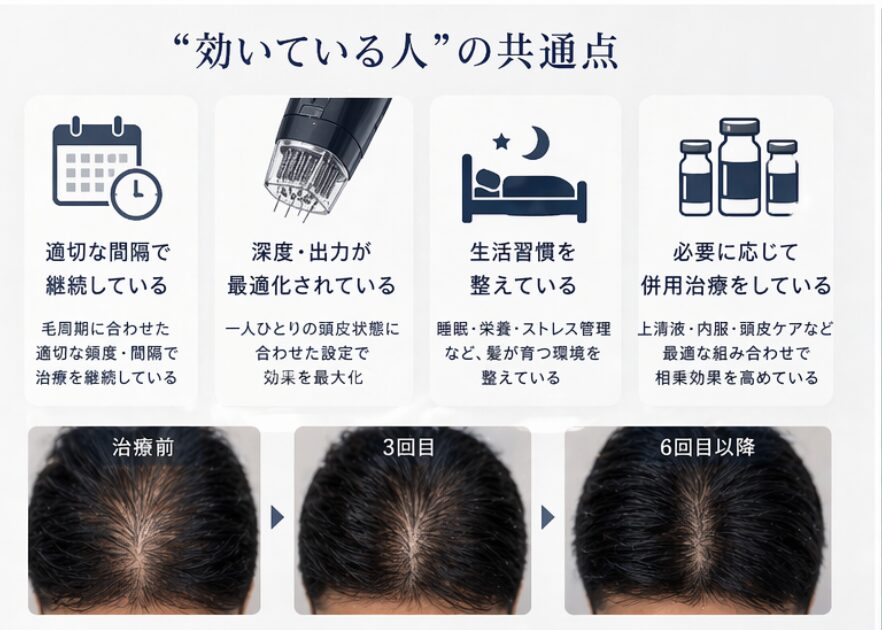
Common Traits of Patients Who Respond Well
1. Proper Timing Between Sessions
Results are often better when treatment intervals are optimized based on:
- Recovery time
- Hair cycle timing
- Individual scalp response
Not simply receiving treatments as often as possible.
2. Correct Depth and Energy Settings
Settings matter significantly.
- Too shallow = insufficient reach
- Too aggressive = excess inflammation
- Different scalp zones need different settings
The same settings do not suit everyone.
3. Good Lifestyle Foundations
Hair is part of the body. Poor habits can reduce outcomes:
- Lack of sleep
- Smoking
- High stress
- Nutritional imbalance
Patients with better routines often respond better.
4. Combination Therapy When Needed
Some patients benefit from combining Morpheus8 with:
- Conditioned media therapy
- Exosome-based support
- Oral medications
- Professional scalp care
Flexibility often improves efficiency.
Common Reasons People Underperform
- Judging after only one session
- Expecting dramatic instant change
- Generic settings every visit
- No home care
- Irregular treatment intervals
These factors can limit results.
The AVAN TOKYO Approach
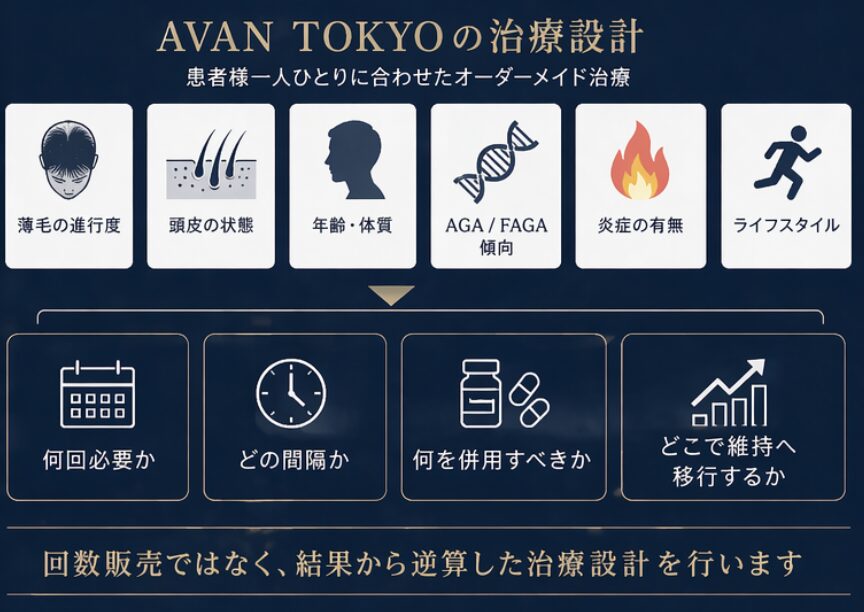
We assess:
- Degree of hair loss progression
- Scalp condition
- Age
- AGA / FAGA tendencies
- Inflammation status
- Lifestyle factors
Then determine:
- How many sessions are appropriate
- What interval is best
- What combinations may help
- When to shift into maintenance
This is one reason premium patients choose AVAN TOKYO.
Conclusion
The true question is not simply how many sessions.
It is:
For whom, with what settings, at what timing, and with what consistency?
Patients who respond well often share:
- Proper intervals
- Customized settings
- Better lifestyle habits
- Smart combination therapy
At AVAN TOKYO, treatment is designed around results—not package counts.
📍AVAN TOKYO Ginza Hair Regenerative Medicine
English / 中文 / Tiếng Việt Available