


The Medical Differences Between Male and Female Hair Loss2026.03.13
And the Potential Benefits of Adipose-Derived Stem Cell Conditioned Medium
When people notice that their hair is becoming thinner, many tend to think of “hair loss” as a single condition.
In reality, however, male hair loss and female hair loss differ in how they progress, what changes occur in the hair follicles, and what points should be emphasized in treatment.
That is why the first and most important step is to understand what type of hair loss is actually present.
At AVAN TOKYO, we carefully evaluate these differences and propose a regenerative approach using adipose-derived stem cell conditioned medium for patients whose hair follicles are still present and potentially recoverable.
However, this is not a universal treatment for every kind of hair loss.
Its value lies in using it appropriately for the right indications.
Male Hair Loss Typically Affects the Hairline and Crown
The most common form of hair loss in men is male pattern hair loss, also known as androgenetic alopecia.
It typically progresses gradually with:
- recession of the hairline
- thinning at the crown
- reduced density in androgen-sensitive areas
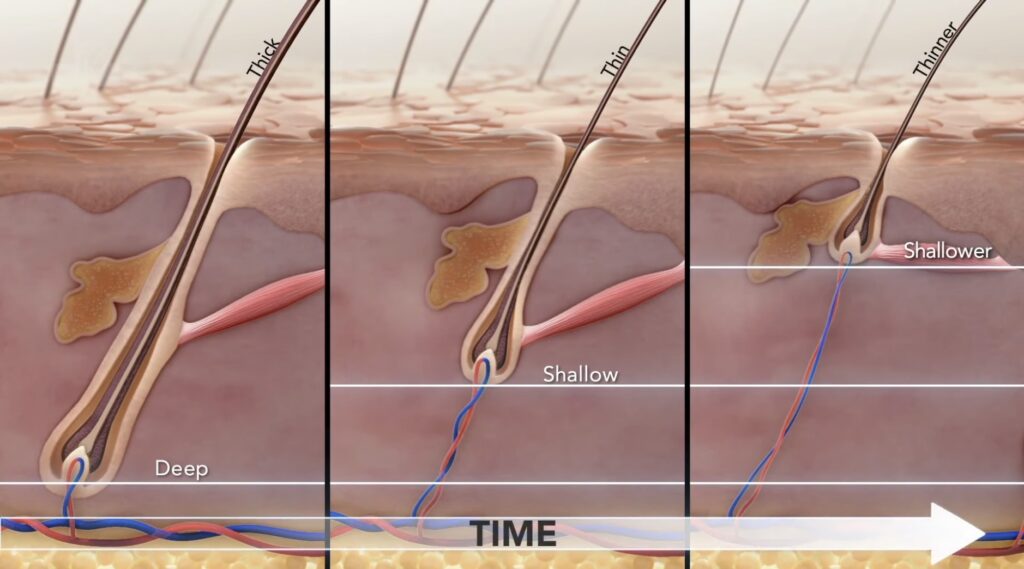
The core process is follicular miniaturization.
In other words, the follicles do not suddenly disappear. Instead, over time they produce hair that becomes thinner, shorter, and weaker, until the follicles are no longer able to produce strong terminal hair.
Because of this, treatment for male hair loss focuses on two key goals:
- slowing further miniaturization
- helping weakened follicles function more effectively
Female Hair Loss Often Appears as Overall Thinning
In women, the pattern is often different.
Rather than a clear recession of the hairline, female hair loss more commonly appears as:
- widening of the part line
- reduced density at the top of the scalp
- a general decrease in overall hair volume
This is often seen in female pattern hair loss, but women may also experience diffuse shedding, such as telogen effluvium, related to factors like childbirth, stress, rapid weight loss, fever, nutritional imbalance, iron deficiency, thyroid dysfunction, or other systemic changes.
This means that female hair loss is often more complex.
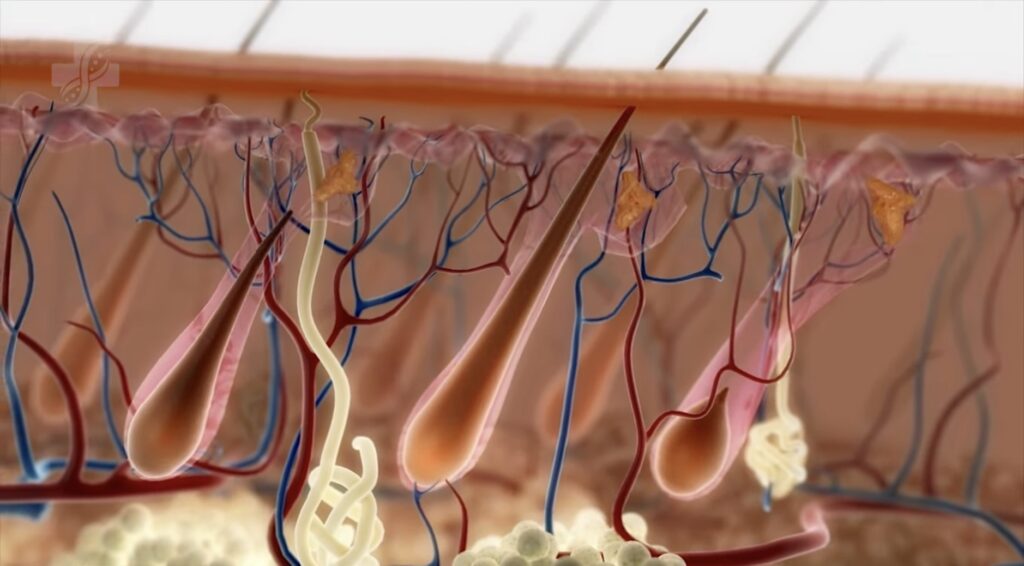
It may involve not only follicular miniaturization, but also hormonal change, nutritional issues, and whole-body factors.
That is why female hair loss should not be approached in exactly the same way as male hair loss.
What Is the Medical Difference Between Male and Female Hair Loss?
The biggest medical difference lies in the pattern of thinning and the dominant mechanism behind it.
In men, hair loss is more often driven by androgen sensitivity in specific areas, leading to a recognizable pattern involving the frontal hairline and crown.
In women, thinning is more likely to appear diffusely, with a gradual drop in density rather than obvious bald spots. In addition, women are more likely to have overlapping causes, such as telogen effluvium combined with female pattern hair loss.
Another important point is that in women, what appears to be “hair loss” may sometimes be strongly influenced by underlying systemic factors.
Because of this, treatment must be based not only on appearance, but also on careful medical assessment.
What Is Adipose-Derived Stem Cell Conditioned Medium?
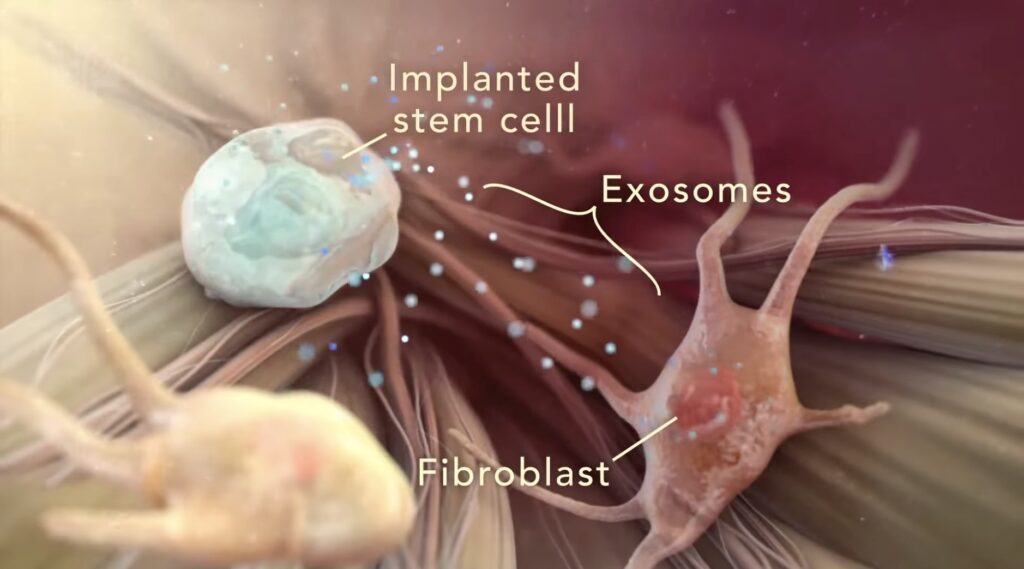
Adipose-derived stem cell conditioned medium does not mean injecting living stem cells themselves.
Instead, it refers to the use of growth factors, cytokines, and signaling molecules secreted by adipose-derived stem cells during culture.
In simple terms, this is not a “magic liquid that instantly grows hair.”
Its real role is to help support the microenvironment around weakened hair follicles.
Many patients with hair thinning still have follicles present.
The problem is that those follicles are producing weaker, thinner hair.
In these cases, conditioned medium may help by supporting:
- the hair cycle
- the follicular environment
- local scalp circulation
- signals related to healthier hair growth
Because of this, it is best understood as a regenerative supportive treatment rather than a stand-alone miracle cure.
Benefits for Male Hair Loss
In male pattern hair loss, the follicles often remain present, but their function becomes progressively weaker.
Adipose-derived stem cell conditioned medium may offer benefits by helping support:
- hair cycle regulation
- the environment around dermal papilla cells
- microcirculation around the follicles
- overall scalp conditions that favor stronger hair growth
For men, this makes it a promising option as a supportive regenerative treatment, especially for those who want to protect the follicles they still have and improve the quality of weakened hair.
However, it should be viewed as a treatment that supports and complements established hair-loss care, rather than completely replacing standard therapy.
Benefits for Female Hair Loss
In women, the goal is often not simply to treat one bald area, but to protect overall density and preserve hair volume.
This is where adipose-derived stem cell conditioned medium may be especially meaningful.
In female pattern hair loss and similar conditions where follicles are still alive, it may help support:
- scalp health
- weakened follicular function
- hair thickness and resilience
- the environment needed for healthier growth
For women who feel that their part line is widening, their top volume is decreasing, or their hair has become visibly finer overall, this treatment may be a very attractive option.
It may also be considered in prolonged diffuse shedding, provided the underlying cause has been evaluated appropriately.
What AVAN TOKYO Values
At AVAN TOKYO, we believe that true hair treatment begins with understanding that:
male hair loss should be treated as male-pattern disease, and female hair loss should be treated as female-pattern disease.
Even though both are called “hair loss,” the medical background is often different.
That is why we do not treat all thinning hair the same way.
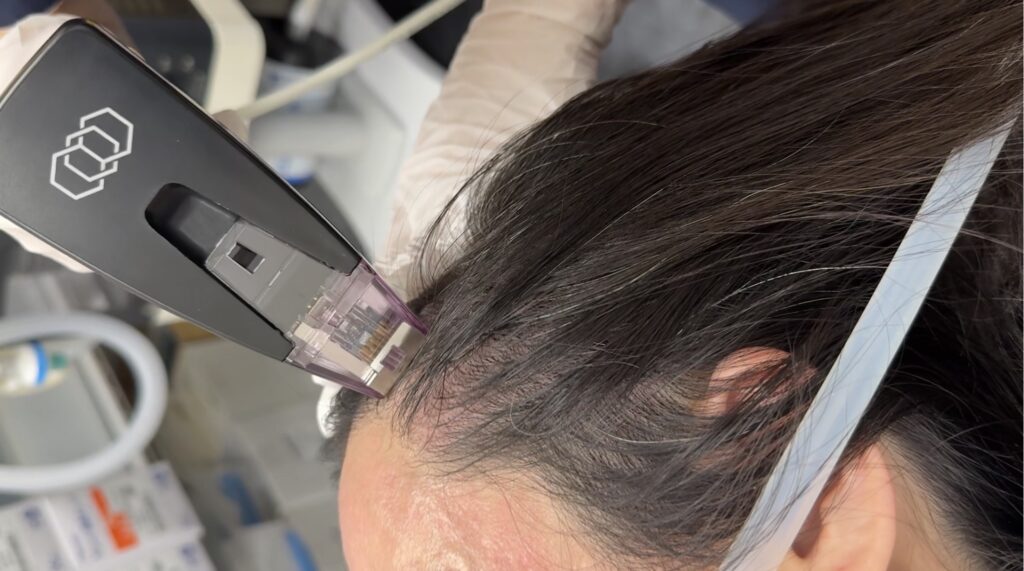
We position adipose-derived stem cell conditioned medium not as a trend-driven treatment, but as a regenerative supportive therapy for patients who still have functioning follicles and want to preserve and strengthen the hair they currently have.
If you have started to notice:
- a widening part line
- reduced overall volume
- progression at the hairline or crown
- weakening of once-healthy hair
this is often the stage at which consultation becomes especially meaningful.
Conclusion
Male hair loss is typically a patterned form of thinning centered on the hairline and crown.
Female hair loss is more likely to appear as widening of the part line and generalized reduction in hair volume, often with more complex background factors.
The potential benefit of adipose-derived stem cell conditioned medium lies in its ability to help support:
- the hair cycle
- the follicular environment
- local circulation
- the preservation of follicles that are still alive
That is why it may be promising for both men and women — but only when used according to the actual medical pattern of hair loss.
At AVAN TOKYO, we believe the key is not simply choosing a treatment, but choosing the right treatment for the right type of hair loss.