


Long-Term Acne Antibiotics and Hair Loss: Gut and Scalp Microbiome Shifts2026.10.14
Many patients continue to take oral antibiotics for acne through their teens, twenties, and thirties. Tetracyclines (minocycline, doxycycline) and macrolides are long-standing standard treatments for inflammatory acne. In recent years, however, the relationship between long-term acne antibiotics and hair loss has quietly drawn clinical attention. When oral antibiotics are continued for six months or a year, they affect not only Cutibacterium acnes on the face but also the gut microbiome and the resident flora of the scalp and skin — which in turn destabilizes the environment around the hair follicle. In this article, Dr. Moriwaki explains the mechanisms that connect long-term acne antibiotics and hair loss, and the order in which the ground should be prepared before starting scalp regenerative medicine.
Key Points of This Article
・Long-term acne antibiotics and hair loss are linked mainly through reduced gut-microbiome diversity, decreased nutrient absorption, and low-grade systemic inflammation.
・On the scalp, Malassezia yeast relatively expands, so seborrheic dermatitis and folliculitis emerge more easily.
・Minocycline itself can directly affect follicles through pigmentation, drug-induced lupus-like reactions, and other adverse events.
・Stopping antibiotics does not automatically restore hair density; the gut, scalp, and follicle have to be rebuilt together over months.
・Regenerative scalp treatment should be planned only after the dermatologist and the hair clinic have jointly revisited the antibiotic strategy.
Which Acne Antibiotics, and the Reality of “Long-Term Use”
The Japanese Dermatological Association guidelines list oral tetracyclines as the first-line choice for inflammatory acne and recommend reassessing therapy at roughly three months. In actual practice, however, when the skin fails to settle, prescriptions are often extended to six or twelve months. Antibiotics are intended to curb C. acnes and inflammation, but they act simultaneously on the gut, oral, and skin microbiota. This is where the connection between long-term acne antibiotics and hair loss begins. Patients who say “my acne is better, but hair shedding has increased over the past year” often have this quiet microbiome shift in the background.
Gut Microbiome Shifts and Hair Loss
Not Enough Raw Material for the Follicle
Gut bacteria indirectly support hair follicles by producing B vitamins (biotin, folate, B12), vitamin K, and short-chain fatty acids. When long-term antibiotics reduce gut-microbiome diversity, the apparent diet may not change, but the raw material available to the matrix cells shrinks. Even when serum iron and ferritin remain within reference range, a gradual decline in biotin and B vitamins alone can thin hair quality — a scenario we encounter in clinical practice.
Low-Grade Inflammation and the Gut–Skin–Follicle Axis
Reduced gut diversity loosens the tight junctions of the intestinal wall, producing “leaky gut” and spreading low-grade chronic inflammation systemically. Pro-inflammatory cytokines such as IL-6 and TNF-α tend to shorten the anagen phase of the hair cycle. In this sense, long-term acne antibiotics and hair loss are quietly connected through the gut, the skin, and the follicle.
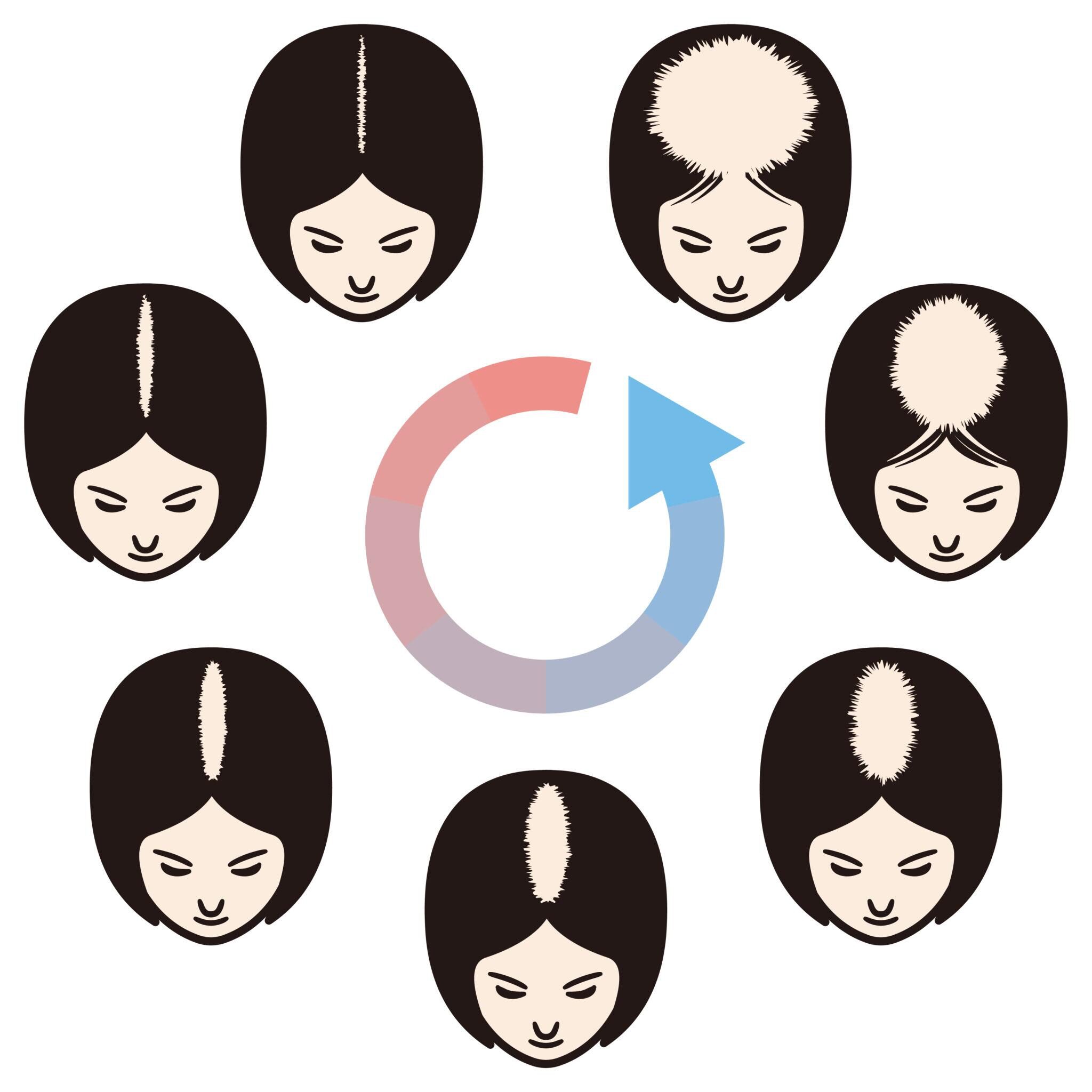
Changes in Scalp and Skin Flora and Hair Loss
Malassezia and Seborrheic Dermatitis
Antibiotics act on bacteria but not on the yeast Malassezia furfur. When bacteria recede, Malassezia relatively expands; on the scalp, seborrheic dermatitis, dandruff, and itch become more visible. Chronic scalp inflammation prevents follicles from completing anagen and, as a result, increases diffuse shedding.
Folliculitis and a Disrupted Resident Flora
Some patients develop recurrent small pustules on the scalp after a long antibiotic course. Staphylococcus aureus-dominant folliculitis or colonization by resistant organisms may lie beneath, and if physical irritation is added, post-inflammatory pigmentation and small patches of hair loss can remain. When thinking about long-term acne antibiotics and hair loss, we also need to watch for this “shift” of symptoms — the facial acne has cleared, but a new scalp problem has appeared.
Direct Effects of Antibiotics on the Follicle
Long-term, high-dose minocycline is known to cause pigmentation of the scalp, nails, and gingiva. More rarely, drug-induced lupus-like reactions, DRESS syndrome, hepatotoxicity, and autoimmune thyroiditis have been reported; if these reach the scalp they may contribute to inflammatory or even scarring alopecia. With doxycycline, photosensitivity can slowly degrade the follicular microenvironment at the hairline and part. Framing long-term acne antibiotics and hair loss simply as “a side effect” is not enough; it helps to break the problem down by pathway so the right countermeasure can be prioritized.
The Order to Set Things Right Before Regenerative Scalp Treatment
Scalp injections of stem cell conditioned media and Morpheus8 scalp treatment both show their real value on a quiet, non-inflamed ground. For patients continuing acne antibiotics on auto-pilot, three steps come first.
First, revisit the acne strategy with the dermatologist — follow the guideline, bound the antibiotic duration, and consider shifting to a non-antibiotic maintenance plan with topical retinoids (adapalene) or benzoyl peroxide. The Japanese Dermatological Association guideline is a useful reference.
Second, recover the gut environment — a diet built around fermented foods, fiber, and sufficient protein, combined where appropriate with physician-supervised probiotics. Rechecking zinc, biotin, iron, and B vitamins on bloodwork is often informative.
Third, calm scalp inflammation — adding needles or heat to a scalp still carrying seborrheic dermatitis or folliculitis will only stress the follicle, so a run-up period of topical antifungals and gentle shampoo is prudent.
Only after this foundation is set does it make sense to design stem cell conditioned media therapy to lift the scalp environment, and the clinical response becomes much easier to read. For related reading, see the hair regenerative medicine column list here.
Frequently Asked Questions
Q. Can I receive scalp conditioned media treatment while on acne antibiotics?
Oral antibiotics are not an absolute contraindication to conditioned media therapy. We do, however, avoid periods when the scalp still carries active seborrheic dermatitis or folliculitis, and we coordinate the plan with the dermatologist. Starting on a controlled, non-inflamed foundation makes it easier to interpret the result.
Q. Will the shedding stop on its own once I stop antibiotics?
In many cases shedding gradually improves over three to six months after cessation, but it takes time for the gut flora and scalp flora to recover. Combining diet, stress management, and scalp care in parallel realistically speeds the return. Individual variation is wide, so reassessment on a one-year horizon is reasonable.
Q. If I add probiotics during the course, can I prevent hair loss?
No blanket answer applies, but as an adjunct to limit the loss of gut diversity, probiotics can be a rational choice. Strains, doses, and evidence vary across products, so we recommend choosing them in consultation with the prescribing physician rather than on a self-directed basis.
Q. Can minocycline pigmentation also appear on the scalp?
There are reports with long-term, high-dose use. If you notice a bluish-gray discoloration of the scalp or pigmentation of nails or gums, speak with the prescribing doctor promptly. The color may persist after cessation, so early recognition matters.
Q. I combine acne antibiotics with spironolactone. What about the scalp?
Anti-androgenic agents often work in favor of the FAGA (female pattern hair loss) pattern and may partially offset the shedding risk tied to antibiotics. Decisions are individual, so sharing information across dermatology, gynecology, and hair-care physicians is helpful.
──────────────
Medical Supervisor: Shin Moriwaki, MD
Member, Japan Society of Aesthetic Surgery (JSAS) / Member, American Academy of Aesthetic Medicine
ECFMG Certificate
──────────────
📍AVAN TOKYO Ginza Hair Regenerative Medicine
AVAN TOKYO Ginza Hair Regenerative Medicine
English / 中文 / Tiếng Việt supported
Inquiries welcome via DM / LINE / Website / Phone.