


Feeling More Hair Shedding After Starting Blood Pressure Medication? — Dr. Moriwaki Organizes How to Recognize Drug-Induced Alopecia From Beta-Blockers, Diuretics, and ACE Inhibitors, and Where Stem Cell Conditioned Media Scalp Treatment Can Provide Parallel Support2026.08.12
“I feel like my hair started shedding more after I began the blood pressure medication” — this is not a rare complaint from patients in their 40s to 60s who take long-term antihypertensive therapy. In fact, several antihypertensives are known to potentially cause drug-induced alopecia, showing up as a shift in hair density two to four months after starting the medication. That said, discontinuing an antihypertensive on your own dramatically raises the risk of cardiovascular events such as stroke and myocardial infarction, so protecting the primary-disease treatment while supporting the scalp environment in parallel is essential. This article organizes, from Dr. Moriwaki’s viewpoint, how to recognize antihypertensive-related shedding, the correct order for coordinating with the prescribing physician, and where stem cell conditioned media scalp treatment can — and cannot — provide parallel support.
Key Points of This Article
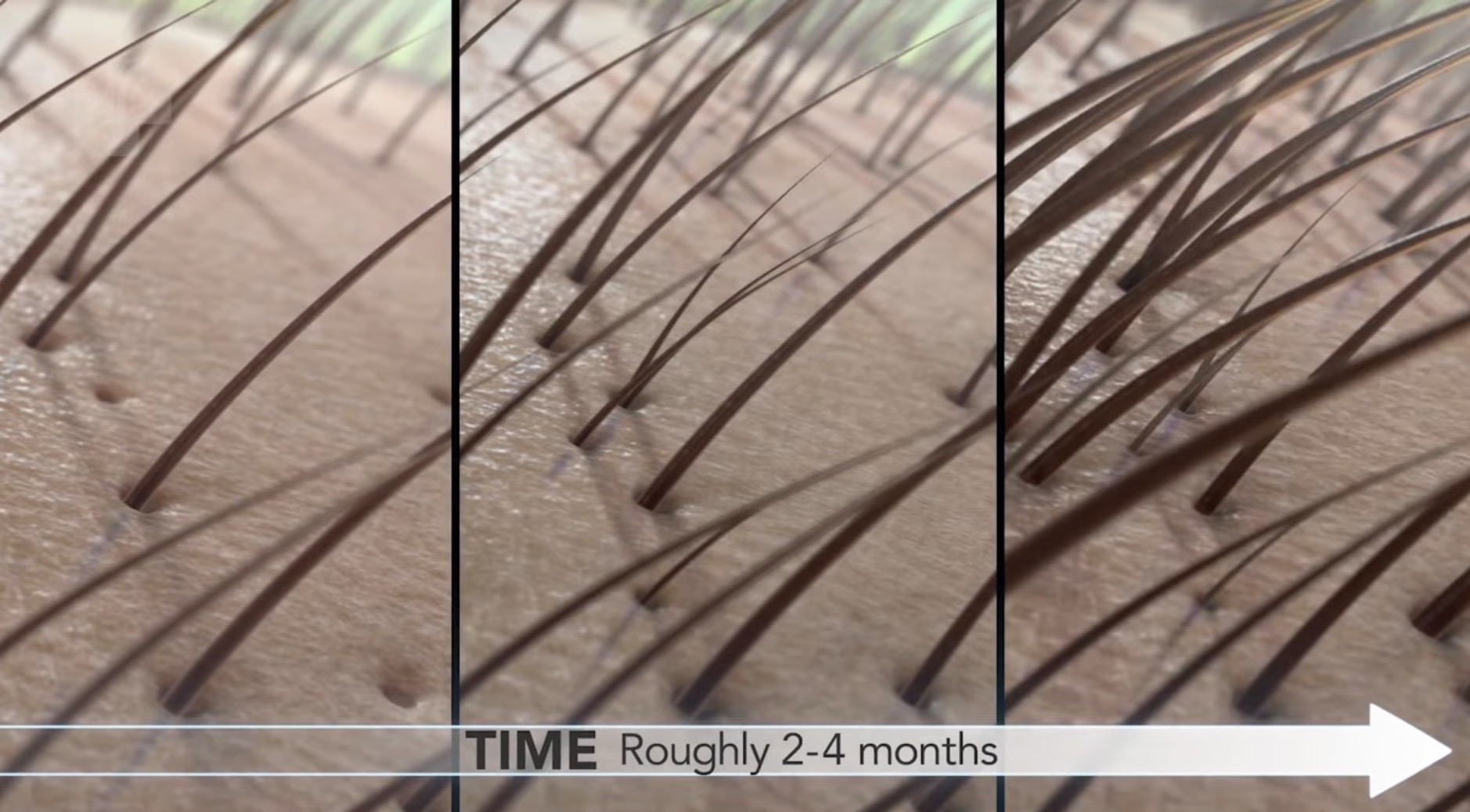
・Drug-induced alopecia from antihypertensives typically appears as telogen effluvium two to four months after starting the medication, and its progression pattern differs from AGA.
・Beta-blockers, thiazide diuretics, ACE inhibitors, and ARBs have been reported as contributing factors, though frequency and severity vary greatly between individuals.
・Self-discontinuing an antihypertensive sharply raises cardiovascular event risk, so any change must be considered in consultation with the prescribing physician.
・Many cases show a recovery trend three to six months after the causative drug is stopped, but when AGA is running in parallel, a separate treatment plan is required.
・Stem cell conditioned media scalp treatment is positioned as parallel support for the follicular microenvironment when the medication cannot be changed or when ongoing shedding needs to be cushioned.
What Is Drug-Induced Alopecia? — A Framework Distinct From AGA
Drug-induced alopecia is the collective term for hair loss caused by oral, topical, or injectable medications. It most often appears as diffuse telogen effluvium, with overall scalp density decreasing slowly. Whereas AGA advances primarily through follicular miniaturization and shortening of the anagen phase, this condition is centered on a synchronous shift of the hair cycle, in which large numbers of follicles transiently move into the telogen phase.
Difference From Chemotherapy-Induced Alopecia — Recognizing It by “Timing”
Chemotherapy-induced alopecia causes strong damage to the matrix cells of the anagen phase, so rapid shedding begins one to three weeks after administration. In contrast, antihypertensives act through a phase shift in the hair cycle, so shedding classically increases two to four months after starting the medication. The timeline — “when did you start taking what?” — is the entry point to diagnosis.
Patterns of Drug-Induced Alopecia Commonly Seen With Antihypertensives
Shedding is not something that “inevitably” occurs with any antihypertensive; reported frequencies are limited. Still, knowing which drug classes have suggested associations from a pharmacological standpoint helps sort out the cause.
Beta-Blockers (Propranolol, Metoprolol, etc.)
Proposed mechanisms include beta-receptor-mediated changes in perifollicular blood flow and promotion of the shift to the telogen phase. Diffuse increase in shedding several months after starting the drug is one possible presentation.
Thiazide Diuretics
Changes in fluid and electrolyte balance, and increased urinary excretion of trace elements, may affect follicular metabolism. Long-term female users sometimes present with the complaint that “shedding during shampooing has clearly increased.”
ACE Inhibitors, ARBs, Calcium Channel Blockers
Case reports are relatively few, but telogen effluvium appearing around the time of initiation has been described. With calcium channel blockers, diltiazem-type agents have paradoxically been reported to produce hypertrichosis, so the effect on hair follicles is not uniform across drugs.
How to Recognize It and the Order of Consultation — Never Self-Discontinue
Antihypertensive-related shedding, AGA or female pattern hair loss (FAGA), or postpartum / stress / nutritional telogen effluvium — sorting these out is the first step in designing treatment.
Organize by Timeline and Pattern of Involvement
Medication-related shedding is classically “two to four months after starting the drug” and “diffuse across the entire scalp.” When frontal M-shaped recession or focal density loss at the vertex is progressing, suspect AGA running in parallel. If hair-shaft caliber variability (follicular miniaturization) is confirmed under a dermatoscope, AGA is likely a major contributor.
Information Sharing With the Prescribing Physician Takes Absolute Priority
To repeat: discontinuing an antihypertensive on your own risks provoking cardiovascular events through blood-pressure rebound. When you notice increased shedding, first tell the prescribing physician (internist) about “the timeline between starting the medication and the increase in shedding” and “any other side effects,” and consult whether switching to an alternative within the same class is possible. Guidelines on AGA care from the Japanese Dermatological Association are also useful reference material.
Where Stem Cell Conditioned Media Scalp Treatment Can Provide Parallel Support
The first line for drug-induced alopecia is still “reconsidering the causative drug,” but there are many situations in which the antihypertensive cannot be discontinued from a cardiovascular standpoint. In those cases, stem cell conditioned media scalp treatment can be positioned as parallel support for the follicular microenvironment.
What Can Be Expected — Preparing the Environment Around the Follicle
The growth factors (VEGF, IGF-1, HGF, etc.) and exosomes contained in stem cell conditioned media are thought to act toward calming perifollicular micro-inflammation and improving the blood-flow and metabolic environment. “We can’t change the drug, but we can prepare the environment around the follicles as much as possible” — that is the positioning of parallel support.
What Should Not Be Overexpected — The Pharmacological Action Itself Cannot Be Neutralized
At the same time, stem cell conditioned media is not a treatment that cancels out “the pharmacological action of the antihypertensive being taken.” As long as the causative drug continues, background pressure toward shedding persists. Responses vary between individuals, and objective evaluation with standardized photographs and dermatoscopic hair-caliber measurement is indispensable. See also our hair regenerative medicine column index for related topics.
Frequently Asked Questions
Q. I feel like my hair started shedding more after starting blood pressure medication. Should I stop the drug right away?
Avoid stopping on your own — blood-pressure rebound raises the risk of stroke and myocardial infarction. First consult the prescribing physician, share the timeline and shedding status, then consider whether switching to an alternative within the same drug class is feasible.
Q. Does medication-related shedding recover once the causative drug is stopped?
In many cases, recovery gradually emerges over three to six months after the drug is discontinued. When AGA or female pattern hair loss is running in parallel, however, stopping the drug alone may not deliver sufficient recovery.
Q. Is it safe to add AGA treatment (finasteride, etc.) on top of drug-induced alopecia?
The two can coexist. However, the interaction between antihypertensives and AGA medications and the way side effects can stack require individual assessment, and the safest design is one shared between the prescribing physician and the hair-loss physician.
Q. Can I receive stem cell conditioned media scalp treatment while on antihypertensives?
Taking antihypertensives does not by itself contraindicate conditioned media treatment. However, concurrent anticoagulants or antiplatelets, and poorly controlled hypertension, require evaluation of bleeding and blood-pressure fluctuation risk. Please declare all medications you are taking at the consultation.
Q. When should the effect be evaluated?
Because of the hair cycle, scalp-treatment effect is assessed on a scale of at least three to four months, and ideally six months. Following the course objectively with standardized photographs and dermatoscopic hair-caliber measurement is the key to avoiding misjudgment in the face of individual variability.
──────────────
Medical Supervision: Dr. Shin Moriwaki (Supervising Physician)
Member, Japan Society of Aesthetic Surgery (JSAS)
Member, American Academy of Aesthetic Medicine
ECFMG Certificate
──────────────
📍AVAN TOKYO Ginza Hair Regenerative Medicine
AVAN TOKYO Ginza Hair Regenerative Medicine
English / 中文 / Tiếng Việt supported
Inquiries welcome via DM / LINE / Website / Phone.