


GLP-1 hair loss — for women whose shedding surged 3–6 months after rapid weight loss on Ozempic or Wegovy: where stem cell conditioned media scalp treatment can walk alongside scalp microenvironment correction, and where it cannot correct systemic nutritional status itself — organized by Dr. Moriwaki2026.08.17
“I lost weight smoothly on Ozempic or Wegovy — but three to six months in, my hair suddenly started falling out in clumps.” This kind of consultation has surged in our clinic. GLP-1 hair loss is a general term for acute telogen effluvium that develops after rapid weight loss on GLP-1 receptor agonists (semaglutide, liraglutide, tirzepatide, etc.). The drug itself does not directly injure the hair follicle. Rather, the ‘sharp drop in body weight’ synchronously pushes hair cycles into the telogen phase, producing a secondary form of hair loss. In this article, Dr. Moriwaki organizes the mechanism, and honestly describes what stem cell conditioned media scalp treatment can walk alongside — correcting the scalp microenvironment — and what it cannot do: correct systemic nutritional status itself.
Key Points of This Article
・GLP-1 hair loss is not a direct attack on the hair follicle by the drug; it is fundamentally an acute telogen effluvium triggered by ‘rapid weight loss’
・Shedding typically peaks 3–6 months after weight loss begins, and once nutrition is restored, most cases recover naturally over 6–12 months
・What stem cell conditioned media scalp treatment can target is correction of the scalp microenvironment — inflammation control, blood flow, and growth factor supply — not systemic nutrient deficiency itself
・Protein, iron, zinc, and vitamin D deficiencies frequently underlie the picture, so internal medicine evaluation and nutritional management form the foundation
・The key clinical decision is distinguishing cases that can be observed for natural recovery from those that benefit from concurrent scalp treatment
Why GLP-1 Hair Loss Happens — Weight Loss and Hair Cycle Synchronization
GLP-1 hair loss is fundamentally ‘acute telogen effluvium’ triggered by the rapid weight loss induced by GLP-1 receptor agonists. Originally developed as incretin-based diabetes drugs, GLP-1 receptor agonists potently reduce caloric intake through appetite suppression and delayed gastric emptying. In recent years, off-label prescribing for weight loss has surged, and patients losing 3–5% of body weight per month are no longer rare. This ‘sharp drop’ is precisely the trigger.
Rapid weight loss synchronizes the hair cycle
Each hair follicle normally cycles through anagen (growth), catagen (regression), and telogen (rest) at its own timing, with 10–15% of follicles in telogen at any moment — a well-balanced state. When strong nutritional stress (rapid caloric drop, protein deficit, trace element deficiency) hits the whole body, however, many anagen follicles are pushed ‘in a hurry’ into telogen. This phenomenon is telogen effluvium, and rapid weight loss from GLP-1 receptor agonists is one of its most typical triggers.
The 3–6 month delay before symptoms appear
Another feature is the time lag between weight loss and hair shedding. Follicles pushed into telogen then take 2–3 months to prepare for shedding, and eventually fall out en masse during shampooing or brushing. Patients describe it as “I was feeling great after losing weight, then suddenly hair started falling out” — precisely because of this hair-cycle time lag, which also makes it hard for the patient to connect cause and effect.
Do GLP-1 Receptor Agonists Themselves Injure the Hair Follicle?
Some patients ask, “Doesn’t semaglutide directly toxicity the hair root?” Current clinical trials and observational studies have not clearly demonstrated direct toxicity of GLP-1 receptor agonists on follicle cells; most reported hair loss is interpreted as secondary telogen effluvium accompanying rapid weight loss. In other words, the main culprit is not the ‘drug’ itself but the ‘pace of weight loss’ — an understanding on which treatment design must be built.
What Stem Cell Conditioned Media Scalp Treatment Can Walk Alongside in GLP-1 Hair Loss
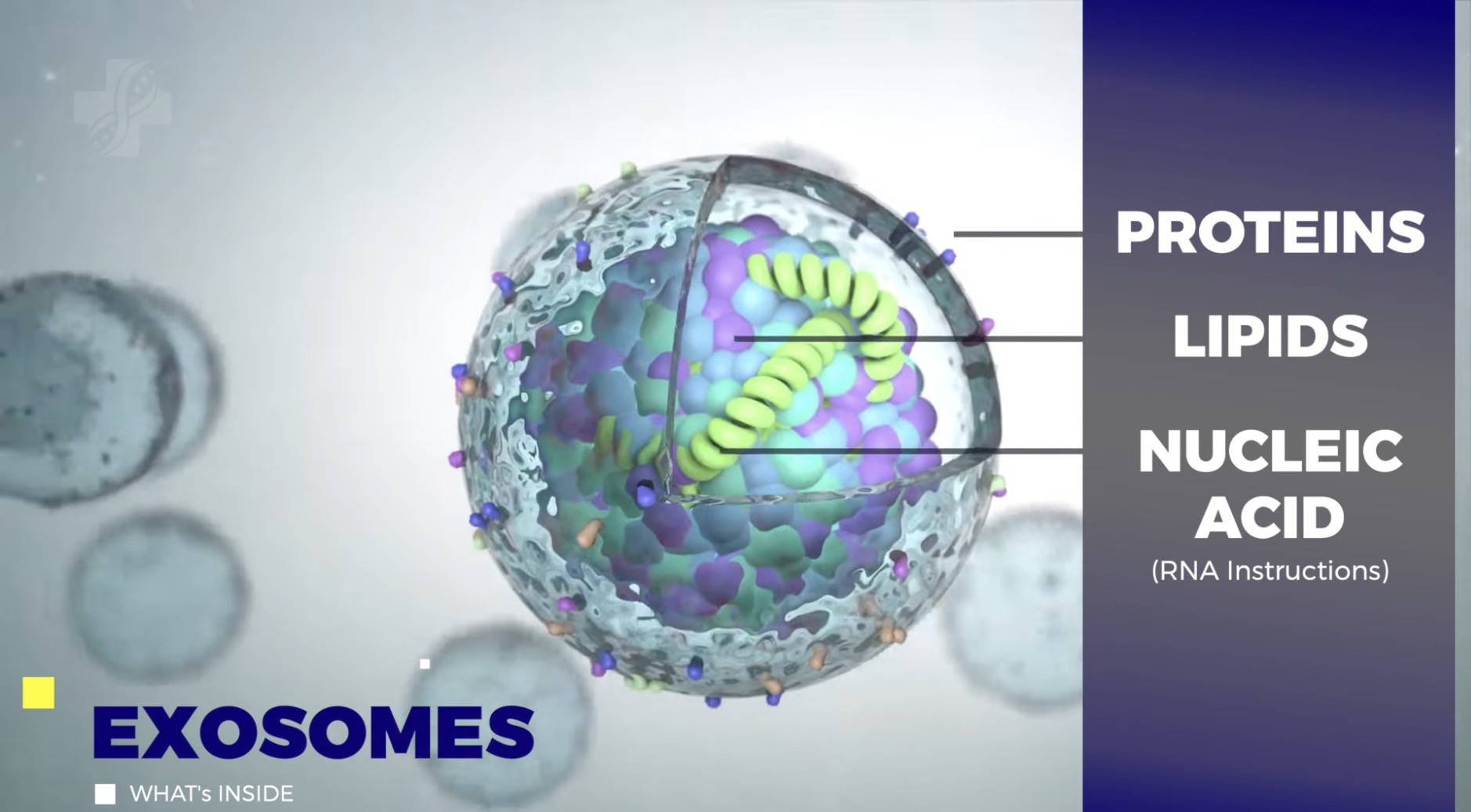
The rationale for considering stem cell conditioned media scalp treatment in GLP-1 hair loss lies in correcting the scalp microenvironment. Under rapid weight loss, decreased perifollicular blood flow, chronic microinflammation, and reduced growth factor supply tend to occur in parallel — and even after systemic nutrition recovers, some patients experience a sluggish ‘restart’ on the scalp side. Stem cell conditioned media delivers exogenous growth factors, cytokines, and exosomes to the scalp microenvironment, supporting an environment that helps ‘nudge’ follicles from telogen back into anagen. For more detail, please see our hair regenerative medicine column archive.
Calming scalp inflammation and improving blood flow
During rapid weight loss, elevated cortisol and sympathetic dominance tend to persist, and chronic microinflammation and reduced blood flow of the scalp often coexist. In scalp treatment, we design protocols that deliver stem cell conditioned media to supply anti-inflammatory cytokines and support microcirculation.
Delivering growth factors to follicles in the recovery phase
As acute telogen effluvium enters the recovery phase and follicles attempt to re-enter anagen from telogen, supplying exogenous growth factors (VEGF, IGF-1, HGF, etc.) may help accelerate the ‘return.’ However, individual responses vary, and we share upfront that scalp treatment alone rarely produces adequate response while systemic nutrition remains unrecovered.
Areas Where Stem Cell Conditioned Media Scalp Treatment ‘Cannot Walk Alongside’
On the other hand, the fundamental issue — ‘systemic nutritional status itself’ — is outside the reach of scalp treatment. Even if stem cell conditioned media is delivered to the scalp, follicles cannot return to anagen unless body protein, iron, zinc, and vitamin D deficiencies are corrected. Failing to share this boundary upfront distorts assessment of the scalp treatment’s effect. For general clinical guidance on hair loss, please also refer to the guidelines of the Japanese Dermatological Association.
Internal medicine evaluation of protein, iron, zinc, and vitamin D as the first step
GLP-1 receptor agonists have potent appetite-suppressing effects, and patients often unknowingly drop below 0.6 g of protein per kg body weight per day. Blood work should confirm ferritin, serum zinc, 25-OH vitamin D, and albumin, and building a framework that runs alongside internal medicine and nutritional guidance is the starting line of treatment.
When reviewing the pace of weight loss is medically appropriate
When a high pace of weight loss exceeding 5% of body weight per month continues, revisiting the pace of weight loss (dose adjustment, consultation with the prescribing physician) is medically appropriate — also to reduce risk. Scalp treatment only becomes a meaningful next step once this foundation is in place.
Timing of Consultation and Flow of Examination
Whether it is GLP-1 hair loss is judged comprehensively based on the pattern of shedding (diffuse vs. localized), timing of GLP-1 receptor agonist initiation, speed of body weight change, blood work (ferritin, zinc, vitamin D, thyroid, albumin), and microscope-based hair diameter distribution. Once the diagnosis is established, whether to add stem cell conditioned media scalp treatment while running alongside internal medicine and nutritional management is designed individually.
Frequently Asked Questions
Q. Will this shedding return to normal if I stop the drug?
In most cases, once body weight stabilizes and nutrition recovers, hair volume naturally returns over 6–12 months. That said, the speed and completeness of recovery vary by individual, and chronic deficiencies in iron, zinc, or protein can slow the return.
Q. Can I receive scalp treatment while still using a GLP-1 receptor agonist?
Yes — in principle, local scalp treatment can be performed during continued use. However, during periods of ongoing rapid weight loss, the effect of scalp treatment alone tends to be limited, so we design treatment on the premise of running alongside internal medicine and nutritional guidance.
Q. How do you distinguish GLP-1 hair loss from AGA?
A ‘diffuse’ pattern with uniform thinning across the whole head is typical, and this distribution differs from AGA, which localizes to the hairline or crown. On microscopy, AGA shows follicle miniaturization with varying hair diameter, whereas telogen effluvium mainly shows preserved diameter but reduced count. Because the two can coexist, differential diagnosis is made by comprehensive judgment based on examination and testing.
Q. Will supplements alone stop the shedding?
Replenishing deficient nutrients is important, but a strategy of ‘just take supplements while keeping the same rapid weight-loss pace’ rarely lowers risk. Adjusting the pace of weight loss and ensuring dietary protein intake are the foundation, with supplements as a complementary role.
Q. Is there anything I can do to prevent it?
Complete prevention is difficult, but keeping the pace of weight loss to a gentle 3% or less of body weight per month, ensuring at least 1.0 g of protein per kg body weight per day, and avoiding deficiencies in iron, zinc, and vitamin D — following these three points can lower the risk of onset.
──────────────
Supervising Physician: Shin Moriwaki, MD
Member, Japan Society of Aesthetic Surgery (JSAS) / Member, American Academy of Aesthetic Medicine
ECFMG Certificate
──────────────
📍AVAN TOKYO Ginza Hair Regenerative Medicine
AVAN TOKYO Ginza Hair Regenerative Medicine
English / 中文 / Tiếng Việt supported
Inquiries: DM / LINE / Website / Phone.