


What Not to Apply to Your Scalp on the Day of a Stem Cell Conditioned Media Procedure — Post-Procedure Scalp Skincare Explained by Dr. Moriwaki, Based on the Microchannels Opened by Microneedling and RF and Their Infection/Irritation Risks2026.08.17
On the day of a stem cell conditioned media scalp injection, Morpheus8 scalp treatment, or microneedle RF procedure, the scalp may look smooth to the naked eye, but in reality thousands to tens of thousands of invisible microchannels are open across it. These microchannels are the essential ‘entry points’ that allow the growth factors and exosomes in the conditioned media to reach the hair follicle stem cell niche. But they are also a ‘weakened barrier’ through which irritants and bacteria can enter. If post-procedure scalp skincare is done incorrectly, you not only undermine the effect of the regenerative treatment itself, but sharply raise the risk of contact dermatitis, folliculitis, and post-inflammatory pigmentation. In this article, Dr. Moriwaki reviews what should not be applied to the scalp on the day and the day after a stem cell conditioned media scalp treatment, based on medical reasoning and practical clinical experience.
Key Points
・Right after stem cell conditioned media scalp injections, microneedle RF, or Morpheus8 scalp treatment, thousands of invisible microchannels are open on the scalp, and normal skincare can immediately become a source of inflammation, irritation, or infection.
・The five categories to avoid on the day and the day after are: (1) alcohol-based toners and hair styling products, (2) exfoliants such as AHA/BHA and retinol, (3) topical minoxidil and hair tonics, (4) shampoos with essential oils/strong fragrances, and (5) hair dye, perm solution, and straightening chemicals.
・The first principle of post-procedure scalp skincare is ‘minimum intervention’—no washing on the day, only a gentle rinse the next day with lukewarm water and a low-irritation shampoo, and 48 hours before restarting styling products.
・Because microwounds can be entry points for Staphylococcus aureus and Malassezia, if redness, pustules, or strong pain develop, do not mask them with over-the-counter medications; contact the clinic that performed the treatment.
・Post-procedure scalp skincare should not be a DIY decision—documenting what may be used, what must be avoided, and when to restart, ideally in writing at the clinic, is the safest design.
What Actually Happens to the Scalp Right After a Stem Cell Conditioned Media Procedure
The microchannels are both the ‘entry for efficacy’ and a ‘weakened barrier’
In Morpheus8 scalp treatment, fine RF needles reach into the dermal layer of the scalp, and microneedle RF or dermapen-type devices similarly create thousands to tens of thousands of tiny puncture holes. These microchannels are precisely what allow the bioactive components of stem cell conditioned media—growth factors, exosomes, miRNA—to reach the hair follicle stem cell niche, overcoming the barrier of transdermal absorption. But the reverse is also true: right after the procedure, the stratum corneum barrier is temporarily lowered, and irritants or external bacteria that would normally be blocked can enter the dermis directly. The principle of post-procedure scalp skincare is simple: for the several hours to 72 hours it takes for these channels to close, add nothing unnecessary.
The wound healing cascade and the cost of ‘unnecessary irritation’
Immediately after treatment, the scalp begins its wound healing cascade—inflammation phase → proliferation phase → remodeling phase. In the inflammation phase during the first several hours to 48 hours, neutrophils and macrophages gather at the puncture sites and work in coordination with the cytokines and growth factors from the stem cell conditioned media to resolve inflammation and remodel tissue. If strong external irritants (alcohol, acidic ingredients, strong fragrances) are added at this point, physiological inflammation can shift into excessive inflammation, raising the risk of itching, contact dermatitis, and post-inflammatory pigmentation, and even interfering with the signals the conditioned media is meant to deliver.
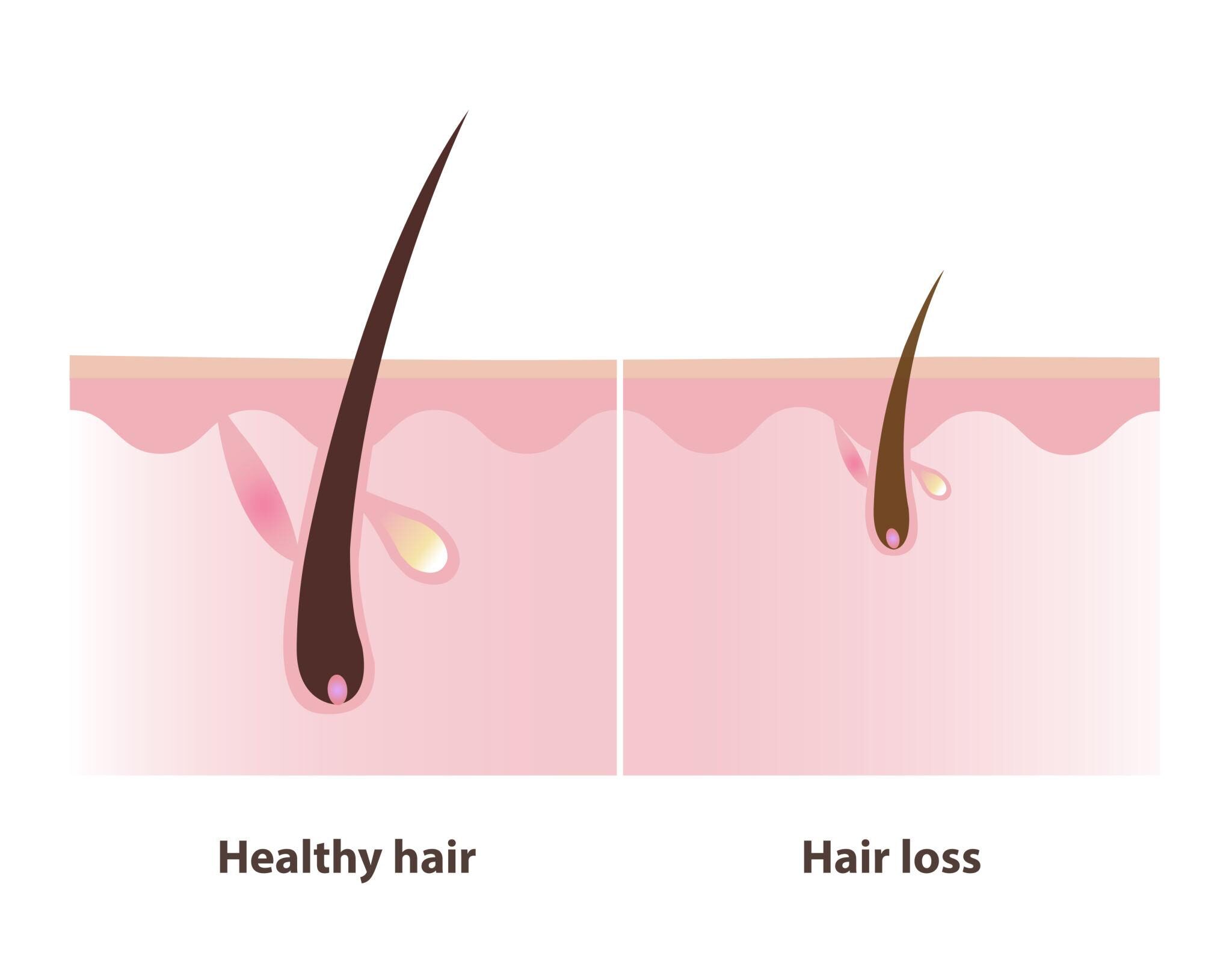
Five Categories to Avoid in Post-Procedure Scalp Skincare (Day 0–1)
(1) Alcohol-based toners and ethanol-containing styling products
Ethanol (denatured alcohol) dissolves sebum. When it penetrates through open microchannels into the dermis, it causes strong stinging, vasodilation, and delayed erythema. Many hair sprays, waxes, gels, and mist-type styling products contain ethanol as a base solvent, so as a rule, avoid them on the day of treatment. Within post-procedure scalp skincare, alcohol is one of the highest-risk topical ingredients.
(2) AHA, BHA, retinol, high-concentration vitamin C
Facial peeling ingredients (glycolic acid, salicylic acid, retinol, high-concentration ascorbic acid derivatives) can become irritants simply by running down from the temples or hairline, even without being applied directly to the scalp. On the day and the day after, temporarily pause using aggressive facial skincare at the temples and along the hairline.
(3) Topical minoxidil and hair tonics
Minoxidil causes vasodilation and redness. Applied on the day of treatment to a scalp with open microwounds, it increases the frequency of local erythema, stinging, and contact dermatitis. As a rule, restart topical minoxidil from the day after treatment, once scalp redness has subsided. Hair tonics rich in botanical extracts, ethanol, or menthol should also be avoided on the day.
(4) Shampoos and treatments with essential oils or strong fragrances
Even ‘natural’ shampoos may contain peppermint oil, tea tree oil, or citrus essential oils that are strong irritants immediately after a procedure. On the day of treatment, avoid washing entirely; from the next day onward, use a fragrance-free, low-irritation medical or sensitive-skin shampoo, gently smoothing it over the scalp with your fingertips and lukewarm water. Vigorous scrubbing or scratching with the fingernails widens the microwounds and must be avoided.
(5) Hair dye, perm solution, and hair-straightening chemicals
Oxidative hair dyes, perm solutions, and straightening chemicals contain paraphenylenediamine and thioglycolic acid, well-known primary causes of contact dermatitis even in normal scalps. After a procedure, the sensitization risk is even higher, so at our clinic we recommend leaving a one-week gap on either side between a stem cell conditioned media scalp procedure and hair coloring or perming. For related articles, see our full list of hair regenerative medicine columns.
Safe Design for Post-Procedure Scalp Skincare — Practical Steps to Keep It ‘Minimal’
Recommended aftercare from day 0 to 72 hours
On day 0: do not wash your hair, do not apply styling products, and do not add friction with hats or pillowcases—these three are the highest priority. From the next day, rinse the scalp gently with lukewarm water (under 38°C), use a fragrance-free, low-irritation shampoo softly with your fingertips, and dab the scalp dry with a towel rather than rubbing. After 72 hours, most people can resume normal skincare and styling products, but if redness or itching persists, extend the pause for several more days. Because individual variation exists, consult your physician if in doubt.
Red flag signs of infection or contact dermatitis
If strong spreading erythema, warmth, pustules, or throbbing pain appear the day after treatment or later, do not apply over-the-counter antibiotic ointments or topical steroids on your own—contact the clinic that performed the procedure promptly. Folliculitis or secondary infection on the scalp is usually mild if addressed early, but masking it with OTC medications may delay diagnosis. General information on scalp and hair disorders is available through the Japanese Dermatological Association.
Why the clinic should individually specify ‘what you may use’
Post-procedure scalp skincare tolerances vary by scalp type (dry, oily, sensitive), the specific procedure (conditioned media alone, combined with Morpheus8, or combined with microneedling), and history (atopy, seborrheic dermatitis, prior contact dermatitis). At our clinic, we provide written guidance on which low-irritation shampoos are acceptable, which topicals to avoid, and when to restart, so patients do not have to guess. Individual response varies and no promise can be made, but our clinical impression is that many patients see the early reactions to stem cell conditioned media (redness, mild swelling) resolve more calmly when unnecessary external irritation is simply avoided.
FAQ
Q. Is it safe to shampoo on the day of the procedure?
As a rule, avoid washing on the day of treatment. From the next day, once scalp redness has settled, gently begin using a fragrance-free, low-irritation shampoo with lukewarm water. Avoid vigorous scrubbing, which can widen microwounds.
Q. When can I resume topical minoxidil?
Most patients can resume from the day after treatment once scalp redness has subsided, but always skip the day of treatment. Because minoxidil’s own vasodilatory effect combined with fresh microwounds increases stinging and contact dermatitis risk, follow your physician’s individualized instructions.
Q. While mild redness or itching remains, what can I apply?
As a rule, we recommend applying nothing. If moisturizing is essential, only use a fragrance-free, low-irritation medical lotion individually specified by the clinic. Avoid commercial hair tonics, massage oils, and aromatherapy products.
Q. What if pustules or strong redness appear after the procedure?
Do not apply over-the-counter antibiotic ointment or steroid on your own—contact the treating clinic promptly. Folliculitis or contact dermatitis on the scalp is usually mild if addressed early.
Q. How far apart should hair coloring or perming be from the procedure?
Our clinic recommends a one-week gap on either side between a stem cell conditioned media scalp procedure and hair dye or perm chemicals, as a safety margin to minimize contact dermatitis risk on the scalp.
──────────────
Medical Supervisor: Shin Moriwaki, MD
Member, Japan Society of Aesthetic Surgery (JSAS) / Member, American Academy of Aesthetic Medicine
ECFMG Certificate
──────────────
📍AVAN TOKYO Ginza Hair Regenerative Medicine
English / 中文 / Tiếng Việt supported
For consultations, please contact us via DM / LINE / Website / Phone.