


Realistic Hair Treatment Goals by Progression Stage2026.10.10
When starting hair loss treatment, many patients compare themselves to others: “Someone who started at the same time has more hair now” or “I want to reach the density in that before-and-after photo.” But the realistic endpoint of hair treatment is largely determined by the number of surviving follicles at baseline and the degree of follicle miniaturization — in other words, by progression stage. Without a progression-based treatment goal, patients may misjudge genuine improvement as “failure” and abandon treatment at the wrong time. In this article, Dr. Moriwaki explains how to design a realistic progression-based treatment goal across three stages: early, moderate, and advanced.
Key Points
・The ceiling of a progression-based treatment goal is set by surviving follicle density and the degree of miniaturization at baseline.
・Comparing yourself to someone else’s before-and-after is biologically unsound because baseline follicle counts differ.
・Early stage (Norwood II–III, Ludwig I) aims at density maintenance and recovery; moderate stage (IV) at halting regression and partial recovery; advanced stage (V–VI) at protecting remaining follicles and visual balance.
・Compare yourself not to others but to “yourself three months ago,” using hair diameter, hairs per follicular unit, and scalp visibility as the three evaluation axes.
・Articulating your personal goal line with your physician at the first consultation is the single strongest safeguard against mid-course anxiety.
Why Comparison Breeds Anxiety — Different Baseline Follicle Counts
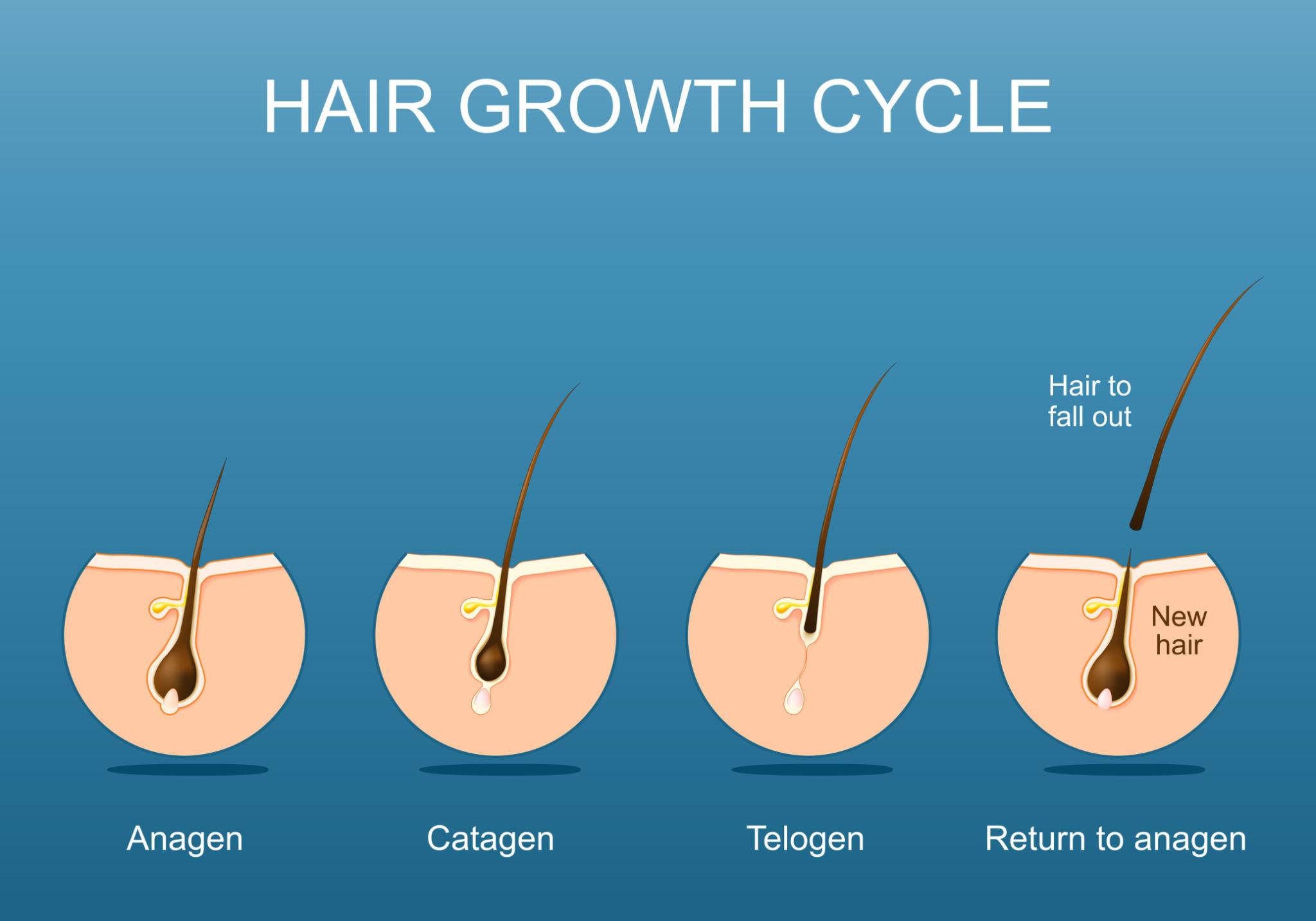
The outcome of hair treatment is capped first by biology: how many follicles have survived at baseline. When follicles are exposed to DHT (dihydrotestosterone) for extended periods, they gradually miniaturize and eventually fibrose and disappear. Critically, follicles that have fully disappeared cannot be regenerated by oral medication, topical agents, or stem cell conditioned media.
Most patients who grow anxious comparing themselves to others skip over this premise. A patient at Norwood V who adopts the before-and-after photo of a Norwood III patient as their target is comparing two biologically different starting points. Someone with fewer surviving follicles cannot physically reach the same density as someone who started with more.
This is where a progression-based treatment goal becomes essential. Accurately understanding your baseline follicle state, and drawing a realistic endpoint in advance, prevents anxiety and unnecessary escalation of treatment.
Drawing the Goal Line — Realistic Targets Across Three Stages
Early stage (Norwood II–III, Ludwig I): Maintenance and Recovery
Miniaturization has begun, but few follicles have fully disappeared. The goal here is to maintain current follicles while reviving those that have miniaturized. Combining stem cell conditioned media to improve the follicular microenvironment with oral and topical treatments often restores scalp coverage to a non-visible level within 6–12 months. Still, returning to the density of your teenage years is not a realistic endpoint and should be acknowledged from the start.
Moderate stage (Norwood IV, Ludwig II): Halting Regression and Partial Recovery
Follicle loss is clearly underway at the hairline or crown. The goal is to stop further regression and to partially revive miniaturized follicles for visual improvement. Lost follicles do not return, but increasing the diameter of surviving follicles can substantially reduce scalp visibility. The realistic target is not “a teenage hairline” but the natural density of someone in their late 30s or early 40s.
Advanced stage (Norwood V–VI, Ludwig III): Protection and Visual Balance
Wide areas of follicle loss have already occurred. The progression-based treatment goal here narrows to protecting surviving follicles long-term and leveraging the density of the back and sides through styling. Because regenerative medicine alone cannot restore lost follicles, combining with hair transplantation or adjusting style to minimize scalp light reflection becomes necessary. Rather than “recovering density,” the long-term satisfying goal is “stopping progression here and stabilizing the look.”
Evaluate with Your Own Metrics — Compare to Yourself Three Months Ago
After drawing your progression-based treatment goal, build the habit of comparing yourself to your past self, not to others. Three evaluation axes are enough.
First, hair diameter. Measure the same follicle under a microscope. Improvement of miniaturized follicles increases diameter. Second, hairs per follicular unit. Healthy units produce 2–3 hairs; miniaturized units drop to 1. Third, scalp visibility. Fixed-point photography under the same lighting, angle, and hairstyle lets you track changes objectively.
For AGA treatment guidance, you can also refer to the Japanese Dermatological Association guidelines. Objective staging requires a physician’s examination and microscope findings — not self-judgment. Related columns on hair regenerative medicine are available in our column list.
Frequently Asked Questions
Q. Will I get the same result if I take the same treatment as someone else?
No. The treatment ceiling is set by the number of surviving follicles and the degree of miniaturization at baseline, not by the treatment itself. A personalized progression-based treatment goal is essential.
Q. Can the goal line be changed after treatment begins?
Yes. It is reviewed every 3–6 months. If recovery is faster than expected, the target is raised; if slower, treatment intensity or strategy is revised. The line is a working document, not a fixed verdict.
Q. Is it wrong to aim for the same goal as a younger patient?
Setting a biologically unreachable goal can make real improvement feel like “failure.” A realistic, sustainable goal matched to your age and progression stage is what delivers long-term satisfaction.
Q. Is there no point in looking at before-and-after photos?
They are useful references, but assuming “the same result will happen to me” is a misreading. Check each case’s progression stage, age, treatment history, and individual variation, and compare only cases close to your own conditions.
Q. Who decides the progression-based treatment goal?
The physician proposes it based on examination, microscope findings, and follicle assessment; you refine it together with your lifestyle and preferences. Articulating it at the first consultation is the strongest safeguard against mid-course anxiety.
──────────────
Medical Supervisor: Shin Moriwaki, MD
Member, Japan Society of Aesthetic Surgery (JSAS) / Member, American Academy of Aesthetic Medicine
ECFMG Certificate
──────────────
📍AVAN TOKYO Ginza Hair Regenerative Medicine
English / 中文 / Tiếng Việt supported
Inquiries welcome via DM / LINE / Website / Phone.