


Are Saunas and Bedrock Baths Good for the Scalp? Dr. Moriwaki on Sweat, Blood Flow, and Dryness2026.09.08
“I go to the sauna every day, yet my hair seems to be thinning,” or “I’ve heard that bedrock baths reset the scalp environment — is that really true?” — questions like these come up more and more in the clinic. Saunas and bedrock baths have upsides (sweating, increased blood flow) but also downsides (high heat, dryness, oxidative stress) that hit the scalp at the same time. Whether the sauna scalp environment tips positive or negative is not a matter of “go or don’t go” — it depends on time, temperature, frequency, and pre/post care. Here Dr. Moriwaki lays out how to read the balance between sweating, blood flow, and dryness.
Key Points
・The effect on the sauna scalp environment is a mix of positives (sebum turnover through sweating, temporary blood-flow boost) and negatives (heat-driven stratum-corneum dryness, oxidative stress); design of the session decides the outcome.
・Sitting continuously for over 10 minutes in a dry sauna at 80–90°C often leaves scalp stratum-corneum moisture temporarily lower than before you went in.
・Three simple habits — “towel over the head,” “sauna hat,” “lukewarm shower to cool down” — cut heat damage substantially.
・Saunas are usually not banned during AGA or hair-loss treatment. However, avoid them for 48–72 hours after scalp needling or conditioned-media injections that break the skin.
・When self-care alone cannot repair the scalp environment, hair regenerative treatment with stem cell conditioned media is an option.
Three Reasons Saunas and Bedrock Baths Are Considered “Good” for the Scalp
Sebum and Follicular Plug Turnover Through Sweating
When you enter a sauna or bedrock bath, the scalp sweats heavily. Scalp sebaceous-gland density is 2–3 times that of the face, and when oxidized sebum and plugs sit around the follicles, chronic folliculitis and micro-pressure on the dermal papilla can develop. Pairing sweating with a shampoo directly afterwards physically flushes oxidized sebum around the follicles — this is the first positive in the sauna scalp environment. However, “leaving sweat on for hours” backfires: salt and lactic acid in dried sweat disrupt scalp pH and seed Malassezia overgrowth and seborrheic dermatitis.
Temporary Increase in Blood Flow
High heat raises core temperature and dilates skin vessels, temporarily increasing blood flow to the scalp. Dermal-papilla and matrix cells receive oxygen and nutrients from capillaries, so a blood-flow boost is not itself unfavorable for maintaining anagen. But this rise is limited to the session and the following tens of minutes — it is not persistent enough to translate directly into “more blood, more hair.” Frame it as a “floor-raiser” of chronic under-perfusion for those who smoke or are chronically cold-exposed.
Autonomic-Nervous Reset and Cortisol
Alternating sauna and cold plunges (contrast bathing) is reported to reset sympathetic/parasympathetic switching. Sustained chronic stress raises cortisol, which pushes follicular stem cells into telogen and makes telogen effluvium more likely. The “integrated” feeling from a sauna session can indirectly contribute to a more stable hair cycle.
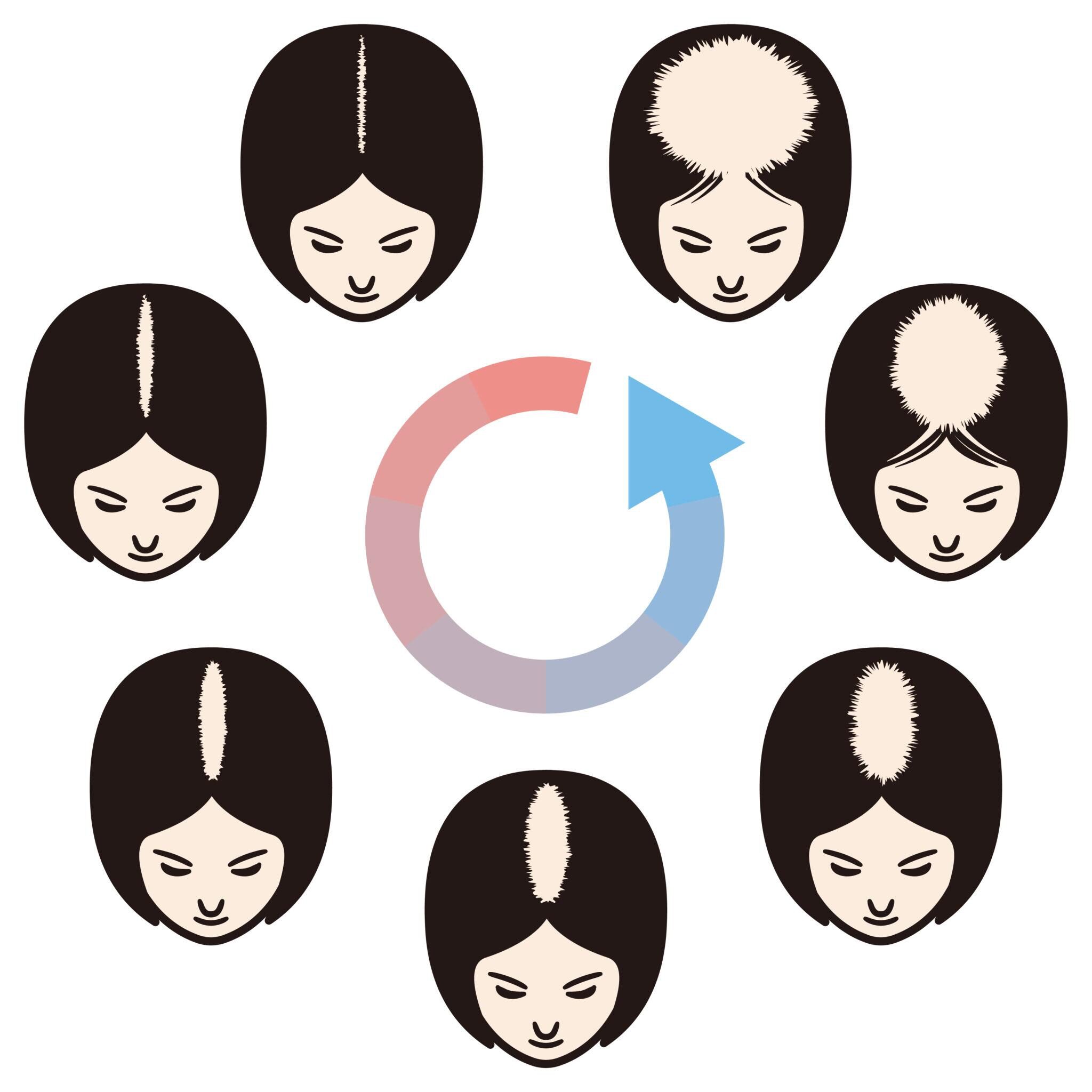
How the Sauna Scalp Environment Turns “Bad” — Dryness and Oxidation
Rapid Drop in Stratum-Corneum Moisture From High Heat, Low Humidity
A dry sauna is a “desert-grade dry environment” at 80–100°C with under 10% humidity. Staying more than 10 minutes at a stretch is known to leave scalp stratum-corneum moisture lower than before. When the scalp barrier weakens, transepidermal water loss (TEWL) rises, dandruff, itching, and redness appear, and eventually the hair cycle can be disturbed. Especially in people with a background of atopic or seborrheic dermatitis, post-sauna flares are common in our impression.
Heat Damage to the Head and Denaturing of Hair Keratin
Air at around 80°C is by no means gentle on hair keratin. In hair oxidatively damaged from coloring or perming, cuticles lift more easily, moisture escapes, and split/broken hairs increase. Prolonged high-heat exposure of the scalp itself raises local oxidative stress (reactive oxygen species) and acts as an accelerator of follicular aging. The reason sauna hats and wrapped towels help is precisely that they insulate just the head, cutting both core-temperature rise and scalp heat damage.
Practical Ways to Take Care of the Sauna Scalp Environment
Realistic Guidelines on Time, Temperature, Frequency
If you want the sweating and blood-flow upside while limiting scalp load, a realistic upper limit is 8–12 minutes per dry-sauna set, 2–3 times per week. Bedrock baths at 40–45°C with higher humidity are milder, so 20–30 minutes × twice a week keeps scalp drying comparatively light. If you’re doing “20 minutes at 90°C daily,” self-check for dandruff, redness, and shedding.
Pre/Post Care and Shampoo Timing
Don’t enter with fully dry hair — a light dampening reduces direct heat damage to the cuticle. Wrapping a towel or wearing a sauna hat protects the head. Afterward, don’t let sweat sit — rinse quickly with a lukewarm shower around 38–40°C. Hot showers strip even more of the scalp’s lipid barrier, so avoid them. Cap shampooing at once a day, and moisturize with a scalp lotion after washing to prevent dryness.
Where Sauna Habits Sit Relative to Hair Regenerative Medicine
Patients receiving stem cell conditioned-media scalp injections or Morpheus8 for AGA or female diffuse thinning often ask whether they should skip the sauna. Routine sauna habits are generally fine, but we recommend a pause of 48–72 hours after scalp needling or conditioned-media injection to prevent infection and heat-driven inflammatory amplification. For other hair regenerative medicine topics, see our hair regenerative medicine column index. For medical guidance on AGA, the Japanese Dermatological Association guidelines are also worth referencing. What the sauna scalp environment can adjust is mainly the “base state of the scalp itself,” not follicular stem-cell rejuvenation as such. It is realistic to run the two in parallel as tools with different purposes.
FAQ
Q. Will going to the sauna every day really cause hair loss?
A long-term routine of over 20 minutes per session at 80–90°C dry sauna daily can accumulate scalp stratum-corneum dryness and heat damage, and drive dandruff, itching, and shedding. But the sauna alone is not the primary driver of AGA — assessment combines time, frequency, moisturizing, and genetic predisposition. Two to three sessions a week with a sauna hat rarely causes major harm to a healthy scalp.
Q. Which is gentler on the scalp, a bedrock bath or a dry sauna?
In terms of drying damage, bedrock baths (40–45°C, high humidity) are milder. Because dry saunas combine high temperature with low humidity, stratum-corneum moisture drops faster than in a bedrock bath for the same duration. If you have a dry scalp or a history of seborrheic dermatitis, it is safer to start with bedrock baths and watch your response.
Q. Should I shampoo after the sauna?
Leaving sweat and sebum on the scalp disrupts pH and unbalances the resident flora. In principle, rinse quickly with a lukewarm shower and, if needed, wash once with a low-irritation shampoo. Avoid entering the sauna multiple times a day and shampooing repeatedly, as this strips too much of the lipid barrier.
Q. Can I use saunas and bedrock baths during AGA treatment?
Being on oral medications (finasteride, dutasteride, minoxidil) is generally compatible with sauna and bedrock bath use. However, pause for 48–72 hours after scalp injection procedures (conditioned media, PRP) or Morpheus8, which cause micro-wounds, to prevent infection and inflammatory amplification.
Q. If I take care of my scalp with saunas, is hair regenerative medicine unnecessary?
What the sauna gives is mainly “scalp environment tune-up” and “temporary blood-flow and autonomic reset” — not a regenerative signal to follicular stem cells themselves. AGA and advanced hair loss are driven mainly by cell-level changes (follicular miniaturization, shortened hair cycles), and lifestyle alone has limits in reversing them. Treat the two as different tools — “daily tune-up” and “cell-level redesign” — with different purposes.
──────────────
Supervising Physician: Shin Moriwaki, MD
Member, Japan Society of Aesthetic Surgery (JSAS) / American Academy of Aesthetic Medicine
ECFMG Certificate
──────────────
📍AVAN TOKYO Ginza Hair Regenerative Medicine
English / 中文 / Tiếng Việt supported
Inquiries via DM / LINE / Website / Phone.