


Before Choosing a Hair Transplant: Preparing the Scalp Environment2026.09.12
Many patients are told, “a transplant is your only option,” or decide on their own that a hair transplant is the last resort. But if you skip scalp environment preparation before hair transplant surgery, the transplanted grafts may take well while the surrounding “native hair” continues to fall out — and within a few years, the thinning appearance returns. A hair transplant is a powerful treatment, but the results are cut in half when the order of care is wrong.
This article organizes, from a supervising physician’s perspective, why the phrase “a transplant is the last resort” has become misunderstood, and why scalp environment preparation before hair transplant surgery makes such a difference in the final outcome.
Key Points of This Article
・A hair transplant is not “the last resort” but one treatment option to be chosen after the scalp environment and follicular reserve are properly prepared
・Neglecting scalp environment preparation before hair transplant surgery often leads to a rebound where the grafts survive but the surrounding native hair keeps thinning
・It is critical to assess whether options like stem cell conditioned media, oral drugs, and topical drugs are still viable before proceeding to surgery
・Hair transplant and regenerative medicine are not in opposition — they should be combined by designing timing and sequence
・Before accepting the verdict “transplant is the only way,” you need a consultation that objectively evaluates scalp environment, follicular reserve, and rate of progression
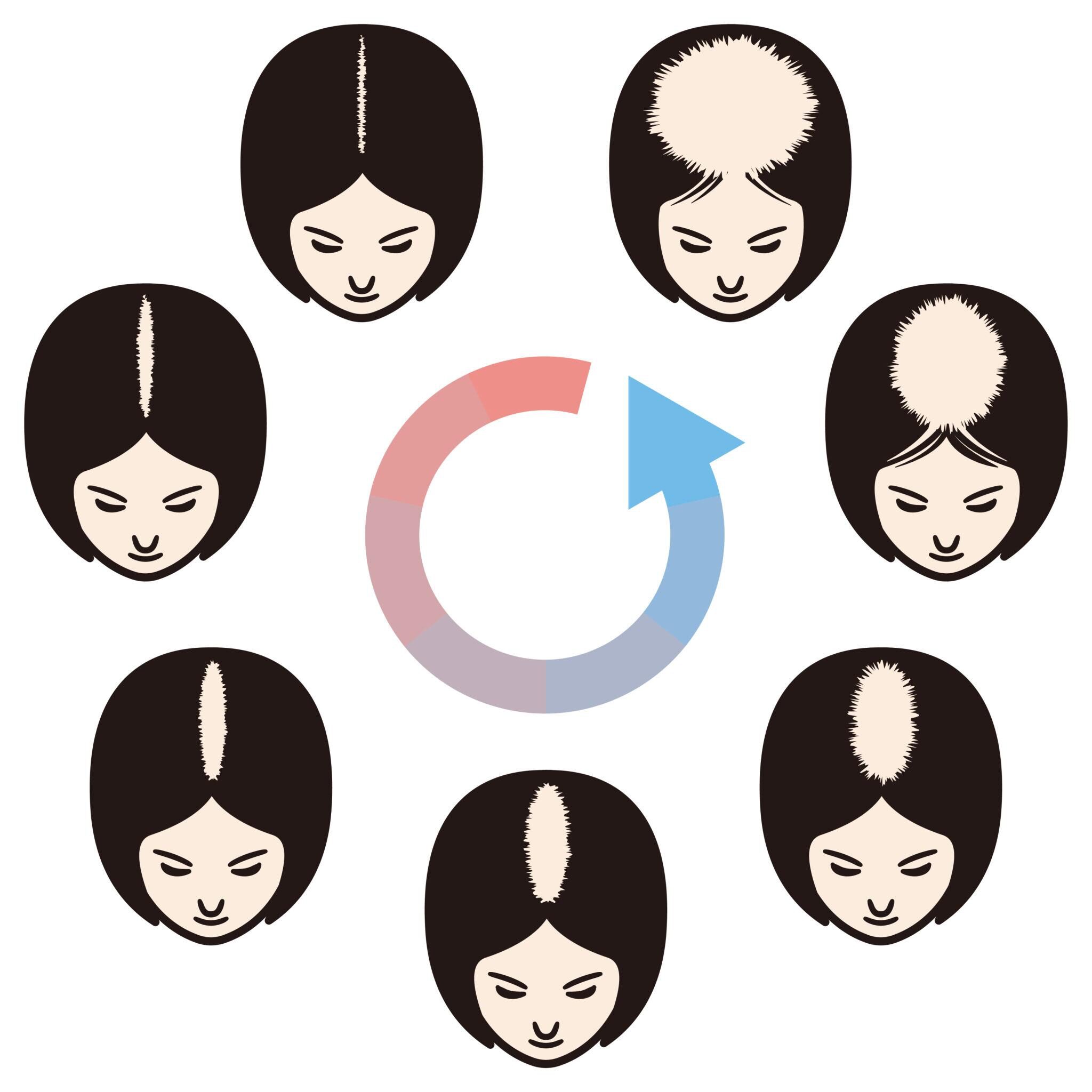
“A Hair Transplant Is the Last Resort” — A Phrase That Has Drifted From Its Meaning
Originally, “a hair transplant is the last resort” was a careful phrase used by physicians. Donor hair from the back of the head is finite, and once harvested, follicles cannot be restored. That is why the medically sound stance was to “preserve the donor supply until it is truly needed,” using oral drugs, topical drugs, and regenerative medicine to hold the line for as long as possible.
In recent years, however, this phrase has drifted through ads and testimonials, creating the misconception that “a transplant alone solves everything” or that “anything but a transplant is a waste.” In reality, a hair transplant is not a treatment that protects the hair you still have — it moves hair from one region to another. Even with a high graft survival rate, the surrounding native hair will continue to thin as AGA progresses, entirely independent of the transplant. Without scalp preparation before hair transplant surgery, this gap becomes visible within a few years.
Why Scalp Preparation Before Hair Transplant Surgery Shapes the Result
You can protect the grafts, but not the surrounding hair
Grafted hair is harvested from the occipital area, which is less sensitive to AGA — this is called “donor dominance,” and it keeps the transplanted hair stable. However, the native hair around the grafted zone remains under the influence of AGA. Without scalp preparation before hair transplant surgery to add oral, topical, or regenerative therapy, one to three years later the surrounding hair thins and the transplanted zone can appear “isolated like an island.”
Scalp inflammation and poor circulation compromise graft integration
Grafts survive by receiving a new blood supply from the recipient scalp. Chronic seborrheic dermatitis, scalp inflammation, and perifollicular fibrosis can delay the reconstruction of this vascular network, affecting both graft survival and hair caliber. Preparing the scalp environment before hair transplant surgery — calming inflammation and improving circulation and the perifollicular environment — is groundwork that directly affects the postoperative result. For dermatologic guidance on AGA, the Japanese Dermatological Association provides the standard reference.
The Hierarchy of Options Before a Hair Transplant
Before the verdict “transplant is the only option” is accepted, there are actually several tiers of care. These include suppression of progression with oral drugs such as finasteride or dutasteride, stimulation of growth with topical minoxidil, and modulation of the perifollicular microenvironment with stem cell conditioned media. In particular, when follicles have miniaturized but are not yet completely lost, these treatments still hold the potential to recover density. A hair transplant becomes meaningful only for regions where follicles are entirely lost — and before that point, there is room for scalp preparation before hair transplant care.
Assessing residual follicular capacity by visual inspection or photography alone is difficult; a microscope is needed to check the number of hairs per follicular unit and the variability in hair caliber. “Looking thin” is not the same as “follicles are lost.” For related perspectives on treatment selection, see the list of related hair regenerative medicine columns.
Dr. Moriwaki’s Sequence for the Pre-Transplant Path
Dr. Moriwaki follows a clear sequence at consultation. First, scalp inflammation, sebum, and perifollicular status are checked with a microscope, and the rate of AGA progression is estimated from family history and course. Next, the physician assesses how much density can still be moved with oral drugs, topical drugs, and regenerative therapy. After three to six months of scalp preparation before hair transplant surgery, the case is re-evaluated to see whether any regions truly still require grafting — this sequence minimizes the surgical field and preserves donor hair for where it is genuinely needed.
Accurately, “a hair transplant is the last resort” means “grafting only the regions that remain necessary after other options have been exhausted” — not “anything other than a transplant is a waste right now.” Respecting the order also improves transplant outcomes. That said, when progression is rapid and follicular reserve is limited, or when a different pathology such as scarring alopecia is at play, this sequence may not apply. Individual differences must always be factored in.
Frequently Asked Questions
Q. What does “preparing the scalp environment” before a transplant actually involve?
A combination: calming chronic inflammation, dandruff, and seborrheic dermatitis; suppressing AGA progression with oral and topical drugs; and, when needed, using stem cell conditioned media to improve the perifollicular environment. It aims to stabilize the scalp over several months and is not a one-off procedure.
Q. If density recovers with pre-transplant regenerative medicine, does the transplant become unnecessary?
When follicles have miniaturized but are not lost, there are cases where density is restored without a transplant. However, regions where follicles are completely lost cannot be recovered by regenerative medicine. Consultation separates recoverable regions from regions that only a transplant can address.
Q. Can a hair transplant and stem cell conditioned media be received on the same day?
Generally the timing is separated. The scalp immediately after a transplant is still in the wound-healing phase, and there is a period during which injections and strong procedures are avoided. Once things settle, adding conditioned media to protect the surrounding native hair is a typical design.
Q. Another clinic told me a transplant is the only option. Would a second opinion change that?
There are real cases where physicians differ in their assessment of follicular reserve, progression speed, and scalp environment. Whether options remain before a transplant is worth re-evaluating with another physician’s perspective. The final decision should be made carefully by integrating multiple sources of information.
Q. Is scalp preparation before a hair transplant still needed at a younger age?
It is arguably more important for younger patients. AGA progresses over decades, so choosing a transplant alone at a young age often results in an unnatural only-the-grafted-zone-remains state as progression continues. Building the foundation to stop progression takes priority.
──────────────
Supervising Physician: Shin Moriwaki, MD
Member, Japan Society of Aesthetic Surgery (JSAS) / American Academy of Aesthetic Medicine
ECFMG Certificate
──────────────
📍AVAN TOKYO Ginza Hair Regenerative Medicine
AVAN TOKYO 銀座 毛髪再生医療
English / 中文 / Tiếng Việt supported
Inquiries via DM / LINE / Website / Phone.