


How to Navigate Scalp Treatment Downtime After Stem Cell Conditioned Media Therapy — What Actually Happens on Your Scalp in the First 72 Hours, Explained by Dr. Moriwaki2026.08.05
“How long until my scalp goes back to normal after microneedle RF or conditioned media injection?” “When can I shampoo again?” — in hair regenerative medicine consultations, questions about scalp treatment downtime come up almost as often as questions about the procedure itself. Unlike facial treatments that can be hidden with makeup, scalp treatment downtime plays out on a body area that is visible to others as soon as you part your hair, which is why many patients hesitate about how quickly to return to commuting, client-facing work, sports, or bathing. Dr. Shin Moriwaki of AVAN TOKYO Ginza Hair Regenerative Medicine walks through what is medically happening on your scalp during the first 72 hours, and how to move through scalp treatment downtime calmly and safely.
Key Takeaways
・Scalp treatment downtime refers to roughly the 72-hour window in which the microscopic wounds created by microneedle RF or conditioned media injection close and the skin barrier regains continuity.
・During this window the barrier is temporarily reduced, and heat, friction, styling products, and heavy sweating can become sources of irritation and infection.
・Mild redness, slight swelling, pinpoint bleeding, tiny scabs, and mild itching are usually expected — do not rush to seal them with occlusive ointments.
・Restart shampooing per the clinic’s guidance (often after 24 hours), using lukewarm water and rolling the lather gently with your palms.
・Severe pain, widespread redness, pus, fever, or swelling that persists for several days should never be self-managed — contact the treating clinic promptly.
What Is Actually Happening on Your Skin During Scalp Treatment Downtime
To deliver stem cell conditioned media to the scalp, most clinics combine techniques that physically “open” the skin barrier temporarily — microneedle RF, or direct injection with ultra-fine needles. This design is what allows proteins in the tens to hundreds of thousands of Daltons, and exosomes measuring tens to hundreds of nanometers, to reach deeper than the stratum corneum into the perifollicular space. Put another way, scalp treatment downtime is precisely the interval during which those opened routes close and the skin restores its original barrier function.
Microwounds typically begin coagulating and provisionally closing within the first few hours, undergo superficial re-epithelialization around 24 hours, and see visible redness and pinpoint bleeding largely subside around the 72-hour mark. Individual variation exists, but treating this “about 72 hours” as a grace period for the scalp barrier to return to baseline makes it much easier to see when to resume daily activities.
What Commonly Occurs as a Normal Course
Mild redness, warmth of the scalp, small pinpoint bleeds visible along your part, thin scabs that flake off over the following days, and itching near the tail end of healing — these are physiological reactions that can occur during scalp treatment downtime. As long as they are not accompanied by severe pain or widespread swelling, most cases can be followed conservatively.
Warning Signs
On the other hand, pain that worsens over time, throbbing pain, widespread erythema, pus, fever, or intense swelling can indicate infection or excessive inflammation, and fall outside what is considered expected during scalp treatment downtime. In such cases, do not stack over-the-counter antibiotic ointments on your own — contact the clinic where you were treated as early as possible. For general dermatologic guidance including scalp infections and AGA-related conditions, the guidelines of the Japanese Dermatological Association are also a helpful reference.
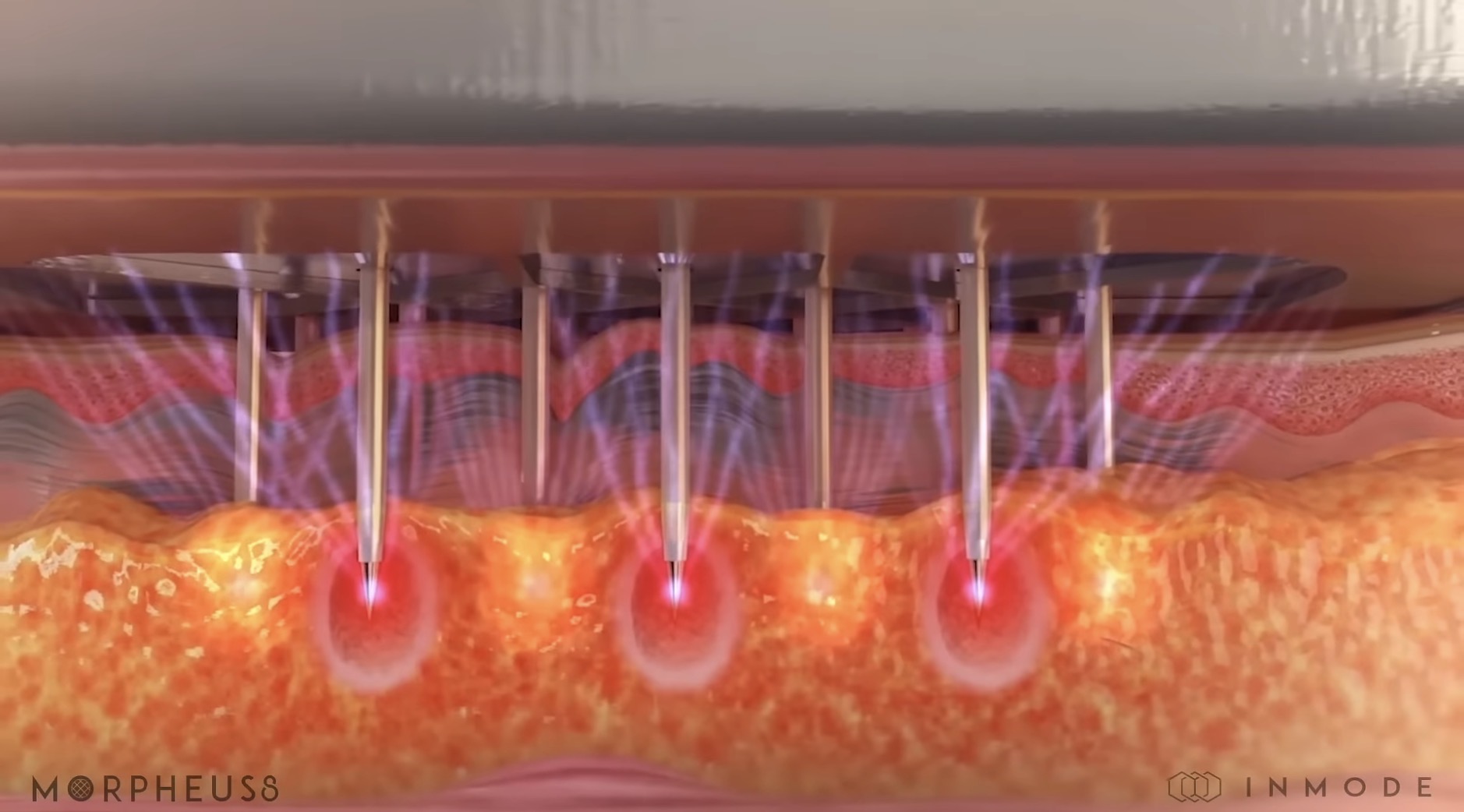
Dividing the 72 Hours into Four Windows for Scalp Treatment Downtime
Instead of thinking “resume everything once downtime is over,” segmenting scalp treatment downtime by time window and prioritizing accordingly makes decision-making far easier.
0–6 hours: When the barrier is most vulnerable
For the first several hours after treatment, the microscopic openings are effectively “open.” Avoid applying styling products, hair tonics, alcohol-based lotions, or heavily fragranced products to your scalp. Long periods outdoors under strong sun, or high-heat environments like open flames, professional kitchens, and saunas are also best avoided in this window. If you use cold compresses, do not apply ice directly — wrap it in a clean towel and limit to short intervals.
6–24 hours: Washing hair and sleep environment
Most clinics guide patients to resume shampooing during this window. Very hot water dilates capillaries and prolongs redness and itching, so use lukewarm water (slightly below body temperature), avoid your nails, and roll the lather gently with your palms. Change to a clean pillowcase, and avoid pressing your scalp face-down for long stretches — small habits like this genuinely matter during scalp treatment downtime.
24–48 hours: Judging exercise, circulation, and sweating
Light walks and stretching are usually fine, but intensity that produces dripping sweat, long baths, saunas, and alcohol strongly raise circulation and perspiration, which is precisely when redness and pinpoint bleeding become more visible. Ramp intensity back up gradually the day after and the day after that, and rinse promptly with lukewarm water if you do sweat.
48–72 hours: Don’t disturb the finishing microinflammation
This phase overlaps with when the growth factor cocktail is acting, and subcutaneous collagen remodeling and the perifollicular microenvironment are beginning to reset. Strong exfoliating peels, hair coloring, perms, and scalp aesthetic menus should wait until scalp treatment downtime has fully resolved and redness and pinpoint bleeding have completely disappeared.
Deciding Between “Back to Normal Fast” and “Back to Normal Carefully”
Scalp treatment downtime is relatively short by dermatologic standards, but poor decisions can turn what should be a few-day course into 1–2 weeks of prolonged inflammation. The single fastest way to shorten downtime is, paradoxically, to not rush back. Most patients return to commuting or remote work the next day; simply keeping high-heat environments and heavy exercise off the same-day schedule allows scalp treatment downtime to pass remarkably smoothly.
For more detail on the treatment flow and other patients’ recoveries, please also see the hair regenerative medicine column archive here.
Frequently Asked Questions
Q. On average, how long is scalp treatment downtime?
Redness, mild swelling, and pinpoint bleeding generally become inconspicuous within 72 hours of the procedure, and most patients can return to daily life the next day. Individual variation exists based on constitution, treatment intensity, and injection site.
Q. Can I shampoo on the day of the procedure?
Most facilities advise against shampooing on the same day. A light lukewarm rinse may be permitted in some cases, so please follow your treating physician’s instructions.
Q. I want to remove the scabs faster — is it okay to peel them off myself?
Forcibly peeling scabs damages the immature skin underneath and raises the risk of pigmentation and scarring. The rule is to leave them alone until they detach naturally, and this is a key principle for keeping scalp treatment downtime short.
Q. When can I color or perm my hair again after treatment?
Procedures involving chemical irritation are safest to schedule about two weeks after scalp treatment downtime has fully ended. Share the treatment details with your physician before deciding.
Q. If redness gets worse during downtime, can I apply over-the-counter anti-inflammatory cream?
Do not stack topical steroids or antibiotic ointments on your own. Doing so can mask infection or excessive inflammation. If signs exceed expectations, contact the treating clinic first.
──────────────
Supervising Physician: Shin Moriwaki, MD
Member, Japan Society of Aesthetic Surgery (JSAS) / Member, American Academy of Aesthetic Medicine
ECFMG Certificate
──────────────
📍AVAN TOKYO 銀座 毛髪再生医療
AVAN TOKYO Ginza Hair Regenerative Medicine
English / 中文 / Tiếng Việt available
Inquiries welcome via DM / LINE / Website / Phone.