


How to Read Hair-Growth Cosmetic Ads That Tout Wnt Signal Activation — Dr. Moriwaki on the Distance Between Research Papers and Product Advertising2026.07.25
“Activate Wnt signaling to promote hair growth” — lately, we are seeing more and more haircare cosmetics and scalp serums that put this kind of copy on the label. It is true that in the world of basic research, the Wnt/β-catenin signaling pathway has been reported in multiple papers to be involved in the activation of hair follicle stem cells. However, between that fact and the conclusion that “if you use a cosmetic containing this ingredient, your hair will grow back” lies a distance larger than most people imagine. This article organizes how to read Wnt signaling hair growth cosmetic ads from a medical standpoint, using three perspectives: the reality of the pathway, the gap between products and clinical evidence, and the conventions of advertising copy — as sorted out by Dr. Moriwaki.
Key Points of This Article
・Basic research indicates that Wnt signaling hair growth is involved in shifting hair follicle stem cells from the resting phase to the growth phase, but clinical proof that a cosmetic ingredient actually acts on human scalp hair follicle stem cells is extremely limited
・Most ads that tout “Wnt activation” merely borrow the results of cell culture or mouse experiments, and do not prove the hair-growth effect of the product itself
・Reproducing research results on the scalp requires overcoming physical barriers of transdermal absorption, ingredient concentration, and delivery to hair follicle depth
・Scalp injection of stem cell conditioned media and microneedle RF performed in medical facilities are medical procedures in a completely different category from cosmetics
・Before purchase, literacy is required to separate the questions “which study reported this ingredient?” and “does the product itself have clinical trials?”
What Is the Wnt Signaling Pathway Doing in the Hair Follicle?
Wnts are a family of secreted glycoproteins; when they bind to Frizzled receptors on the cell membrane, β-catenin translocates from the cytoplasm to the nucleus and functions as a transcription factor to switch gene expression. In the hair follicle field, Wnt3a and Wnt10b secreted from dermal papilla cells are considered to be one of the switches that move hair follicle stem cells in the bulge region from the resting phase to the growth phase. In mouse models, activation of Wnt signaling has been reported to prolong the anagen phase of the hair cycle and promote follicular neogenesis. Up to this point there is a certain academic consensus. However, this is mainly at the level of cell culture (in vitro) and animal experiments, and whether it can be reproduced in living human scalp as-is is a separate matter that must be organized carefully.
The Reality of Cosmetic Ads Touting “Wnt Signal Activation”
The problem is how cosmetic advertising borrows the results of this basic research. Looking at actual packaging and online product pages, phrases such as “formulated with ingredient X that stimulates Wnt signaling” or “stem cell care ingredient for signal activation” line up, but the references cited as evidence are almost without exception basic research papers on cultured cells or on administration to mice. Products that have gone as far as clinical trials proving “at this concentration, with this application method, under these usage conditions, hair actually grew on the human scalp” are extremely few. In other words, Wnt signaling hair growth in cosmetic wording only conveys indirect information that “this ingredient has shown some action in the past in basic research”; it never means that applying the product will make hair grow. Confusing these two only piles up time spent worrying about the gap between expectation and result.
The Physical Wall Between Research Papers and Product Advertising
Even if the molecular actions of basic research could be assumed, the topical application format of cosmetics has physical hurdles to overcome. The stratum corneum of the scalp is known for the “500-dalton rule” — the permeation of substances above 500 daltons drops sharply — but the Wnt protein itself is a large molecule of tens of thousands of daltons, and it is hard to believe that mere topical application reaches hair follicle stem cells below the dermis. Some products contain low-molecular-weight Wnt agonists, but many of these lack sufficient human safety and efficacy data and have not received approval as pharmaceuticals. As related information, the male- and female-pattern hair loss clinical guidelines of the Japanese Dermatological Association currently recommend only specific drugs such as topical minoxidil and oral finasteride/dutasteride as high-evidence-level treatments; cosmetics touting Wnt signaling hair growth are not included.
A Different Category from Medical Hair Regenerative Therapy
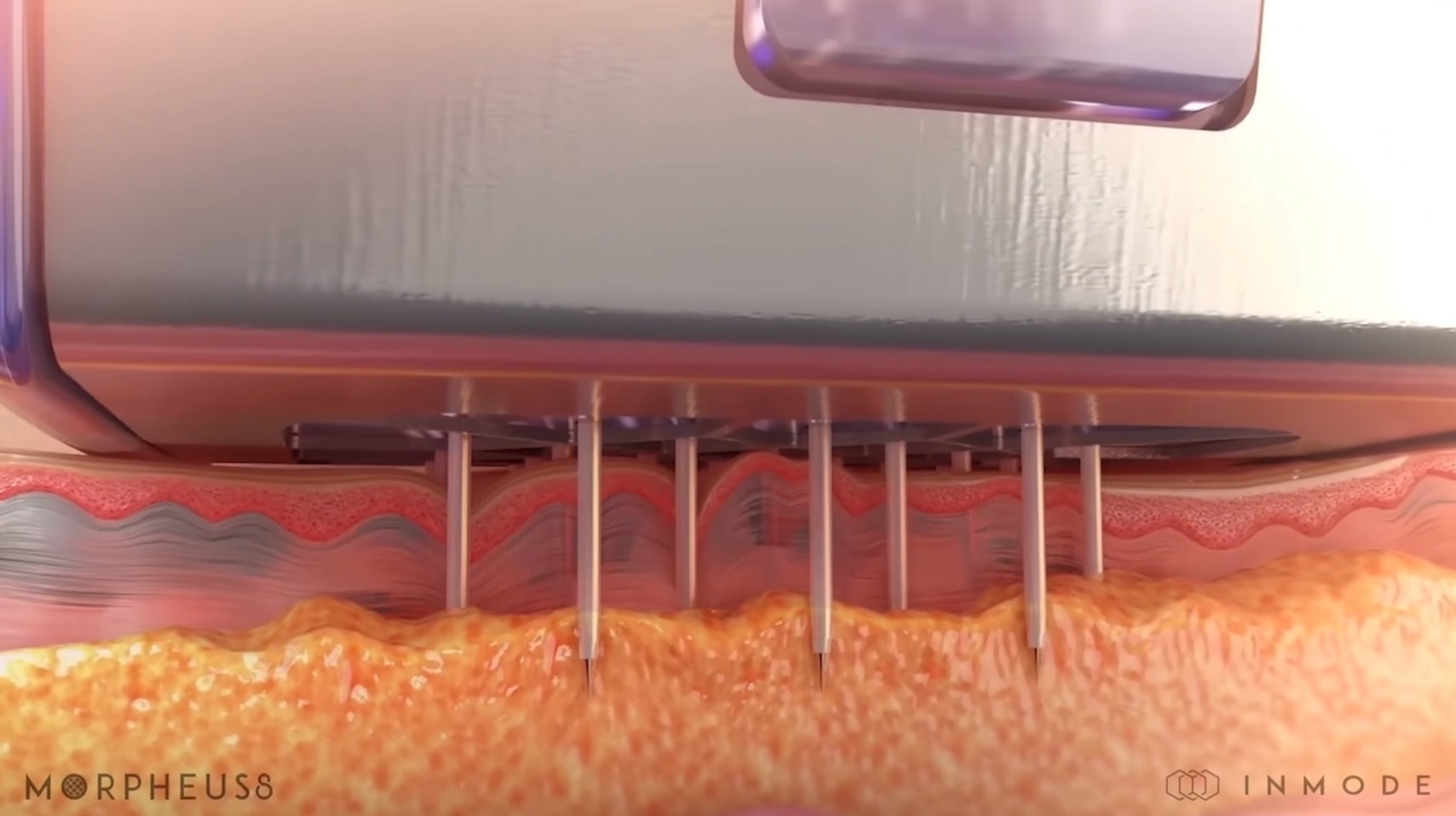
The scalp injection of stem cell conditioned media and microneedle RF (Scalp Morpheus8) performed at our clinic are not procedures of applying something to the scalp as a cosmetic. They are medical procedures that involve needling and RF heating to physically pass through the stratum corneum barrier, designed to deliver growth factors, cytokines, exosomes and other components close to the hair follicle. It is thought that a part of the mechanism of action may include the downstream of the Wnt signaling hair growth pathway, but this is at most an inference at the basic-research level; even at our clinic we do not assert that “we activate Wnt to guarantee hair growth.” Individual differences in response exist, and indications also change depending on progression stage and the presence or absence of underlying disease. For further reading on hair regenerative medicine, please also see the list of related columns on hair regenerative medicine. Actual treatment design will be proposed after confirming the state of the scalp, degree of progression, and medical history.
Frequently Asked Questions
Q. Will hair grow with a shampoo that touts Wnt signaling hair growth?
At this point, there are virtually no double-blind clinical trials showing that ingredients formulated in over-the-counter shampoos or treatments reach the human scalp’s hair follicle stem cells at sufficient concentration and produce a hair-growth effect. They have value as care products that keep the scalp clean, but it is reasonable to consider that the evidence is insufficient to expect a pharmaceutical-level hair-growth effect.
Q. Are “stem cell cosmetics” the same as the medical treatment with stem cell conditioned media?
Please think of them as different things. “Formulated with stem cell X” as a cosmetic is merely a labeling term referring to a state that contains extracts or portions of the culture supernatant as a cosmetic raw material; the cells themselves are not included. Stem cell conditioned media handled at medical facilities differ in manufacturing control, administration route, and intended use, and cannot be directly compared with cosmetics.
Q. If Wnt signaling hair growth is hard to expect from cosmetics, where should I start considering treatment?
The order is to first confirm the scalp and follicle status, progression stage, and medical history at a dermatology or hair regenerative outpatient clinic. Starting with evidence-based oral and topical medications, and combining scalp injection of stem cell conditioned media as needed, becomes a realistic option.
Q. If a research paper states “hair grew with Wnt,” can I trust it directly?
The credibility of the paper itself and whether that result can be applied directly to a commercial product are separate matters. Many results are at the mouse or cellular level, and multiple walls stand before human clinical application. It is important to read separately whether the work is “at the in vitro/animal experiment stage” or “has advanced to human comparative trials.”
──────────────
Medical Supervisor: Dr. Shin Moriwaki
Japan Society of Aesthetic Surgery (JSAS) Member / American Academy of Aesthetic Medicine Member
ECFMG Certificate
──────────────
📍AVAN TOKYO Ginza Hair Regenerative Medicine
English / 中文 / Tiếng Việt supported
Consultations available via DM / LINE / Website / Phone.