


How Far Can Liposuction Under Local Anesthesia Go? A Surgeon Explains the Boundaries of Range, Pain, and Safety2026.07.14
In recent years, more and more people considering liposuction have told us, “General anesthesia scares me” or “I want to stay conscious during the procedure.” In fact, if the treatment area is chosen appropriately, liposuction under local anesthesia alone can be performed safely. However, there are medical boundaries to the areas that can be treated this way, and going beyond them increases risks such as anesthetic toxicity and incomplete pain control. Dr. Moriwaki of AVAN TOKYO explains in detail the range of indications for liposuction performed as awake surgery, how pain is taken into consideration, and the limits of safety.
The short answer: Liposuction under local anesthesia alone is feasible for “small areas with a small volume of fat removal,” such as the upper arms, under the chin and the knees.
Because the lidocaine contained in tumescent fluid has a per-body-weight upper limit, it is safer to combine it with intravenous sedation or general anesthesia when treating a large area or several areas at once.
Awake surgery has the advantages of “a lower risk of respiratory depression and an easier same-day return home,” but sensations of pressure and pulling cannot be eliminated entirely.
Key points of this article
- Liposuction under local anesthesia alone is feasible for “small areas with a small volume of fat removal,” such as the upper arms, under the chin and the knees
- When treating a large area or several areas at once, it is safer to combine it with intravenous sedation or general anesthesia
- The lidocaine in tumescent fluid has a per-body-weight upper limit, and exceeding it increases the risk of anesthetic toxicity
- The major advantages of awake surgery are “a lower risk of respiratory depression and an easier same-day return home”
- Safe awake liposuction depends on two factors: “selecting the target area” and “designing the infiltration solution”

What is local anesthesia (tumescent anesthesia) for liposuction?
The anesthesia used for awake liposuction is a method in which local anesthetics such as lidocaine are mixed with saline, epinephrine, sodium bicarbonate and other components to make “tumescent fluid (tumescent anesthetic solution),” which is then injected in large volumes into the fat layer.
As the subcutaneous fat layer swells with fluid, pain nerves are blocked over a wide area, and at the same time the vasoconstrictive action of epinephrine reduces blood loss.
It also softens the fat tissue itself, reducing resistance as the cannula passes through and lowering the risk of skin unevenness.
This design of the infiltration solution is itself standard in modern liposuction, but the range that can be completed while the patient remains conscious is by no means wide.
Areas and removal volumes that can be completed while awake: a guide
In actual clinical practice, the guide for what can readily be handled with awake surgery alone is “one area, with a removal volume of 500–800 ml or less.” Specifically, this applies to liposuction of limited areas such as the upper arms, under the chin, the inner knees and accessory breast tissue.
These areas have relatively thin subcutaneous fat, which makes it easier to keep the total volume of tumescent fluid within a safe range while still achieving the necessary anesthetic effect.
Typical areas suited to awake liposuction
- Under the chin (liposuction of the jawline)
- The back of the upper arms
- The inner knees
- Limited areas of accessory breast tissue and the underarm
On the other hand, it is not realistic to perform extensive liposuction, such as the full circumference of the thighs, the entire abdomen or a large area of the back, while the patient is awake.
There are three main reasons.
First, the total volume of tumescent fluid required would exceed the lidocaine upper limit (around 35–45 mg per kg of body weight).
Second, the operation takes longer, and changes of position and patient fatigue lower the pain threshold.
Third, carefully finishing the design over a large area requires bold changes of position, and it is difficult to hold these positions while awake.
Advantages and disadvantages of awake surgery
When the procedure can be completed while awake, the major advantage is that “complications specific to general anesthesia, such as respiratory depression and postoperative nausea, are less likely to occur.” You recover alertness quickly, can walk and drink fluids immediately after surgery, and can more easily go home the same day.
This is very appealing for people who find it difficult to take a long break because of work or family commitments.
In addition, because you can communicate with the doctor during the procedure, there is also the advantage that fine adjustments to posture and left–right differences can be checked while you are conscious.
On the other hand, there are also disadvantages. Because you are conscious, you may “physically feel” changes of position, pulling of the skin and vibration during the procedure.
Even if pain is controlled, sensations of pressure and pulling cannot be eliminated entirely. In addition, people who tend to become anxious may need additional sedatives partway through.
Understanding in advance that it will be “not painful, but not comfortable either” leads to greater satisfaction after surgery.
Choosing between local anesthesia, intravenous sedation and general anesthesia
For extensive liposuction or surgery on several areas on the same day, combining intravenous anesthesia (TIVA) or general anesthesia is standard.
In particular, deep liposuction using energy devices such as ELSA (LSSA), and fat harvesting performed at the same time as fat grafting to the breasts, require body movement during surgery to be kept to a minimum.
An intraoperative monitoring system is essential for safe anesthesia planning.
If you wish, a board-certified anesthesiologist from our partner network can also attend your surgery.
For safety standards in aesthetic surgery, information from the Japan Society of Aesthetic Surgery (JSAS) is also a useful reference.
At AVAN TOKYO, we make an overall judgment based on the preoperative physical assessment, the areas you want treated and your downtime constraints, and tailor the choice of local anesthesia alone, combined intravenous sedation, or general anesthesia to each person.
Rather than forcing the procedure to be completed while awake, choosing a safe anesthetic method according to the treatment area helps balance both the result and safety.
For other related procedures and downtime, please also see our list of liposuction-related articles here.
Main risks and side effects
| Risk / side effect | Details |
|---|---|
| Swelling, puffiness and bruising | These symptoms commonly appear after surgery. How they appear and how long they last vary depending on the area and the volume removed |
| Contracture | From around 1 month after surgery, a tight feeling, unevenness and firmness may appear (as a guide, these settle in 3–6 months) |
| Infection and pigmentation | These may rarely occur |
| Local anesthetic (lidocaine) | Exceeding the per-body-weight upper limit increases the risk of anesthetic toxicity. If you have had an allergic reaction to lidocaine in the past, please be sure to tell us at your medical interview |
If intravenous sedation or general anesthesia is used, a preoperative blood test is required. For details, please see our liposuction page.
Frequently Asked Questions
- Is liposuction under local anesthesia alone really painless?
- If the tumescent fluid has penetrated sufficiently, you will feel almost no sharp pain. However, sensations of pressure and pulling often remain, and “not painful, but not numb either” is the closest description. For people who are very anxious, we consider combining a light sedative.
- Can I go home the same day if I stay conscious?
- Yes. With awake surgery alone, you can, as a rule, go home the same day. However, you will be discharged only after we have checked your progress, including postoperative compression, bleeding checks and fluid intake. It is reassuring to have someone accompany you.
- If I want extensive liposuction as awake surgery, will you accommodate this?
- Because we prioritize medical safety, as a rule we decline such requests. Lidocaine toxicity and fatigue during surgery also reduce the precision of the result, so for extensive areas we recommend intravenous sedation or general anesthesia.
- Can people with an anesthetic allergy have the procedure?
- If you have had an allergic reaction to lidocaine in the past, liposuction under local anesthesia alone is not possible. We will consider an alternative anesthetic plan or a change of technique, so please be sure to tell us at your medical interview.
Consultations are welcome, including questions about anesthesia options
1 minute walk from Ginza-itchome Station Exit 6 / Reception 10:00–19:00
About the reviewing doctor
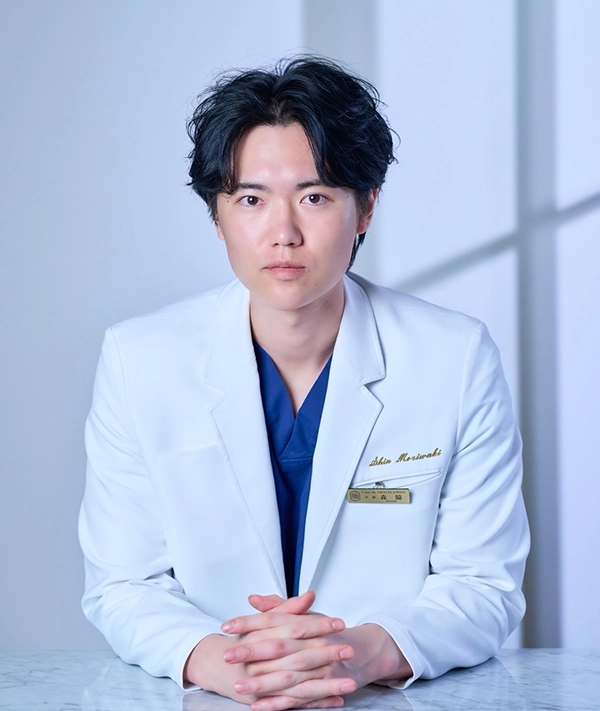
Dr. Shin Moriwaki
Director, AVAN TOKYO Ginza Liposuction Clinic
Graduate of Tokushima University School of Medicine.
After working at Tokushima University Hospital, Tokyo Chuo Cosmetic Surgery and Gracia Clinic, he took up his current position.
At least 3,000 cosmetic surgeries performed from January 2022 through November 2026, including previous positions.
Certifications
・VASER Lipo certified physician
・ECFMG Certificate
Memberships
・Member, Japan Society of Aesthetic Surgery (JSAS)
・Full member, Japanese Society for Regenerative Medicine
・Member, American Academy of Aesthetic Medicine