


Protein Distribution Matters More Than Total Amount for Hair Matrix Cells — Meal Timing and the Role of Stem Cell Conditioned Media2026.07.13
“Just eat 60g of protein a day.” People worried about thinning hair or increased shedding often receive this kind of advice. But taking 60g in a single meal versus spreading it evenly across breakfast, lunch, and dinner does not deliver the same amount and timing of building blocks to your hair matrix cells. Hair synthesis is a 24-hour metabolic process, and when blood amino acid levels drop for extended periods, hair elongation can effectively pause during that window. This article separates “how much” from “how it is distributed across the day” from the perspective of the hair matrix cell, and organizes — through Dr. Moriwaki’s lens — how internal nutritional design can be combined with an external approach such as stem cell conditioned media, which acts on the follicular environment.
Key Points of This Article
・Protein is a nutrient the body cannot store, so even if your daily total is sufficient, an uneven intake pattern easily creates supply gaps for hair matrix cells
・A practical baseline is 20–30g per meal, evenly distributed across breakfast, lunch, and dinner, to avoid interrupting hair synthesis
・Skipping breakfast tends to lower blood amino acid levels from late night through the morning, working against hair matrix cell protein synthesis
・Nutrition can supply raw materials but cannot redesign the inflammation, blood flow, and growth factor environment around the follicle — a different approach is needed there
・Combining meal timing (internal) with stem cell conditioned media (external) as two wheels of the same treatment helps prepare a stronger foundation for hair therapy
Hair Matrix Cells Are “Always Waiting for Materials” — The Reality of Daily Hair Growth
A single scalp holds roughly 100,000 hairs, of which about 85% are in the anagen (growth) phase. Anagen hairs grow approximately 0.3–0.4mm per day, meaning that if you simply add up all follicles, tens of meters of new keratin fiber are being assembled every 24 hours. Hair matrix cells drive this synthesis, constantly pulling amino acids from the bloodstream and operating day and night.
Why Hair Synthesis Gets “Deprioritized” Under Protein Deficiency
When the body’s amino acid pool runs low, life-critical organs — the liver, immune system, and skeletal muscle — receive materials first, while tissues considered non-essential to survival, such as hair and nails, tend to be served last. This is the general framework in clinical nutrition. Even when total daily intake is adequate, any window where supply is interrupted may make it harder for hair synthesis to maintain its usual pace during that time.
Why “60g All at Once” Fails — Protein Cannot Be Stored
Carbohydrates can be stored as glycogen in the liver and muscle, and fats are held in subcutaneous and visceral depots. Protein has no dedicated storage tank. Ingested protein is absorbed as amino acids, and anything beyond immediate needs is oxidized, excreted, or converted to glucose and fat. The logic of “I ate a lot at dinner last night so I can skip breakfast today” simply does not match the metabolic rhythm of hair matrix cells.
Blood Amino Acid Half-Life and the Risk of Skipping Breakfast
When the fasting window from dinner to breakfast stretches to 10–12 hours, free amino acid concentrations in the blood gradually decline, and the body begins breaking down muscle protein to cover the deficit. The longer this catabolic-dominant window continues, the thinner the amino acid supply reaching hair matrix cells becomes. Chronic breakfast skippers sometimes show reduced hair strength and diameter, and this pathway may be one contributing factor — although individual variation is substantial, and skipping breakfast cannot be simplistically equated with thinning hair.
Aiming for 20–30g per Meal — Designing an Eating Pattern That Does Not Starve Hair Matrix Cells
A practical target currently proposed is roughly 0.3–0.4g of protein per kilogram of body weight per meal, split across three to four meals a day. For someone weighing 60kg, that translates to about 20g per meal — achievable with everyday foods like 100g of chicken breast, two eggs, or half a block of tofu with one pack of natto. This distribution keeps blood amino acid levels comparatively stable throughout the day, reducing gaps in supply to hair matrix cells.
Building a Protein Source Into Breakfast
Breakfasts in Japan often center on carbohydrates — white rice, bread, cereal — and protein intake frequently falls below 10g. Adding just one or two items such as one egg (about 6g), 100g of yogurt (about 4g), or one pack of natto (about 8g) can push morning protein up close to 20g. Before reaching for a specialized protein powder, revisiting the breakfast table is often more sustainable in practice.
Is Bedtime Protein Necessary?
Hair matrix cell metabolism does not stop while you sleep. Consuming a cup of milk (about 7g) or unsweetened yogurt (about 6g) one to two hours before bed may soften the overnight drop in blood amino acids. That said, this is not a universal recommendation — some people should prioritize digestive comfort and sleep quality, and individualization is necessary.
The Territory Nutrition Cannot Reach — Where Stem Cell Conditioned Media Comes In
Getting protein quantity and distribution right is an essential foundation for hair therapy, but on its own it will not halt progressive AGA or female pattern hair loss. Around the follicle, chronic micro-inflammation, reduced blood flow, and weakened growth factor signaling can proceed in parallel. Nutrition covers the supply of raw materials, but it cannot redesign the microenvironment surrounding the follicle.
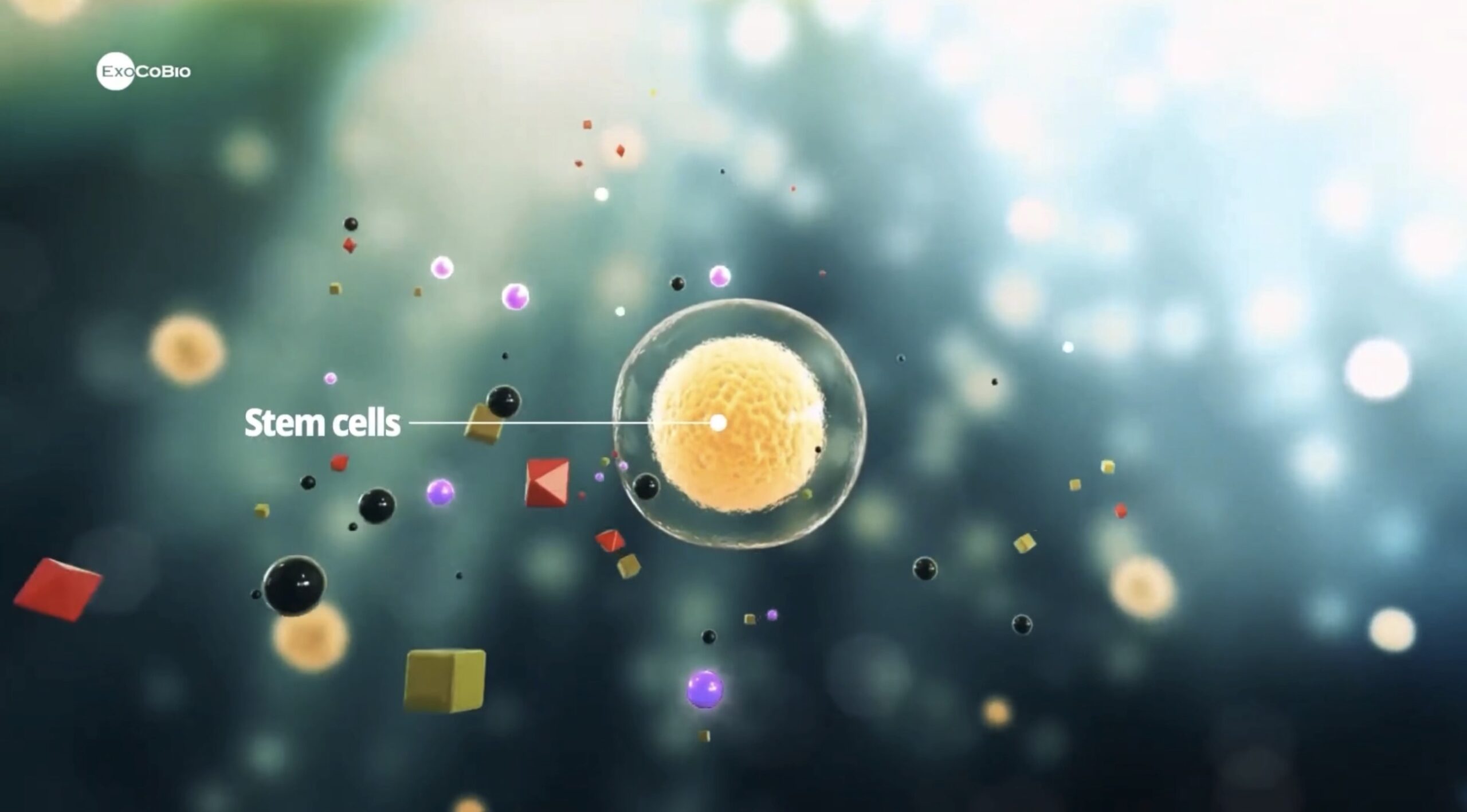
This is where applying stem cell conditioned media to the scalp is considered. It contains a wide range of growth factors and cytokines secreted by cells — including VEGF, IGF-1, HGF, and KGF — along with exosomes, and is thought to potentially influence inflammatory control and angiogenic signaling around the follicle. Combining the internal approach of nutrition with the external approach of stem cell conditioned media helps set up a stronger foundation for hair therapy.
For readers who want to explore the external approach in parallel with internal design, please see our hair regenerative medicine column archive for related articles. For clinical guidelines covering AGA and other hair loss conditions, it is also worth consulting the guidelines of the Japanese Dermatological Association.
Being Honest: It Is Not a Cure-All
Stem cell conditioned media is not a treatment that erases underlying nutritional deficiencies. Patients with low ferritin, extremely low-protein diets, or thyroid dysfunction should first have those internal issues corrected. To maximize the potential of stem cell conditioned media, addressing meal timing as the foundation is often the shortest path. Individual response varies, guaranteed outcomes cannot be promised, and we communicate this approach on the premise of designing internal and external care as two wheels working together.
Frequently Asked Questions
Q. Is replacing meals with protein powder the same as food for hair synthesis?
At the level of amino acid absorption, food-derived and powder-derived protein are not meaningfully different. However, whole foods also contain the cofactors needed for hair synthesis — zinc, iron, B vitamins — so rather than relying solely on powder, we recommend prioritizing food-based reinforcement, such as adding an egg or a pack of natto to breakfast.
Q. Do protein needs increase with age?
Older adults are reported to experience anabolic resistance, where the same protein intake generates less muscle protein synthesis than in younger people. A similar tendency is expected in hair synthesis, and a slightly higher per-meal target of 25–30g is often considered. Patients with kidney conditions or other restrictions must consult their primary physician before adjusting intake.
Q. Are there special dietary restrictions during stem cell conditioned media treatment?
There are no strict restrictions, but excessive alcohol on the day of treatment and extremely low-protein diets should be avoided. By maintaining a steady 20g of protein at each of three daily meals, you create an environment where the raw materials needed during follicular recovery are less likely to run short.
Q. If I skipped breakfast for many years, is it too late to improve now?
Hair follicles remain metabolically active throughout life, so improvements to the nutritional environment are meaningful at any age. That said, in areas where follicles have already miniaturized, nutritional improvement alone will not necessarily restore density, and combination with external hair regenerative medicine approaches is often considered. Individual situations should be discussed at consultation.
──────────────
【Medical Supervision】Shin Moriwaki, M.D. (Supervising Physician)
Member, Japan Society of Aesthetic Surgery (JSAS) / Member, American Academy of Aesthetic Medicine
ECFMG Certificate
──────────────
📍AVAN TOKYO 銀座 毛髪再生医療
AVAN TOKYO Ginza Hair Regenerative Medicine
English / 中文 / Tiếng Việt supported
Inquiries welcome via DM / LINE / Website / Phone.