


Does Stem Cell Conditioned Media Work for AGA? — Evidence and Real-World Clinical Impressions2026.05.15
“Does stem cell conditioned media actually work for AGA (androgenetic alopecia)?” — This is one of the most frequent questions we hear from male patients who come to our clinic for scalp consultations.
The internet is flooded with conflicting voices — some claiming dramatic regrowth, others reporting no effect at all.
That is precisely why we, as physicians, must speak honestly about what can reasonably be expected and where caution is still warranted, drawing on both published evidence and our own clinical experience.
To state our conclusion up front: stem cell conditioned media is not a replacement for the standard AGA treatments, but when combined with oral and topical medications, it functions as a powerful option that elevates the quality of response — and we feel a clear, growing confidence in that role.
How Stem Cell Conditioned Media Acts on AGA
First, we need to understand why conditioned media can act on AGA at all.
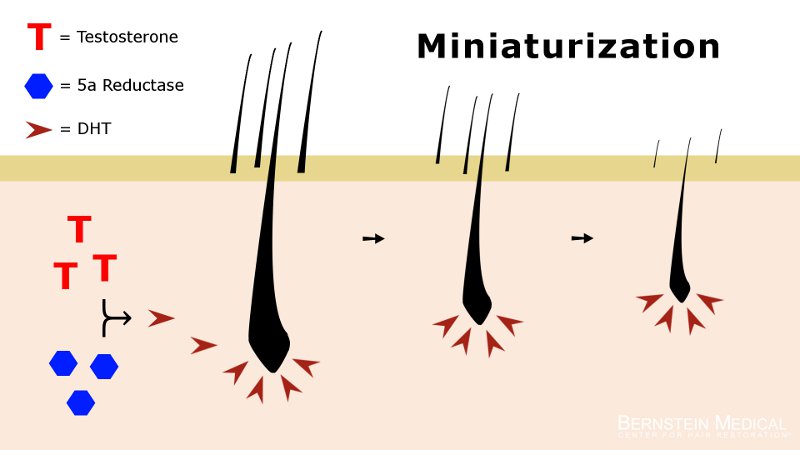
Recent research shows that AGA is not solely the result of male hormones (DHT) — chronic micro-inflammation around the follicle and decline in hair follicle stem cell function are also deeply involved.
“Restarting” the Follicle Through Growth Factors
Stem cell conditioned media contains dozens of growth factors related to follicle growth and maintenance, including VEGF, KGF, IGF-1, HGF, and FGF.
These act in multiple directions on miniaturized follicles — stimulating matrix cell proliferation, activating dermal papilla cells, and promoting angiogenesis in the surrounding tissue.
In other words, while finasteride and dutasteride function as a “brake” by suppressing DHT, conditioned media functions as an “accelerator” that wakes the follicle itself back into motion.
Controlling Inflammation in the Scalp Environment
In scalps where AGA is progressing, a low-grade chronic inflammation around the follicles is known to be present.
This “silent inflammation” damages the niche environment of follicle stem cells and is one of the reasons minoxidil responsiveness declines over time.
The anti-inflammatory cytokines in conditioned media help calm this inflammation, preparing the soil so that oral and topical medications can deliver their full potential.
This “environmental repair” is one of the unique reasons conditioned media has its own role in AGA care.
Evidence and Clinical Impressions — How Much Can We Expect?
Evidence for conditioned media in AGA is still developing.
That is why it is essential to clearly separate what the literature shows from what we feel in actual practice.
What Can and Cannot Be Said at This Point
Clinical studies of conditioned media and related preparations (PRP, exosome-containing products) for scalp treatment have been increasing, particularly outside Japan.
Though still small in scale, many report increases in hair density, improvement in hair caliber, and reduction in shedding, with no serious adverse events reported.
On the other hand, sample sizes and follow-up periods are often limited, and we are not yet at the stage where we can claim “the same level of established evidence as finasteride.”
Therefore, in counseling patients, we always emphasize that this is not a standalone cure, and that its greatest value emerges in combination with oral and topical therapy.
The Shift in “Quality of Response” We See in Practice
In daily practice, many patients whose progress had stalled on finasteride alone report after 3–6 months of combined conditioned media therapy that “shedding during shampooing has clearly decreased” or that “the visible scalp at my parting line is less prominent.”
Especially in patients who introduce conditioned media as their “next stage” after passing the initial shedding phase, we see improvements in hair caliber and a kind of three-dimensional return of volume at the frontal and crown areas that is difficult to obtain with oral therapy alone.
When combined with drug delivery through Morpheus8, conditioned media is distributed more evenly to the deeper scalp layers, which also helps reduce variability of response — a significant clinical advantage.
These impressions may not yet rise to the level of statistical evidence, but as physicians who examine many scalps every day, we feel them accumulating into a genuine clinical conviction.
Summary
For AGA, stem cell conditioned media should not be viewed as a substitute for oral and topical therapy, but rather as a complementary treatment with great potential to draw out the full effect of those standard treatments.
Its two main actions — restarting the follicle through growth factors and controlling chronic micro-inflammation — can help break through the plateau phase of AGA care.
What matters most is not “trying to regrow hair with conditioned media alone,” but designing the right timing and combination based on the stage of your AGA, your response to existing treatments, and the condition of your scalp environment.
The body of evidence is still building, but in real clinical practice, conditioned media is increasingly positioned as a therapy that genuinely changes the quality of response.
If you feel that “I’ve been on oral medication, but nothing more is moving from here,” it is well worth revisiting your scalp environment and treatment design from the perspective of regenerative medicine.
Hair regrowth is entering an era of total scalp strategy — not a single drug, but a multi-layered restoration of the entire scalp environment.
📍AVAN TOKYO Ginza Stem Cell & Regenerative Medicine Clinic
AVAN TOKYO GINZA STEM CELL CLINIC
English / 中文 / Tiếng Việt available
For reservations and consultations,
please reach out via DM / LINE / Website / Phone.