


For Those Anxious About Repeated Steroid Injections in Finger and Foot Joints — Dr. Moriwaki Outlines the Unique Risks of Small Joints and the Alternative of Stem Cell Conditioned Media Joint Injection2026.07.17
“Every time my Heberden’s nodes, thumb CMC osteoarthritis, or bunion pain flares up, I get another steroid joint injection — but how many more times can I safely repeat this?” This is one of the most common anxieties heard in our clinic. Unlike large joints such as the knee or shoulder, the small joints of the hand and foot have thinner skin, less subcutaneous fat, and tendons running right beside the joint capsule. That is precisely why the effects of repeated local steroid administration tend to surface here not only functionally but also visibly. This is the context in which joint injection using stem cell conditioned media has drawn attention as an alternative option. In this article, Dr. Shin Moriwaki honestly outlines the limits of steroids in the small joints of the hand and foot, and how they differ from — and can be combined with — stem cell conditioned media joint injection.
Key Points of This Article
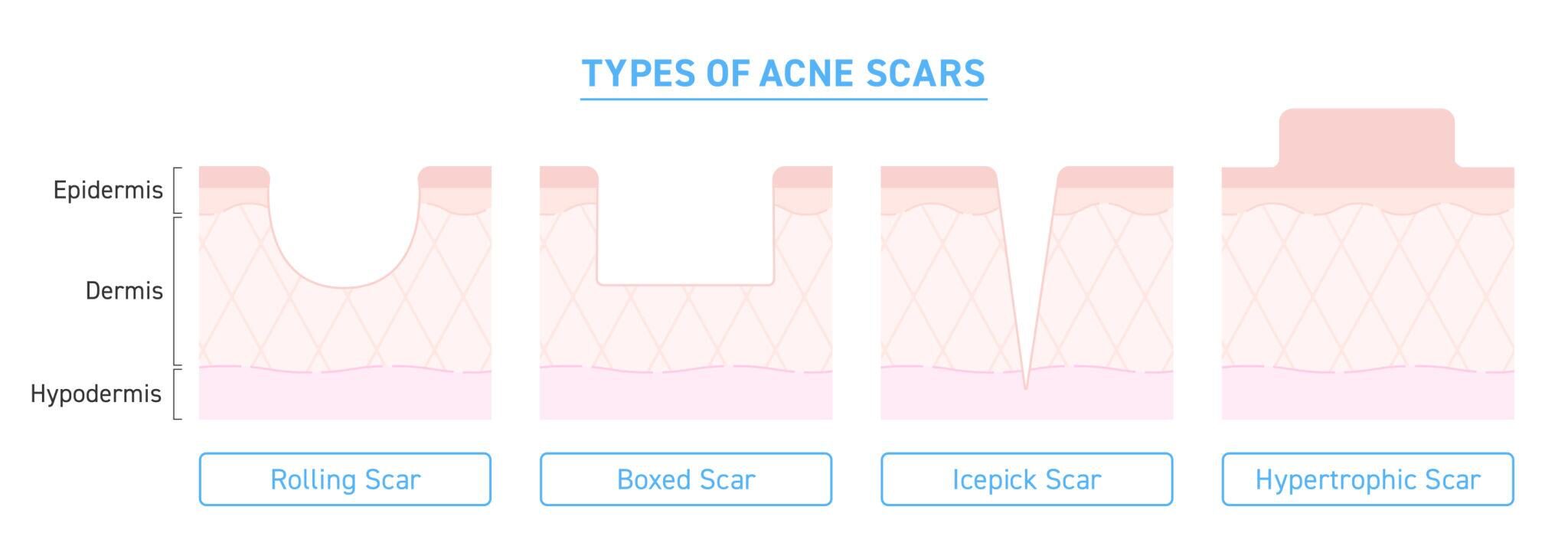
・A steroid joint injection is a treatment that strongly suppresses inflammation. It is effective for acute pain relief, but in the thin-skinned hand and foot, cosmetic risks such as skin atrophy, depigmentation, and fat dimpling are notably prominent.
・Repeated injections at the same site have been linked to weakening of surrounding tendons and ligaments and, rarely, tendon rupture — so managing dose count and interval is essential.
・Stem cell conditioned media joint injection is not aimed at “stopping inflammation” but at “tuning the tissue-side repair environment” — an approach with a different axis of action.
・The two are not adversaries; they are options to be designed by pain phase, joint status, and skin condition, not simple superior-and-inferior alternatives.
・In cases of active infection, severe joint destruction, or poorly controlled systemic disease, stem cell conditioned media is also contraindicated. Response varies between individuals, and no definitive guarantee can be made.
The Real Risks of “Repeating” Steroids in Hand and Foot Joints
Because steroids strongly suppress inflammatory cytokines within the joint, they are highly effective in the short term for acute flare-ups of osteoarthritis, synovitis, and tenosynovitis. That is exactly why patients easily fall into the cycle of “if it hurts, just inject again.” But you need to understand that the joints of the hand and foot have several anatomical vulnerabilities that the larger, more central joints do not.
Atrophy of Skin and Subcutaneous Fat, and Depigmentation
The dorsum of the hand and foot and the palmar surface of the fingers have thin skin and sparse subcutaneous fat. Repeated local steroid administration is known to cause the skin around the injection site to atrophy and become thin and shiny, subcutaneous fat to sink and dent, and depigmentation (white spots) to persist long-term in people of color, including Asians. Since the hand and foot are visible in daily life, many patients start to worry more about visible changes than about pain relief — which is precisely what makes steroid use in this region so difficult.
Weakening of Tendons and Ligaments, and the Risk of Spontaneous Rupture
The flexor and extensor tendons of the fingers, the tendon sheath of the thumb, and the entheses of the Achilles tendon and plantar fascia all run immediately adjacent to the target joint cavities. When highly concentrated steroids are repeatedly injected in close proximity, collagen fiber remodeling is disrupted, and case reports of tendon weakening and rare spontaneous rupture do exist. In small joints with narrow cavities, unintentional exposure of the tendon to the solution is not zero.
Effects on Cartilage and Bone in Small Joints
High-frequency, high-concentration local steroid administration is basically known to suppress cartilage matrix metabolism and can affect bone metabolism. The causal picture in humans is not one-piece, but it is at least not a treatment that can be declared “safe to inject into the same joint without limit.” In many clinical settings it is operated with a rough guideline of leaving three to four months between injections at the same site and limiting the total to a few times per year.
Stem Cell Conditioned Media Joint Injection Is Not “Another Drug for the Same Purpose”
Stem cell conditioned media, on the other hand, is a liquid component containing growth factors, cytokines, and exosomes secreted extracellularly when cells such as mesenchymal stem cells are cultured. A joint injection that delivers this into or around the joint is not aimed, like steroids, at forcefully suppressing inflammation, but at acting on the tissue’s repair environment itself.
The Difference in Axis Between “Inflammation Suppression” and “Repair Environment Modulation”
The central axis of steroids is “stopping inflammation.” For acute intense pain and marked swelling, that is a rational choice and a necessary weapon for protecting quality of life. In contrast, stem cell conditioned media aims, via growth factor groups such as TGF-β, IGF-1, FGF, and VEGF and miRNAs, to gently modulate inflammation in the synovium and tendon entheses while pushing repair signals on the tissue side. Because the two differ in the very axis of “stopping inflammation” versus “promoting repair,” it is more practical to view them not as simple replacements but as options that can be separated by phase and purpose.
Administration Design in the Small Joints of the Hand and Foot
In joints such as DIP, PIP, thumb CMC, first MTP, and IP joints of the toes, the joint cavity is extremely narrow, so delivering the fluid reliably requires ultrasound-guided administration and careful “targeting” of the periarticular tissues (joint capsule, entheses). Rather than forcing in a large volume, deciding “where to inject” carefully along the anatomy of the pain source is what largely determines outcomes in this territory.
How to Actually Use Each Approach for Hand and Foot Joint Pain
Situations Where Steroids Are “Well Suited”
In scenarios such as an initial acute trigger finger, sudden intense synovitis pain, or a rheumatoid arthritis flare — where daily life cannot continue unless inflammation is calmed quickly — steroids remain one of the rational first-line choices. However, when repeatedly used at the same site, the premise is that you observe the guideline of allowing three to four months between injections and limiting the total to a few times a year, and that you check the state of skin, tendons, and joint each time.
Situations Where Stem Cell Conditioned Media Joint Injection Becomes a Candidate
・You have been repeating steroids and are starting to worry about skin atrophy, pigment changes, or effects on the tendons
・The main issue is chronic pain of osteoarthritis — daily activity is burdened rather than there being an acute flare
・You have Heberden’s nodes, thumb CMC arthritis, or first MTP arthritis and want to persist conservatively while avoiding surgery
・Chronic enthesis pain (tennis elbow, plantar fasciitis, etc.) is responding for shorter and shorter periods to steroids
In these situations, it is realistic to combine conditioned media not to “knock down inflammation” but to “tune the repair environment.” Individual judgment based on joint status and imaging (X-ray, ultrasound) is required. For more details, please also refer to our page on stem cell conditioned media joint injection.
There Are Also People For Whom Stem Cell Conditioned Media Is “Not Suited”
To avoid any misunderstanding: stem cell conditioned media is not a straightforward upgrade over steroids. In the following situations it is used with caution or is contraindicated.
・Suspected active infection in or around the joint
・Joint destruction has advanced severely, with bone-on-bone clear deformity or dislocation (a stage where surgery should be considered)
・Poorly controlled diabetes, immunosuppressed state, ongoing malignancy treatment, and other high systemic risk conditions
・Prior history of strong allergic reaction to components of the conditioned media
In these cases, orthopedic evaluation should be prioritized first, and in cases of severe finger deformity, surgical options such as arthroplasty or arthrodesis should also be placed on the table for discussion. For general information on joint disease, please also refer to the public information of the Japanese Orthopaedic Association.
Think in Terms of the “Whole Treatment Plan,” Not “How Many More Times”
Treatment for pain in the small joints of the hand and foot is not something that ends with an injection alone. Braces (supports, taping, insoles), review of daily-life movement, exercise therapy for periarticular muscles, weight control, and oral medication when necessary — multiple layers overlap to make treatment work. Both local steroid administration and stem cell conditioned media joint injection are only one of those layers, and the premise that neither is a “one-shot game changer” on its own is the most important thing to relieve the anxiety of repetition.
At the first visit, Dr. Moriwaki does not count “how many more times you can inject.” Instead, he designs on the time axis of “which treatments to combine in what order, and by what indicators to review.” Neither denying steroids nor treating conditioned media as a panacea, but discussing combinations that account for the pharmacology and limits of each together with the patient — that is the realistic strategy for keeping small joints usable for the long term.
Frequently Asked Questions
Q. I have been continuing steroid injections in my fingers — should I switch to stem cell conditioned media joint injection?
This is not a treatment that is uniformly recommended as a switch. There are situations where steroids remain effective for acute inflammation, and judgment depends on the state of the skin and tendons and the grade of joint destruction. Based on current symptoms, past injection count, and site, we recommend first going through an orthopedic evaluation and then individually considering whether combining stem cell conditioned media would add value.
Q. Can steroids and stem cell conditioned media be used on the same day?
Because the two differ in their axis of action, mixed same-day injection is not a common design. It is often more realistic to first calm an acute flare-up with a steroid, then once the situation has settled, consider stem cell conditioned media for the purpose of tuning the repair environment. Please consult your attending physician for details.
Q. How many sessions of stem cell conditioned media joint injection are needed to judge effect?
Because repair of tendons, entheses, and small joints takes time, we do not judge from a single session; we evaluate on a scale of weeks to months, tracking changes in pain score, range of motion, and daily activity. Individual variation is large, and when response is poor we review, including continuation, change, or shift to other treatments.
Q. Can stem cell conditioned media be injected in areas where the skin has already become thin?
In areas with skin atrophy, care must be taken to avoid vascular injury and pigment changes. Administration itself is often possible, but the puncture direction, needle gauge, and volume are adjusted. When atrophy is severe, dermatological evaluation may be interposed first.
Q. I have been told surgery is the only option — can conditioned media buy me time?
In end-stage cases where joint destruction is severe and daily life is greatly impaired, even if symptomatic improvement is obtained with conditioned media it is limited, and fundamental deformity does not return. When surgical indication is clear, choosing injections to delay is not recommended. For borderline cases, it is important to discuss both the option of persisting conservatively and the option of surgery side by side, aligned with the main source of pain and the patient’s life context.
──────────────
Supervising Physician: Shin Moriwaki, MD
Member of the Japan Society of Aesthetic Surgery (JSAS) / Member of the American Academy of Aesthetic Medicine
ECFMG certificate (U.S. medical licensure qualification)
──────────────
📍AVAN TOKYO Ginza Regenerative Medicine
AVAN TOKYO Ginza Regenerative Medicine
English / 中文 / Tiếng Việt available
Inquiries via DM / LINE / Website / Phone.