


When a Finger Clicks and Locks: Stenosing Tenosynovitis (Trigger Finger) and the Option of Stem Cell Conditioned Media Peritendinous Injection — Dr. Moriwaki Sorts Out the Limits of Repeated Steroid Injections and How the Approach May Engage the Inflammation and Degeneration Around the A1 Pulley2026.07.24
You wake up to find your thumb or middle finger stuck in flexion, and when you try to straighten it, it snaps open with a click — this catching sensation is what we call “trigger finger.” Medically it is termed stenosing flexor tenosynovitis, and it begins with friction between the A1 pulley (the ring-shaped ligamentous tunnel at the base of the finger) and the flexor tendon. The standard conservative treatment is an intra-sheath steroid injection, but many patients struggle with limits on how long the effect lasts and how often it can be repeated. Could stem cell conditioned media peritendinous injection be positioned as “another option” for stenosing tenosynovitis? In this column, Dr. Shin Moriwaki of AVAN TOKYO Ginza Regenerative Medicine sorts out the possibilities and limits from a medical standpoint.
Key Points of This Article
・Stenosing tenosynovitis is a chronic tendon sheath disorder in which the flexor tendon loses its smooth glide beneath the A1 pulley, producing catching and snapping at the base of the finger.
・The first-line conservative treatment is an intra-sheath steroid injection, but repeated injections accumulate risks such as subcutaneous atrophy, skin depigmentation, and rare flexor tendon rupture.
・Stem cell conditioned media peritendinous injection is considered as a conservative approach that pursues “a different axis of action” — calming inflammatory cytokines while engaging the repair environment of tendon and synovium.
・For strongly locked fingers or cases unresponsive to conservative therapy, A1 pulley release surgery is a reliable option; do not persist unreasonably with conditioned media alone.
・Treatment response varies between individuals and cannot be guaranteed. Diagnosis, indication, and timing must be decided in combination with orthopedic evaluation.
What Is Stenosing Tenosynovitis? The Stenosis and Degeneration Occurring at the A1 Pulley
The flexor tendons that bend and straighten the fingers run through tunnel-like structures called “tendon sheaths” on the palmar side. The innermost tunnel at the base of the finger is the A1 pulley (annular ligament). It supports the smooth gliding of the tendon along with finger motion, but against a background of aging, repetitive motion, hormonal shifts, diabetes, or rheumatoid arthritis, the sheath itself thickens and a nodular swelling develops on the tendon side as well.
As a result, when you try to extend after flexing, the thickened portion struggles to pass through the A1 pulley and at some moment pops open — this is the phenomenon called “trigger finger.” It is common in women aged 40–60, in people with diabetes, and in those whose occupations heavily use the hands, with morning stiffness of the finger and a predilection for the thumb, middle, and ring finger. Chronic sheath disorders are now known to carry not only inflammation (tendinitis) but also a degenerative aspect (tendinosis) with disordered collagen alignment in the tendon and sheath — a perspective essential when designing treatment.
The Effect of Intra-Sheath Steroid Injection and the Wall of Repeated Dosing
The first-line conservative treatment is a steroid injection into the tendon sheath. Its strong anti-inflammatory action quiets sheath swelling and produces symptomatic improvement lasting several weeks to months in many cases. For information on tendon and joint disorders, the public resources of the Japanese Orthopaedic Association may also be a helpful reference.
On the other hand, the injection effect often weakens after a certain period, and repeated dosing at recurrence accumulates the risk of adverse events such as subcutaneous atrophy, skin depigmentation, and — rarely — flexor tendon rupture. In patients with diabetes, attention to blood glucose elevation is also needed. “It works, but it is hard to keep repeating” — this is the practical limit of repeated dosing, and the reason many patients want to consider a next step.
What Does Stem Cell Conditioned Media Peritendinous Injection Aim For?
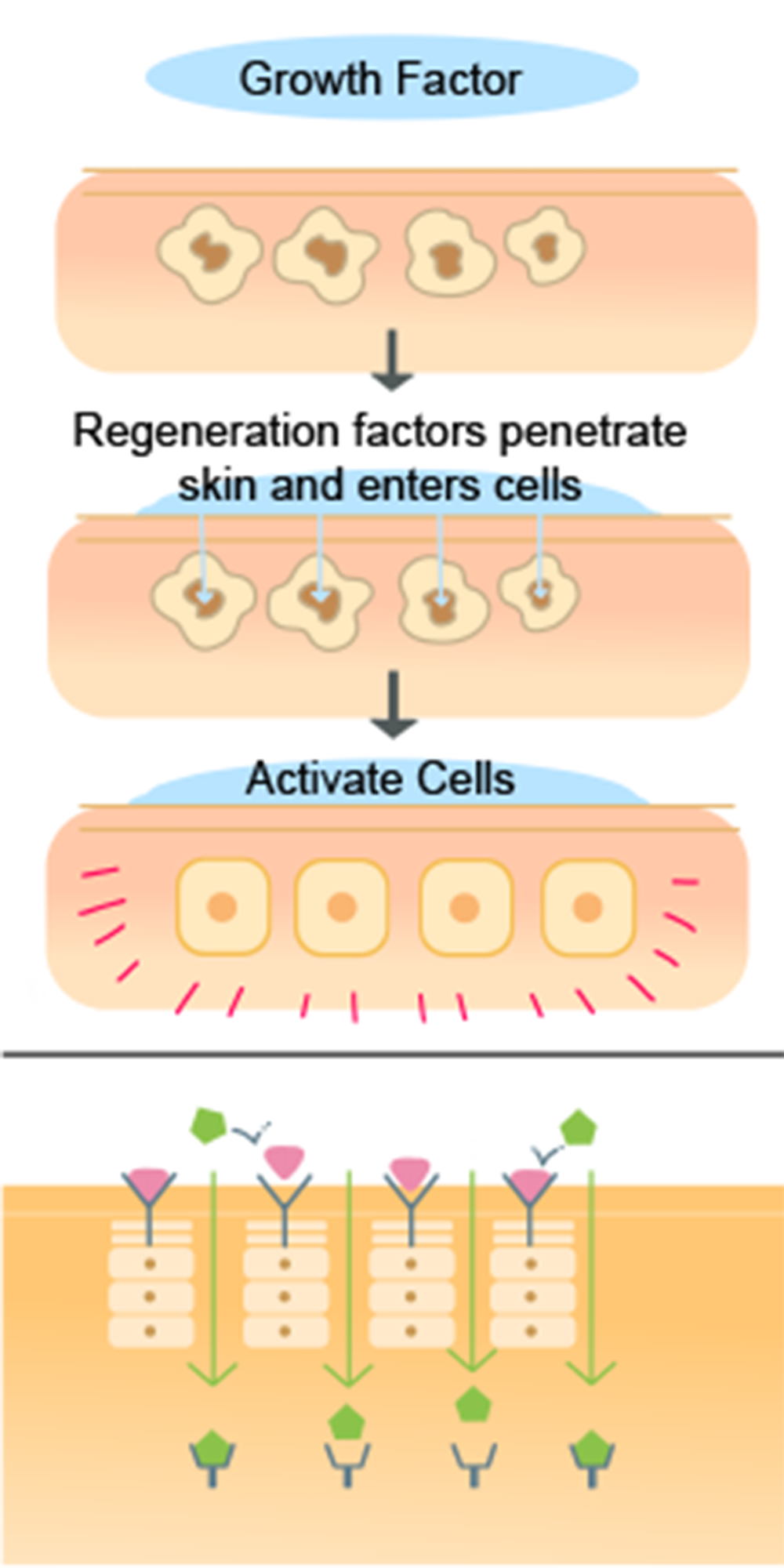
For stenosing tenosynovitis, there is room to consider stem cell conditioned media peritendinous injection as “a different axis of action.” The conditioned media contains growth factors, cytokines, and exosomes secreted by mesenchymal stem cells, and the concept is to deliver anti-inflammatory signals (regulators such as IL-1ra and TSG-6) in parallel with tissue repair signals (TGF-β, IGF-1, FGF, VEGF, and others).
While steroids aim primarily to “strongly suppress inflammation,” conditioned media aims to “calm inflammation while regulating the repair environment of tendon and synovium.” If we take the degeneration underlying chronic sheath disorders into account, this difference in axis of action carries meaning. However, comparative-trial-level evidence for stem cell conditioned media in trigger finger is not yet sufficient, and it must be emphasized as “an option envisioned from case experience and mechanism of action.” Please also see more about stem cell conditioned media joint injection here.
Technical caution — peritendinous, not intra-tendinous
The delivery site of conditioned media should, as a rule, be confined to the peritendinous space near the A1 pulley, not inside the tendon. Direct intra-tendinous injection has been noted to potentially increase risks of tissue damage and tendon rupture, and it should be performed carefully under ultrasound guidance while confirming the layered structure. Because outcomes are strongly reflected by technical skill in this area, it is a treatment best received at an experienced facility.
Indications and Limits — Positioning Alongside A1 Pulley Release Surgery
Among cases of stenosing tenosynovitis, when the finger is strongly locked and cannot be straightened on its own, or when conservative treatments such as splinting and steroid injection have failed to improve symptoms, A1 pulley release surgery — which incises the pulley to expand the gliding space — is a reliable option. It is a mature procedure performed under local anesthesia in a short time and has a high success rate.
Peritendinous injection of conditioned media is best considered as an option positioned “before surgery becomes necessary” or “before repeatedly dosing steroid injections, when another conservative axis is worth trying.” In cases of strong locking, advanced contracture, or major impairment of daily activities, one should prioritize orthopedic evaluation for surgery rather than persisting with injections. Treatment strategy should be selected in a stepwise manner in consultation with the attending physician, based on symptom severity, duration, and functional limitation.
What to Keep in Mind After Treatment
In the days immediately after injection, a temporary rebound of pain called “post-injection flare” may occur. Avoid strenuous exercise and heavy gripping for a few days, and refrain from forcibly cracking the finger. In daily life, repetitive motions such as opening bottle caps, wringing towels, or extensive mouse use often act as triggers, so taking breaks and adjusting tools can also help prevent recurrence.
Frequently Asked Questions
Q. How long does stenosing tenosynovitis take to resolve on its own?
Mild cases sometimes improve spontaneously with rest and splinting, but in chronic cases spontaneous resolution is hard to expect, and consideration of conservative or surgical treatment becomes necessary. If catching or snapping persists for several months, please seek orthopedic evaluation promptly.
Q. I have received many steroid injections. Is there any point in switching to conditioned media?
For patients who want to avoid the tissue atrophy or glucose elevation associated with repeated steroids, or for those whose steroid effect has become shorter-lasting, there is room to consider conditioned media as a different axis of action. However, effect varies between individuals and is not universally beneficial.
Q. When can I return to work after a peritendinous conditioned media injection?
If your work is desk-based, the day of or the day after treatment is usually feasible. For hand-intensive occupations, it is safer to reduce loading for a few days. Strong gripping and heavy lifting should be avoided for about a week.
Q. Can strongly locked fingers that cannot be straightened also be treated by injection?
With strong locking or long-standing contracture, this is the stage at which A1 pulley release surgery should take priority. We do not recommend persisting with conditioned media injections; please undergo orthopedic evaluation for surgery.
Q. What is the guideline for cost and number of sessions?
Because this is a self-pay treatment, please judge not by the cost of a single session but by the total cost including sessions and follow-up. Assessment of effect can take several weeks to months, and a common flow is to check the response after the first dose and then decide whether to add more.
──────────────
Supervising physician: Shin Moriwaki, MD
Member, Japan Society of Aesthetic Surgery (JSAS)
Member, American Academy of Aesthetic Medicine
ECFMG Certificate (U.S. Medical Licensing Qualification)
──────────────
📍AVAN TOKYO 銀座 再生医療
AVAN TOKYO Ginza Regenerative Medicine
English / 中文 / Tiếng Việt available
Inquiries welcome via DM / LINE / Website / Phone.