


The Cutting Edge of AGA Treatment: Oral Medications, Topical Treatments, and Regenerative Medicine2026.05.09
The era of “just accepting hair loss” is over.
Today, multiple effective treatments for AGA (androgenetic alopecia) have been established, making it possible to choose the optimal approach based on each patient’s condition and goals.
AGA treatments fall into three major categories: oral medications, topical treatments, and regenerative medicine.
Understanding the mechanism and characteristics of each approach is the critical first step toward successful treatment.
Oral Medications: Addressing the Root Cause of AGA
The leading oral medications for AGA treatment are finasteride and dutasteride.
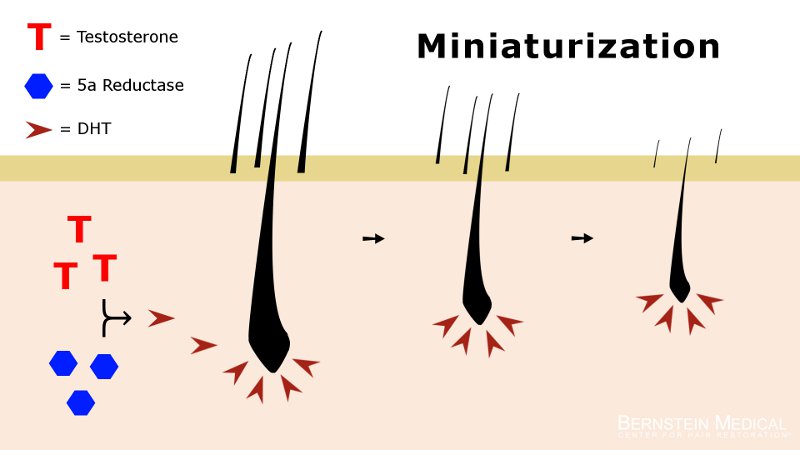
These belong to a class called 5α-reductase inhibitors, which suppress the production of dihydrotestosterone (DHT) — the primary driver of AGA.
DHT binds to androgen receptors in the dermal papilla, gradually miniaturizing the hair follicle and advancing hair loss.
Finasteride
Finasteride selectively inhibits type II 5α-reductase, reducing DHT production by approximately 70%.
Approved by the US FDA in 1997, it is a well-established treatment with extensive long-term safety data.
· Maintains continuous effect with once-daily oral intake
· Most patients notice results within 3 to 6 months of starting treatment
· Side effects such as decreased libido have been reported; regular consultation with a physician is important
Dutasteride
Dutasteride inhibits both type I and type II 5α-reductase, providing stronger DHT suppression than finasteride.
Its higher DHT inhibition rate makes it effective even in severe or rapidly progressing cases.
· Suppresses DHT by approximately 90% or more
· Long half-life allows for sustained action in the body
· Side effect profile is similar to finasteride; use only under medical supervision
While oral medications are highly effective at stopping AGA progression, their ability to actively regrow hair that has already thinned is limited.
For more aggressive improvement, combination with other treatments is strongly recommended.
Topical Treatments: Working Directly on the Scalp
Minoxidil is the gold standard topical treatment for AGA.
Originally developed as an antihypertensive drug, its hair-growth-promoting side effect led to its widespread adoption as a topical AGA therapy worldwide.
How Minoxidil Works
Minoxidil dilates blood vessels in the scalp, increasing the supply of oxygen and nutrients to hair follicles.
This activates dormant follicles and stimulates hair regrowth.
· Available in a wide range from over-the-counter (1–5%) to clinic-prescribed higher concentrations
· Standard dosage is 5% for men and 1–2% for women
· At least 4 to 6 months of continuous use is required to evaluate effectiveness
Oral minoxidil has also emerged as an option in recent years.
Whether to use topical, oral, or a combination should be determined in consultation with a physician.
Synergistic effects with 5α-reductase inhibitors make combined protocols increasingly popular.
Regenerative Medicine: Rebuilding the Hair Follicle Itself
While oral and topical medications primarily aim to slow progression and maintain the current state, regenerative medicine goes further — it seeks to fundamentally restore hair follicle function.
AVAN TOKYO Ginza Hair Regeneration Clinic offers the following leading-edge regenerative therapies.
Stem Cell Conditioned Medium Therapy
Conditioned medium derived from stem cells contains a rich array of growth factors including EGF, FGF, VEGF, and KGF.
When administered to the scalp, these factors directly activate hair follicle stem cells and restore the shortened anagen (growth) phase to its natural length.
· Direct approach to the follicle level — beyond what oral or topical drugs can reach
· Hair growth effects accumulate with repeated treatments
· Minimal downtime with little impact on daily life
Exosome Therapy
Exosomes are nano-sized vesicles that mediate intercellular communication.
By delivering specific miRNAs and proteins to hair follicle stem cells, they suppress the expression of hair-loss-related genes while promoting hair growth.
Their higher degree of purification compared to conditioned medium allows for more targeted action.
Morpheus8 (Fractional RF)
Morpheus8 delivers radiofrequency energy deep into the scalp, breaking down fibrosis while stimulating hair follicle stem cells.
On its own it delivers impressive results, but when combined with stem cell conditioned medium or exosome therapy, the synergistic effect is significantly amplified.
Choosing the Right Treatment for You
The optimal treatment depends on the stage of AGA progression, age, lifestyle, and treatment goals.
Rather than relying on a single approach, combining multiple therapies is the current standard strategy.
· Assess your current stage using the Hamilton-Norwood classification
· Clarify your primary goal: slowing progression, active regrowth, or both
· Consider time, budget, and acceptable side effect risk
At AVAN TOKYO Ginza Hair Regeneration Clinic, we provide individualized treatment protocols tailored to each patient’s unique condition.
Strategically combining oral medications, topical treatments, and regenerative medicine allows us to pursue the maximum possible outcome.
The most important first step for anyone struggling with hair loss is to receive an accurate diagnosis at a specialist clinic and build a treatment plan suited to their condition.
The longer progression goes unchecked, the more challenging treatment becomes.
Now is the earliest and best opportunity to begin.
📍AVAN TOKYO Ginza Hair Regeneration Clinic
AVAN TOKYO GINZA HAIR REGENERATION CLINIC
English / 中文 / Tiếng Việt Available
For reservations and consultations:
DM / LINE / Website / Phone