


Are Exosomes and Stem Cell Conditioned Media Distinct Entities or Nested Layers? — Dr. Moriwaki Explains the Hierarchical Relationship Between Particles, miRNA, and Growth Factor Proteins2026.07.29
In advertising and on social media, ‘exosome therapy’ and ‘stem cell conditioned media therapy’ are often discussed as parallel treatments — but in reality, for many products, the relationship is not one of ‘distinct entities’ but of ‘nested layers.’ Reframing this through the concept of the exosome fraction within conditioned media is a prerequisite for assessing quality, dosing, and realistic expectations when considering scalp regenerative therapy. This article, from Dr. Moriwaki’s clinical perspective, medically organizes the three-tier relationship between particles, miRNA, and growth factor proteins.
Key Points
・Exosomes are a sub-fraction of extracellular vesicles contained within stem cell conditioned media, and are not, in most products, a completely independent substance
・The exosome fraction within conditioned media has a three-tier structure: the particle (lipid bilayer), the enclosed miRNA, and the growth factor proteins
・A label of ‘X trillion exosome particles’ is a particle-count metric; it does not guarantee biological activity or the miRNA cargo inside
・In hair care, purification alone does not determine superiority; source cells, manufacturing process, and storage management have a larger clinical impact
・Rather than agonizing over ‘exosomes vs. conditioned media,’ checking lot information, testing systems, and regulatory notification status leads more directly to informed decisions
Exosomes Are Suspended ‘Inside’ Conditioned Media
Stem cell conditioned media refers to the ‘supernatant’ obtained after culturing mesenchymal stem cells (MSCs) and removing the cells themselves. This supernatant contains secreted growth factors, cytokines, and extracellular vesicles (EVs); among these EVs, lipid bilayer vesicles roughly 30–150 nm in diameter are called exosomes.
In other words, the exosome fraction within conditioned media occupies only a small sub-population of the total conditioned media, and the binary question ‘conditioned media or exosomes’ is, in many cases, structurally invalid. Most commercially available exosome products are prepared by concentrating and purifying the EV fraction from conditioned media using ultracentrifugation, size-exclusion chromatography (SEC), or tangential flow filtration (TFF). Conditioned media products, meanwhile, typically retain exosomes within them — the two often exist in a nested relationship.
The Three Tiers: Particles, miRNA, and Growth Factor Proteins
Exosomes become easier to understand when viewed as three tiers. The first tier is the ‘particle’ — the physical container itself, the lipid bilayer. The second tier is the ‘miRNA’ enclosed within the membrane — short RNA molecules that post-transcriptionally regulate gene expression and are reported to influence signaling pathways in target cells. The third tier is the ‘growth factor proteins’ attached to and within the membrane — factors such as TGF-β, IGF-1, VEGF, and HGF, along with adhesion molecules and tetraspanin markers (CD9, CD63, CD81).
If we consider conditioned media as a whole, it contains — in addition to these three tiers — ‘free’ growth factor proteins not enclosed by any membrane, other EV fractions (microvesicles, apoptotic bodies), metabolites, and lipids. When injected into the scalp, the molecules that may actually reach hair follicles and act as signals cannot be attributed to any single one of these three tiers alone; understanding this is the starting point.
Why the Quality of the Exosome Fraction Within Conditioned Media Cannot Be Measured by ‘Particle Count’ Alone
The ‘X trillion particles/ml’ figures seen in advertising are, in most cases, particle counts measured by Nanoparticle Tracking Analysis (NTA) or Tunable Resistive Pulse Sensing (TRPS). This number reflects only ‘the total physical count of particles in that size range’ — it says nothing about whether those particles are truly exosome-derived, whether miRNA or proteins are present inside, whether they remain biologically active, or whether the source cells’ quality is assured.
Therefore, to evaluate the quality of the exosome fraction within conditioned media, particle count alone is insufficient; assessment should also include Western blot for marker proteins (CD9, CD63, CD81), morphological confirmation by electron microscopy, ELISA for growth factors, and in vitro bioactivity assays. For related information, please also see our hair regenerative medicine column index.
The Decision Axis in Hair Treatment: ‘Purify or Use Whole?’
In clinical practice, the recurring question is whether ‘exosome-purified products’ or ‘whole conditioned media products’ are superior. However, sufficient randomized comparative data on the human scalp to draw a simple conclusion is not yet available.
The Meaning of Purifying, and the Meaning of Using It Whole
The theoretical advantage of purification lies in the ability to raise particle concentration and to isolate a ‘pure’ EV effect by removing free proteins. The practical significance of using conditioned media whole lies in delivering a comprehensive set of signaling molecules secreted by cells, in retaining active components that may be lost during purification, and in maintaining a realistic price range that does not reflect purification costs.
The hair follicle is a ‘mini-organ’ where dermal papilla cells, matrix cells, follicular stem cells, vascular endothelium, and immune cells interact in complex ways — it is not driven by any single signaling molecule. In the multifactorial context of the scalp environment, a ‘whole,’ cocktail-style effect can also be reasonable, in Dr. Moriwaki’s view. For general information on inflammatory scalp conditions and the skin barrier, please also refer to the guidelines of the Japanese Dermatological Association.
Information Patients Should Verify
The genuine decision regarding the exosome fraction within conditioned media rests not on the ‘exosomes vs. conditioned media’ dichotomy but on whether the following information can be confirmed: the source cells (umbilical cord, adipose, dental pulp, etc.) and passage number, serum-free vs. FBS-containing culture, the presence of sterility, mycoplasma, and endotoxin testing, availability of the Certificate of Analysis (CoA), management of freeze–thaw cycles, and the notification status under Japan’s Act on the Safety of Regenerative Medicine. These items describe quality far more meaningfully than product names or marketing copy.
Frequently Asked Questions
Q. Is exosome-only treatment more effective than stem cell conditioned media?
At present, direct comparative trials of exosome-purified products versus conditioned media on the human scalp have not been sufficiently accumulated. A high particle concentration does not necessarily correlate with clinical effect; source cells, manufacturing process, and storage conditions have a larger practical influence. Individual variation is also significant, and definitive claims of superiority should be avoided at this stage.
Q. Is a product with ‘X trillion exosomes’ inherently better?
Particle count is a physical metric; it does not guarantee biological activity, purity, or the miRNA cargo inside. It must be evaluated together with confirmation of marker proteins and information about source cells, manufacturing process, and testing systems.
Q. Does the exosome fraction within conditioned media reach the hair follicles when injected into the scalp?
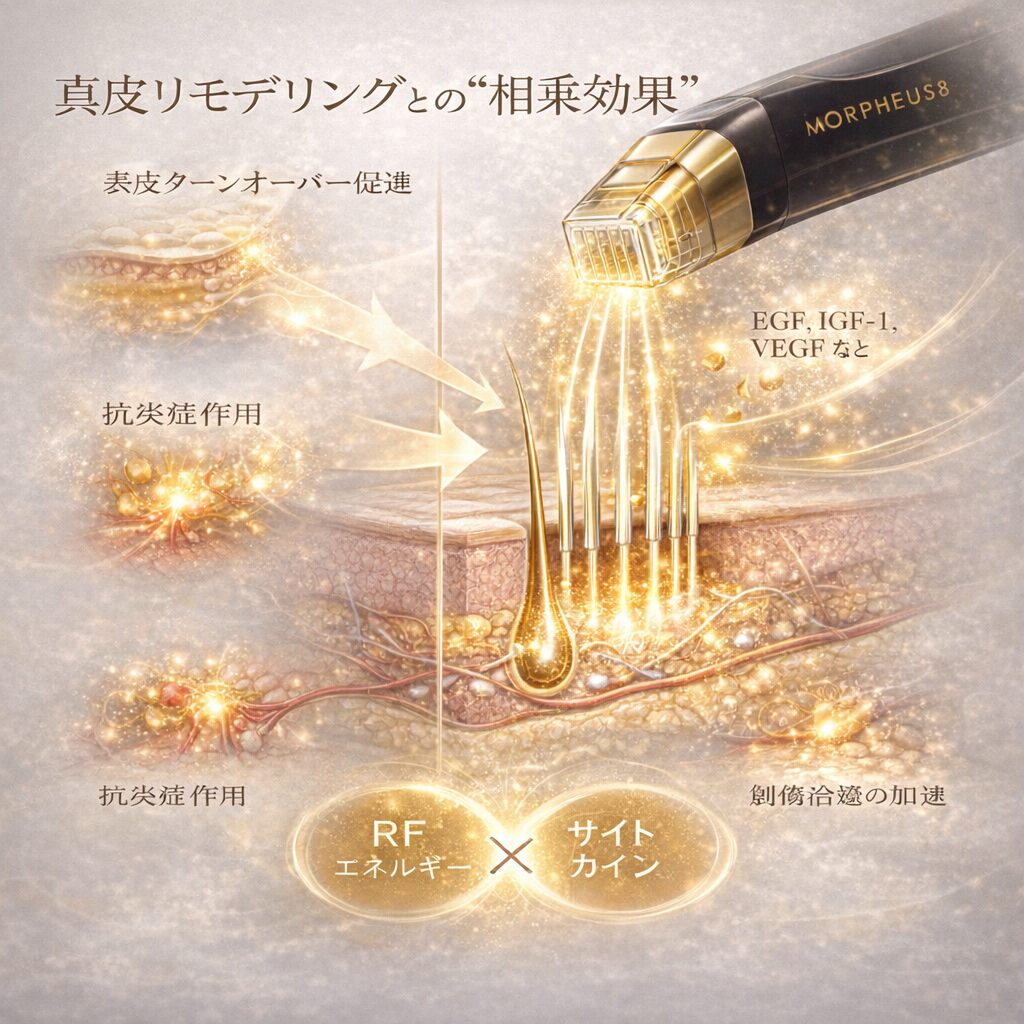
Particles of 30–150 nm do not simply pass through the skin barrier, so deep penetration by topical application alone is limited. A realistic design combines scalp injection with techniques such as microneedling or RF to deliver the material into the dermal layer. Reach also depends on procedural conditions and scalp state, which should be understood in advance.
Q. Do exosomes and conditioned media differ in the frequency of adverse events?
Both depend heavily on source cells, manufacturing process, and injection technique, and at present there is insufficient basis to compare adverse event rates based solely on whether the product is purified. Facility-level procedural management and product lot management are more important clinical variables.
Q. When unsure which to choose, what should be the first criterion?
Rather than relying on the ‘exosomes vs. conditioned media’ label, we recommend choosing a facility and product that can clearly disclose source cells, passage number, testing system, notification status, and storage management. The transparency of publicly available information is a more reliable basis for decision-making than the sound of the product name.
──────────────
Supervising Physician: Shin Moriwaki, MD
Member, Japan Society of Aesthetic Surgery (JSAS)
Member, American Academy of Aesthetic Medicine
ECFMG Certificate
──────────────
📍AVAN TOKYO 銀座 毛髪再生医療
AVAN TOKYO Ginza Hair Regenerative Medicine
English / 中文 / Tiếng Việt available
Inquiries via DM / LINE / Website / Phone.