


Can Facial HIFU and Scalp RF Treatment Be Done on the Same Day? — Dr. Moriwaki Reviews the Interval Design and Thermal Load on Hair Follicles When Combining Scalp RF and Facial HIFU2026.07.27
“I received facial HIFU last week and have Morpheus8 (scalp RF) booked for next week — is it really safe?” — At AVAN TOKYO Ginza, we often receive inquiries from patients considering parallel use of thermal treatments on both the face and scalp. The scalp RF and facial HIFU combination targets different anatomical layers and delivers heat differently, but from the body’s perspective it still means “receiving intense thermal stimulation in a short time frame.” Casually assuming “different areas can be done simultaneously” can lead to unexpected overlapping downtime and thermal load on the hair follicles. In this article, Dr. Moriwaki, who oversees regenerative medicine at AVAN TOKYO Ginza, reviews how much interval should be placed when considering the scalp RF and facial HIFU combination, what effects on hair follicles are anticipated, and how to safely combine them.
Key Points of This Article
・The scalp RF and facial HIFU combination involves biological responses that are linked even across “different sites,” so back-to-back same-day treatment should be avoided in principle
・Facial HIFU delivers heat to the SMAS and subcutaneous fat layer; scalp RF delivers to the dermis and shallow fat layer — the target layers differ, but both promote “thermal tissue remodeling”
・Hair follicle stem cells reside in the bulge region, a zone vulnerable to heat, and excessive consecutive thermal stimulation risks disrupting the hair cycle and causing transient shedding
・Recommended interval is at least 2–4 weeks; depending on intensity and physical condition, 6 weeks or more may be warranted
・If same-day treatment is proposed, always confirm overlap of anesthesia, edema, and downtime beforehand
What Is the Difference Between Facial HIFU and Scalp RF?
Layers Targeted by Facial HIFU
HIFU (High-Intensity Focused Ultrasound) concentrates ultrasonic energy at a single focal point, creating “point-shaped thermal coagulation spots” at set depths such as 1.5mm, 3.0mm, and 4.5mm below the skin. In particular, the 4.5mm setting targets the SMAS layer (superficial musculoaponeurotic system) and is designed to induce a lift effect. Because heat reaches the deep dermis to the fascia without burning the epidermis, downtime is comparatively small, while deep tissues receive substantial heat.
Layers Targeted by Scalp RF
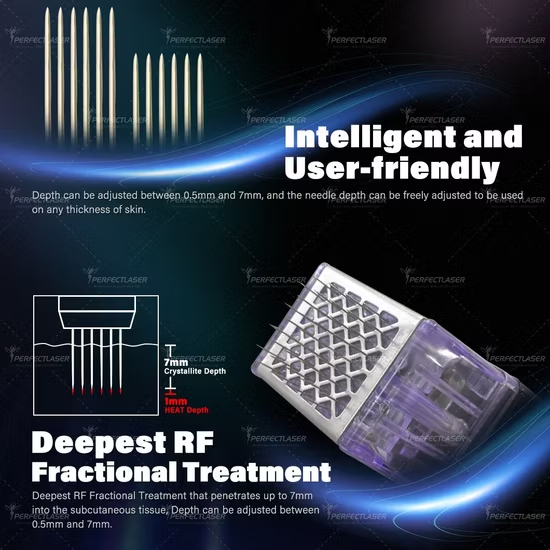
Meanwhile, microneedle RF devices such as Morpheus8 used on the scalp deliver radiofrequency through fine needles into the dermis to shallow subcutaneous fat layer, promoting collagen remodeling and the wound-healing cascade. The aim is to resolve fibrosis of the scalp and redesign the microenvironment around the hair follicles, and it is also used as a drug delivery route for stem cell conditioned media.
The Delivery of Heat Differs, but the Biological Response Overlaps
Physically, the two use different devices, different depths, and different sites. Yet the body responds to both by initiating the “early response of the inflammatory cascade” at local and systemic levels. Inflammatory cytokines such as TNF-α and IL-6 rise locally and can circulate systemically. When multiple thermal treatments overlap in a short period, this inflammatory response accumulates — a point that cannot be ignored.
Follicular Risks Easily Overlooked in the Scalp RF and Facial HIFU Combination
Hair follicle stem cells reside in the “bulge region” of the upper follicle. This region is relatively fragile against heat, and basic research suggests that sustained thermal stimulation exceeding 42–45°C can lead to functional decline. While scalp RF devices are designed to minimize thermal spread to follicles through settings, temperature elevation around follicles may exceed expectations depending on intensity, pulse density, and the patient’s scalp thickness.
When the inflammatory response from facial HIFU is added at this timing, the synchronization of the hair cycle can be disrupted, and transient shedding (an initial-shedding-like increase in hair loss) may occur 1–2 months after treatment. This is understood not as “hair falling out from heat itself,” but as a phenomenon where “the inflammatory environment accelerates the follicle’s transition to the resting phase.” For patients with ongoing AGA, this transient change may be more easily perceived as “worsening,” which requires special consideration.
Interval Design in Practice for the Scalp RF and Facial HIFU Combination
At Least 2–4 Weeks Between Sessions
Based on Dr. Moriwaki’s clinical experience, when arranging the scalp RF and facial HIFU combination, we recommend spacing the two by at least 2 weeks, ideally 4 weeks. During this period, local inflammatory response subsides and thermal stress on the follicles recovers. When combining high-intensity facial HIFU (e.g., 4.5mm + 3.0mm combined) with dense scalp RF, a 6-week or longer gap provides a wider safety margin.
Should It Be Face-First or Scalp-First?
Which to perform first depends on the patient’s primary goal. If hair treatment is the chief complaint, scalp RF plus stem cell conditioned media is done first, and facial procedures are considered after observing one hair cycle (3–4 months). If facial lifting is the priority, facial HIFU is performed first, and scalp RF begins 2–4 weeks later once swelling subsides. There is no scientific basis for “doing both simultaneously doubles the effect”; separating the periods allows more accurate assessment of each response.
Don’t Skip Checking Physical and Immune Status
Consider postponing both treatments during fever, severe fatigue, or 1–2 weeks after vaccination. Thermal treatment when immune response is active can prolong inflammation and increase pigmentation risk. Patients on anticoagulants or antiplatelet drugs need a treatment plan that accounts for compounded bruising risk.
What to Confirm If Same-Day Treatment Is Proposed
Some facilities may indicate “same day is fine.” We do not categorically deny this, but the following should always be confirmed.
・Whether the total anesthetic dose stays within safe limits (overlap of topical anesthesia and blocks)
・The impact on daily life and work if edema and bruising appear simultaneously on both face and scalp
・Downtime management from the next day onward (whether hair washing is allowed, skincare, cooling)
・Total perceived pain and patient tolerance
Same-day treatment offers efficiency but clearly increases physical burden. When not urgent, spacing them out often leads to greater long-term satisfaction. Related columns on hair regenerative medicine can be found here. For treatment design in the scalp and skin domain, please also consult public information such as the guidelines of the Japanese Dermatological Association.
Frequently Asked Questions
Q. Can I receive scalp microneedle RF on the same day as facial HIFU?
Immediately after facial HIFU is when subcutaneous inflammation is highest, so adding RF or needling to the scalp is not recommended. Local and systemic inflammatory responses compound, making swelling, redness, and fatigue more pronounced the next day. We recommend spacing at least 1–2 weeks, ideally 4 weeks.
Q. Does the scalp RF and facial HIFU combination cause shedding (transient hair loss increase)?
It does not always occur, but reports exist. The cause is thought to be not the heat itself but the synchronization of the hair cycle due to post-treatment inflammatory response. Most cases recover naturally in 2–3 months, but if AGA is progressing, please consult a physician beforehand.
Q. Can the scalp RF and facial HIFU combination be performed while on oral treatment (finasteride, minoxidil)?
Oral medications themselves are not contraindications for thermal treatment. However, during oral minoxidil use, peripheral vessels are dilated, slightly raising bruising risk. Also disclose anticoagulant or antiplatelet drug use before treatment.
Q. Should I start with facial HIFU or scalp RF first?
If hair concerns are primary, scalp RF plus stem cell conditioned media comes first, and facial HIFU is considered after observing progress for 3–4 months. If facial sagging is primary, the order can be reversed. Clarifying priorities tends to yield greater satisfaction than parallel progression.
Q. How often are visits needed during combined treatment?
Standard intervals are 4–6 weeks for scalp RF and 3–6 months for facial HIFU. To avoid overlapping bookings, establishing an annual schedule at the initial consultation reduces the burden of visits.
──────────────
Supervising Physician: Shin Moriwaki, MD (Supervising Physician)
Member, Japan Society of Aesthetic Surgery (JSAS) / Member, American Academy of Aesthetic Medicine
ECFMG Certificate
──────────────
📍AVAN TOKYO 銀座 毛髪再生医療
AVAN TOKYO Ginza Hair Regenerative Medicine
English / 中文 / Tiếng Việt available
Inquiries via DM / LINE / Website / Phone.