


“My Big Toe Aches on the Push-Off” — Distinguishing Hallux Rigidus (Stiffness of the First MTP Joint) from Hallux Valgus and Gout Attacks, and Dr. Moriwaki on What Stem Cell Conditioned Media Joint Injections Can and Cannot Target2026.08.06
“My big toe joint aches with the first step in the morning” or “a sharp pain runs through it as I climb stairs” — many patients dismiss this as “probably my bunion getting worse” or “maybe a mild gout attack.” But hallux rigidus — a form of osteoarthritis specific to the first metatarsophalangeal (MTP) joint, in which a dorsal osteophyte gradually forms and dorsiflexion range of motion is progressively lost — has a fundamentally different pathology from either. Left alone, the loss of dorsiflexion further narrows, altering the push-off balance and even the entire gait pattern. In this article, Dr. Moriwaki lays out the intra-articular pathology of hallux rigidus, the differential points from hallux valgus and gout attacks, and where stem cell conditioned media joint injections can address the intra-articular inflammatory environment — and where the bony structural changes fall outside their reach.
Key Points
・Hallux rigidus is osteoarthritis of the first MTP joint. Unlike hallux valgus, the toe does not deviate sideways; instead, dorsiflexion range of motion progressively fails.
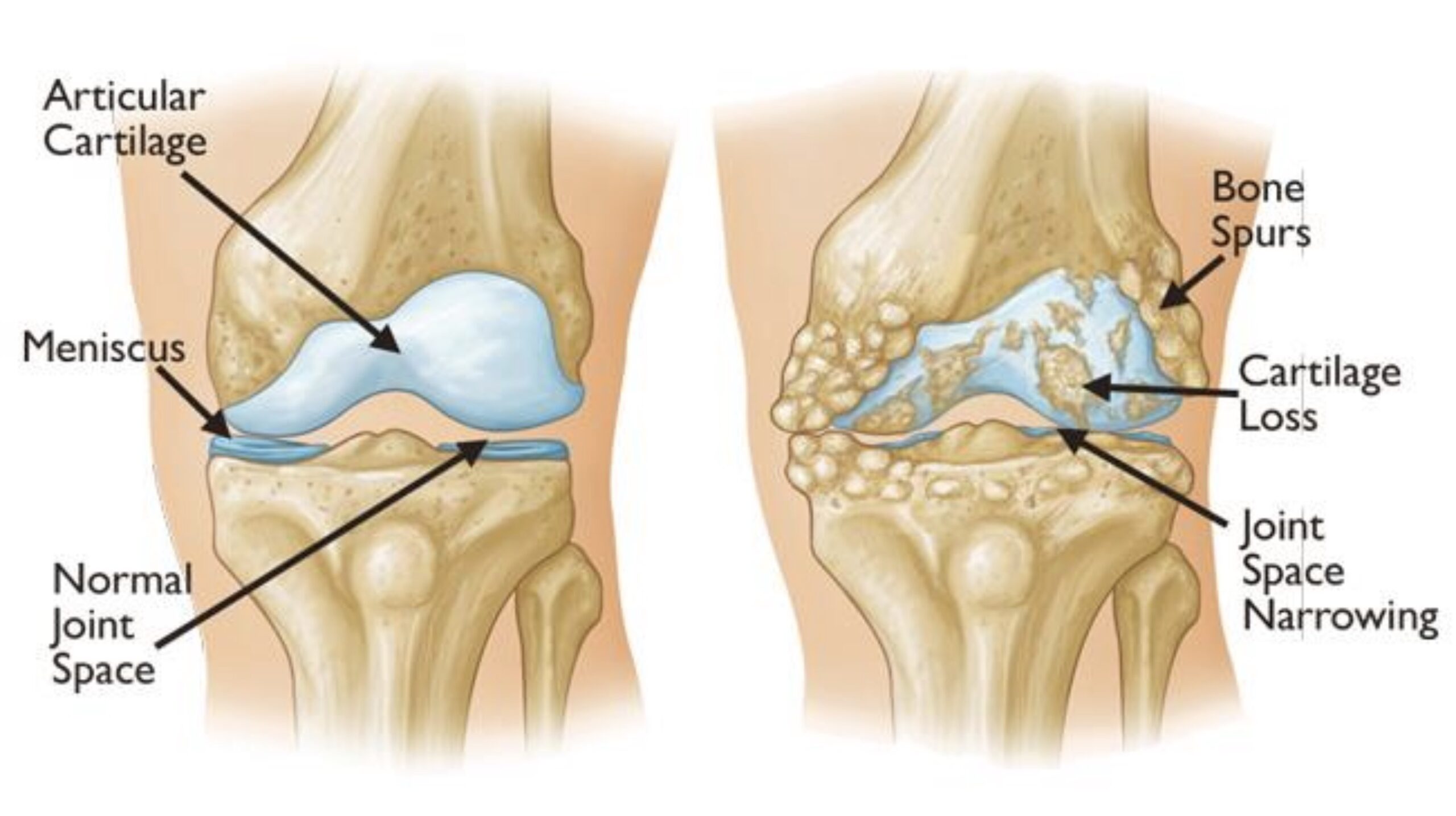
・A dorsal osteophyte, joint space narrowing, and subchondral bone sclerosis develop in stages, and pain classically appears on push-off dorsiflexion.
・Unlike a gout attack — with redness, warmth, and severe self-onset pain — the pain here is a chronic, slowly progressive one that unfolds over years.
・Stem cell conditioned media joint injection is positioned as one conservative option that targets the intra-articular inflammatory cycle, including synovitis and subchondral bone edema, in the first MTP joint.
・Already formed dorsal osteophytes and narrowed joint space are outside the reach of injection therapy; sharing this line at the outset is the starting point of treatment design.
What Is Hallux Rigidus? — Osteoarthritis Specific to the First MTP Joint
Structural changes occurring in the first MTP joint
Hallux rigidus is osteoarthritis of the first metatarsophalangeal joint (between the first metatarsal head and the base of the proximal phalanx). Years of repeated dorsiflexion loading during gait accumulate, and cartilage wear begins on the dorsal aspect of the joint. Compensatorily, a dorsal osteophyte forms, the joint space narrows, and the subchondral bone develops sclerosis and subchondral cysts. If a lateral X-ray shows a prominent dorsal osteophyte and the AP view shows a narrowed joint space, the imaging picture is consistent with hallux rigidus. From the middle stage on, dorsiflexion is reduced to one-third to one-quarter of normal, and push-off during gait becomes painfully restricted.
Why it is called “rigid”
Unlike hallux valgus, in which the toe deviates laterally, in this condition the toe “stays straight and stops moving.” This loss of range of motion by itself changes daily life significantly. Squatting, climbing stairs, walking uphill — any scene requiring strong dorsiflexion — reproduces the pain. Unconsciously shifting to lateral foot loading during walking then leads to lateral plantar calluses and secondary strain on the knee and lower back.
Differentiating from Hallux Valgus and Gout Attacks — “Same Big Toe Pain,” Different Treatment Plan
Difference from hallux valgus
Hallux valgus is a lateral deviation in which the toe tilts toward the second toe and the medial side of the MTP joint (the bunion) protrudes and hurts against the shoe. Hallux rigidus, by contrast, has an “up-and-down” direction of deformation: pain arises because the dorsal osteophyte strikes the shoe upper or because the joint surfaces collide during dorsiflexion — a completely different mechanism. On examination, pain when the toe is pushed medial-to-lateral suggests hallux valgus; pain and limited motion when the toe is moved up-and-down (especially dorsiflexion) suggests hallux rigidus. The two can coexist, in which case the treatment order depends on which is the dominant symptom.
Difference from a gout attack
Gout attacks also frequently occur at the first MTP joint and are often confused with hallux rigidus at first onset. However, a gout attack follows an acute arthritis pattern: “sudden onset at night,” “redness, warmth, severe spontaneous pain,” “peaking within days and spontaneously subsiding over 1–2 weeks.” The chronic pain of hallux rigidus, by contrast, appears “when moved” and progresses “gradually over years” — the temporal axis and inflammatory profile distinguish them. When acute redness or warmth is suspected, priority should be given to gout diagnostic work-up, including serum uric acid measurement and joint aspiration for urate crystal analysis.
What Stem Cell Conditioned Media Joint Injection Can and Cannot Target — Stage by Stage in Hallux Rigidus
Injecting stem cell conditioned media into the first MTP joint is positioned as a conservative approach targeting synovitis-driven pain and the intra-articular inflammatory cycle accompanied by subchondral bone edema. The chronic pain of this condition arises from an entanglement of persistent synovitis and the reaction to microtrauma in the subchondral bone; the intra-articular inflammatory environment itself is one source of the pain. The various cytokines and growth factors contained in the conditioned media are suggested at the experimental level to provide anti-inflammatory effects and tissue-repair signals, and intra-articular delivery aims to modulate this inflammatory cycle. Clinically, improvement in pain scores and reduction of pain on dorsiflexion may be observed, though efficacy and duration vary individually.
What it cannot target — bony deformity cannot be reversed
On the other hand, the already formed dorsal osteophyte itself, the narrowed joint space, and the deformed articular surfaces — that is, bony structural changes — cannot be altered by stem cell conditioned media injection. At a stage where the primary cause of restricted range of motion is mechanical impingement of the osteophyte, suppressing inflammation with injection is unlikely to substantially change dorsiflexion range itself. In such cases, orthopedic surgical options such as cheilectomy, joint-preserving arthroplasty, or arthrodesis are considered. For guidance on joint disease management, please also refer to the Japanese Orthopaedic Association website.
The Order of Treatment — Where to Start and Where to Revise
For early-to-middle stage hallux rigidus, the foundation is bolstering conservative therapy: reviewing footwear (rocker sole, stiff-soled shoes that limit toe dorsiflexion), load distribution with insoles, oral NSAIDs during flare periods, and lifestyle adjustments such as avoiding deep squatting. Steroid joint injection offers strong short-term anti-inflammatory effect, but repeated use raises concerns about cartilage and soft-tissue impact, so the number of injections must be handled with caution. Stem cell conditioned media joint injection can be presented as one option within this conservative framework, one that acts on the intra-articular inflammatory environment. After initiation, pain scores and dorsiflexion range are objectively re-evaluated at 1–3 month intervals; if change is scarce, the treatment content is revised, and in progressive cases the design includes switching to orthopedic surgical evaluation. For thinking on conditioned media injections into other joints, please also see this page on stem cell conditioned media joint injections.
Frequently Asked Questions
Q. Up to what stage can hallux rigidus be managed with conservative therapy?
Generally, Grade I–II of the Hattrup-Johnson classification (mild-to-moderate joint space narrowing and osteophyte formation) is the main battleground of conservative therapy. In this period, it is worth trying to control pain and range of motion with orthotic devices, activity modification, medication, and options that include stem cell conditioned media joint injection. Once advanced to Grade III (joint space obliteration or large osteophytes), conservative therapy tends to be limited in effect, and parallel consideration of surgical evaluation becomes realistic.
Q. Will the joint injection make my osteophyte smaller?
No. Osteophytes are bone tissue and cannot be shrunk by stem cell conditioned media joint injection. What can be targeted is control of synovitis and soft-tissue inflammation around the osteophyte, which may reduce pain and swelling — but the osteophyte itself on X-ray does not change. At a stage where range of motion is dictated by the mechanical impingement of the osteophyte, sharing this point at the outset is essential.
Q. How do you tell whether it is a gout attack before injecting?
A gout attack typically develops as acute redness, warmth, and severe self-onset pain completing over days, and is diagnosed by serum uric acid measurement and urate crystal analysis of joint fluid. Hallux rigidus centers on chronic pain on dorsiflexion, with acute redness or warmth typically scarce. Because the two can coexist, when acute attack signs are suspected, stem cell conditioned media joint injection should be postponed; treating the acute gout attack and controlling the underlying disease first is the safer sequence.
Q. Is injection into the first MTP joint very painful?
The first MTP joint is a small joint, but the puncture burden is reduced by using local anesthesia and a fine needle, palpating the joint space, and using ultrasound guidance when needed. On the day of injection, avoid prolonged walking and activities that heavily load the big toe; from the next day, daily activities are typically resumed gradually depending on pain level.
Q. Is there anything I can do in daily life to prevent recurrence?
Reducing repeated excessive dorsiflexion loading on the first MTP joint helps prevent inflammation from flaring again: choose footwear that limits dorsiflexion (rocker soles, stiff soles), manage body weight, avoid prolonged squatting, and pause running during painful flare periods. To sustain the improvement gained from conservative therapy and joint injection, this habitual joint protection in daily life is indispensable.
──────────────
Supervising Physician: Shin Moriwaki, MD
Member of the Japan Society of Aesthetic Surgery (JSAS) / Member of the American Academy of Aesthetic Medicine
ECFMG Certificate (U.S. Medical License Qualification)
──────────────
📍AVAN TOKYO 銀座 再生医療
AVAN TOKYO Ginza Regenerative Medicine
English / 中文 / Tiếng Việt supported
Inquiries via DM / LINE / Website / Phone.