


“Injecting Stem Cells Into the Scalp Grows Hair”—Is It True? Dr. Moriwaki Explains the Medical Difference Between Stem Cell Transplantation and Stem Cell Conditioned Media (Secretome) Therapy2026.07.13
“Injecting stem cells into the scalp will grow hair”—recently, catchphrases like this have become increasingly common. However, most scalp regenerative medicine actually offered at clinics is not a therapy that injects stem cells themselves, but a therapy that delivers what is called stem cell conditioned media—the “secretome.” The two share similar names, but they differ in regulatory category, in what happens inside the body, and in the range of realistic expectations. This article organizes these differences from the perspective of Dr. Moriwaki at AVAN TOKYO Ginza, unpacking the points patients most easily confuse when choosing a treatment.
Key Points of This Article
・Stem cell conditioned media is not “stem cells themselves,” but a liquid collecting the secretions cells release into the culture medium.
・Injecting the cells themselves into the scalp is subject to notification under Japan’s Act on the Safety of Regenerative Medicine, and is not something that starts casually in a general outpatient setting.
・Hair therapy with the media works by acting on the follicular microenvironment through growth factors, cytokines, and exosomes.
・The phrase “stem cell injection grows hair” is often an advertising expression that conflates cell therapy with conditioned media therapy.
・When choosing treatment, it is essential to confirm with the physician whether the product contains cells or secretions, and what the realistic range and limits are.
What Fundamentally Differs Between “Injecting Stem Cells” and “Injecting Stem Cell Conditioned Media”
Many people treat “stem cell therapy” and “conditioned media therapy” as the same thing, but the two differ greatly in design philosophy and regulatory positioning. To untangle the confusion, we need to start with what is actually being injected.
What is Therapy That Transplants Cells Themselves
Strictly speaking, “stem cell therapy” refers to a treatment in which stem cells collected from the patient or a donor are expanded in vitro and returned to the body as living cells. Applied to the scalp, injecting adipose-derived stem cells into the dermis is theoretically possible, but in Japan the Act on the Safety of Regenerative Medicine classifies acts of processing cells ex vivo and administering them under Class I–III categories, requiring notification and review of the implementation plan. In other words, this is not something that can casually begin in a general hair-loss outpatient clinic saying, “Let’s start stem cell injections today.”
Conditioned Media is Therapy That Delivers “Secretions”
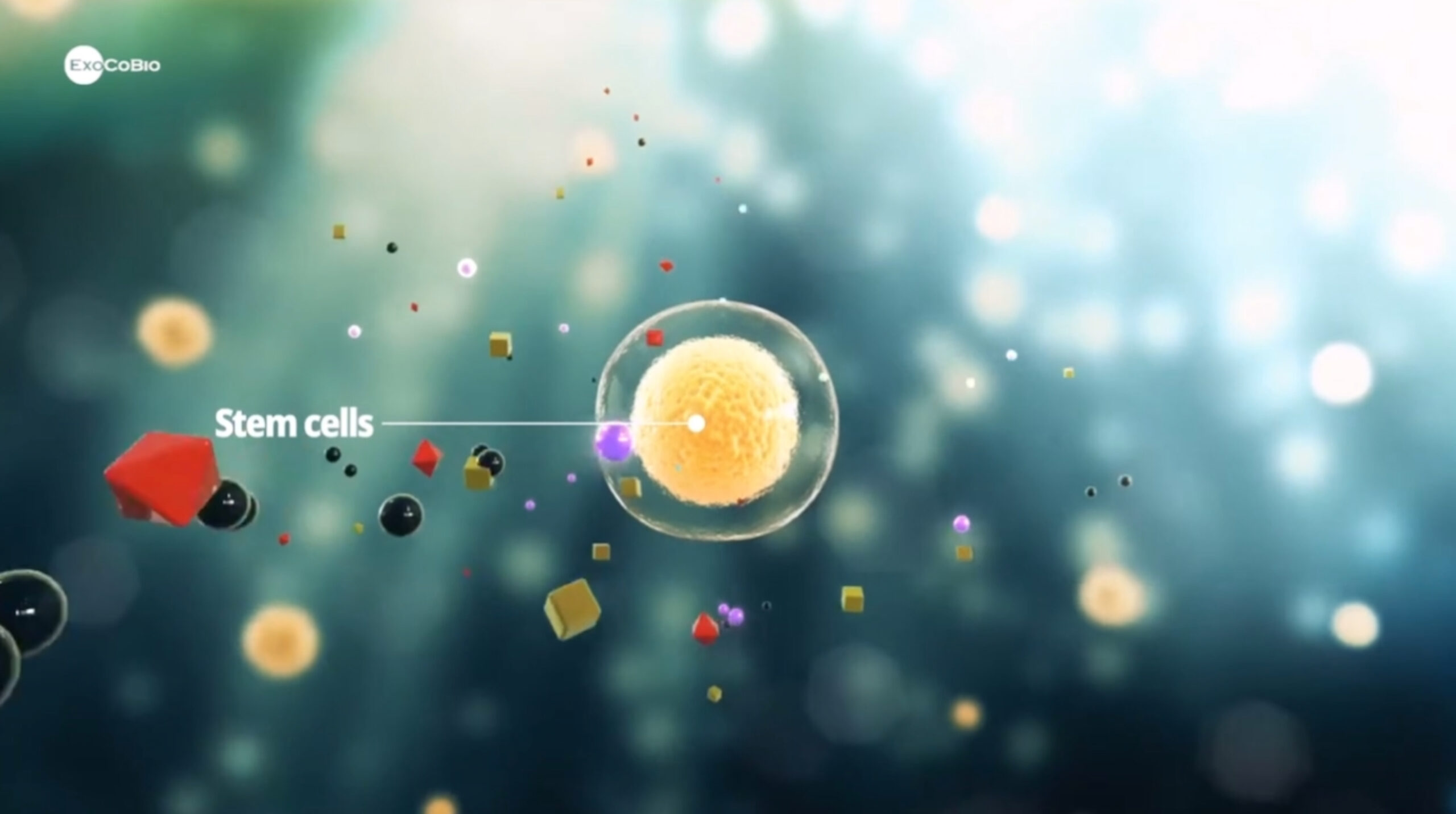
By contrast, stem cell conditioned media refers to a liquid obtained by culturing stem cells, then removing the cell components, and collecting only the secretions—growth factors, cytokines, exosomes and so on—released into the medium. It does not contain the cells themselves. What is injected into the scalp is “the acting components released from the cells,” not transplanted cells. This is the biggest difference from cell therapy.
Why the Misconception “Injecting Stem Cells Into the Scalp Grows Hair” Spread
Overlap of Advertising Expressions and Terminology
Online, terms like “stem cell injection,” “stem cell IV,” “conditioned media,” and “exosome therapy” are often used without clear distinction. In particular, the phrase “stem cell injection” is hard for readers to tell whether it refers to narrow cell therapy or to media made from stem cells. As a result, the image that “stem cells will reach follicles directly and grow hair when injected into the scalp” tends to take on a life of its own. The premise to keep in mind is that most regenerative medicine actually injected into the scalp is not cells but conditioned media.
How Stem Cell Conditioned Media Acts on Hair Follicles
The media contains growth factors that can influence the follicular microenvironment, such as VEGF, IGF-1, HGF, and FGF. Basic research suggests these act on the endothelial cells of scalp microvessels, on dermal papilla cells, and on matrix cells, and may participate in maintaining the anagen phase and controlling perifollicular inflammation. However, injecting the media does not cause cells in it to engraft and multiply. It is fundamentally a therapy of “delivering signaling molecules,” and its effect stays within the range of the follicles’ inherent regenerative capacity. Where follicles have already been completely lost, as in scarring alopecia, injecting the media will not create new follicles, and this must be acknowledged honestly.
What You Can Realistically Expect, and What You Should Not Overexpect
With stem cell conditioned media hair therapy, what can realistically be expected is improvement of hair quality and diameter through extension of the anagen phase, suppression of shedding through calming scalp inflammation, and general support of overall AGA treatment while protecting existing follicles. On the other hand, claims like “one injection dramatically grows hair,” “stem cells engraft and multiply in the scalp,” or “new hair grows even where follicles are lost” cannot be explained by the mechanism of conditioned media therapy. Effects vary individually, and for those with progressing AGA, an integrated design combining oral and topical treatments is the premise. For more, see our related column list on hair regenerative medicine.
Points to Confirm With Your Doctor When Choosing Treatment
Whether a treatment presented as “stem cell therapy” is actually injection of cells themselves or injection of conditioned media is something patients can verify for themselves. Feel free to ask your physician about the product’s origin (umbilical cord, adipose, dental pulp, etc.), whether it contains cells or secretions, whether it is notified under the Act on the Safety of Regenerative Medicine, and the realistic range and limits of the expected action. For AGA treatment guidelines, the Japanese Dermatological Association guidelines are also a useful reference. Correctly understanding these terminological differences forms the foundation for choosing treatment without falling into either overexpectation or excessive distrust.
Frequently Asked Questions
Q. Are stem cells included in stem cell conditioned media?
No, they are not. The media is made by removing cell components from the culture medium in which stem cells were grown, and collecting only the liquid components—growth factors, cytokines, exosomes—that cells secreted. Understand that what is injected into the scalp is not “stem cells themselves,” but the signaling molecules the cells use to act on tissues.
Q. Should I trust advertisements saying “stem cell injection reliably grows hair”?
The word “reliably” is medically hard to justify, and effects vary individually even for hair therapy with the media. In reality, results change significantly with AGA stage, remaining follicle density, lifestyle, and combined treatments. Definitive advertising expressions should be read carefully, also from the standpoint of the medical advertising guidelines.
Q. Is conditioned media therapy legal in Japan?
Because administration of media without cells is handled differently from cell therapy, it is safer to confirm the properties of the product and its notification status at each facility. We recommend choosing clinics that disclose the Certificate of Analysis and manufacturer information of the product used.
Q. Can hair grow where follicles are completely gone with conditioned media?
Where follicles have been completely lost (scarring alopecia, old burn scars, etc.), conditioned media injection alone cannot be expected to regrow hair. It is a therapy that acts on existing follicles, so intervention while follicles remain is the realistic indication.
Q. Is conditioned media the same as exosome therapy?
Not completely the same. Exosomes are one type of small particle contained in the media, carrying growth factors and miRNA. Much of what is called “exosome therapy” focuses on that particle component, and its refinement may differ from therapies that use the whole media.
──────────────
Medical Supervisor: Dr. Shin Moriwaki (Supervising Physician)
Member, Japan Society of Aesthetic Surgery (JSAS) / Member, American Academy of Aesthetic Medicine
ECFMG Certificate (US Medical Licensure Qualification)
──────────────
📍AVAN TOKYO Ginza Hair Regenerative Medicine
English / 中文 / Tiếng Việt available
Inquiries via DM / LINE / Website / Phone.