


“Knee Pain” Is Not a Single Diagnosis — Dr. Moriwaki Organizes the Order of Diagnosing Knee Osteoarthritis, Meniscus, Tendon, and Bursa Before Considering a Knee Injection with Stem Cell Conditioned Media2026.07.15
The complaint “my knee hurts” often contains several distinct conditions mixed together. Even the same pain on the inner side of the knee can mean an early change of knee osteoarthritis, a meniscus tear, inflammation at the pes anserinus tendon insertion, or prepatellar bursitis — and each carries a different meaning and treatment order. Before considering a knee joint injection as an option, first sorting out “where the pain is coming from” is the very first step to make conservative care, including stem cell conditioned media, work. This article organizes the path from differential diagnosis of knee pain to the decision of a knee joint injection, from the perspective of the supervising physician.
Key Points of This Article
・The cause of “knee pain” is not only knee osteoarthritis; the meniscus, tendon insertions, and bursae are also involved.
・Before considering a knee joint injection, the diagnostic order — sorting the source of pain by history, palpation, and imaging — determines the outcome.
・Stem cell conditioned media reaches mainly the intra-articular inflammatory environment; pain outside the joint cavity requires a different approach.
・Repeating injections with an unclear diagnosis often fails to produce the expected effect.
・Effects vary between individuals; a knee joint injection is not an “all-purpose treatment” and should be designed in combination with other conservative options.
The Same “Knee Pain” Has More Than One Cause
The knee is a joint where three bones — the femur, tibia, and patella — combine with cartilage, meniscus, ligaments, tendons, bursae, and fat pads in a complex arrangement. Many patients describe their symptom simply as “my knee hurts,” but the picture differs completely depending on which of these structures is inflamed or degenerated. In clinical practice, the first step is a careful history of the location of pain, its timing, and the movements that worsen it.
Pain Arising Inside the Joint
Pain from within the joint cavity includes inflammation of the cartilage and synovium as knee osteoarthritis progresses, mechanical irritation after a meniscus tear, and joint effusion from synovitis. It tends to worsen with weight-bearing or stairs, often with swelling, warmth, and effusion (commonly described as “water on the knee”). If the inflammation is inside the joint, an injection delivering medication into the joint cavity may be meaningful.
Pain Arising Outside the Joint
On the other hand, pain arising “outside the joint” is also common — runner’s knee from friction of the iliotibial band on the lateral side, inflammation at the pes anserinus tendon insertion on the medial side, or prepatellar and infrapatellar bursitis. These sit in positions that intra-articular medication cannot reach, and they typically have a single tender point that is clearly reproducible. Even with the same technique of a knee joint injection, the target layer is different, and skipping the differential often makes the expected effect harder to obtain.
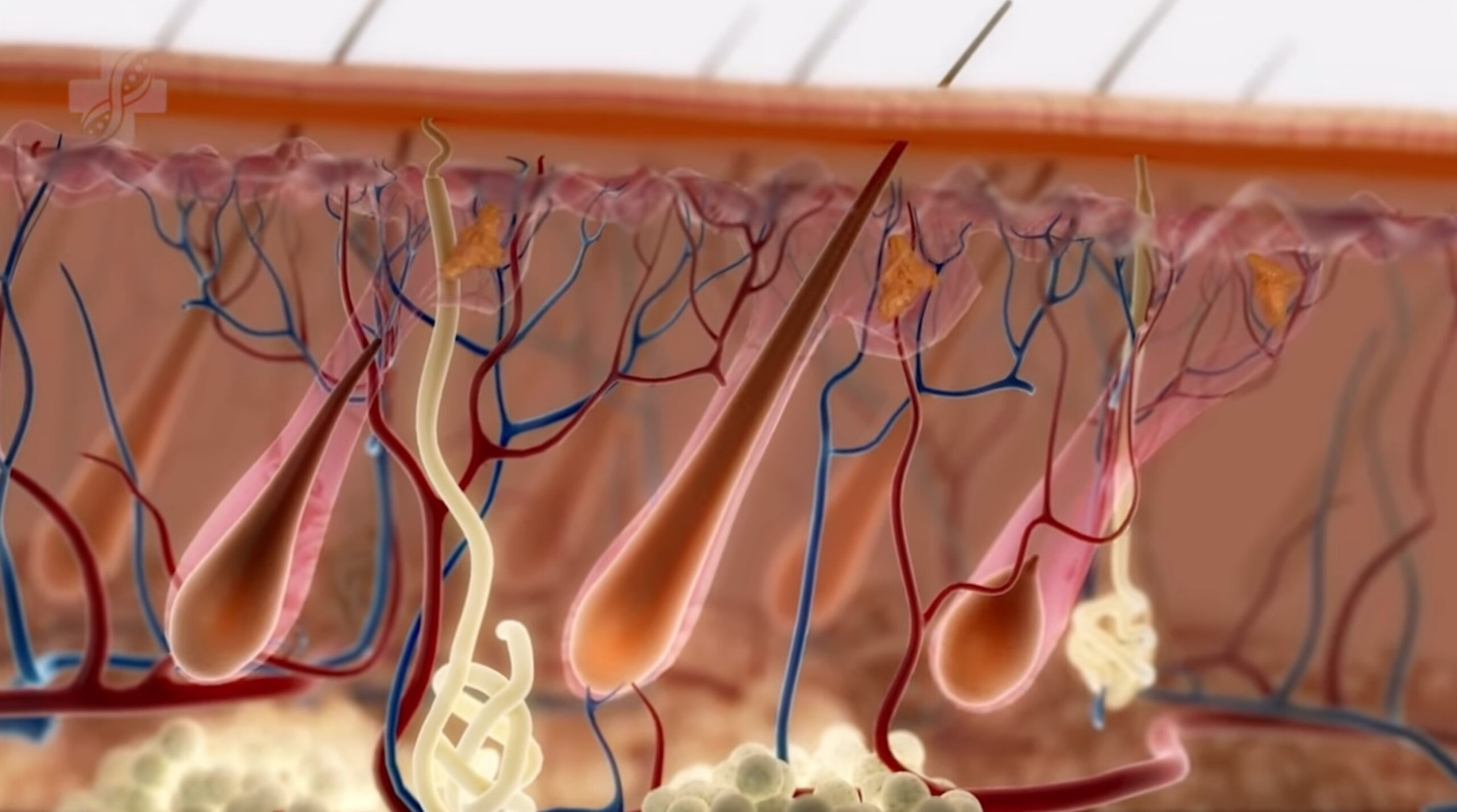
Differentiating Knee Osteoarthritis, Meniscus, Tendon, and Bursa
In actual practice, the source of pain is checked in the following order.
When to Suspect Knee Osteoarthritis
Gradually progressive medial-sided pain in middle-aged or older adults, morning stiffness, difficulty starting to move, and pain that worsens with kneeling or going down stairs are typical complaints raising suspicion of knee osteoarthritis. The KL grade is evaluated on X-ray, and MRI is used as needed to assess cartilage, meniscus, and bone marrow edema. This is a representative condition where hyaluronic acid, corticosteroid, and stem cell conditioned media as a knee joint injection are considered.
When to Suspect Meniscus Injury
Pain after a sudden twisting motion, a sensation of catching in the joint, or locking symptoms — unable to fully extend or flex — raise suspicion of meniscus injury. The tear morphology and location are confirmed on MRI, and the balance of conservative care and surgery is considered from symptoms, age, and activity level. Because an injection cannot resolve the mechanical catching itself, injections may be an adjunct, but it is hard to view them as a treatment that stands alone.
When to Suspect Tendon Insertion or Bursa Pain
Pain that is not “inside the knee” but reproduced by pressing on one point “around the knee,” pain only on the outer or inner side while running, or pain when the front of the knee touches the floor when kneeling — such complaints raise suspicion of pes anserinus tenditis, iliotibial band syndrome, or prepatellar bursitis. These are outside the joint cavity, and an intra-articular knee joint injection of stem cell conditioned media does not directly reach them. Exercise therapy, form correction, and orthoses form the base of care. For general information on joint diseases, the site of the Japanese Orthopaedic Association is also a useful reference.
When to Consider a Knee Joint Injection of Stem Cell Conditioned Media
Only after the diagnosis is sorted out does the appropriateness of a knee joint injection of stem cell conditioned media come into view. This treatment is a conservative approach aiming to deliver anti-inflammatory cytokines and growth factors to the intra-articular inflammatory environment, and to modulate the cycle of pain and inflammation. It is positioned as one option to consider in early- to mid-stage knee osteoarthritis when the effect of hyaluronic acid has plateaued, or when the patient wants to avoid repeated corticosteroid injections out of concern for their effect on cartilage.
However, careful judgment is required when the knee has end-stage joint destruction, active infectious or inflammatory arthritis, or uncontrolled systemic disease. Furthermore, for “pain outside the joint cavity” such as tendon-insertion or bursal inflammation, even the same technique of a knee joint injection has a different target layer and evaluation axis. Effects vary between individuals, and it is important to share carefully at the first visit the premise that this is not an all-purpose treatment able to resolve every knee pain. Please also see details on joint injections of stem cell conditioned media here.
Following the Diagnostic Order Determines the Outcome
Jumping straight from “my knee hurts” to “an injection” can leave the expected effect out of reach because the source of pain was different. First, take a careful history of the course, site, and aggravating movements; then confirm the tender point on palpation; then assess the structural state on X-ray or MRI — after following this order, the decision is made whether to choose a knee joint injection, to prioritize exercise therapy, or to refer to a surgical service. Stem cell conditioned media becomes a meaningful option only on top of this diagnostic process, and adhering to the order raises the reproducibility of results.
Frequently Asked Questions
Q. If my knee hurts, should I try a knee joint injection first?
No — diagnosing the cause of pain comes first. Whether the pain is inside or around the joint, and whether it is knee osteoarthritis, meniscus, or tendon insertion, changes whether an injection has meaning. We recommend first receiving an orthopedic assessment, and then considering treatment options based on that.
Q. Does a joint injection of stem cell conditioned media regenerate cartilage?
We are not at a stage where we can assert that “cartilage itself is regenerated.” What this treatment mainly acts on is the intra-articular inflammatory environment, positioned as conservative care aiming to affect the cycle of pain and inflammation. It needs to be considered with an understanding of the indications and limits.
Q. Can it be offered for a knee where hyaluronic acid has plateaued?
Depending on the diagnosis and condition, it can be a consideration. However, end-stage KL grade 4 or active infection is outside the indication. Please have the structure checked with X-ray or MRI, and discuss combinations with other conservative options.
Q. Around how many sessions before judging the effect?
Generally, we follow pain scores, daily activities, and range of motion over several weeks to several months, and after multiple sessions decide whether to continue, change, or stop. It is not a treatment completed in a single session, and effects vary between individuals.
Q. How should it be positioned relative to surgery?
Surgery such as total knee arthroplasty is an option considered for end-stage knees, while stem cell conditioned media is a conservative treatment that plays a role at the stage before that. The two are not competitors — it may help to view them as treatments with different roles at different levels of progression.
──────────────
Supervising Physician: Shin Moriwaki, MD
Member of the Japan Society of Aesthetic Surgery (JSAS) / Member of the American Academy of Aesthetic Medicine
ECFMG Certificate (US Medical License Qualification)
──────────────
📍AVAN TOKYO Ginza Regenerative Medicine
AVAN TOKYO Ginza Regenerative Medicine
English / 中文 / Tiếng Việt supported
Inquiries welcome via DM / LINE / Website / Phone.