


At Which Norwood Stage Should You Add Regenerative Medicine? Designing Treatment with Stem Cell Conditioned Media Across Norwood II–VI2026.07.02
“I want to start AGA treatment, but I don’t know which stage I’m actually at.” “Is oral medication alone enough, or should I also add regenerative medicine?” — many men who come in for a consultation about male pattern baldness get stuck at this very entrance to treatment.
The longest-standing tool used clinically to grasp the stage of progression is the Hamilton–Norwood classification, a seven-stage scale. This Norwood classification reads progression from the combination of frontal hairline recession and vertex thinning, and it functions as a shared language for discussing how to combine oral, topical, and hair-regenerative treatments — including stem cell conditioned media.
In this column, we outline how AVAN TOKYO Ginza positions stem cell conditioned media at each Norwood stage.
What does the Norwood classification actually measure?
The Norwood classification, presented by O’Tar Norwood in 1975, is a scale for male pattern baldness that combines patterns of frontal hairline recession and vertex thinning into stages I through VII. In daily clinical practice we use shorthand such as II, III, III vertex, IV, V, VI, and VII to speak a common language about progression.
The higher the number, the less follicular reserve remains
What the Norwood classification captures is not simply how visible thinning has spread. As the stage climbs, follicular miniaturization (hair becoming thinner and shorter) advances under the scalp, and the proportion of follicles entering telogen also rises.
In other words, II–III is the stage where “enough follicles remain that extending the anagen phase can still recover density,” while V–VI is the stage where “the follicles themselves are being lost, and protecting what remains becomes the main battlefield.” Framing it this way makes it much easier to set treatment priorities.
The frontal-first and vertex-first patterns respond differently
The Norwood classification evaluates the hairline and the vertex on separate axes, and the two respond to treatment quite differently. The frontal region is strongly influenced by type II 5α-reductase and does not move easily with oral therapy alone. The vertex, by contrast, tends to respond more readily, and adding stem cell conditioned media on top of oral and topical therapy is a combination in which patients often notice change more clearly. Even within the same Norwood III, treatment design will diverge depending on whether it is frontal-led or vertex-led — this perspective matters.
How to fold stem cell conditioned media into each stage
Using the Norwood classification as the axis, we at AVAN TOKYO Ginza think about staged protocols along the following lines. Please read this not as a categorical “at this stage things always go this way,” but as a starting point for designing treatment.
Norwood II–III: focus on “stopping the progression” first
At II–III, when the hairline has only just started to recede a little, the first priority is to stop progression with oral finasteride or dutasteride. At this stage, follicular reserve is still intact, and simply refining the scalp environment can bring some density back for many patients.
Stem cell conditioned media is not something “you must add right now.” Rather, we introduce it while watching the response to oral therapy, as an adjunct that lifts the scalp environment and supports emergence from initial shedding. For patients in their 20s or 30s with a rapidly progressing phenotype, adding stem cell conditioned media earlier begins to make more clinical sense.
Norwood IV–V: the mid-game where oral therapy alone is not enough
Stages IV–V, where vertex thinning becomes clear and starts to merge with frontal recession, are when adding stem cell conditioned media to the twin pillars of oral and topical treatment brings the most obvious meaning. Follicles at this phase are “still alive but heavily miniaturized,” and the many factors contained in stem cell conditioned media — growth factors, cytokines, exosomes — are thought to be able to support the anagen phase of the hair cycle.
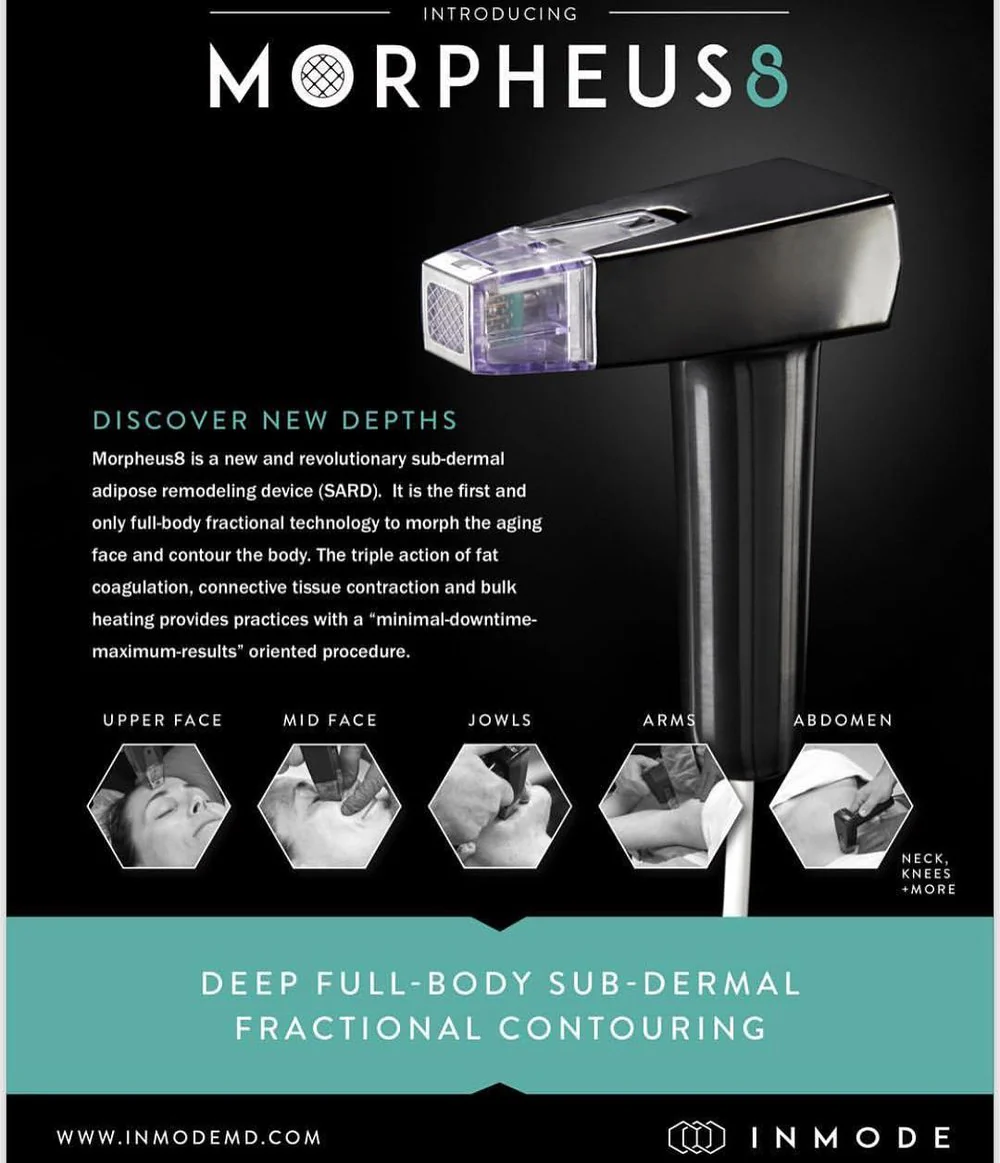
This is also the stage where we seriously discuss delivery routes such as drug delivery combined with RF microneedling like Morpheus8, or direct scalp injection.
Norwood VI and beyond: shifting toward “protective” treatment
From VI onward, when frontal and vertex thinning have merged widely and only the temporal and occipital regions remain, “regrowing” follicles that have already been lost is difficult even with stem cell conditioned media.
At this stage, the focus shifts to protecting the follicles that still remain and holding further miniaturization at bay. If hair transplantation is considered, one must separate the survival of the transplanted hairs from the maintenance of the “native” hairs, and stem cell conditioned media takes its place as a tool for maintaining the post-transplant scalp environment. Excessive expectations must be avoided, and the limits explained honestly.
Using the Norwood classification to build the “order” of treatment
The true value of the Norwood classification lies not merely in measuring the extent of hair loss, but in guiding the order in which treatment is stacked. Even within the same stage number, the choice of tools will differ according to family history, speed of progression, age, and hair quality.
Judge effectiveness objectively — with photos and hair diameter
Regardless of stage, effectiveness must not be judged subjectively but through standardized fixed-point photographs and, where possible, trichoscopy-based measurements of hair diameter and density. Every 3–6 months we check whether the Norwood stage has moved and whether the ratio of thin, weak hairs is decreasing; if change is scarce, we revisit the protocol.
Guidelines for AGA and alopecia care from the Japanese Dermatological Association are also a useful reference.
Read alongside our other hair regeneration columns
The Norwood classification is only a “map” of progression; it does not decide the mix of treatments themselves. For the specifics of oral, topical, stem cell conditioned media, and Morpheus8 approaches, please also see our related columns on hair regenerative medicine, so that you can consider the combination of treatments that fit your own stage in a three-dimensional way.
Summary
The Norwood classification is a starting point for measuring the progression of male pattern baldness in a shared language and building the order of treatment. Understanding the staged emphasis — “stop progression” at II–III, “push back with oral therapy plus stem cell conditioned media” at IV–V, and “protect what remains” from VI onward — makes it much clearer how oral, topical, and hair regenerative treatments should be layered.
Stem cell conditioned media is not a panacea; its role shifts according to the Norwood stage and the follicular reserve. Precisely for that reason, the first step is to sit down with a specialist and sort out what stage you are at now, what you want to protect, and what you want to try to recover.
──────────────
Supervising Physician: Shin Moriwaki, M.D.
Member of the Japan Society of Aesthetic Surgery (JSAS)
Member of the American Academy of Aesthetic Medicine
ECFMG Certificate
──────────────
📍AVAN TOKYO Ginza Hair Regenerative Medicine
English / 中文 / Tiếng Việt available.
Inquiries welcome via DM / LINE / Website / Phone.