


Why Runner’s Knee (Iliotibial Band Syndrome) and Jumper’s Knee Are Not Pains to Be Treated with Intra-Articular Injections — Extra-Articular Tendon and Enthesis Disorders and the Indication Boundary of Stem Cell Conditioned Media2026.07.06
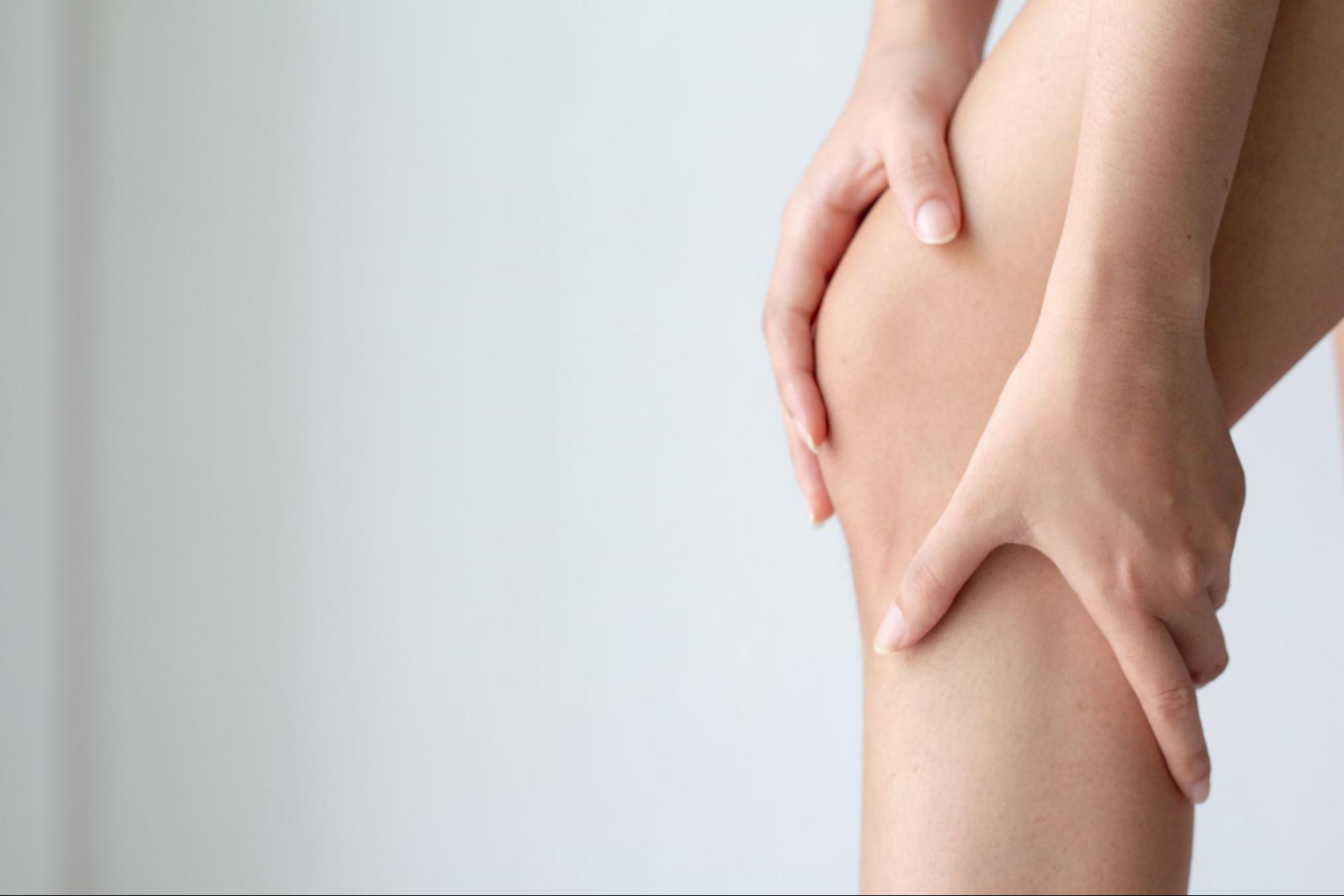
Outer knee pain while running, or a sharp pain just below the kneecap when jumping or landing — these are hallmark complaints of sports enthusiasts, best known as runner’s knee (iliotibial band syndrome) and jumper’s knee (patellar tendinopathy). Because “knee pain” evokes images of something happening to the cartilage or synovium inside the joint, many patients place these conditions on the same continuum as knee osteoarthritis. However, both iliotibial band syndrome and jumper’s knee are not diseases occurring inside the knee joint cavity. They are disorders of the tendons and their bony attachments (entheses) that sit outside the joint. Without recognizing this distinction, injecting a solution into the joint will not reach the actual source of pain. In this column, Dr. Moriwaki explains why intra-articular stem cell conditioned media should not be a first-line choice for these two conditions, and how a separate strategy — extra-articular local delivery to the tendon or enthesis — should be considered.
Key Points of This Article
・Runner’s knee (iliotibial band syndrome) is an extra-articular disorder caused by friction and overload between the iliotibial band and the lateral femoral epicondyle — it is not a disease of the knee joint cavity
・Jumper’s knee (patellar tendinopathy) is also a tendon degeneration, at a different pathologic layer than synovitis or joint fluid inflammation
・Injecting stem cell conditioned media into the knee joint therefore does not directly reach the pain source of iliotibial band syndrome or jumper’s knee
・The foundation of treatment is rest, load management, and exercise therapy (stretching plus strengthening of hip abductors), often combined with extracorporeal shockwave therapy
・Extra-articular local delivery to the tendon or enthesis may be an option, but only after correctly ruling out knee osteoarthritis, pes anserine bursitis, and other differentials
Runner’s Knee (Iliotibial Band Syndrome) Is Not a Disease “Inside the Knee Joint”
Runner’s knee is a lay term for what medically is called iliotibial band syndrome. The iliotibial band is a thick fibrous strap running from the iliac crest of the pelvis down the outer thigh to insert at the lateral tibia (Gerdy’s tubercle). In long-distance runners and cyclists, repeated knee flexion and extension causes this band to slide back and forth over the lateral femoral epicondyle, generating friction and compression. When the load is excessive, inflammation and edema arise in the connective and adipose tissue lying between the band and the bone just above the epicondyle, producing sharp lateral knee pain during running or downhill descent.
The painful site is outside the joint cavity
The crucial point is that iliotibial band pain originates outside the joint capsule, at the lateral aspect of the knee. Structures inside the knee joint — meniscus, cartilage, synovium, joint fluid — are not the leading actors in iliotibial band syndrome. Injecting solution into the intra-articular space therefore has little physical means of reaching the friction interface between the iliotibial band and the lateral epicondyle, where the pain actually lives.
Exercise therapy and load management are the leads in early treatment
First-line care for iliotibial band syndrome consists of adjusting mileage and pace, avoiding downhill running, stretching the iliotibial band and tensor fasciae latae, and strengthening hip abductors (such as the gluteus medius). Reducing a Trendelenburg-like pelvic drop on the opposite side at foot strike unloads the traction on the iliotibial band. Only on top of this foundation should local anti-inflammatory management, extracorporeal shockwave therapy, or the orthopedic evaluation aligned with the guidance of the Japanese Orthopaedic Association be integrated into a treatment plan.
Jumper’s Knee (Patellar Tendinopathy) Is Not “Inflammation” but “Tendon Degeneration”
Jumper’s knee arises when sports that repeat jumping and landing — basketball, volleyball, soccer — concentrate stress on the patellar tendon attachment. It was once called patellar tendinitis, but recent pathology has shown that chronic patellar tendons display not classic inflammatory cell infiltration but tendinosis: disorganized collagen fibers, mucoid degeneration, and neovascularization. Just as with tennis elbow (lateral epicondylitis), understanding has shifted from -itis (inflammation) to -osis (degeneration).
What happens at the patellar tendon attachment
Tenderness in jumper’s knee typically concentrates at the origin of the patellar tendon just below the inferior pole of the patella. This enthesis — the transitional tissue linking tendon and bone — has a sparse blood supply, and once degeneration progresses, natural recovery takes time. Again, the trouble sits outside the knee joint cavity, in the tendon itself.
Intra-articular injection targets a different layer
Intra-articular injection into the knee joint can carry meaning when synovitis, effusion, or cartilage wear compromises the intra-articular environment, as in knee osteoarthritis. In a condition whose core lesion is tendon degeneration, however, injecting into the joint cavity does not deliver effect to the tendon enthesis. Positioning intra-articular stem cell conditioned media as first-line for jumper’s knee therefore represents a mismatch of pathologic layer.
Differentiating from Knee Osteoarthritis and Pes Anserine Bursitis
“Knee pain” is not a single diagnosis. Iliotibial band syndrome tenders at the outer upper knee, jumper’s knee just below the patella, pes anserine bursitis on the medial slightly lower knee, and knee osteoarthritis diffusely along the joint line. Age, sports history, weight, alignment (bowlegs or knock knees), and how the pain behaves during standing up or stair climbing all inform differentiation. Imaging — X-ray, MRI, ultrasound — helps separate intra-articular changes (cartilage, meniscus, joint fluid) from extra-articular tendon, enthesis, or bursal problems. Skipping this order and moving to “knee pain, therefore intra-articular stem cell conditioned media” collapses the diagnostic step of identifying whether the pain lives inside or outside the joint.
The Concept of Extra-Articular Local Delivery to Tendon and Enthesis
Does this mean stem cell conditioned media has no role in iliotibial band syndrome or jumper’s knee? The answer is not that simple. In recent years, for hard-to-heal enthesopathies with poor blood supply — tennis elbow, Achilles tendinopathy, patellar tendinopathy — approaches that deliver cytokines and growth factors derived from conditioned media locally to the tendon or the peri-enthesis have been under investigation. Intra-articular injection and extra-articular tendon-enthesis injection may both be called “a knee injection,” yet they target different anatomic layers with different aims.
A choice placed on top of foundational treatment
Crucially, extra-articular local delivery is no substitute for conservative therapy — rest, load management, stretching, and strengthening. For runner’s knee, hip abductor training; for jumper’s knee, eccentric quadriceps exercise, remain the foundation. Local delivery is then combined as needed on top of that base. Outcomes must be judged not by pain alone but by range of motion, time to return to sport, and recurrence frequency — that is, functional measures.
Honest limits of stem cell conditioned media
Stem cell conditioned media is a biological product containing cell-secreted growth factors, cytokines, and exosomes, and it is expected to help modulate the inflammatory environment and support tissue repair. But when tendon degeneration is already advanced, with partial rupture or extensive structural breakdown, its role is limited, and surgical management may take priority. Individual variability is significant, and conditioned media is not a treatment that guarantees a tendon will be “restored to original condition.” Its meaning as an intra-articular or extra-articular option emerges only within an overall design that distinguishes intra- from extra-articular targeting and combines it with conservative therapy. For more, please also refer to the explanatory page on stem cell conditioned media joint injections.
Frequently Asked Questions
Q. I’ve been diagnosed with runner’s knee. Will a stem cell conditioned media knee joint injection let me run again sooner?
Runner’s knee — iliotibial band syndrome — is an extra-articular problem at the friction interface between the lateral femoral epicondyle and the iliotibial band, not inside the knee joint cavity. An injection into the joint cavity does not reach the pain source, so intra-articular injection cannot be placed as first-line for runner’s knee. Adjusting mileage, stretching, and strengthening the hip abductors form the foundation.
Q. Does an injection into the knee joint help jumper’s knee?
Jumper’s knee is a tendon degeneration at the patellar tendon insertion — a different pathologic layer from synovium or cartilage inside the joint. Intra-articular injection therefore is not first-line for jumper’s knee itself. Localized approaches to the extra-articular tendon or enthesis may be considered, but only on the foundation of functional training such as eccentric quadriceps exercise.
Q. Can I tell knee osteoarthritis apart from runner’s knee or jumper’s knee on my own?
General tendencies are readable from pain location and movement patterns, but multiple conditions can coexist, and self-diagnosis is not advised. It is safer to determine, with X-ray, MRI, or ultrasound, whether the pain arises from intra-articular change or an extra-articular tendon-enthesis problem before deciding on treatment.
Q. Can stem cell conditioned media “restore” tendon degeneration?
Stem cell conditioned media contains growth factors, cytokines, and exosomes expected to help modulate the inflammatory environment and support tissue repair, but it is not a treatment that always restores advanced tendon degeneration. Effects vary by individual, and where partial rupture or extensive structural breakdown exists, surgical management is prioritized.
Q. If I need to return to sport quickly, can an intra-articular injection at least take the pain away sooner?
Pain relief and tissue healing are separate matters. Silencing pain and returning to play can allow tendon or enthesis degeneration to progress, raising the risk of recurrence and partial rupture. Return timing must consider not only pain but range of motion, strength, and movement pattern recovery.
──────────────
Supervising Physician: Shin Moriwaki, MD
Member, Japan Society of Aesthetic Surgery (JSAS) / Member, American Academy of Aesthetic Medicine
ECFMG Certificate holder
──────────────
📍AVAN TOKYO Ginza Regenerative Medicine
English / 中文 / Tiếng Việt available
Inquiries via DM / LINE / Website / Phone.