


Sleep Apnea, Snoring, Mouth Breathing and Hair Loss: Nocturnal Hypoxia, Hair Follicle Damage, and Stem Cell Conditioned Media as a Medical Choice2026.06.26
「I sleep enough hours, yet my hair fall does not decrease」「Since my family started pointing out my snoring, my hair feels thinner and weaker」――patients with these self-reports are surprisingly common in our clinic.
Behind hair loss that cannot be explained by sleep duration alone may lie the quality of nighttime breathing: hypoxia caused by snoring, mouth breathing, or obstructive sleep apnea syndrome (SAS).
At AVAN TOKYO Ginza, when designing treatment for AGA or female diffuse hair loss, we emphasize whole-body evaluation that includes not only the scalp environment but also the nighttime oxygen environment. This article reviews, from a medical standpoint, what nighttime breathing does to the scalp and hair follicle, and where stem cell conditioned media regenerative medicine can fill the gap.
Why Does Nocturnal Hypoxia Damage Hair Follicles?
Hair follicles are among the most metabolically active skin appendages, with matrix cells continually proliferating and differentiating at the rate of millimeters per day.
This intense metabolic activity is supported by oxygen and nutrients supplied through capillaries. At night, especially during deep non-REM sleep, growth hormone secretion peaks and tissue repair and cell division reach their maximum.
However, when snoring or apnea repeatedly obstructs the airway, blood oxygen saturation (SpO₂) drops intermittently. A healthy adult maintains nighttime SpO₂ around 96%, while SAS patients commonly fall below 85%.
Hair Follicle Stem Cells Are Vulnerable to Hypoxia
Follicle stem cells located in the bulge region are relatively vulnerable to oxygen stress, as basic research has shown.
Chronic hypoxia impairs mitochondrial function and increases reactive oxygen species (ROS). This drives follicle stem cells out of their proper quiescent state and accelerates exhaustion and aging.
In other words, even if total sleep hours are adequate, repeated nighttime hypoxic episodes may erode the follicle’s regenerative cycle.
Sympathetic Dominance and Reduced Scalp Blood Flow
In SAS, every apneic event triggers an arousal response, intermittently exciting the sympathetic nervous system.
As a result, blood pressure and heart rate rise even at night, and peripheral vessels tend to constrict. The scalp is one of the most distal peripheral vascular beds from the heart, and sustained sympathetic dominance reliably reduces blood flow to the dermal papilla.
「The follicle does not receive enough oxygen and nutrients at night」――this is the fundamental reason hair loss progresses more easily in patients with snoring and apnea.
Mouth Breathing and the Scalp Environment: An Unexpected Connection
Even without full-blown SAS, mouth-breathing habits alone can affect the scalp environment.
Systemic Dry Environment Caused by Mouth Breathing
Normally, nasal breathing humidifies and warms inspired air in the nasal cavity before it reaches the lungs, but mouth breathing bypasses this humidification mechanism.
As a result, the pharynx and trachea dry out easily, sustaining low-grade chronic inflammation. Chronic inflammation circulates inflammatory cytokines such as IL-6 and TNF-α throughout the body, which also reach the microenvironment around hair follicles.
Perifollicular micro-inflammation is known to shorten the anagen phase and increase the proportion of follicles that shift into telogen, surfacing as diffuse hair thinning.
Reduced Sleep Quality and Decreased Growth Hormone Secretion
Mouth breathers tend to have shallower deep non-REM sleep, resulting in reduced growth hormone secretion.
Growth hormone and IGF-1 are signaling molecules essential for maintaining the anagen phase of the follicle, and their decline manifests as hair shaft thinning and increased shedding.
「The quality of nighttime breathing」 affects the scalp’s regenerative power more than most people realize.
Relationship with AGA and Female Diffuse Hair Loss
It is more realistic to view obstructive sleep apnea not as a cause of hair loss in isolation, but as an aggravating factor that accelerates the progression of existing AGA or FAGA.
Patterns of Aggravation in Male AGA
Male AGA is a condition in which 5α-reductase produces dihydrotestosterone (DHT), causing miniaturization of susceptible follicles.
When nighttime hypoxia, oxidative stress, and micro-inflammation are layered on top, even cases that should respond to finasteride or dutasteride often show blunted treatment response. AGA treatment guidelines should reference the Japanese Dermatological Association guidelines, but in our clinic we frequently encounter patients who plateau on guideline therapy and turn out to have undiagnosed SAS in the background.
The Blind Spot in Female Diffuse Hair Loss
Female diffuse hair loss around menopause is usually explained by multiple factors: declining estrogen, low ferritin, thyroid dysfunction. Adding the perspective of snoring and post-menopausal SAS often makes previously inexplicable symptoms fit together.
After menopause, the protective effect of progesterone is lost, and SAS prevalence in women reportedly approaches that of men. In female diffuse hair loss patients who also report 「nighttime awakening」「daytime sleepiness」「heavy-headedness in the morning」, evaluating sleep-disordered breathing is worth considering.
Stem Cell Conditioned Media as a Choice: For Those Who Cannot Change the Nighttime Environment Easily
Fundamentally, the first priority is to correct the nighttime breathing environment itself through CPAP, oral appliances, or ENT treatment.
However, even after SAS treatment begins, the follicular damage already accumulated from nighttime hypoxia does not spontaneously reverse. This is where stem cell conditioned media regenerative medicine of the scalp emerges as a complementary option.
How Stem Cell Conditioned Media Acts on the Follicle Microenvironment
Stem cell conditioned media contains growth factors and cytokines secreted by human adipose-derived stem cells, including VEGF, IGF-1, HGF, FGF, and KGF, as well as miRNAs packaged in exosomes.
VEGF promotes angiogenesis, working to rebuild the capillary network around the dermal papilla that has been damaged by hypoxia. IGF-1 and HGF act as anagen-prolonging signals that push matrix cell division forward, and KGF regulates keratinocyte differentiation.
These factors act in combination, supporting the concept of using daytime treatment to compensate for 「follicles that did not receive enough oxygen at night」.
Delivery to the Follicular Root Layer via Morpheus8 Drug Delivery
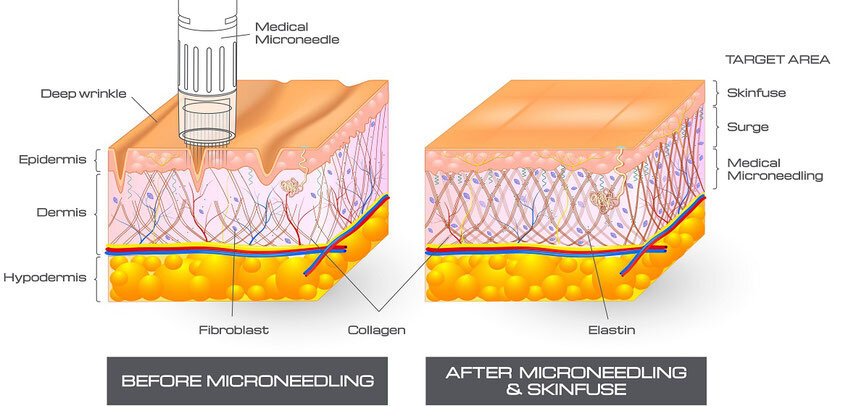
At AVAN TOKYO, we frequently combine stem cell conditioned media with Morpheus8, a microneedle RF device, as drug delivery to ensure delivery depth in the scalp.
Simply applying conditioned media to the scalp surface fails to penetrate the stratum corneum barrier, and almost nothing reaches the follicle. By creating microscopic pathways into the follicular root layer with Morpheus8 and then infusing stem cell conditioned media, we directly approach the follicle microenvironment damaged by hypoxia.
Improving the nighttime breathing environment (CPAP or lifestyle correction) plus daytime scalp regenerative medicine (stem cell conditioned media + Morpheus8)――this two-axis strategy is the realistic treatment design for hair loss patients with snoring or apnea.
Self-Check List and When to See a Doctor
If you fit the following items, nighttime hypoxia may be contributing to your hair loss:
・Your family points out your snoring
・Your mouth is dry when you wake up
・You experience strong daytime sleepiness
・You wake up multiple times at night
・You have heaviness in the head in the morning
・Your BMI is over 25, or your neck is thick
If you fit multiple items and your AGA treatment is not responding well, we recommend considering both a sleep breathing evaluation (simple PSG or sleep clinic visit) and combination therapy with stem cell conditioned media regenerative medicine that supports the follicle microenvironment.
Hair loss has entered an era where it cannot be discussed in terms of 「scalp alone」 or 「hormones alone」. Only by evaluating the whole body, including the quality of nighttime breathing, can a treatment design suited to that individual become visible. Please also visit our hair regenerative medicine column index for explanations from other angles.
──────────────
Supervising Physician: Shin Moriwaki, MD
Member, Japan Society of Aesthetic Surgery (JSAS) / Member, American Academy of Aesthetic Medicine
ECFMG certificate (US medical licensing qualification)
──────────────
📍AVAN TOKYO Ginza Hair Regenerative Medicine
English / 中文 / Tiếng Việt available
For inquiries, please contact us via DM / LINE / Website / Phone.