


Scalp Microbiome and Hair Loss: How Imbalance of Resident Bacteria Affects Follicles, and Why Stem Cell Conditioned Media Matters2026.06.11
“My scalp itches no matter what shampoo I switch to.” “My dandruff won’t stop and my hair seems to be thinning.” Behind such complaints, an imbalance of the scalp microbiome — the community of microorganisms living on the scalp — may well be at work.
In recent years, just as research has shown the importance of the gut microbiome, we have come to understand that the scalp also hosts a wide variety of resident microbes, and that their balance plays a decisive role in hair health.
A slight shift in sebum, sweat, temperature, or washing habits can disrupt this microbial balance, triggering chronic inflammation and a gradual decline in follicle function. At AVAN TOKYO, we apply this new perspective on the scalp microbiome to redesign the scalp environment using stem cell conditioned media.
What Is the Scalp Microbiome?
The scalp hosts skin commensals such as Staphylococcus epidermidis, Cutibacterium acnes, and Malassezia. Together, these microbes keep each other in check, prevent pathogen invasion, and maintain a mildly acidic environment through the breakdown of sebum.
A Healthy Microbial Balance
A healthy scalp resembles a “diverse forest” in which multiple microbial species coexist. The greater the diversity, the less likely any one species is to dominate, and the less prone the scalp is to inflammation.
Over-washing, under-washing, stress, sleep deprivation, and a nutrient-poor diet can all erode that diversity, allowing certain microbes to proliferate uncontrolled and rapidly destabilizing the scalp environment.
Overgrowth of Malassezia and Inflammation
Malassezia, a lipophilic yeast, is particularly important. It feeds on sebum, and its metabolites irritate the scalp, leading to seborrheic dermatitis, dandruff, itching, and chronic microinflammation.
That chronic inflammation dulls the activity of follicle stem cells and accelerates the miniaturization of hair follicles, in which strands grow progressively thinner. In short, scalp microbiome disturbance is not merely a surface issue — it is increasingly recognized as one of the root causes of hair loss.
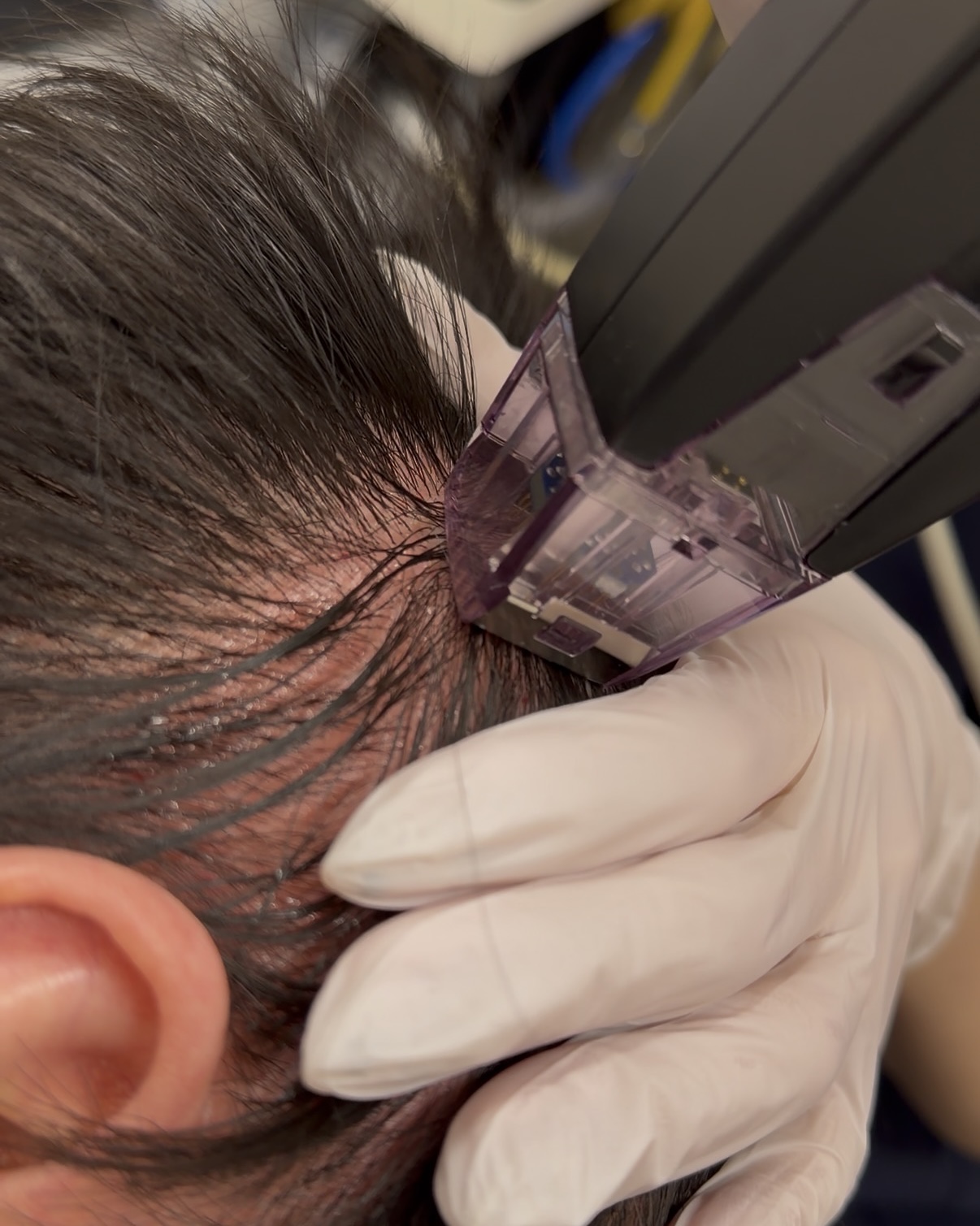
How Scalp Microbiome Imbalance Drives Hair Loss
When the resident bacteria fall out of balance, a state known as dysbiosis develops on the scalp. This dysbiosis sets off chronic microinflammation and steadily impairs follicular function.
Microinflammation and the Follicle
Even low-grade inflammation that is barely visible to the naked eye can reduce perifollicular blood flow, raise oxidative stress, and damage the niche in which follicle stem cells reside.
Guidelines from the Japanese Dermatological Association also reference the link between chronic scalp inflammation and hair loss, indicating that normalizing the scalp environment should be the foundation of any treatment.
Loss of Barrier Function and External Triggers
As microbial diversity declines, the stratum corneum’s barrier function weakens. A compromised barrier lets shampoo residues, UV light, and air pollutants reach the dermis more easily, fueling further inflammation in a vicious cycle. Breaking this loop is a central strategy in hair regenerative medicine.
The Role of Stem Cell Conditioned Media in Restoring the Scalp Microbiome
Stem cell conditioned media is the liquid secreted during the culture of mesenchymal stem cells and is rich in growth factors, cytokines, and exosomes. At AVAN TOKYO, we use this media to address microinflammation and rebuild the follicle stem cell niche.
Anti-Inflammatory Action Resets the Scalp
Anti-inflammatory cytokines contained in the media, such as TGF-β and IL-10, calm chronic scalp inflammation and aid recovery from dysbiosis. As inflammation subsides, sebum production normalizes, the overgrowth of Malassezia is curbed, and a natural microbial balance is more easily restored.
Rebuilding the Follicle Stem Cell Niche
Growth factors such as VEGF, FGF, and IGF-1 promote perifollicular angiogenesis and stem cell activation, helping push resting follicles back into the growth phase. Combined with Morpheus8-based drug delivery, the media can be carried into the deeper layers of the scalp, allowing us to target both scalp environment recovery and hair regrowth simultaneously.
Pairing with Home Care
In parallel with clinic treatment, gentler shampoo habits, avoiding excessively hot air during drying, and securing adequate sleep and nutrition all stabilize the rebuilt scalp environment. For more, please see our collection of related articles on hair regenerative medicine.
Conclusion
A disturbed scalp microbiome is more than a surface complaint of dandruff or itching — it is a key driver of hair loss through chronic microinflammation. For an imbalance that cannot be solved simply by changing shampoo or hair tonic, resetting the scalp with stem cell conditioned media and rebuilding the follicle stem cell niche is a deeply rational approach. If you have noticed thinning strands or persistent scalp itching, we invite you to reconsider the scalp environment itself through a personal consultation.
──────────────
Supervised by: Dr. Shin Moriwaki
Member of Japan Society of Aesthetic Surgery (JSAS) / Member of American Academy of Aesthetic Medicine
ECFMG Certificate
──────────────
📍AVAN TOKYO Ginza Hair Regenerative Medicine
English / 中文 / Tiếng Việt available
Consultations are welcome via DM / LINE / Website / Phone.