


miRNA, the ‘Other Protagonist’: Exosomal Gene-Regulating Molecules and the Signals Stem Cell Conditioned Media Delivers to Hair Follicles2026.06.27
In recent years, the term “stem cell conditioned media” has rapidly entered the vocabulary of regenerative hair medicine. Often described as a cocktail of growth factors, the treatment actually contains another protagonist that deserves equal billing: the miRNA (microRNA) carried inside exosomes. Unlike growth factors, which are proteins that signal cells from the outside, miRNA is a small molecule that enters the cell and rewrites its activity from within. This article unpacks what these gene-regulating cargo molecules are telling the hair follicle, and why this matters clinically.
What miRNA Actually Is — The “Small Command RNA” That Makes No Protein
miRNA (microRNA) is a very short RNA of roughly 22 nucleotides. By itself it produces no protein. Its job is to bind to specific mRNAs (messenger RNAs) and fine-tune how much of a given protein the cell makes. It looks modest on paper, but it has rapidly drawn attention as the final regulator that decides cell fate.
A “Conductor,” Not a Blueprint
If DNA is the blueprint and mRNA is the on-site work order, miRNA is the conductor that orchestrates them. A single miRNA can influence hundreds of mRNAs, swinging the balance between cell proliferation, differentiation, and dormancy. In hair follicle cells, miRNA is now known to be deeply involved in cycling, matrix cell division, and follicular stem cell maintenance.
Exosomal miRNA and Stem Cell Conditioned Media
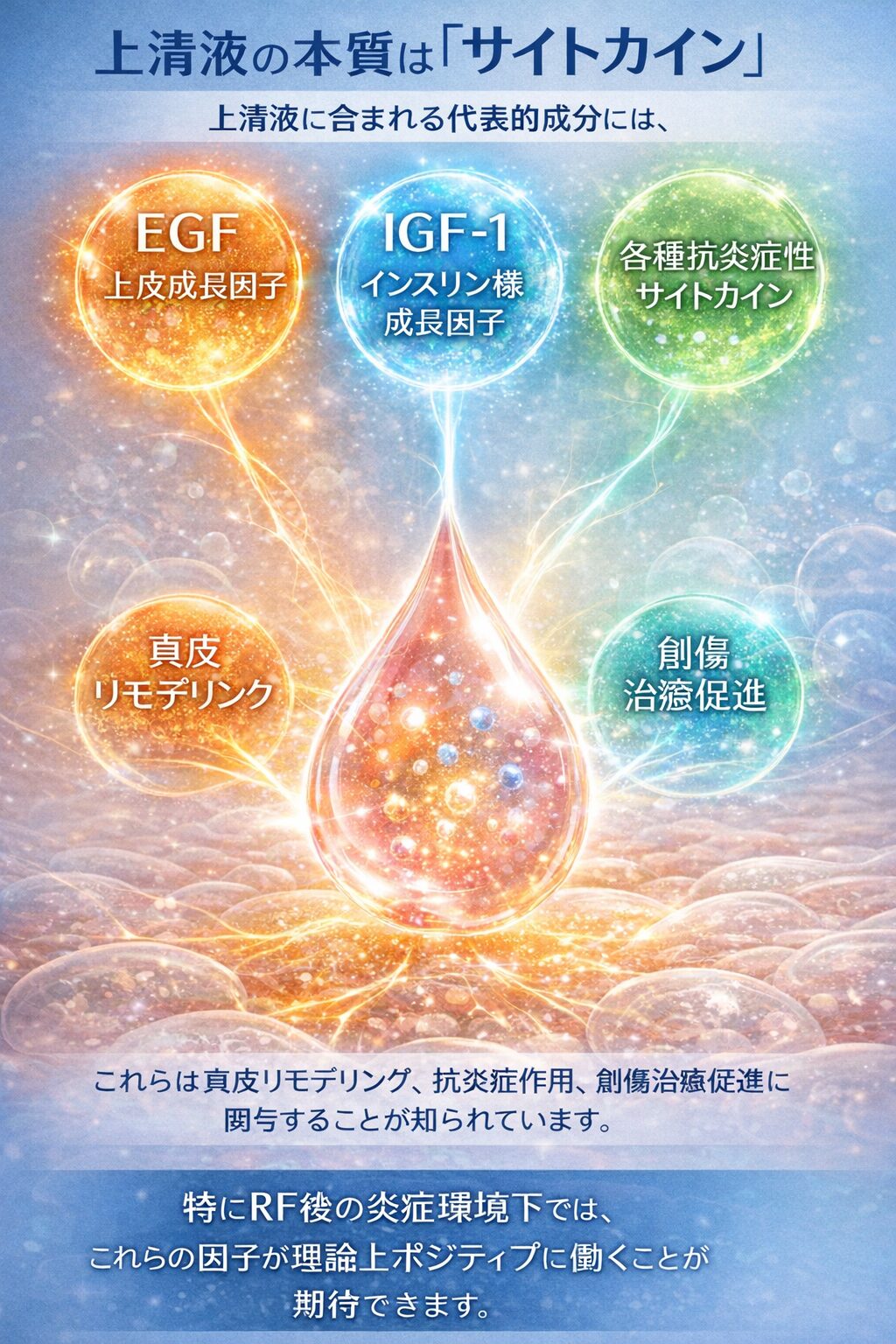
Stem cell conditioned media is the cell-free fraction left over after culturing mesenchymal stem cells or similar lines. It contains not only soluble growth factors such as VEGF, IGF-1 and HGF, but also vast numbers of 30–150 nm extracellular vesicles called exosomes.
Exosomes Are “Delivery Trucks,” miRNA Is the “Cargo”
Exosomes are tiny lipid-bilayer vesicles that carry miRNA, mRNA and various proteins from one cell to another. Because their cargo is shielded by the lipid membrane, it resists degradation in transit. Once the vesicle reaches the target cell, it releases its contents through membrane fusion or receptor-mediated uptake.
When stem cell conditioned media is delivered to the scalp, its exosomes are absorbed by cells around the follicle, and the miRNA inside directly tunes the expression of target genes. We are no longer only knocking on the door of the cell from the outside with growth factors — we are reaching inside and adjusting the genetic program itself. That is why miRNA deserves to be called the other protagonist.
What miRNA Tells the Follicle — Hair Cycle and the Stem Cell Niche
The hair follicle is a dynamic organ that cycles through anagen, catagen and telogen. The switches behind that cycle live inside the “niche” — the molecular environment surrounding the dermal papilla, matrix cells and follicular stem cells.
Recent preclinical work suggests that specific miRNAs carried by mesenchymal stem cell exosomes act on central hair-cycle pathways such as Wnt/β-catenin and TGF-β signaling, nudging follicles from rest into growth.
“Calming” miRNA and “Growing” miRNA
The miRNA payload includes both anti-inflammatory species, which quiet chronic micro-inflammation in the scalp, and pro-proliferative species, which encourage matrix cell division. In AGA and female diffuse alopecia, the perifollicular cytokine environment is often deranged and the hair cycle shortens. Stem cell conditioned media may help by letting multiple miRNAs work in concert to steer these disordered signals back toward a follicle-friendly balance. For AGA management guidelines, please also refer to the Japanese Dermatological Association, which we cross-reference when designing combined regenerative protocols.
Why “Just Growth Factors” Is an Incomplete Story
What truly separates stem cell conditioned media from a plain growth-factor cocktail is access to this gene-regulating layer.
Growth factors bind to receptors on the cell surface — an outside knock. miRNA, in contrast, slips inside the cell and rewrites which genes are switched on or off — an internal adjustment. Having both delivered together in the same preparation is what gives stem cell conditioned media its clinical depth.
The Gap Between “Responsive” and “Unresponsive” Follicles
In real practice, patients respond very differently to the same protocol. Many factors contribute — residual follicular stem cell numbers, chronic scalp inflammation — but baseline differences in “which mRNAs are over-expressed” and “which pathways are suppressed” also shape outcomes. That is why conditioned media treatment is rarely a one-shot affair: continuity tuned to the hair cycle is what lets miRNA-driven regulation accumulate as a real adjustment of the follicle.
How AVAN TOKYO Designs miRNA-Aware Treatment
At AVAN TOKYO Ginza Hair Regenerative Medicine, we do not simply inject conditioned media into the scalp. We design the depth of delivery, the interval between sessions, and the combination of procedures. Morpheus8 drug delivery is one tool we use to bring exosomes physically closer to the follicle, giving the miRNA-bearing particles a real chance to be taken up by perifollicular cells and to deliver their gene-regulating signal.
For related protocols and deeper reading, see our column index for hair regenerative medicine.
Conclusion — Treatment Design with the Other Protagonist in Mind
Stem cell conditioned media is often described as a growth-factor cocktail, but a real share of its power lies in the miRNA carried by exosomes. Reaching inside the cell to adjust gene expression is precisely what allows regenerative medicine to approach the follicle on a different plane from conventional hair-loss therapy.
Keeping miRNA in the frame helps patients understand the effects, the limits, and the indications of stem cell conditioned media treatment more three-dimensionally — and it offers a useful axis when asking, “Why does this work for me, or not?”
──────────────
Medical Supervisor: Shin Moriwaki, MD
Member, Japan Society of Aesthetic Surgery (JSAS) / Member, American Academy of Aesthetic Medicine
ECFMG Certificate
──────────────
📍AVAN TOKYO Ginza Hair Regenerative Medicine
English / 中文 / Tiếng Việt supported
Consultations welcome via DM / LINE / Website / Phone.