


How Golfer’s Elbow (Medial Epicondylitis) Differs from Tennis Elbow — Tendinopathy of the Flexor-Pronator Group and Stem Cell Conditioned Media Joint Injection2026.07.09
“A sharp pain shoots through the inside of my elbow during a golf swing.” “Lifting a heavy pot or wringing out a towel sends pain from the inner elbow down my forearm.” These symptoms are classic signs of medial epicondylitis, popularly known as golfer’s elbow. Although it is often lumped together with tennis elbow (lateral epicondylitis), the two share the label “elbow pain” but affect opposite sides and involve opposite muscle groups.
Medial epicondylitis is a tendon-attachment disorder caused by the accumulation of chronic microtrauma at the tendinous insertion of the flexor and pronator muscles onto the medial epicondyle. It is far from limited to golfers: throwing athletes, keyboard-heavy office workers, cooks, and parents lifting children all commonly develop it through repetitive forearm flexion and pronation. In this article, Dr. Moriwaki of AVAN TOKYO Ginza reviews how medial epicondylitis differs from tennis elbow, and outlines stem cell conditioned media joint injection as one option within a conservative-treatment framework.
Key Points of This Article
– Medial epicondylitis (golfer’s elbow) affects the inside of the elbow, whereas tennis elbow (lateral epicondylitis) affects the outside — the sites are mirror opposites
– Both conditions are better understood as “tendinosis” (degeneration) rather than “tendinitis” (inflammation); rest and exercise therapy form the treatment foundation
– For refractory medial epicondylitis, local injection of stem cell conditioned media into the tendon attachment can be positioned as a conservative option that may act on the tissue repair environment
– Response varies individually, and careful indication — including screening for ulnar nerve involvement and surgical criteria — is prerequisite
What Is Golfer’s Elbow? The Pathology of Medial Epicondylitis
Medial epicondylitis is a disorder that arises at the tendon insertion of the flexor and pronator muscles (pronator teres, flexor carpi radialis, flexor carpi ulnaris, flexor digitorum superficialis, etc.) onto the medial epicondyle. These muscles are the mechanical hub for forearm flexion and pronation, making the site a natural focus of repetitive strain.
Why It Is “Degeneration,” Not “Inflammation”
Once regarded as an inflammatory disease, histologic research has clarified that medial epicondylitis is essentially tendon degeneration (tendinosis) from accumulated microtrauma. In chronic cases, inflammatory cell infiltration is scant; instead, disorganized collagen fibers, neovascularization, and ingrowth of nerve endings dominate. Recognizing this as “-osis” (degeneration) rather than “-itis” (inflammation) is the starting point for a rational treatment strategy.
Symptoms and Physical Findings
Early stages present as a dull ache after activity, progressing to pain that is triggered by everyday tasks such as swinging a golf club, throwing, wringing a towel, typing on a keyboard, or lifting a heavy pot. On examination, tenderness over the medial epicondyle and reproduction of pain by resisted wrist flexion are the key findings.
How It Differs from Tennis Elbow — Contrast with Lateral Epicondylitis
Even though both are “epicondylitis,” tennis elbow (lateral epicondylitis) and golfer’s elbow should be regarded as anatomically and clinically distinct.
Opposite Locations, Opposite Muscle Groups
Tennis elbow arises at the extensor tendon insertion on the lateral epicondyle, particularly the extensor carpi radialis brevis (ECRB). Pain intensifies with wrist extension, backhand strokes, mouse use, and turning a screwdriver — situations that repetitively load the extensor group.
Golfer’s elbow (medial epicondylitis), in contrast, involves the flexor-pronator group; pain is reproduced by wrist flexion and pronation. Even though both are enthesopathies of the elbow, mirror-image muscle groups are involved.
Frequency and Pitfalls in Differential Diagnosis
Epidemiologically, tennis elbow is more common, but medial epicondylitis is far from rare in occupations that demand repetitive forearm flexion and pronation — cooks, office workers, caregiving parents, musicians. Because the ulnar nerve groove lies just posterior to the medial epicondyle, ulnar nerve entrapment symptoms (little-finger numbness, weakness on the ulnar side of the hand) may coexist and require separate evaluation as cubital tunnel syndrome.
Stem Cell Conditioned Media Joint Injection as an Option
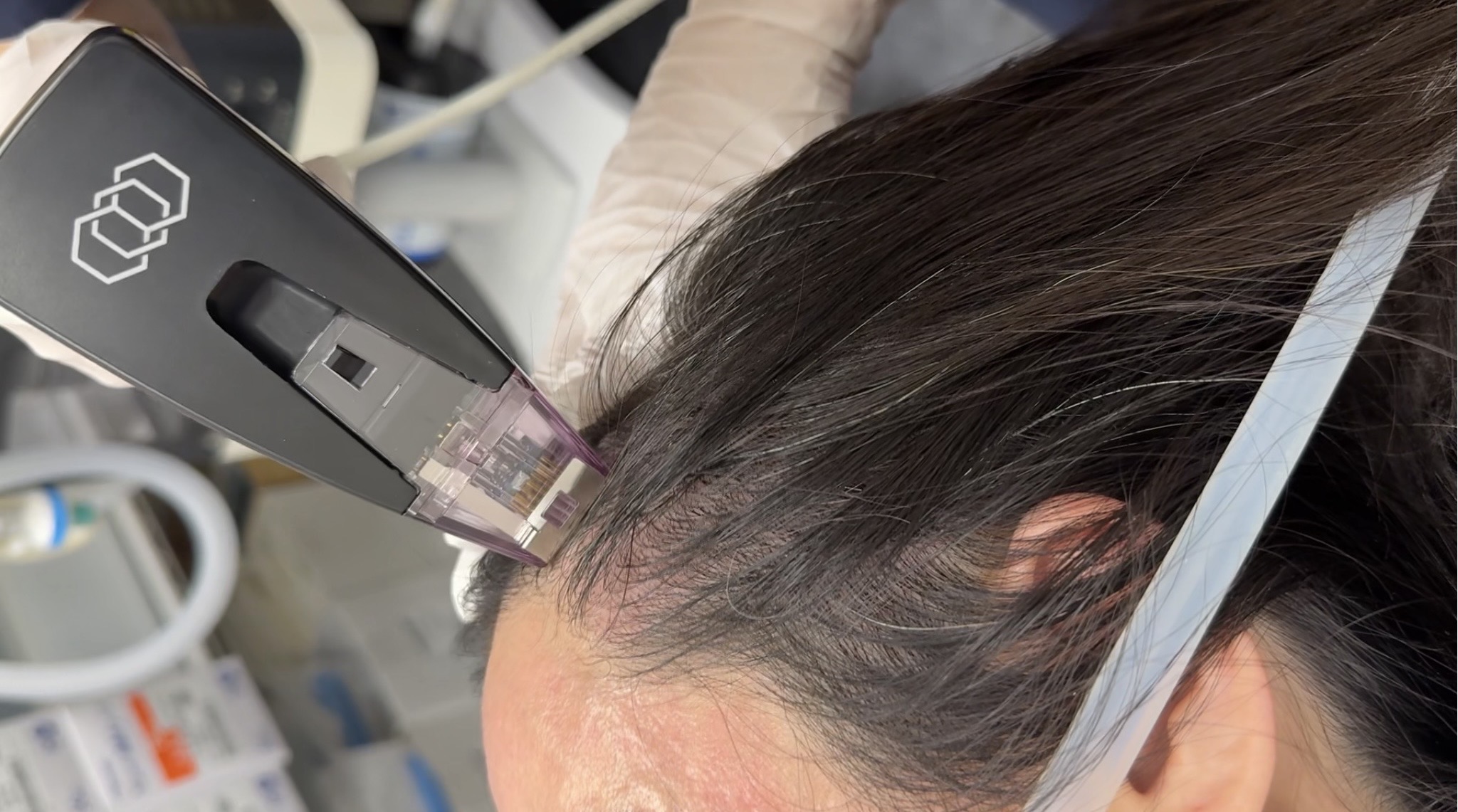
Treatment of medial epicondylitis begins with conservative measures — rest, icing, stretching, eccentric exercises. For refractory cases, options include local steroid injection, extracorporeal shockwave therapy, PRP injection, and, more recently, local injection of stem cell conditioned media at the tendon insertion. For general information on joint disorders, see the public materials of the Japanese Orthopaedic Association.
The “Repair Environment” Targeted by Stem Cell Conditioned Media
Stem cell conditioned media contains diverse bioactive molecules — TGF-β, IGF-1, FGF, VEGF, and others — that are involved in cell proliferation, angiogenesis, and tissue repair. Tendon tissue has intrinsically poor blood supply and slow repair, but growth factors present in the conditioned media are thought, at the level of basic research, to act on the local repair environment, potentially supporting collagen reorganization and neovascularization. That said, this is not an injection that “restores the tendon to new”; it should be understood as one means of supporting the repair environment of a chronic tendon insertion.
How It Differs in Aim from Steroid Injection
Local steroid injection provides potent short-term pain relief but, with repeated use, carries the risk of tendon weakening and subcutaneous atrophy, and is known to increase the long-term risk of tendon rupture. Stem cell conditioned media does not aim to “suppress inflammation” but rather to “act on the repair environment.” The two are not competitors but options on distinct axes of action.
Efficacy Assessment and the Limits of Indication
Efficacy of tendon-insertion conditioned-media injection for medial epicondylitis is typically assessed over several weeks to several months. Objective records of pain scores (VAS), grip strength, and symptom reproduction during daily activities should guide the evaluation. When response is poor, orthopedic re-evaluation and consideration of surgical indication are needed. In the presence of active infection, poorly controlled systemic disease, or use of anticoagulants, the procedure may need to be deferred; cautious indication is a prerequisite. For more, please see our page on stem cell conditioned media joint injection.
Frequently Asked Questions
Q. Can I develop medial epicondylitis even if I don’t play golf?
Yes. The nickname “golfer’s elbow” is misleading; it also develops through repetitive forearm flexion and pronation in cooking, lifting children, wringing towels, and computer work. In fact, many patients we see have never played golf.
Q. How can I tell tennis elbow and golfer’s elbow apart?
The location of pain is the biggest clue. Tenderness on the inside of the elbow with pain reproduced by wrist flexion suggests golfer’s elbow; tenderness on the outside with pain on wrist extension suggests tennis elbow. Some patients have both, so accurate diagnosis requires physical examination and, when needed, imaging.
Q. Can injection of stem cell conditioned media alone cure the condition?
We cannot promise that injection alone will cure it. Enthesopathy is closely tied to movement habits and posture, so combining injection with stretching, eccentric exercises, and adjustments to form and daily motions is the more reliable path to improvement. Response varies individually and is also influenced by chronicity and age.
Q. What is a typical treatment interval?
Injection to the tendon insertion is typically assessed at intervals of several weeks to about one month. It is not a one-off treatment; we evaluate symptom trends and changes in daily activity objectively and decide whether to add subsequent injections.
Q. Once the pain is gone, can I immediately return to golf or sports?
Even with pain relief, tendon tissue repair takes time. Applying full load too soon risks recurrence, so we recommend a graded return to activity along with a review of form and equipment (grip thickness, shaft weight, and the like).
──────────────
Supervising Physician: Shin Moriwaki, MD (森脇 進)
Member, Japan Society of Aesthetic Surgery (JSAS) / Member, American Academy of Aesthetic Medicine
ECFMG Certificate (U.S. Medical Licensing Qualification)
──────────────
📍AVAN TOKYO Ginza Regenerative Medicine
AVAN TOKYO Ginza Regenerative Medicine
English / 中文 / Tiếng Việt available
Contact us via DM / LINE / Website / Phone.